 CM: I try not to,
but at the same time you must, to
a certain extent, particularly when time is so important. People
are
watching the clock a lot in the studio in the western world. In
recordings you know that you can stop and cure things, put things right
that are
not quite perfect, but it’s a terrible decision with the
small amount of time available for making recordings. Often, a
very difficult decision is to whether to retake something, and thus
lose a certain amount of time, or to hope that it’s going to be okay
without listening. The moment a conductor or singer has to listen
to playbacks, then that wastes a
lot of time that could be spent doing recordings.
CM: I try not to,
but at the same time you must, to
a certain extent, particularly when time is so important. People
are
watching the clock a lot in the studio in the western world. In
recordings you know that you can stop and cure things, put things right
that are
not quite perfect, but it’s a terrible decision with the
small amount of time available for making recordings. Often, a
very difficult decision is to whether to retake something, and thus
lose a certain amount of time, or to hope that it’s going to be okay
without listening. The moment a conductor or singer has to listen
to playbacks, then that wastes a
lot of time that could be spent doing recordings. CM: Somebody had
touched them up. Probably not
so much as Rimsky-Korsakov’s version of Boris, but still rather touched up
— particularly Jenůfa
and
to some extent Kát’a
Kabanová. I used to go along with that
because I’d say to myself, “Well, Janáček
was a composer
of genius who, however, was not a very well trained musician, and
therefore he needed well trained people to help him.” But I don’t
think that anymore. I think that his music, that his
orchestration and the way he wrote, the funny, peculiar way he wrote
things down is really part of the genius of the man. What
passed for a certain amount of gaucheness before, gaucherie is now, in
my opinion, genius and originality.
CM: Somebody had
touched them up. Probably not
so much as Rimsky-Korsakov’s version of Boris, but still rather touched up
— particularly Jenůfa
and
to some extent Kát’a
Kabanová. I used to go along with that
because I’d say to myself, “Well, Janáček
was a composer
of genius who, however, was not a very well trained musician, and
therefore he needed well trained people to help him.” But I don’t
think that anymore. I think that his music, that his
orchestration and the way he wrote, the funny, peculiar way he wrote
things down is really part of the genius of the man. What
passed for a certain amount of gaucheness before, gaucherie is now, in
my opinion, genius and originality. CM: This varies
between
producer and producer. It depends on their schedule, on
whether we can get together. I usually try and
get together with directors and discuss the whole thing with
them. If I am in a position to, as it were, dictate to them at
all, then I really go into it in depth. If I have been
engaged as a guest somewhere else, let’s say with a theater where the
director and I are both guests, neither of us being permanently
employed
as directors with the company, I then take a great deal of trouble to
find out what the director’s concept is going to be, because a terrible
lot of them go on with this word “concept.” They say, “This is my
concept of it,” and my reply to that is, “It may
be your concept, but is it the composer’s concept, and does it fit in
with the music the composer has written?” In
certain cases, a concept such as putting an opera into another milieu
or another period need not necessarily fight the composer’s
concept. I will give you two examples, both of Faust. Gounod’s Faust, placed in the
period of Gounod is a perfectly
logical concept because it fits the music. It
fits the music better than the original concept of being
medieval. The whole concept of the Faust legend is timeless, and
therefore can fit into any
age, so why not put into the age of Gounod and have Mephistopheles
with a top hat on? The libretto does say that he has a feather
in his cap, but that can be easily changed, as Jean-Louis Barrault
found out many years ago. La
plume au chapeau becomes Le
plus aux chapeaux, which sounds more or less the same.
[Both laugh] Another thing where the time can be changed very
well is in Busoni’s Doctor Faust,
which he himself said it would be good if you can set it in
modern dress. What I don’t like is setting it in such a
different milieu that it doesn’t fit in with the music, or that it
makes nonsense of some of the action. A recent example of that
is Tosca which was produced
by Jonathan Miller in Florence, and
then repeated in London. The police chief, Scarpia, was
changed into a fascist character. Apart from that, nothing
particular was changed except that it became fascist. It meant,
of course, that a lot of the text didn’t make sense and a lot of the
little incidents of local color didn’t make sense.
CM: This varies
between
producer and producer. It depends on their schedule, on
whether we can get together. I usually try and
get together with directors and discuss the whole thing with
them. If I am in a position to, as it were, dictate to them at
all, then I really go into it in depth. If I have been
engaged as a guest somewhere else, let’s say with a theater where the
director and I are both guests, neither of us being permanently
employed
as directors with the company, I then take a great deal of trouble to
find out what the director’s concept is going to be, because a terrible
lot of them go on with this word “concept.” They say, “This is my
concept of it,” and my reply to that is, “It may
be your concept, but is it the composer’s concept, and does it fit in
with the music the composer has written?” In
certain cases, a concept such as putting an opera into another milieu
or another period need not necessarily fight the composer’s
concept. I will give you two examples, both of Faust. Gounod’s Faust, placed in the
period of Gounod is a perfectly
logical concept because it fits the music. It
fits the music better than the original concept of being
medieval. The whole concept of the Faust legend is timeless, and
therefore can fit into any
age, so why not put into the age of Gounod and have Mephistopheles
with a top hat on? The libretto does say that he has a feather
in his cap, but that can be easily changed, as Jean-Louis Barrault
found out many years ago. La
plume au chapeau becomes Le
plus aux chapeaux, which sounds more or less the same.
[Both laugh] Another thing where the time can be changed very
well is in Busoni’s Doctor Faust,
which he himself said it would be good if you can set it in
modern dress. What I don’t like is setting it in such a
different milieu that it doesn’t fit in with the music, or that it
makes nonsense of some of the action. A recent example of that
is Tosca which was produced
by Jonathan Miller in Florence, and
then repeated in London. The police chief, Scarpia, was
changed into a fascist character. Apart from that, nothing
particular was changed except that it became fascist. It meant,
of course, that a lot of the text didn’t make sense and a lot of the
little incidents of local color didn’t make sense. 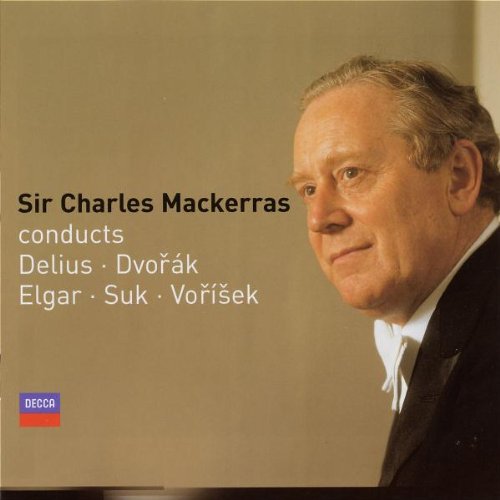 CM: Yes, I think
that is. It appealed then... [pauses] or it
didn’t even really appeal to all sorts of people then, but I
don’t know whether success can be judged by the amount of appeal to the
public. If that were the case, the people who go and see
Philip Glass’ operas would run the situation, but that’s not at all an
operatic
public. It was very interesting to see, when the English National
Opera did Akhnaten at
the Coliseum in London, it was packed
out. It was a huge success with the public, but that public was
not the normal operatic public. It was a sort of upper-class pop
culture.
CM: Yes, I think
that is. It appealed then... [pauses] or it
didn’t even really appeal to all sorts of people then, but I
don’t know whether success can be judged by the amount of appeal to the
public. If that were the case, the people who go and see
Philip Glass’ operas would run the situation, but that’s not at all an
operatic
public. It was very interesting to see, when the English National
Opera did Akhnaten at
the Coliseum in London, it was packed
out. It was a huge success with the public, but that public was
not the normal operatic public. It was a sort of upper-class pop
culture.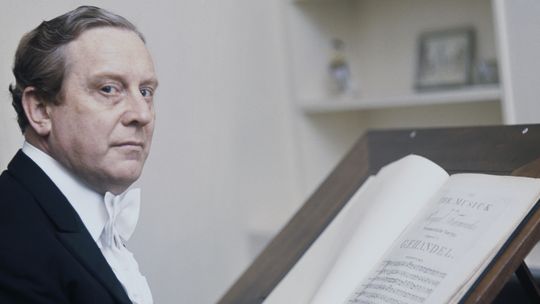 BD: Yes. It
would be like doing a takeoff.
BD: Yes. It
would be like doing a takeoff.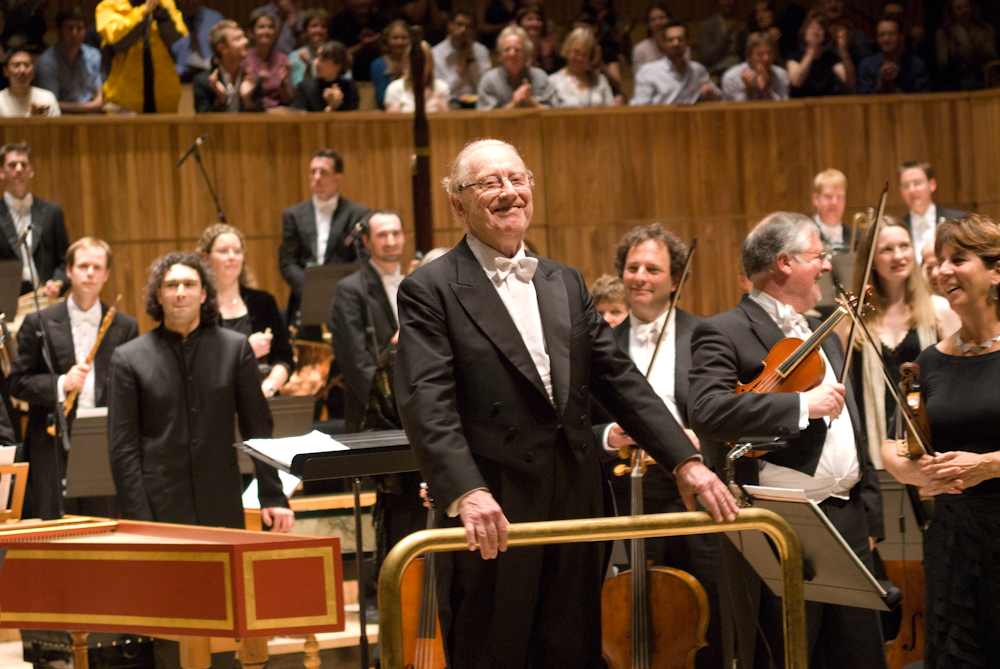
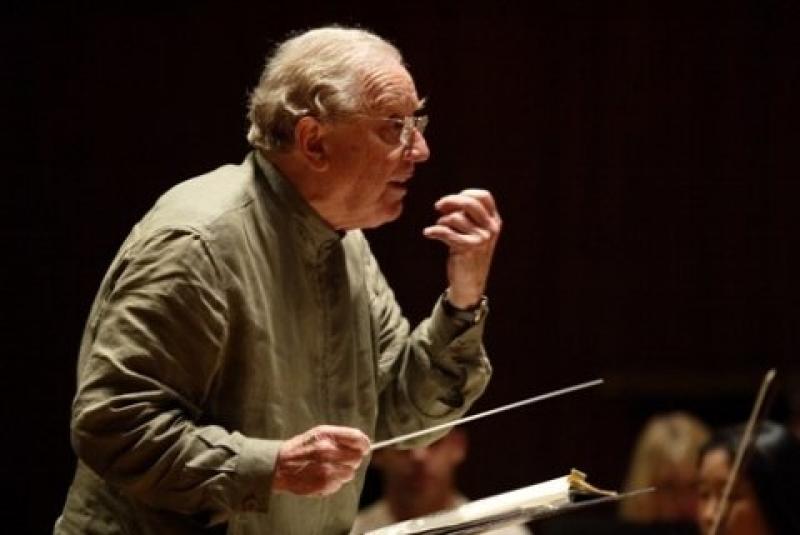
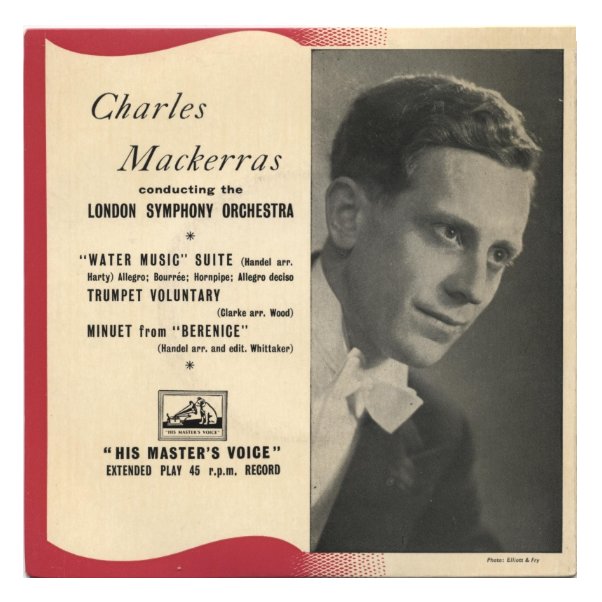
Sir Charles Mackerras
Sir Charles Mackerras, who died
on July 14 aged 84, was a conductor and musicologist, and introduced
the passionate and heartfelt music of Leos Janácek, the Czech
nationalist composer, to British audiences.The Telegraph 6:15PM BST 15 Jul 2010 In so doing he enriched immensely many of our leading opera houses, where such melodramatic works as Kátya Kabanová, Jenufa and The Makropulos Affair are now a staple part of the repertory. He was one of the great polymath conductors of the 20th century, with interests that ranged from the operettas of Gilbert and Sullivan to the high opera of Wagner and Strauss, and was blessed with a rare ability to combine performance and musicology. His rigour and empathy with both music and musicians, as well as his ferocious intellectual curiosity, earned acclaim and respect from across the musical world. Any performance directed by Mackerras – particularly one featuring Janácek (1854-1928) – bore the imprimatur of unsurpassed authority. In the 1960s he was at the forefront of the period instrument movement, uncovering the original intentions of composers such as Handel, Mozart and Beethoven, and bringing to audiences some of the first "authentic" performances to be heard in Britain. Of particular note was a production of Mozart's The Marriage of Figaro at Sadler's Wells in 1965 in which he controversially – and to some ridicule – reinstated the appoggiaturas and other ornamentation that would have been used in the 18th century. If career-defining musical directorships were thin on the ground, there was no shortage of guest conductorships – with the BBC Symphony Orchestra, Scottish Chamber Orchestra, Royal Philharmonic Orchestra and Philharmonia, to name but a few. He was, according to the commentator Norman Lebrecht, outside the cliques and upper echelons of British music and, as a result, was disappointed to be passed over twice for the top job at Covent Garden – in 1971 in favour of Colin Davis and, in 1987, for Bernard Haitink. Nevertheless, Sadler's Wells, English National Opera and Welsh National Opera came calling, as did the Met in New York and San Francisco Opera. For six decades rarely a year went by without an appearance at the Edinburgh Festival, of which he was appointed honorary president in 2008. Indeed, so busy was Mackerras that the title of a BBC television documentary in 1966 about his life, Allegro Vivace, could not have been more apt. Detractors, however, dubbed him "Chuck 'em Up Charlie" for his freelancer's willingness to conduct anything, anywhere. Mackerras, a self-effacing conductor in a world of egotistical maestros, cared little for image and marketing. Asked about the secret of the conductor's art, he replied that it was his role to "inspire the musicians to play in his way, with one style and one accord". As Rupert Christiansen wrote in The Daily Telegraph at the time of his 80th birthday: "A Mackerras performance invariably has energy, pace, bounce, clarity, shape. "With his unique gift for getting music moving, he puts singers as well as orchestras on their toes – there's no slacking under his baton, no empty sentimentality or self-indulgence." Alan Charles MacLaurin Mackerras was born on November 17 1925 in Schenectady, New York, to Australian parents, the eldest of seven children. His father, Alan, was an electrical engineer and a Quaker; his mother, Catherine, a passionate admirer of Wagner and a convert to Catholicism. Among his ancestors was Isaac Nathan, who is credited with introducing Western classical music to Australia. From the age of three Charlie was brought up in Sydney surrounded by music and boats – although his red hair and freckles left him vulnerable to the sun when at sea. He began taking violin lessons at the age of seven; the following year he was taken to see a performance of Carmen given by a touring Italian company. He also studied flute, but changed instruments after reading in a newspaper of a shortage of oboists. He was educated at St Aloysius College, taking part in numerous Gilbert and Sullivan operas; Sydney Grammar School, which was 10 minutes' walk from the Conservatorium of Music where, much to his parents' irritation, he spent all his spare time; and finally, in a desperate attempt to get him away from music and into law, The King's School, Parramatta, 16 miles outside Sydney, from where he orchestrated his own expulsion. Finally his parents relented over his musical ambitions and by the age of 16 he was orchestrating music in the style of Mozart. After four years as oboist with the ABC Sydney Orchestra he sailed for England on February 6 1947 on the RMS Rangitiki. His fellow passengers included the Duchess of Gloucester, returning home at the end of the Duke's term as governor-general. He had been financially well-rewarded in Australia and arrived in London armed with a long list of musical contacts. Before long he was flourishing at Sadler's Wells as an orchestral oboist and cor anglais player. A chance conversation with an amateur musician in a coffee shop in South Kensington while poring over a newly-acquired score of Dvorák's D minor Symphony ignited a quest to discover more about Czech music and he soon secured a British Council scholarship to study in Prague with the veteran conductor Václav Talich. It was there that, on October 15 1947, Mackerras and his new English wife went to the Národní Theatre to see for the first time Kátya Kabanová, Janácek's tragic tale of a married woman from a peasant community who falls in love with a younger man. This introduction to Janácek – a composer then barely known outside Czechoslovakia – was a revelation to Mackerras. He travelled to Brno, the composer's home town, to seek out other works, determined to introduce them to a wider audience. The Communist putsch in February 1948 hastened his return to London, where he rejoined Sadler's Wells as oboist, repetiteur and occasional conductor. Norman Tucker, director of the Wells, agreed to include Kátya in the 1950-51 season but, despite reasonable reviews, the idiom was a difficult one for audiences to grasp. It was not a box office success and was dropped for eight years. In the meantime Mackerras's reputation as a purposeful conductor was growing, and he was appointed principal conductor of the BBC Concert Orchestra (1954-56). He was also undertaking more research into authentic performances, which led to a series of radio broadcasts with Fritz Spiegl. Mackerras was for a time part of Benjamin Britten's entourage, conducting the premiere of Noye's Fludde, the children's opera, at the Aldeburgh Festival in June 1958, but he was later banished from the composer's inner circle after making some injudicious remarks about the notoriously sensitive composer. His shock at having discovered – while still in Australia – that the commonly played arrangements of works such as Handel's Water Music or the Music for the Royal Fireworks were not as the composer intended, but richly orchestrated by Victorian interpreters such as Sir Hamilton Harty, fired a passion to discover the originals, culminating in his landmark recording on the Pye label of the Fireworks in 1959 with 24 oboes (it had to be made in the middle of the night to secure the availability of enough musicians). While he made visits to South Africa – an introduction to orchestral conducting with the pianist Arturo Benedetti Michelangeli as soloist – and other countries, it was 1960 before he returned to Australia, where he enjoyed a rapturous reception. He was also continuing his pursuit of Janácek's music, with frequent visits to Prague. In 1961 he became the first non-Czech to conduct a Janácek opera in that country – an experience that he said was like "being asked to conduct Wagner in Bayreuth" – when he conducted Kátya in Brno, including in the performance two long-forgotten intermezzos that he had discovered in the composer's archives. Most of the 1960s were spent cementing his reputation in Europe in general – including three years as number two at Hamburg Opera – and Britain in particular. He worked with Shostakovich at the Edinburgh Festival in 1962 (whose opera Katerina Izmaylova he conducted for his debut at Covent Garden two years later), directed the young pianist Daniel Barenboim in Oslo in 1963 and conducted the British premiere of Janácek's The Makropulos Case at Sadler's Wells in 1964. By now the label "Janácek specialist" was firmly affixed to his conductor's tails. But Janácek and urtext Mozart were by no means the complete story. When the copyright expired on Sir Arthur Sullivan's music in 1950, Mackerras published Pineapple Poll, a ballet based on 40 of Sullivan's tunes that became extremely popular at the time. He worked with the D'Oyly Carte Opera Company in the 1970s, conducting The Pirates of Penzance and The Mikado, eventually joining the company's board of directors. This love of lighter music, a legacy of his school days, provided ammunition for his critics, but Mackerras was unrepentant. When, in 1970, Sadler's Wells Opera moved to the Coliseum on its way to becoming English National Opera, Mackerras was installed as the company's musical director, a position he retained until 1977. He then returned to Australia for three years as chief conductor of the Sydney Symphony Orchestra. In 1980 he became the first non-British citizen to conduct the Last Night of the Proms; seven years later he became music director of Welsh National Opera, taking his passion for Janácek to the Principality and raising musical standards in the Welsh capital beyond measure. He also leaves a vast catalogue of recordings, ranging from Handel to Strauss, as well as authoritative accounts of Janácek's operas. Mackerras maintained a full schedule well into his ninth decade. On his 80th birthday he gave a spirited account of Verdi's Un Ballo in Maschera at Covent Garden. Over the coming years he returned there to conduct Don Giovanni, toured with Orchestra of the Age of Enlightenment; reprised his Gilbert and Sullivan in a delectable account of Patience at the Proms; and, in August 2009, although in failing health, directed Haydn's oratorio The Creation with a volunteer chorus at the Dartington Summer School; it was a life-enhancing performance that will live long in the memories of those fortunate to take part. For more than 40 years he kept a holiday villa on the Italian island of Elba, where guests included the Earl and Countess of Harewood. Until a shoulder operation in the mid-1990s he sailed a yacht, the Emilia Marty, named after the tragic heroine of The Makropulos Case who, having discovered the elixir of eternal life, finds that after more than 300 years she finally wishes to die. A biography, Charles Mackerras: a Musicians' Musician, by his cousin Nancy Phelan, was published in 1987. He was appointed CBE in 1974, knighted in 1989, became a Companion of the Order of Australia in 1997 and a Companion of Honour in 2003. Two years later he was awarded the Royal Philharmonic Society's Gold Medal and became the first recipient of the Queen's Medal for Music. He was also showered with honours by the Czech authorities including, in 1996, the Medal of Merit. Although based in London for more than 60 years, Mackerras remained an Australian at heart, never losing his "Aussie twang" or his direct, sometimes brusque, no-nonsense manner of speech. Superstitious by nature, he had a great belief in hypnotism, using it to cure his smoking. He believed, he said, that a conductor secured his best results by hypnotising the orchestra. Sir Charles Mackerras married Judy Wilkins, a clarinettist, in 1947. She and a daughter survive him. Another daughter predeceased him. |
This interview was recorded at his
hotel in Chicago on November 6, 1986. Sections
were used (along with
recordings) on WNIB in 1987, 1995 and 2000, and on WNUR in 2004.
It was transcribed
and posted on this
website in 2012.
To see a full list (with links) of interviews which have been
transcribed and posted on this website, click here.
Award - winning broadcaster Bruce Duffie was with WNIB, Classical 97 in Chicago from 1975 until its final moment as a classical station in February of 2001. His interviews have also appeared in various magazines and journals since 1980, and he now continues his broadcast series on WNUR-FM, as well as on Contemporary Classical Internet Radio.
You are invited to visit his website for more information about his work, including selected transcripts of other interviews, plus a full list of his guests. He would also like to call your attention to the photos and information about his grandfather, who was a pioneer in the automotive field more than a century ago. You may also send him E-Mail with comments, questions and suggestions.