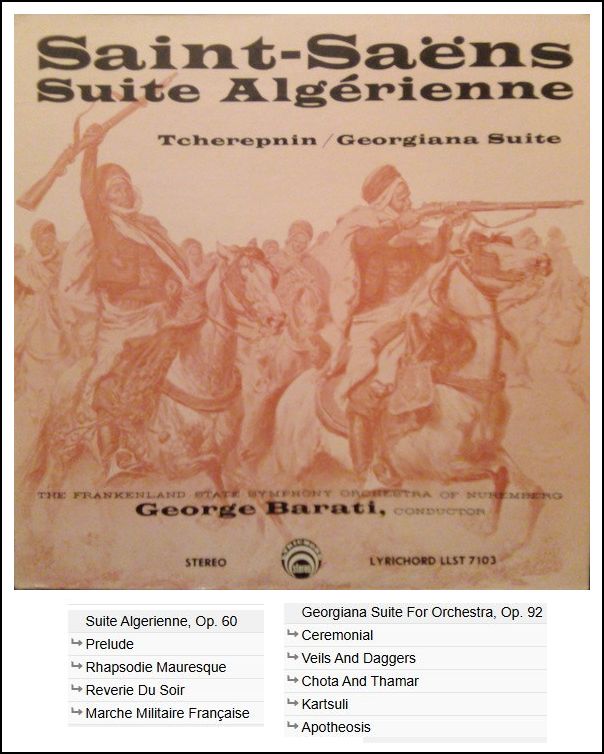
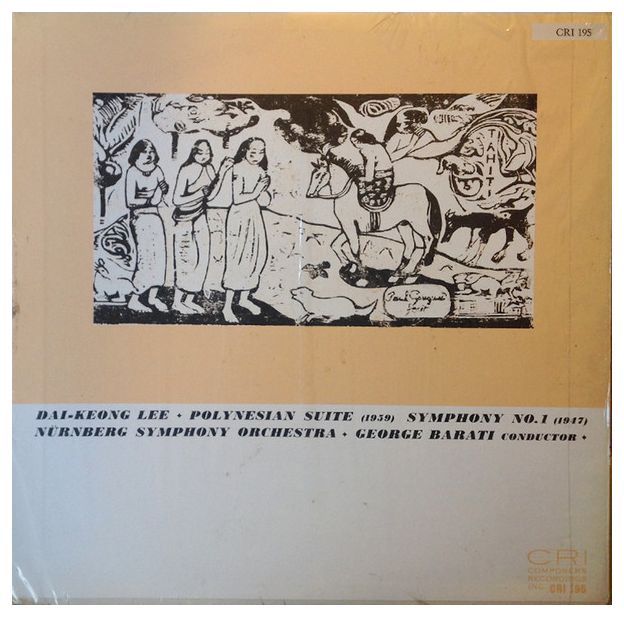
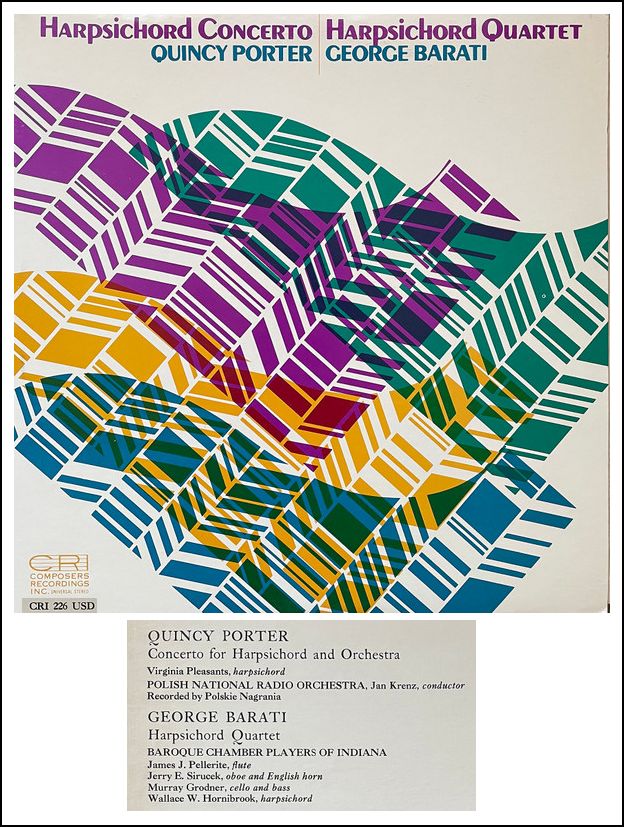
Composer / Conductor / Cellist  George  Barati

A Conversation with Bruce Duffie


barati


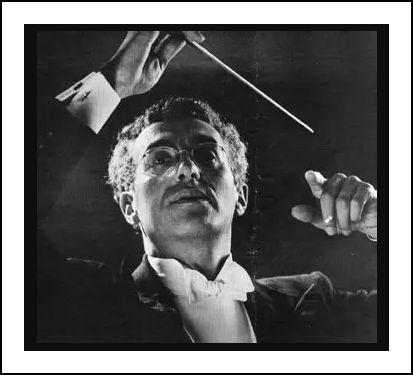
George Barati (born György Braunstein) (April 3, 1913, Győr, Hungary - June 22, 1996, San Jose, California) was a Hungarian-American cellist, composer, and conductor.

Barati studied under Zoltán Kodály and Leo Weiner while a student at the Liszt Academy of Music in the 1930s, and became widely known as a performer throughout Hungary, both as a soloist and as a founding member of the Pro Ideale Quartet. While still a student he became first cellist with the Budapest Symphony and the Municipal Opera.

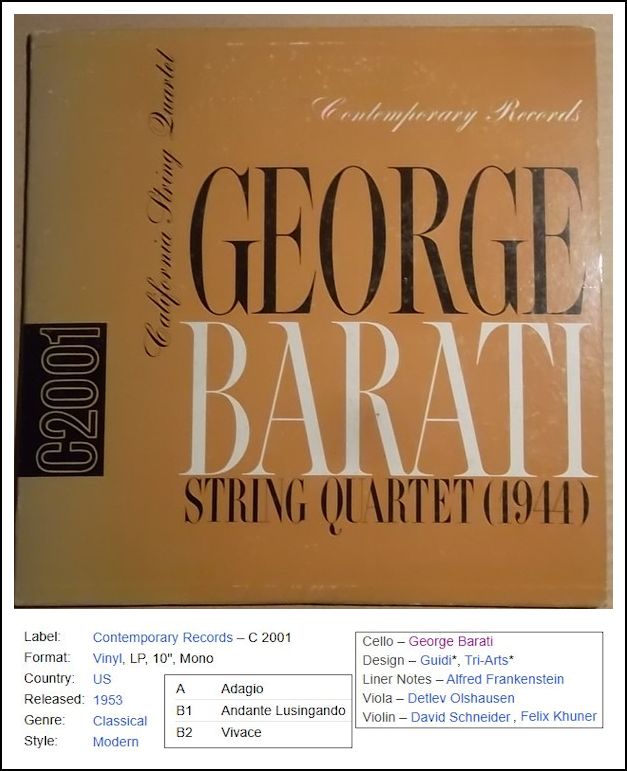
He immigrated to the United States in 1938, where he studied composition at Princeton under Roger Sessions and taught cello performance until 1943. He then relocated to California, where he was cellist with the San Francisco Symphony Orchestra (1946–50) and worked with chamber ensembles. He was also a member of the California String Quartet and founding conductor of the Barati Chamber Orchestra of San Francisco from 1948 to 1952.
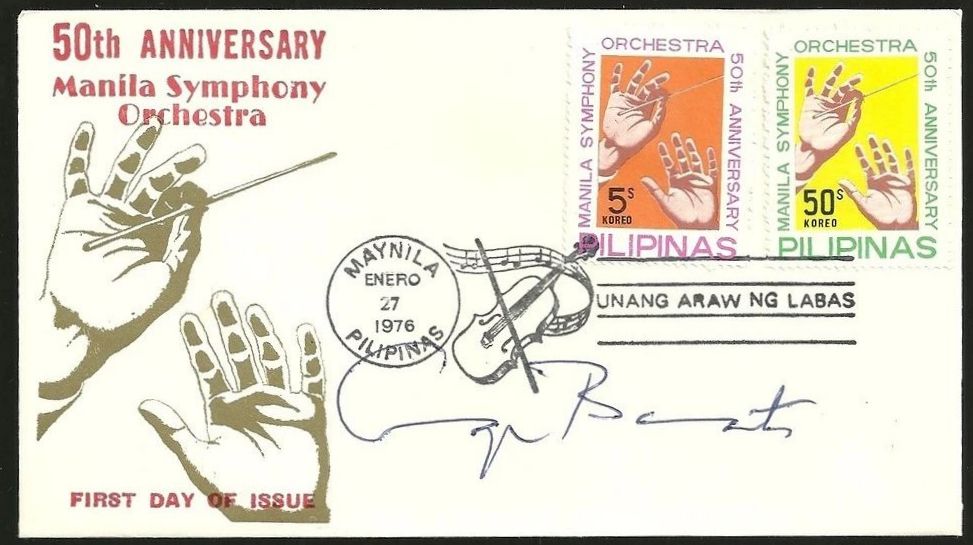

barati


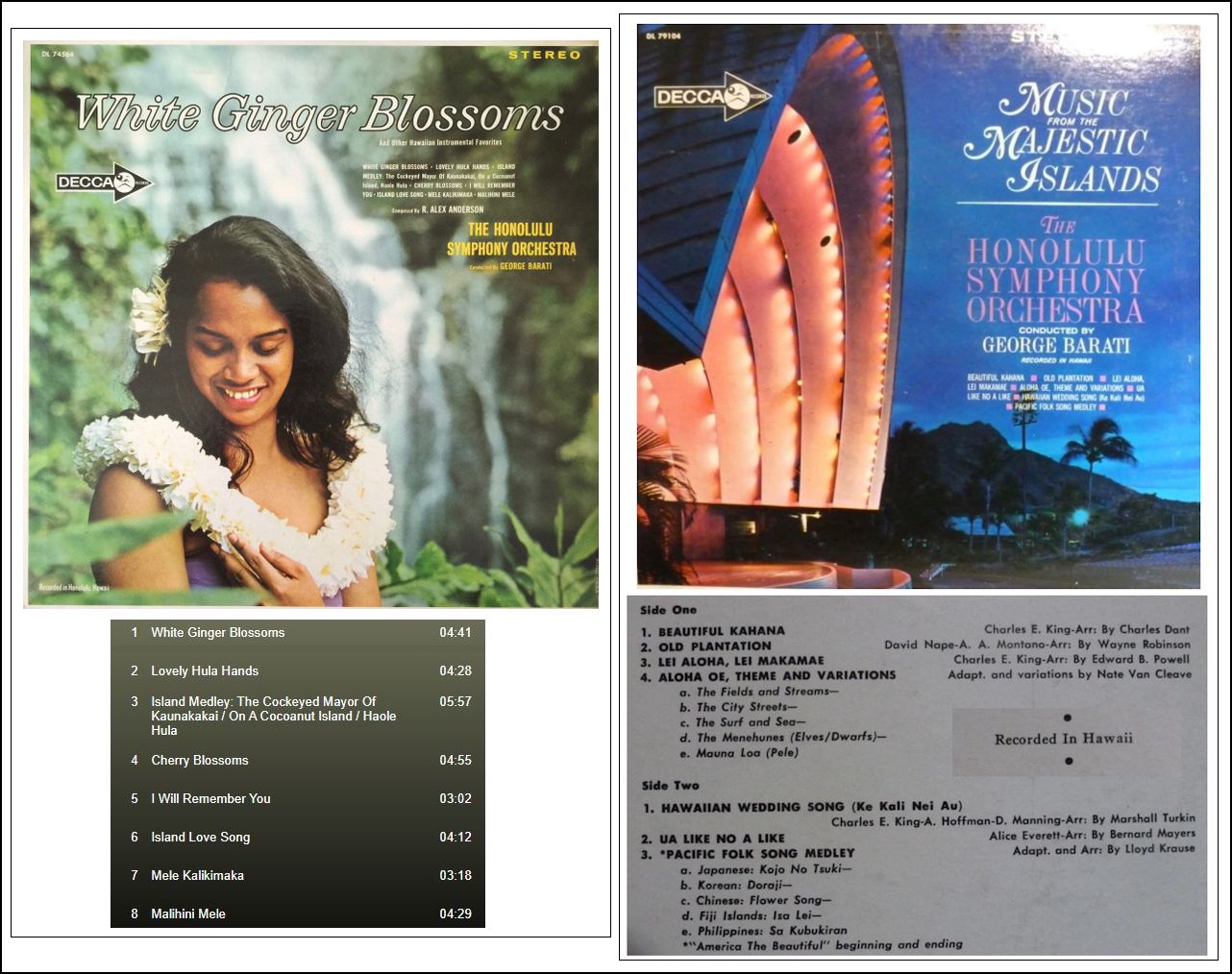
In 1950, Barati moved to Oahu, where he became the conductor of the Honolulu Symphony Orchestra, a position he held from 1950 to 1967. He also began doing international tours as a conductor in Japan, Europe, and Latin America. He returned to California in 1968 and was co-director of the Villa Montalvo Center for Art in Saratoga, California. From 1971 to 1980 he directed the Santa Cruz County Symphony Orchestra.

In addition to his conducting career, he was a juror for the Mitropoulos Competition for Conductors from 1957 to 1970 and participated as a juror for both the Metropolitan and San Francisco Opera Competitions. His honors and awards include the doctor of music, Honoris Causa, from the University of Hawai’i in 1955, a Guggenheim Fellowship in 1965-66, the Ditson Award in 1962, and the Naumberg Award for Composition in 1959.


barati
In September of 1988, George Barati was on a speaking tour of several universities, and he graciously agreed to come to my home studio for a conversation.  Portions were used a couple of times on WNIB, Classical 97, and now, in 2026, I am pleased to present the entire chat.


Bruce Duffie:   When you arrived here today, we were talking about the different purposes of croquet, so let’s change the subject around.  What is the purpose of music in society?

George Barati:   It’s a very important question, and I don’t know if I can answer it.  There are numerous purposes.  First of all, music is an art form where the sound itself is manipulated similarly to colors in painting or words in poetry or novels or plays.  Plays are very important to me.  Secondly, music is part of a festivity, part of the church and the court activities.  It had a ceremonial function back from the Greeks as far as we know, and then in between it becomes rock’n’roll just to deafen your ears so that doctors can make money on you!  [Both laugh]

BD:   Then is there a balance between all of the artistic achievement and an entertainment value?

Barati:   I wouldn’t say a balance.  I would say there is a connection of degrees where the entertainment is more important.  Take the Broadway musical.  Do you want music that is singable and uses the words, and the words can be understood?  There the whole purpose is more for direct enjoyment of the senses vis-à-vis the serious concert music, let’s say.  Artur Schnabel had a wonderful term, calling it ‘music for experience’.  That is what he thought the real purpose of concert music was, and that’s a marvelous way of saying it.

BD:   Is the experience determined by the performer, or is it determined by the listener?

Barati:   [Laughs]  Primarily, the music is written for experience.  It’s a serious subject.  It’s not to have joyrides out of, not to have direct fun or easy fun, although you might have that, too.  But essentially, it’s striving to make a statement, and it depends on the performer to what extent it’s carried out properly.  Then there is the receiving end, the audience, and it’s a marvelous question because some people don’t hear something that the next person in the concert hall may just have fantastic joy or excitement out of.

BD:   I left the third part out of the question, and that
s the composer.  How much is the composer able to make this decision?

Barati:   The composer writes music for the serious statement.  What the statement indicates should not have a literary value.  If so, it can be transferred into words.  Music is an independent subject.  People try to ask what I thought of when I composed the piece.  [Facetiously]  My stomach ached.  [Both laugh]  I don’t want people to worry about what I thought. What I wrote is what matters.  There are many degrees of this, and each piece may be different, but essentially music is a separate language.  It does not need verbal explanations.  The moment composers begin to give elaborate program notes, they have lost the raison d’être [reason do be].

BD:   I never ask composers to explain specific pieces of music, but I like to get them to speak about what goes into making music.

Barati:   What do you mean by making music?  How they write the piece?

BD:   The things that go into the whole process.  I assume that working on a composition is a long and involved process, in getting from one point to another, from the beginning to the end.

Barati:   It is a very involved process.  I’ve been asked this question when I’ve done a number of lectures at universities, and I don’t think I could answer it in just a few words.  There are so many ways.  You don’t know how music starts, and you don’t know how a composition begins.  Nobody seems to know.  We have bits of information.  I’ve got an idea about a fragment, or an interval, or a particular instrumental sound.  Beethoven took a walk in the woods, but what started it?  Why did the composer write two notes down?  Sometimes I hear an interval, and I write it down, then three notes with two intervals.  Those three notes have a certain rhythmic arrangement which suddenly makes sense, and spark a nicely turned phrase.  Then that suggests an elaboration.  For example using words, all you have to say is I really love you!  Or I can say I did love you!  This has enormous ramifications.  Don’t you love me any more?  Why did you love me, or how did you get to love me?  Then suddenly the sentence begins, and the musical development starts.  I have written many times that way.  I didn’t know this for a long time, but one of the main ways that I compose is a kind of inner expansion.  I put down just the cell of an idea, and then it suggests itself to be a bit longer, a bit slower, or an introductory phrase that may get some form, not repeated but somewhat recalled.  Maybe it will be inverted or something like that, so it begins to grow from the inside out.  People tell me that this method would be ideal for a computer, because you push the button and separate the phrases, and insert something. [Laughs]  But I haven’t taken to it yet, and I never will.

BD:   When you’re working, and you’ve got a few of these phrases bouncing around in your head, are you always in control of that pencil, or are there times when the pencil controls your hand?
barati
Barati:   The good pieces are written by the second method, when the pencil is in control of me.  I’m a slow composer.  I used to work regularly on two pieces simultaneously, but when I went to the MacDowell Colony, and I was hoping to write the Cello Concerto, I had no sketches.  I was there for about a month, and I struggled with the first note.  I really finished the Concerto in details by the time I left, and I did revise it extensively before we recorded it and before its first performance.  But the revisions were nothing more than straightening out passages.  It was not revised in the sense of rewriting or recomposing.  Just recently I wrote a harp piece, parts of which I just heard last week at Florida State University, and the harpist was very enthusiastic, so I know it’s a good piece!  I never heard it in its entirety.  I just wrote it.  When I stopped in the evening, the next day I continued just where I left off and never made an effort to revise it.  Another piece, called And the Shadows were Filled with Light was also played last week in Tallahassee.  It’s for eight instruments, and is a very elaborate piece.  I wrote it in Hawai
i on a vacation without a piano in sight anywhere, and by sheer accident I completed it at my two months stay in Bloomington at Indiana University.  Just the last eight or ten bars I finished there, so from Hawaii to Indiana within a space of no more than maybe fifteen days.  It’s not a long piece, but it’s quite elaborate with many, many notes.  I’ve never written anything more to it other than just adding here and there a couple of notes, and changed dynamics.

*     *     *     *     *

BD:   You’re both a conductor and a composer.  Are you the ideal conductor of your music?

Barati:   By no means!  In fact, I really don’t like to conduct my music.  Lately I’ve gotten used to it, but, for instance, the Chamber Concerto, which I’ve conducted a number of times, I have such trouble with it to this day.  I wrote a piece about twenty-five years ago, and I never remember which is the final version.  I’ve worked on it and resketched it, which is the opposite of what I just said.  There was also a time of separation.  The first two movements were done in San Francisco, and the last two movements were when I went to Hawai
i to conduct.  So now I always have to check back just how it goes next!

BD:   When you’re presented with a commission, how do you decide if you will accept it, or postpone it, or even decline it?

Barati:   I should say if they pay enough, but it’s not the case, no.  [Laughs]  It depends if I’m free and if I’m inclined to write that particular work.  The day before yesterday, somebody asked if I would write an organ piece for him.  I told him that Carl Weinrich, the great organist in Princeton, asked me to write a piece for him in 1939 or 1940.  He was a very close personal friend, but I never did it.  I didn’t know how.  The organ is such a complicated instrument that I didn’t trust my knowledge of how to write it down.  I wrote several pieces for harp, and I took lessons to understand the principles.  It is a very awkward instrument, but I know now how to do it.  But the organ???  I am a very bad pianist, so to transfer my bad piano playing to an organ wouldn’t be very good!  [Both laugh]

BD:   You’ve not written anything for organ at all?

Barati:   Not one note!

BD:   Was it just the technique, or was it also the registration that scared you off?

Barati:   That’s part of it.  There is the registration and pedal work, and the elaborations, and maybe the fact that the organ really isn’t truly conducive to contemporary music.  [Pauses a moment]  No I shouldn’t say that.  That’s not correct.  My kind of true contemporary music doesn’t work for the organ.  I would have to alter my basic approach to sound so as to be able to write something decent.

BD:   Are you pleased with your approach to sound?

Barati:   Yes.  I’ve learned a great deal, but pleased?  Not everything is right, and you always wonder who is going to correct the details.  I often want to go back and change a few notes.  I used to have a painter friend who hated to sell his paintings.  He saw a number of them in Berkeley, and he always appeared at the door of the house where the paintings were hung, and asked if he could just make one little change!  He’s done that for years.  Many composers do that, of course, and end up with a second version.  But I’ve learned a great deal in the last ten or fifteen years, and have gained more than enough to get that far.  So I am more pleased than not.

BD:   Is your understanding of music, and the musical line, continuing to change day by day, and month by month?

Barati:   Well, piece by piece.  Not so much time as the attitude.  My life is a very strange one, having come from Central Europe, and having completed my musical education, at least on paper, having a degree from a very good school.  I arrived in Princeton and realized from Roger Sessions that I didn’t know very much about certain aspects of analysis.  He opened my other eye, or other ear.  Then life took me around from the army to San Francisco, and eventually to Honolulu.  There’s also a very, very mysterious land of Polynesia that tourists very seldom have a chance to get a peek into.  But besides that, I began to conduct around the world.  I conducted maybe sixty or eighty concerts just in Tokyo, and for years I was very successful and much in demand as conductor in Japan.  I was also able to get an insight into the cultures of Japan and China through Taiwan, and Korea, and the Philippines.  Through the connections of some of my friends in Hawai
i, I visited wonderful museums there and elsewhere.  Then my presence in these places got into me enough that I know that music is neither Central European nor pure American nor Hawaiian, nor anything else.  It’s a very strange mixture.  So if I write a piece that wants to be more Western, it colors by itself some of the oriental sounds, or vice-versa.

BD:   Do you force this on the music, or does it just take these shapes?

Barati:   It comes.  It started with a piece I called The Dragon and the Phoenix.  The title was given by a very fine Chinese professor of Chinese literature, because I was looking for symbols that exist in both cultures, the Oriental and the Western.  She explained the meanings of those symbols, those ideas in their culture, and it was just perfect.  My wife told me in a rehearsal that it sounded oriental!  It’s Chinese and it’s Japanese.  I hadn’t caught it, so after that I began to realize that I was aware of these particular sounds.
barati
*     *     *     *     *

BD:   We spoke a moment ago about interpreting your own pieces.  How much interpretive leeway do you allow for other performers and other conductors in your music?

Barati:   That’s very tough.  I like my tempos, which I mark fairly carefully, to be observed.  At the same time, I do allow enough leeway.  I’m a conductor who accompanies great performers, and I always say they’re to play the way you want to.  I might say it could be a bit broader here, or slower there, but essentially you play the notes and I help you along.  So, when it comes to my music, the same principle prevails, and a little leeway doesn’t hurt.  A curved phrase, that you cannot write in a meter is better than a rigid phrase.  That’s just as true in Mozart, and Beethoven, and Brahms, and Debussy.  The question is where is the limit?  I always say that good taste establishes a limit.  If you go beyond good taste, then you become fussy.

BD:   Who establishes good taste?  Is it the performer, is it the public, is it history?

Barati:   We know what good taste is.  Certainly, there’s no definition possible.  You can’t say this is the absolute final step before bad taste begins.  There are shady areas.  You don’t play Mozart like Chopin, and you shouldn’t play Chopin like Mozart.  So that’s good taste.  Good taste really means a knowledge of the style, on which you superimpose your personal feeling of the moment.  Every single great performing artist knows that, and the ones who are merely mechanical are not great.  The ones who are great are seldom mechanical.

BD:   Is there a balance between the mechanical and greatness?

Barati:   There’s a balance in everything.  The most important quality of life is to find the balance.  I’ve learned from the MacNeil/Lehrer Report that there’s no right side.  Whatever you believe in, somebody says the opposite things that are proper arguments.  Maybe there is something to that!  There are many examples of how you can see the same thing two ways, and both may be right and neither may be right!  I don’t know!

BD:   Is music in any way something that can be voted on, or elected, or selected?

Barati:   What way do you mean selected?

BD:   Is the public not voting when it comes to attending concerts or buying records?

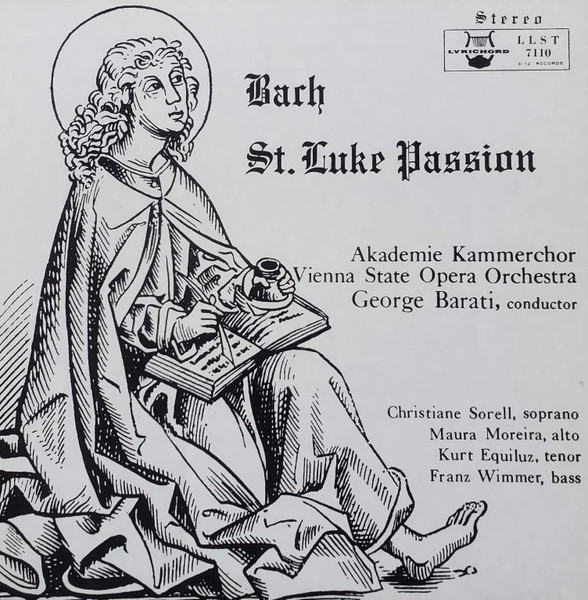
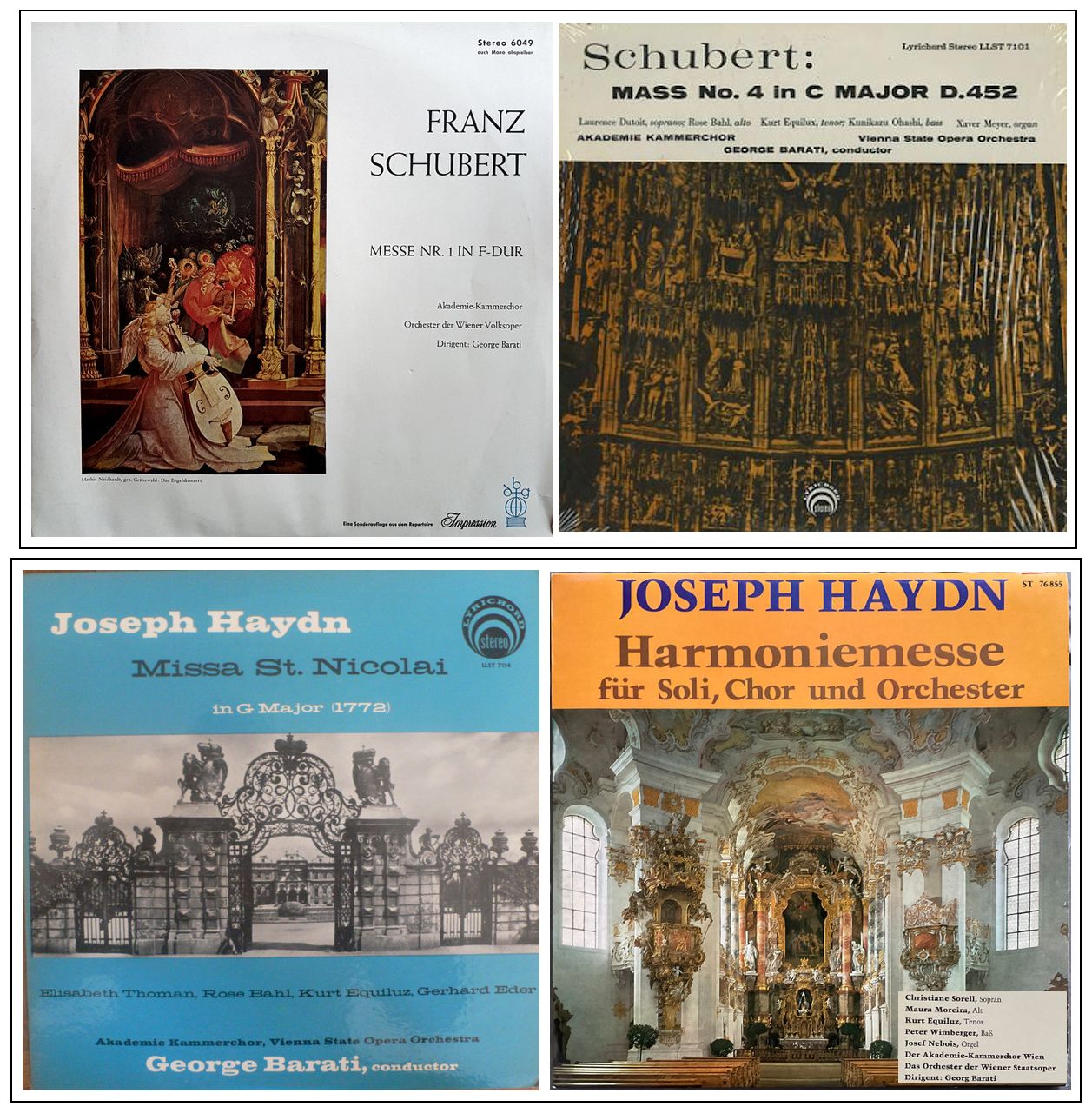
Barati:   The public shouldn’t be voting.  The public should add its information, its reaction, but it should not be final.  What the Music Director should tell the orchestra should not be final, but he or she should make the initial suggestions.  Then, many other aspects enter that picture.  But what’s the public?  It’s the same question you just raised from a different point of view.  The public means the person who happens to be there.  One might be the greatest living expert of a piece of music, and next to him or her there is somebody who is the first time in a concert.  Now who decides?  That’s the public.  The public usually leans towards the traditional.  The public looks backwards, and musicians should be looking forward.  That way, programs should be organized with something unusual in some form, though not necessarily contemporary.  How many times have you heard a Cherubini symphony?  It might be very good.  The D major one has a wonderful scherzo, for instance, yet it’s seldom played.  I recorded two Schubert Masses, two Haydn Masses [shown below], and the Bach St. Luke Passion [shown above].  It was the first time, as there were no recordings available.  Of those five pieces, at least two, maybe three, are masterpieces, maybe even four or five, I don’t know.  The public had never heard of them, so how could they ask for them?


barati

barati
BD:   Now you bring up a word that I want to expand on a little bit, and that is ‘masterpiece’.  What goes into making a piece of music a masterpiece?

Barati:   I am not the right person to tell you, since I don’t know how to write a masterpiece.  But I certainly appreciate some masterpieces, and what goes into them is tremendous talents, these Titans, such as anybody from the names I already mentioned, adding Schubert, and Schumann, and Berlioz, and Liszt, and Rossini and Verdi... the best-known fifty composers.  These are the geniuses, and sometimes
though not alwaysthey happen to write a masterpiece.  So the absolute cream, the absolute top of the heap is a very rare piece of music that is really unique.  That’s the masterpiece, and I would say the only person I know who didn’t write less than good music was Mozart.  But even in Mozart, sometimes there is an uneven or hurried pieces of music that he had to deliver.  But even that, of course, is at a very high level, even if it’s not a masterpiece.

BD:   Is there ever a case where a non-genius will stumble on the right combination and write a masterpiece almost unwittingly?

Barati:   Can you name one?  I’m sure there is but I don’t know.  It’s hard to think of one.

BD:   I’m not asking for specifics, just the possibility.

Barati:   Oh, it’s possible by all means.  After all, they say that monkeys can write now because they hit the proper keys... what’s the saying?

BD:   If you put a hundred monkeys in front of a hundred typewriters, eventually one will come up with a great story.

Barati:   Yes, that’s it!  But it’s not so easy.  [Laughs]  I’ve tried for a few years both as a monkey and as a composer!

BD:   Are you a better composer because you are also a first-rate conductor?

Barati:   [Speaking just a bit more deliberately]  I am a better composer because I’m a conductor!  [Returning to his regular tempo]  It’s terribly important to understand that the composer sees or hears music from inside out, and the conductor from outside in.  Think of an architect who designs a blueprint.  He is the composer, and then the builder who carries out the instructions is the performer, and a person who walks into that building and looks around is the audience.  Again, for me it’s a marvelous balance to see a musical picture two ways and understand.  Sometimes I know exactly what some famous composer thought when he wrote a particular note, or where his mistakes are, and so as the conductor I may be able to correct it better because I understood the functional misjudgment.  Think of Beethoven symphonies where the basses are completely covered.  They are playing the melody, the main idea, but they are covered because Beethoven didn’t quite worry about balance when the secondary line on top covers the tremendous statement being made by the basses.

BD:   You rebalance it to bring that out?

Barati:   I’m aware of it.  Without changing fortissimo to piano in the higher strings, I tell them to be a bit cautious, and to listen to the basses.  If they can hear them, they are okay.  If they don’t hear them, they’re too loud.  That’s routine in a sense, but many people don’t notice it.  You hear it on recordings too, not just performances, where it’s just a complete mess.  You don’t hear the texture.  You hear some kind of a wah-wah-wah-wah sound.

BD:   Have you basically been pleased with the performances you’ve heard of your music?

Barati:   [Sighs]  Oh, I wish I could say yes. That’s one of the curses of hearing your own music.  Whether you are in the audience or if you try to do it yourself, it’s almost never right... I shouldn’t say
right, but its not complete.  I’ve now heard about twelve pieces of mine in the last three weeks, and once in a while I say its perfect, or its wonderful for ten seconds, then another phrase starts, or a balance is missed, or there is a misunderstanding of the rhythm.  I don’t think any composer gets many true performances in his lifetime.

BD:   With the overabundance of performances of Mozart and Beethoven, are they getting great performances now, or are their spirits just as unhappy as they listen?

Barati:   It’s very hard to say.  I don’t know how to judge this kind of a thing.  It’s enormous, but I would dare to suggest that the composer would pick out a best performance possible from these large number of performances and recordings by using twenty bars from here, and twenty bars from there, and then the second movement from another, and so on.  It’s almost impossible because there are so many things which go into the making of a performance or recording.
barati
BD:   What would happen if all of a sudden you could assemble twenty bars from this performance and ten bars from that performance, and the introduction from some other performance so that you have a perfect performance?  Would there be any reason to ever have another performance?

Barati:   Oh, yes, of course!  If you’re talking about recordings, a particular recording is one thing, and your notions the next day present a different attitude, and if you go to a concert you hear this very differently.  No, it’s terribly important to allow the total freedom of selections.  Bad performances have their meaning.  They show up the good performances if nothing else!  [Both laugh]

BD:   Do the bad pieces of music, or the lesser pieces of music, show up the good pieces of music?

Barati:   Absolutely!  If you really want to have a good and well-balanced program, don’t play an all-Beethoven concert or an all-Brahms concert.  Play one Brahms or one Beethoven, and surround it with a contemporary or otherwise unknown piece.  Then that one masterpiece is going to show its enormity.  That’s one reason why we should have more contemporary music.  [Laughs]

*     *     *     *     *

BD:   We’ve been talking about some of the giants.  I’m not asking who they are, but are there giants on the same level writing today?

Barati:   Oh, I think so.  Well, I don’t know about this era, but certainly I’ve lived long enough to see the incredible growth of importance of a Bartók, and Stravinsky, and even Schoenberg, who still has some problems.  When I left Hungary in 1938, Bartók was an undesirable composer to most people.  I was in the orchestra when the first performance of his Second Piano Concerto was given.  Klemperer conducted, and the soloist was Louis Kentner, who is now very well known in England.  He’s a Hungarian-born pianist.  Bartók refused to play it, perhaps because of the orchestra, but four or five days later Klemperer went to Vienna where Bartók played the performance.  I remember distinctly how little understanding I and most of us in the orchestra had of the piece.  I could feel this enormous excitement, some kind of a phenomenal, underlying, almost exotic drive in Bartók’s music, but I didn’t understand it.  I didn’t know where it was.  I didn’t understand anything about it.  When I hear that piece now, I wonder what the great question was.  Where was the worry?  What didn’t make any sense?  It’s just one example of many.

BD:   Is this a case where you’ve now caught up to Bartók?

Barati:   I, and the period both have caught up.  The Rite of Spring is almost a pop piece for many orchestras, but back then it was unplayable when I was a cellist in the orchestra.  It was really a problem, and was really difficult musically speaking.  It’s the same with the late Beethoven quartets.  I played a great deal of string quartets as a young boy.  I would  play with the older people in my hometown in Hungary.  Later, I played with Albert Einstein.  He played string quartets in Princeton for about three years.  Here was this great giant of a mathematician, a great genius, and he refused to play anything but Schubert, Mozart, Haydn, and early Beethoven
the Op. 18, but not even the middle Beethoven.  I would ask to play Op. 59, but he said it was too complex, too difficult!  So that was the going value.  Late Beethoven was out, and Brahms was too complex.  This was in my lifetime, which was not that many years ago!  [Both laugh]  The period changes continuously.  There is continuous movement forward, and we eliminate differences.  Think of the differences between Brahms and Verdi, or Brahms and Wagner in their own times, just a hundred years ago, and today people say Brahms and Verdi and Wagner are about the same kind of music.  We love them all!

BD:   Should we let it all meld together into a style, or should we continue to pull it apart and keep them separate?

Barati:   They should light up the differences.  After all Brahms is not Verdi, and Brahms is not Wagner, and vice-versa.  It’s up to us performers to be sure that the style is retained.  I’ve heard that Bruno Walter’s Brahms is too slow.  I used to play Brahms symphonies under him, which he played so incredibly perfectly.  It was slow because Brahms is supposed to be played slowly.  It’s supposed to be played in the tempo where the two against three rhythms become really alive.  If you play them fast, they get into a mush.  Toscanini played them slowly, too, so they had their reasons.
barati
BD:   Should the movement of society over years be taken into account when you’re interpreting something that was written long ago?

Barati:   That’s very hard to say.  I’ve been thinking about that in different contexts.  Take the influx of different people into this country.  What will happen to what we call classical music?  Will the Vietnamese and the Koreans and the people from all sorts of South Asian countries, as well as the Mexicans alter the understanding of what Europe and America have achieved in so-called classical music?  I’m sure they will.  Partly they will learn the style, and partly they will add their own values.  There’s probably no way to retain what was absolutely solid.  There are two British conductors, whom I won’t name, who insist that the only way to play Beethoven symphonies is with the original instruments.  Well, we don’t live in the time of the original instruments!  We live 200 years later, and we have concerts halls which are three or four or five times the size of those halls where Beethoven performed.  And, we are different people.  We practically have different nervous systems.  We live a faster life.  We have less time.

BD:   [Gently protesting]  But shouldn’t we have these 
‘original instrument performances available either to compare or just to enjoy occasionally?

Barati:   We can have them there the same way as I always tell young composers.  They have to learn counterpoint and harmony and everything else that was taught so they can throw it away.  Sure, it’s very important, but how do you know it was played that way in Beethoven’s time?  There’s no proof whatsoever that they are right, except that these instruments are closer to those old instruments.

BD:   Does this build a new problem into the next generation, because they will be able to hear how the first performance of a work by George Barati was given by listening to the tape or the record?

Barati:   Yes, but that’s hardly perfect either.  I would be the first to say that my performance wasn’t ideal, so flexibility is the word.  The moment we say we cannot bear so and so’s performance, we commit a mistake that is really unforgivable.  I know this because I do it all the time!  [Laughs]  I hate certain performances, but it’s essential to realize that nobody’s a hundred percent right.  We all add something.  I’ve done some very good performances in my life that I can be proud of, and others which make me very embarrassed.  Conductors who think they are the living God walking on Earth are by definition wrong!  Then, maybe by definition I was wrong because I made the statement!  [Both roar with laughter]

*     *     *     *     *

BD:   You conducted a number of operas.  Tell me the joys and sorrows of conducting opera.

Barati:   I love conducting opera.  I founded the Honolulu Opera as part of the Honolulu Symphony Orchestra, and I have guest-conducted opera.  It’s really exciting.  I’ve only conducted certain kinds of operas.  By sheer coincidence only some Mozart, Puccini, Verdi, and never Wagner and never contemporary works.  So my experience is rather limited.  But I love the Puccini, and whatever else I conducted, but the tedium for me sets in when this enormous apparatus has to be controlled.  In a major opera house, where they all know everything beautifully, it’s much easier.  But when a makeshift situation comes in, with only one or two rehearsals, you have only time to talk about staging.  Once I heard Wozzeck at the Vienna Opera, and it went off without any kind of problem.  This was in April, and afterwards I sat down with some of the Vienna Philharmonic people, and said they must have rehearsed three or four times that week!  They laughed at me, and said that the last rehearsals and performances were in October!  

BD:   You’ve written an opera?

Barati:   I’ve written one opera, Noelani with James Mitchener, but it’s not really complete.  I feel guilty about this subject because I spent about two years on it.  I studied and spent a year at the Bishop Museum in Hawai
i to learn the Hawaiian musical lore, and Jim and I worked together on a very interesting scenario.  Then he had to leave.  It was when he was going to Spain to write his now famous book Iberia.  So, the libretto was written by Reuel Denney, who is also a very well-known author of The Lonely Crowd with David Riesman.  He’s a sociologist who teaches American Studies at Hawaii, and a very good poet.  He and my wife worked on the libretto, which is very elaborate.  It’s marvelous, and Jim’s ideas were carried out to the last point.  But it was my first experience in opera, and I tried to do something that you really couldn’t do, which is retain the naivety of the Hawaiian atmosphere.  I realized that you have to add some of the Western assets, such as melodies or arias or some form of pulling it together.  I have included a couple of arias, and just now I’ve heard for the first time a very important moment in the opera, ‘Noelani’s Soliloquy’, and it’s much better this way.  I rethought the whole piece, but I would have to rewrite the whole opera.  That would take another five years, so I probably will never do it... which is sad.

BD:   Is it something you should let someone else work on, or should it not be done?

Barati:   If an opera company or opera group would do a couple of scenes, and ask me to revise two or three scenes, or one act, and guarantee that the copying would be done
that’s very expensive, as you knowthen I might want to do it.  But just to spend a year and do it blindly, and again not hear it in its completeness, I don’t think I want to do it.  So, I’m willing and able, but I have to be asked to do it.
barati
BD:   Are all the pieces you write on commission?

Barati:   Yes, most of them these days.  The commissions might bring a very small amount of money, or sometimes they are just a request, but everything I’ve written has been performed.  So I’ve cassettes of them.

BD:   I asked if you were pleased with the performances.  Are you pleased with the recordings that have been made, because those have a certain amount of universality?

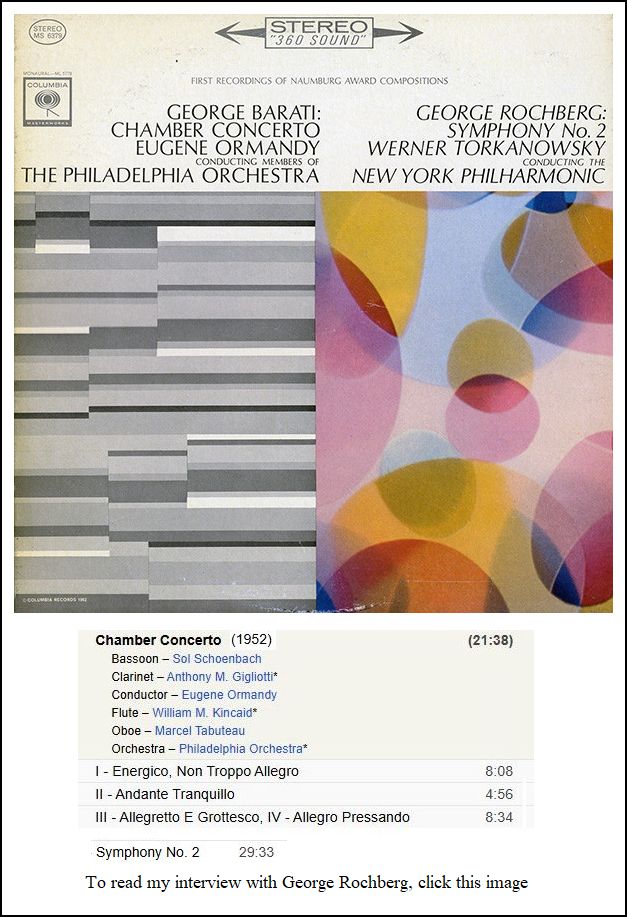
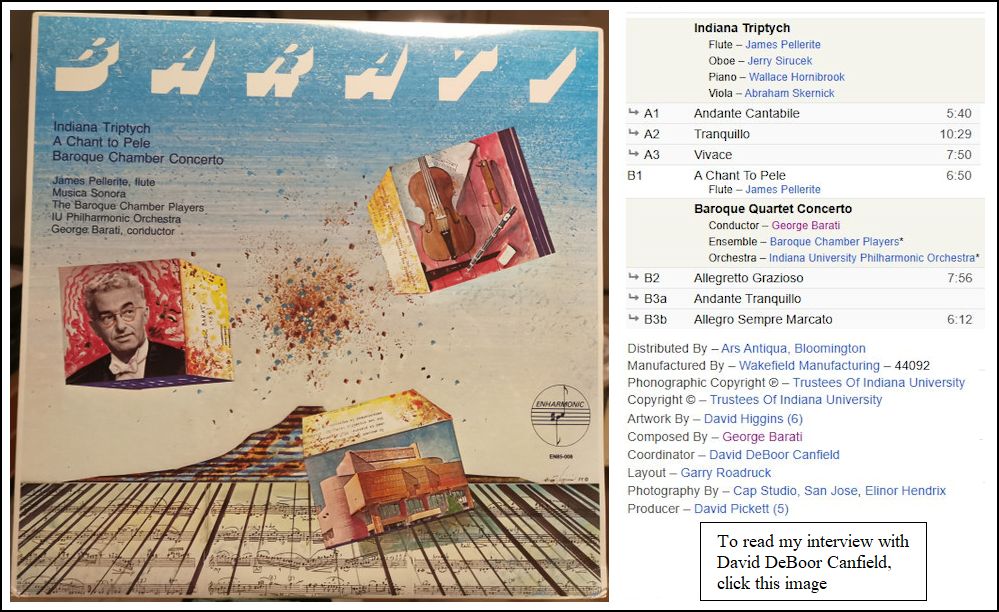
Barati:   No recording of my music is in any sense perfect.  Eugene Ormandy recorded the Chamber Concerto without even my knowledge that he was going to do it!  [LP issue is shown at left]  I was informed that it had been recorded, and Ormandy took such fast tempos here and there, and such slow tempos here and there
which he was famous forthat he distorted the idea.  I must say, though, that it works very well.  You get used to it, but it wasn’t what I wrote.

BD:   But it works.  Is that not the bottom line?

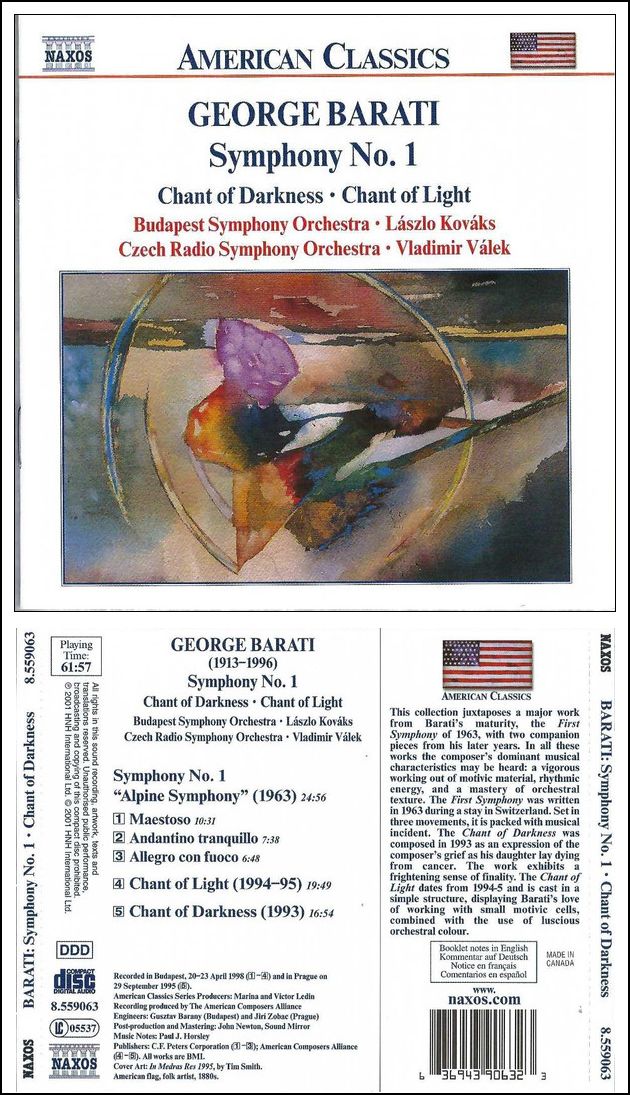
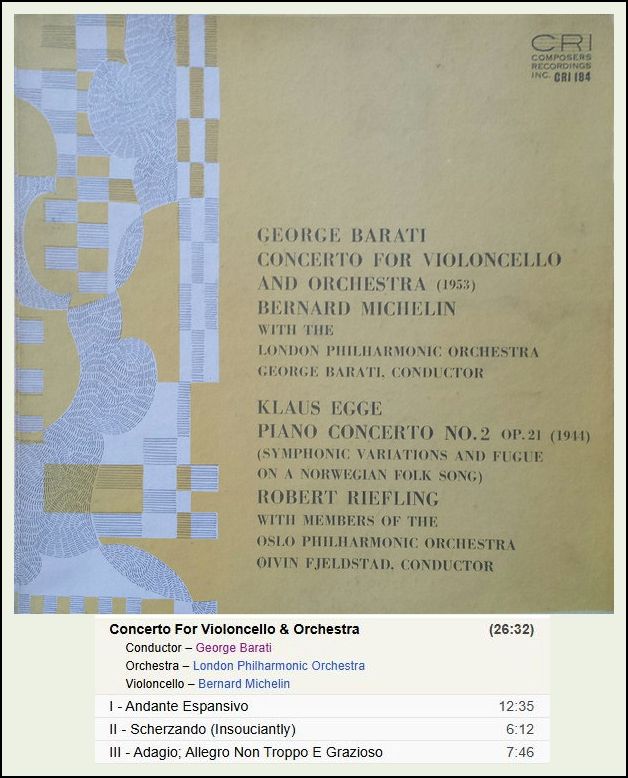
Barati:   It works because he is a very good conductor.  As I said, there’s no perfect final statement.  That’s what I really care to eventually have.  It’s a good example of it, even if he was wrong in some places. I may have been wrong in some places!  In the Cello Concerto, a very funny thing happened.  I met with the soloist, Bernard Michelin, in London for a rehearsal the day before the recording, and he had misread the tempo indication of the middle movement, which is a slow scherzo.  I had very carefully notated it, and gave the metronome marking, but he played it much faster.  So we spent about an hour in the late afternoon slowing him down.  He understood it, but once in a while on the recording he runs ahead.  It’s like a horse you try to pull back, and it gets away from you a little bit.  It was a beautiful performance, but certainly not perfect from that point of view.  [LP issue is shown below-right]

BD:   But basically, these discs are pleasing to you?

Barati:   Basically.

BD:   They’re not travesties?

Barati:   No, no, no, heavens, no.  They are my statements.  It’s my music and I stand by it.  I would love to have a new recording of the
Chamber Concerto, a modern CD version, and maybe sometime somebody will play it.  But no, they’re fine, sure.

*     *     *     *     *

BD:   Is composing fun?

Barati:   Composing is wonderful.  I have a very strange system... I’ve a beautiful house in the Redwoods in California.  I’m a peasant at heart, and I wake up very early.  I’m up at 5:30 or 6 AM, and I make strong coffee for myself... just one cup!  [Both laugh]  I used to have much more, and by the time I’ve sat down, ideas are moving in my mind.  Sometimes I wake up with something
nothing crucial, nothing definite, just kind of a buzzing in my head.  I start putting down something, and almost every time it gets going into something.  I may throw it away, but essentially it’s a point of departure.  I have a couple of hours of a wonderful time before breakfast.  Sometimes I continue in the afternoon, sometimes I don’t.  Once in a while when it’s going very well, or if I have an urgency of some sort, like a deadline, I work on original music.  So I am writing new music more than just two or three hours.  Basically, I’m very much a believer of what Thomas Mann used to say.  He never wrote more than one complete page a day.  He may have written that one page thirty times in the course of the day, but in the evening he had one complete page.  If you think of it in terms of 365 complete pages a year, that’s a novel a year, and I think it’s very good to do it that way.  Don’t push yourself.

BD:   When you’re working on a piece, and you
re tinkering with it, how do you know when you’ve finished?

Barati:   That’s really a problem.  I wish you hadn’t asked that!  [Both laugh]  It’s difficult.  That’s where the instinctive genius is so important.  Once in a while, this would be the right way to do it, but then I wonder, and I question, and I want to go back and maybe rethink it.  Then, at one point something happens.  Either it says this is it, or I say this is it, or I leave it open and maybe get back to it a couple of months later.  There are many possibilities.  It’s very hard.  Sometimes, of course, a piece kind of winds itself off, and you get to it.  Shorter pieces are easier to do that.  In a major composition, there is an inner balance, an inner proportion that is very important.  I very much believe in asymmetry.  I love asymmetrical things, and I get very bored very easily with symmetry.  So that’s a way of getting to it when I’ve gotten to that last moment where it has a really substantial emphasis of some sort, and that’s fine with me.

BD:   What advice do you have for young composers coming along?

Barati:   Keep doing it! What else can you do?  Composition is a deadly problem because performances are so rare, but if you think of what happens today compared to what happened fifty years ago when I came to this country, it’s fantastic.  It’s remarkable!  The assistance, the available commissions and orchestras, the willingness of performers.  Money is available.  Every year I go to the BMI Young People’s Awards, and two dozen composers get commissions.  Sometimes I wonder about the older ones.  I would be happy to accept a BMI commission, but writing, trying it out, hearing it, not accepting that anything I write is good or final, but just pushing a little bit is what one should do.

BD:   What advice do you have for conductors?

Barati:   Go away! [Both have a huge laugh]  No, I’m kidding!  My advice for conductors is that they should take it more seriously.  They think conducting is the big, huge gesture to the audience.  It is not the dance.  That’s the least important thing.  You watch very well-known conductors who don’t do music right, and I would love to take issue.  Sometimes I have, but that doesn’t pay, because you can’t convince a person who is so conceited.  In Hawai
i I became a Big Guy, a Big Deal, and I used to say that I had to get away from Hawaii twice a year to get down to size.  Otherwise, you begin to believe your own PR after a while.  That’s what they all do...  [Pauses a moment]  Not all, but some!
barati
BD:   What advice to you have for audiences?

Barati:   Please listen to my music! [Both laugh]  Please don’t be impatient with an unusual sound!  Please think of the fact that you like to use a new computer that has one more click to it because it helps you some.  People always accept the modern instruments and equipment, but never think about a modern thought that produces the equipment, which is modern science.  At least try!  In its pure form, modern art requires the same attention.  Here in Chicago you have these wonderful pieces of sculpture.  It’s very important to have patience with a new thing in every field of activity.


BD:   What is next on your calendar?

Barati:   I am writing music.  When I get home, which will be tomorrow, I have to finalize the harp piece.  I promised two harpists that I would send them a finished piece.  One is set to perform it this calendar year, and there are just a few months left!  [Remember, this conversation was recorded at the end of September of 1988.
I like the piece, and I’m very pleased with it.  Then I’m going to make a final copy of the Noelani aria with some adjustments, having heard the piece.  I also have a very interesting request from a marvelous professor of mathematics from St. John’s University, who writes good poetry.  He wrote a beautiful little poem, about eighteen lines, finalizing and completing the twenty-fourth book of The Iliad, that he says is very incomplete.  It has to be explained a little bit, and so we are collaborating on a piece for soprano with a small group of maybe five or six instruments, and maybe a speaking choir.  It’s going to be a ten- or fifteen-minute piece.  That’s my official assignment right now, but I’m going to do other things in between.

BD:   Are you optimistic about the future of music?

Barati:   Oh, I think so.  Music is here to stay.  Orchestras may not be here to stay.  There is going to be a real difficult problem for some orchestras in the next ten years, but if we get wiser after budgets and expenditures, we can reduce the problem.  It’s terrible.  It’s always the big deal managers and the big deal conductors who want more and more pay, and a larger and larger orchestra.  For what???  You don’t need twenty-six first violins.  Maybe you only need fourteen in some places.

BD:   Save the twenty-six for a festival?

Barati:   For certain moments, certain orchestras, and certain situations.  Music-making should not be a question of who has the biggest orchestra in the world, and who can write for the most instruments.

BD:   Have you done anything with electronics?

Barati:   No, I haven’t.  I never tried, and I don’t think I ever will.  I would be surprised if I were to.  It’s not my baby!

BD:   Now you’ve passed your seventy-fifth birthday.  What is perhaps the most surprising or interesting thing that you’ve noted in that time?

Barati:   Apart from the fact that I’m still here, the growth of interest is a most unique thing.  When I came to America, there was not much interest in music, and very little knowledge.  People went to the concert, but they didn’t know why.  They were dragged in.  Men were hardly to be seen, and orchestras were soloists.  The circus element prevailed.  So, I am pleased with the growth in interest, and the realization that life is not just nine to five.  

BD:   You’ve conducted all over the world.  Is music really the universal language, as they say?

Barati:   With some built-in limitations, yes.  Many, many years ago, I conducted an absolutely ghastly orchestra in Taiwan.  I did the Mendelssohn Italian Symphony, and I didn’t know what they were playing!  [Laughs]  When I first went to Japan, there were some discrepancies of understanding, but they learned extremely well and remarkably fast.  I remember that the clarinets, trombones, and percussionists were mostly Germans and Americans.  They were in Tokyo, where there are seven orchestras.  I’ve conducted six of them, but each year I came back they were suddenly better, and eventually remarkably good.  They understand just as much as anybody else, though maybe the jazz which occasionally seeps into classical music has problems.  The real bouncy rhythms are not understood in some places.  Otherwise, if not  universal, music is much more universal than any of the spoken-word languages.  So we are doing all right.  We’re helping each other!

BD:   Thank you for being a musician.

Barati:   Thank you for talking to me about it.  You’re fantastic.


barati


barati


© 1988 Bruce Duffie

This conversation was recorded in Chicago on September 26, 1988.  Portions were broadcast on WNIB the following year, and again in 1993.  This transcription was made in 2026, and posted on this website at that time.  My thanks to British soprano Una Barry for her help in preparing this website presentation.

To see a full list (with links) of interviews which have been transcribed and posted on this website, click here.  To read my thoughts on editing these interviews for print, as well as a few other interesting observations, click here.

*     *     *     *     *

Award - winning broadcaster Bruce Duffie was with WNIB, Classical 97 in Chicago from 1975 until its final moment as a classical station in February of 2001.  His interviews have also appeared in various magazines and journals since 1980, and he continued his broadcast series on WNUR-FM, as well as on Contemporary Classical Internet Radio.

You are invited to visit his website for more information about his work, including selected transcripts of other interviews, plus a full list of his guests.  He would also like to call your attention to the photos and information about his grandfather, who was a pioneer in the automotive field more than a century ago.  You may also send him E-Mail with comments, questions and suggestions.