Pianist Ruth Laredo
A Conversation with Bruce Duffie
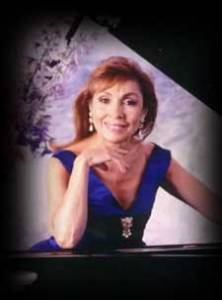
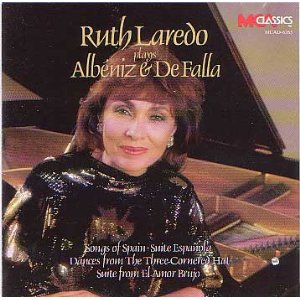
Ruth Meckler Laredo was born
on November 20, 1937 in Detroit, Michigan. Following early piano studies
with her mother, she continued her training with Rudolf Serkin at the Curtis
Institute of Music in Philadelphia. Laredo graduated in 1960 with a Bachelor
of Music degree. The same year she married Bolivian violinist Jaime Laredo.
[The couple was divorced in 1974.] During the next several years both musicians
made numerous joint appearances throughout the world. In 1962 Ruth Laredo
made her debut in New York with the American Symphony Orchestra conducted
by Leopold Stokowski. Since then she has played all over the United States
with many orchestras including the National Symphony, Boston Symphony, Cleveland
Orchestra and the Indianapolis Symphony. She has also played in many foreign
countries, giving tours in Japan, Holland, and Germany, among others. Ruth
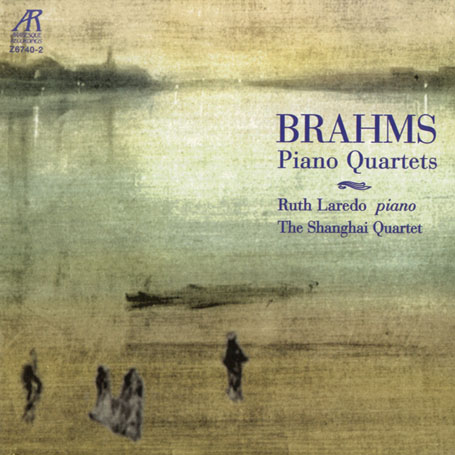
Laredo has been a regular participant at the Marlboro Festival in Vermont,
collaborating with numerous colleagues in virtually all major chamber works
involving the piano.
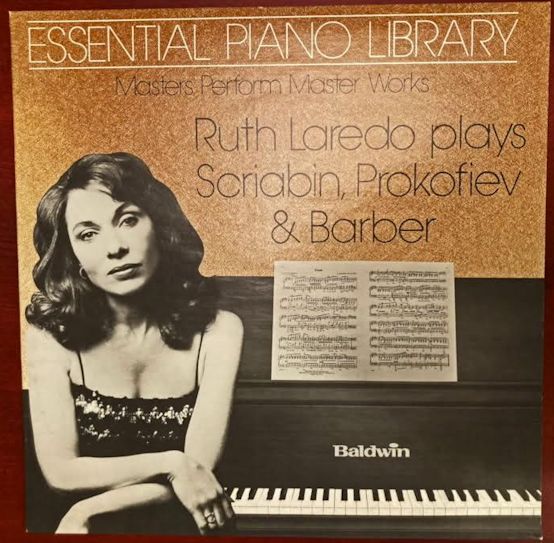
Laredo has been particularly identified with the music of Sergei Rachmaninoff
and Alexander Scriabin. She has recorded the complete solo piano works of
Rachmaninoff for Columbia/CBS/Sony. As a result of these recordings, she
was commissioned by C. F. Peters to edit an edition of the twenty-four Rachmaninoff
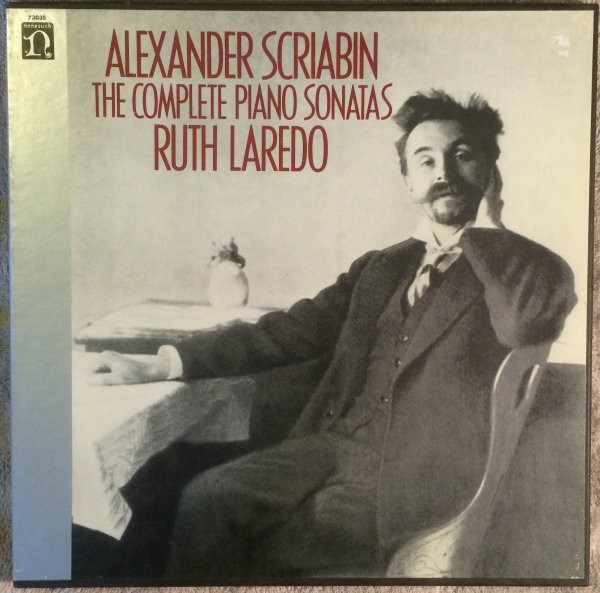
Preludes. She has also earned a reputation as a specialist in Scriabin, having
recorded all ten of his sonatas (for Connoisseur Society) along with other
smaller works, and including this music frequently on her recital programs.
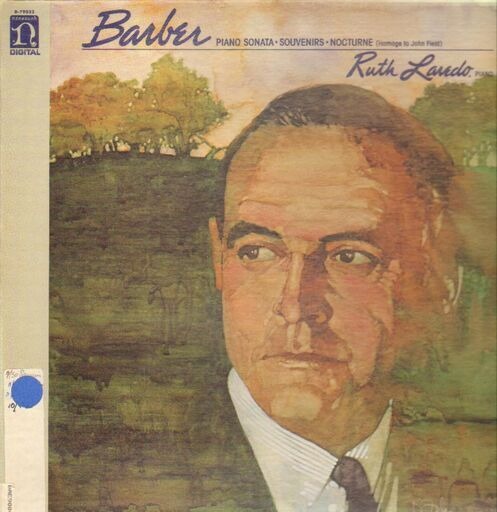
In addition, Ms. Laredo has made recordings of works by Ravel, Debussy,
Barber, Chopin, Beethoven, Tchaikovsky and many other composers.
Laredo won several awards throughout her career including a Grammy nomination,
and was chosen as one of five pianists to perform at Carnegie Hall for its
90th anniversary celebration.
Laredo died on May 25, 2005.
|
Ruth Laredo was in Chicago in June of 1993 for a concert with the Grant
Park Orchestra, the outdoor summer festival on the lakefront. We met
for the interview in her hotel room, and the first thing I noticed was an
electronic keyboard, so that is where we began our chat . . . . .
Bruce Duffie:
You have an electronic keyboard in your room, and my first reaction was
that it might not be the same kind of touch as a grand piano. You
said that you were very pleased with it, so tell me about using the electronic
keyboard.
Ruth Laredo:
What I have in my hotel room today is something made by Yamaha called the
Clavinova. One of the many wonderful features of this little instrument
is that it replicates the feel and sound of a piano as close as I’ve ever
heard in any instrument that isn’t actually a piano. I think the technology
has enormously improved in the past year or so. Even the Yamaha people
say so. One of the nicest things about it is that if anyone complains
about hearing the piano next door, I just plug in my little earphones and
it’s completely silent. You can also make it sound like a harpsichord
or an organ, or any number of other instruments, but I’m really not interested
in anything but the piano.
BD:
If you changed it to the harpsichord sound, could you also change it to
the harpsichord touch?
Laredo: I’ll
try it. I don’t really know. I didn’t even experiment with it,
but it’s really a remarkable little piece of equipment. Plus it’s small,
and you never have to have it tuned. I’ve used it quite a few times
because a pianist in a hotel room without a piano is really an unhappy creature!
[Both laugh] This is something that’s just come to my attention, actually,
within the last year, and I’m really very happy that I can make use of such
a little gadget.
BD: I would
think that in big cities and even in smaller cities, you can probably arrange
to get one of these from a store.
Laredo: Yes,
much more easily than if you ask somebody to allow a piano in the hotel room.
Every hotel automatically assumes that you mean a nine-foot grand and that
it will make an enormous amount of noise, and all the other guests will
be horrified. This is small. It doesn’t take up very much space.
It’s like a little desk, and it doesn’t make a sound if you don’t
need it to.
BD: Would you
be happy with, say, a five-foot Steinway, rather than a nine-foot Steinway
to practice?
Laredo: I don’t
know. I don’t need a five-foot Steinway, I just need an eighty-eight
key keyboard when I’m practicing. I have plenty of time on a large
piano wherever else I go. It doesn’t matter.
BD: Have you
experimented with adjusting the touch or anything else on this gadget?
Laredo: You
can! There are three different levels of sound
— bright, mellow or soft.
BD: That’s
the sound rather than the touch. I’m asking about the feel of the
keys, the response to your fingers.
Laredo: Oh,
I just like it! It feels like a piano. It feels like a good piano
to me. It’s very even. It’s terrific!
BD: That’s
good that it feels like a good
piano, not just a piano.
Laredo: No,
it feels like a good piano! I enjoyed it, practicing today, really.
BD: When you
are traveling all over the world, I assume you don’t take your piano with
you.
Laredo: Heavens,
no! [Laughs]
BD: So you
have to get used to each piano. How long does it take you to adjust
to each new piano that you have on the various stages?
Laredo: As
fast as possible.
BD: Are you
talking two minutes, or two hours?
Laredo: Just
a couple of minutes, never two hours, no. You can really spot what
goes on very quickly. You usually don’t have that much time on a piano
before a concert unless you’re very, very lucky. But what good does
it do if you have more time? You just dislike it more, if it’s not a
good piano! [Both laugh] So I just learned how to get used to
whatever there is, and just go with it and do my best.
BD: Are most
of the pianos you encounter good pianos, or not good pianos?
Laredo: It
varies from one city to another. It’s very hard to anticipate what
you will find. One really doesn’t know, and everybody’s taste in pianos
is different. I know what I like, and sometimes I find one!
BD: Can you
describe what you like, or is it just that you know it when you feel it?
Laredo: I know
it when I feel it. I don’t think it’s possible to really explain it
in words. A certain kind of sound is part of what I like and a certain
touch is what I like, but I don’t know how to describe those things.
BD: So you
couldn’t tell the technician to do this or do that?
Laredo: No,
I don’t like to talk to technicians. They ought to know what I want
without describing it, and they usually do. There’s a marvelous technician
who was at the Chicago Musical College this morning, Mr. Fujiwara, and he
knows exactly what I want. He fixed both of the pianos for the master
class this morning, and I didn’t have to say a word. It was just beautiful.
BD: I
wonder how much is he adjusting to you, and how much are you adjusting to
each piano?
Laredo: He
doesn’t have to adjust to me. What’s good is what I like, that’s all.
It’s clear, isn’t it! [Laughs]
BD: Perfectly
clear!
Laredo: I’m
not interested in the technology of it. Mr. Fujiwara knows what’s good,
and I like what pianos he has fixed for me here in Chicago year after year.
BD: You’re
teaching some master classes. Should young pianists coming along know
anything about the technique of adjusting and maintaining the instrument
itself?
Laredo: If
they want to be piano tuners as well as pianists?
BD: I mean
shouldn’t they know about fiddling with it, or know what is right or wrong
more than just the interpretation of Chopin and Rachmaninoff?
Laredo: I suppose
so. Sure, it’s good to know as much as you can, but I don’t really
enjoy having to know those things. I have taken courses at various
times on the inside of pianos, and it just leaves me cold. I have to
know other things much more important to me, and I think that people who
are piano technicians ought to know their trade just as I know mine.
I don’t really want to know theirs. It doesn’t appeal to me.
BD: So it’s
sort of like driving a car — you don’t have to tinker
with the engine to drive a car well.
Laredo: I’m
not mechanically-minded, and I’m sure there are a lot of people who know
plenty about car mechanics. Piano technicians really need to know those
things, and we should be able to depend upon them. [See my Interview with Franz Mohr,
Chief Concert Technician with Steinway & Sons, 1968-1992.] But
of course there are other pianists who like to tinker around with pianos.
I don’t. I like to play them.
BD: You said
there are other things that you have to know. What do you have to
know to be a pianist?
Laredo: I couldn’t
tell you on the radio! [Both laugh]
BD: Well then,
what kind of suggestions do you have for the younger pianists coming along
now? As you are doing the master classes, what kinds of things do you
put in their ear?
Laredo: Becoming
a musician is a lifelong process, and you never really learn enough no matter
how long you live or how well you play. Having a background in music
is something that has to start very early, and has to do with the luck of
a child — what family he is born into, what concerts
and what events he’s taken to as a very young person, and what is available
on records or in the family itself. One of the tragedies of our life
in America today is that public school music has all but been eliminated.
I think that’s one of the most serious problems we face today. It’s
going to put a lot of people out of business, and it’s far more serious
than just business. It has to do with the cultural life of our country.
If the kids don’t hear music and appreciate music and know something about
music at a very young age, there’s no point to all the things that we are
trying to do because it’s just going to die away. The audiences are
getting older and older, and the young kids must know something about it.
I was at a school today here in Chicago, and we had eight hundred elementary-aged
kids at a concert that I played. It’s an outreach program that’s sponsored
by the Grant Park Festival, and it was really marvelous because the Principal
of the school — Dr. Lawson, who I feel is some kind
of a missionary — feels as strongly as I do that we’ve
got to get the kids to be interested in music right away, as fast as possible.
There were kindergarteners there at a full-length concert, and they asked
questions later. They learn how to attend concerts when they’re small,
and that’s the way it should be! I don’t think it’s funded by the government.
It’s because this very enlightened man is interested enough to make
sure that this happens, and I’m really very thrilled by such people.
BD: So hopefully
these eight hundred kids will remember that nice lady who came and played
piano one day?
Laredo: I’ll
remember those kids, too! They have lots of things going on at that
school. They make a point of having musicians and other cultural events
as much as possible. They also have a little piano lab with several
little keyboards. They’re not even eighty-eight keys. But that’s a
new project they have, and it’s fun for the kids to put on earphones and
play on their little keyboards. Evidently their reading scores are
going up because they’ve learned how to apply themselves so diligently to
the musical problems they face. I think it’s a very beautiful idea
and I hope it lasts. I hope it spreads all over.
BD: Maybe you’ve
hit on something we could talk to school boards about — increase
the music and the reading scores will go up.
Laredo: Yes,
there’s a connection between having discipline in one area and another.
I believe it.
BD: But
doesn’t there have to be a musical discipline all
to itself, really?
Laredo: Well,
discipline is discipline. If you learn how to play the piano, you apply yourself
otherwise much more easily. It has to do with living, it really does.
* *
* * *
BD: When
you come to a concert and play a piece for the first time in a year or
two, do you approach it fresh with a clean score?
Laredo: You
never really start over again if it’s been in your mind before, but it takes
on a new freshness because you’re not the same person you were when you started
it. You can’t really start it again at grade one. You start
somewhere else but you have the past to draw upon. It’s always changing.
Nothing really stays the same if you’re a musician.
BD: So then
every concert grows and builds for you?
Laredo: One
hopes so, sure!
BD: This brings
us to the question of recordings. Once you’ve made the record, it’s
embedded in plastic and it’s exactly the same every time.
Laredo: Every
time. Yes, I know.
BD: You say
that with a little trepidation.
Laredo: It’s
just a fact of life. Of course, everybody who makes a record always
says this. We always have to do it at that time, and we listen to it
and sometimes feel, “Oh, if only we had done it this way or that way.”
But there’s no help for that. We just have to do it. I also
think that there are benefits from listening to recordings and learning from
what you’ve done, or learning from what other people have done, but always
knowing there’s another way to do it. That’s not the only way.
A lot of people listen to records and feel that since it sounds so “perfect,”
it means that it has been sanitized. There are no obvious errors, but
does that mean the standards go up in performance? I don’t really know
if that’s so. I think it means that people learn to expect no mistakes,
and that’s an inhuman expectation. As one recording producer once said
to me, “It’s like if you leave a wonderful take which has some note-errors
in a recording, it’s like seeing a piece of dirt on somebody’s face.
You just see it every time, and you learn to expect it every time you listen
to the record. We just have to clean everything up.” I agree,
but you also have to understand when you go to a concert that people make
mistakes. People are human, and when you play a concert in public it
should not have to be the way it sounds on the record. But I think
the expectation is there for it to be.
BD: So the
expectation has changed?
Laredo: I’m
sure, because of the recordings. It’s changed the way people listen
to others who play in public.
BD: Is there
no way to make a recording straight through three or four times, and just
take the sections which are not perfect but they still have the sweep of
the movement?
Laredo: Hmm.
Well, theoretically, I suppose so, but I don’t know if that’s really what
can happen. It’s an art and a science combined.
BD: Do you
play differently when you are facing a microphone instead of an audience?
Laredo: You’re
damn right I do. Sure.
BD: How so?
Laredo: In
public it’s once and it’s over, assuming there aren’t microphones hiding
all over the place. That’s usually what happens nowadays. There’s
almost no such thing as a concert without a microphone, and I deeply dislike
this practice, I must tell you. I really, really would like for a
concert to be a concert and a recording to be a recording, because I think
they’re two different sciences or arts. But assuming there are no
microphones at a concert, it’s once in a lifetime. It’s an event with
a beginning and an end, and one is more — I don’t know — more
daring, perhaps. You just go for the moment and you do what you feel,
and if a note gets lost here and there it doesn’t matter because the most
important thing is the performance itself and the interplay between the audience
and the music and the performer. On the other hand, a recording session
is something quite different. You have to be terribly meticulous.
You’re listening to yourself after you make the takes, and you hear everything.
Believe me, I am sure that anyone who makes a recording is his own most severe
critic. You can be as passionate or as exciting as you can be for the
microphone, but when the wrong notes come through on the tape, you tend to
want to clean them up. So, it’s quite a process. It’s quite
different.
BD: When you
want to clean up a wrong note, do you insert the note, or do you retake
the whole section?
Laredo: It
depends on what it is. It’s different every time. It depends
on what else is on each side of the mistake. I always like to do complete
takes of a movement, if possible. I always try that.
BD: You’ve
made recordings over a number of years. How has the process changed?
Laredo: Now
we have these digital machines, and all the technology is so improved and
grown since I used to make recordings with large tapes on those huge, giant
reels. You remember those.
BD: Sure.
[Both laugh]
Laredo: Now
they’re on little television sets with screens and numbers and what not.
I don’t know how they do it, but it’s very quick. If you want to hear
something, they push the button and you know exactly where you were when you
stopped. It’s remarkable! It’s just wonderful!
BD: So the
process of making records has changed very quickly.
Laredo: Yes,
sure.
BD: Has the
process of making music changed at all in your career?
Laredo: I hope
not. No, I don’t want it to change. I think it’s the most wonderful
thing in the world. I don’t see why it should change.
BD: So, music
is music is music?
Laredo: As
long as we have what we now call the acoustical piano! [Both laugh]
To play it on, I don’t see why it should change. No.
BD: Will there
ever come a time when we give concerts with this electronic gizmo that you
have here in your hotel room?
Laredo: I’m
sure they already do. I have a feeling this instrument is used in jazz
or in recordings. Pop music has all kinds of electronic instruments
which I don’t know anything about, but which I see pictures of in magazines.
This one is not as complicated as those synthesizers that we see, but it’s
really quite good! I wouldn’t turn my nose up at it. I think
it’s a very lovely little gadget, and it sounds beautiful, too.
* *
* * *
BD: We talked
a little bit about your playing on different pianos. Does your playing
change at all if you’re in a very small, intimate hall, or a great big barn
of a hall, or even outdoors, as you are here at Grant Park?
Laredo: I’m
sure it must, subtly. I was talking about that this morning at the master
class, because I think you have to learn how to scale your playing for the
amount of space that’s between you and the audience. You have to know
when it’s necessary to really expand your playing. It’s like being
an actor. If you’re an actor on the stage, you do a different kind of
acting than if you do screen acting or television acting. Although I’m
not an actor, I know that’s what they talk about.
BD: Yet you’re
still playing the same notes in each location.
Laredo: It’s
the same notes, but the length of time it takes to get from one note to the
other changes. It has to do with articulation and projection and timing.
You have to know that if you’re playing in Grant Park, it’s going to be a
little bit longer distance between you and the people way, way, way out there
in that huge audience than if you were to play in a chamber music hall.
So you have to think about sound all the time.
BD: How do
you divide your career now between solo performances, orchestral concerts
and chamber music?
Laredo: Like
that. [Both laugh]
BD: Some of
this, some of that, like a Chinese menu?
Laredo: Yes,
that’s right. I have a little of everything, and I like that very much.
BD: Is there
ever an over-balance of one or another, and do you try to adjust it, or
do you just take what comes?
Laredo: No.
I just take it as it comes because you never know from one year to the next.
I seem to have managed to do some of each every year, and I like it that
way.
BD: Each brings
its own particular pleasures?
Laredo: Oh,
absolutely, yes. I would be very, very unhappy if I just played solo
all the time. I love to play chamber music, and I have such interesting
colleagues who are chamber music players in string quartets, and I love the
challenge of playing with different people all the time.
BD: Is playing
in front of an orchestra a different challenge from playing behind a string
quartet?
Laredo: It
is a real leveler if you play chamber music with a string quartet.
That’s the way of keeping honest, if you’re a pianist, because if you play
with a really good string quartet, they express themselves freely and openly
and talk about everything very honestly. You can’t be a musician and
not accept the criticisms of your colleagues. That’s why I really
love and welcome the process of chamber music. There’s no ego involved
with string players, the way I find it may have to be with other forms of
music-making. There’s not a power struggle. There’s none of
that. Everybody is in the trench together, and you try very hard to
tell the truth about each other’s playing, and I like that very much.
BD: You don’t
get that so much with a conductor waving a stick?
Laredo: It
depends on the conductor, I’m sure, but it is possible that you must relinquish
some kind of power. It’s not necessary to have a power struggle whatsoever,
but I think it may be seen as such by some. It should be an equal partnership
between an orchestra, a conductor, and a soloist. It’s just very nice
when that can happen.
BD: Then it
becomes chamber music once again?
Laredo: Yes,
that’s the ideal. If you can play with a big orchestra and make it
sound like a big chamber group, then you’re in good shape. That’s what
I like.
* *
* * *
BD: You have
several hundred years’ worth of piano music to select from for each year’s
groups of concerts. How do you decide which ones you’ll play, which
ones you’ll postpone, and which ones you’ll say, “I don’t ever want to play
that piece”?
Laredo: Wouldn’t
it be nice if you could decide everything on your own? There are repertoire
lists that exist, and an orchestra will take a look and say, “We would like
you to play this, this, or this.” It’s not easy to just say, “I will
play X, Y or Z this year.”
BD: But you
have decided what will go on that list, so presumably you’d be happy with
anything from that selection.
Laredo:
Except for the fact that there comes up all kinds of different circumstances
such as traveling and stress. If you’re playing the Brahms C Minor on the west coast and then the
next day you have to go all the way to the east coast and play another big
concerto, what do you do then? You can’t look into the future and
know where you’re going to be. It would be so nice if you could play
the same piece two times in a row in two different cities, so it’s always
a toss-up and there’s always some kind of compromise you have to make.
For example, if one city has had a certain piece one year, they don’t want
to have it again the following year. You can’t insist upon it. You
have to let them make their choice. It’s necessary.
BD: I’m looking
for even something more basic. How do you decide which pieces will
go on your list?
Laredo: Gosh,
I don’t know. I have studied a number of pieces and they’re perpetually
interesting to me. Then there are times when some orchestra will say,
“We want you to play this,” and if it’s on my list or not, I may just wish
very much to play it and never thought of doing it myself. So it’s always
something new.
BD: Okay, they’ve
suggested that you play a piece you’ve never played before, and perhaps never
even heard before. When you get the music in front of you, how do
you decide whether you’ll say yes or no?
Laredo: By
now, I should think it’s not a piece I’ve not heard before. I’ve been
at it for a while, so I think I know most of the piano concertos. But
if there’s a piece that I haven’t played in a long time and hadn’t intended
to put it back on my list for this year, the very suggestion makes me think
about it. What is the work saying? Necessity is the mother of
invention, and sometimes it’s a good idea. It wouldn’t have been my
idea, but I usually wind up doing it.
BD: Is there
no real curiosity about something that you literally have never heard before
— perhaps something that hasn’t been played in a hundred and fifty
years?
Laredo: Oh
I’m curious as can be, but I’m also human and I can’t play everything.
I have a very large repertoire, and I have been learning pieces ever since
I began to play. There comes a time when you feel like you’d like to
play something you’ve known for a while and not have to keep playing something
so new. I do play new things often — constantly
— but you cannot expect people to learn new things all the time.
It’s just not a good idea. It’s really good to play something that
you know. It’s hard for you to understand that, having never been a
concert pianist before, but trust me, it’s true. [Both laugh]
BD: I assume
you try to balance the repertoire wherever possible.
Laredo: Yes.
BD: So if you’re
setting up a solo recital, you have, presumably, almost complete control
over what you’re going to put on it.
Laredo: Yes,
that’s true. I think the days of having anybody suggest what one plays
on a recital, if they existed before, they’re gone now. I like
to make up my own recital programs from my own feeling of what I need to play,
and what I feel works well with other works.
BD: Does that
change from moment to moment and season to season?
Laredo: Yes,
of course it does.
BD: Do you
also play any new works, premieres and such?
Laredo: There
are some pieces being written for me right now, and I certainly hope to be
doing the premieres of these two piano concertos. There’s one by a woman
named Michelle Ekizian, who has gotten a grant. I don’t think it’s
a good idea to talk about it before it’s finished, but she’s at work on it.
Then there’s another young man in New York who’s promised me a piano concerto.
I haven’t seen it yet, but I look forward to it very much.
BD: Do
you have any suggestions for someone who wants to write music for the keyboard
these days?
Laredo: Nope!
[Laughs]
BD: [Somewhat
surprised] Not even just write it?
Laredo:
No, I wouldn’t say that. It’s very hard to be a composer now.
I don’t know how to give anybody advice on how to be a composer, I really
don’t. It’s a terribly difficult thing to do, assuming that they’re
good. It’s very hard to get premieres. Orchestra budgets are getting
cut all the time. We’re trying very hard just to keep going. It’s
a hard time for the arts, and if somebody is gifted enough to write something,
good for them! I hope they have much success, but I don’t know how
they get grants for supporting themselves. It’s just a different time
than it used to be when there were Ford Foundation grants for young composers.
BD: Now there’s
Meet the Composer, and that’s about it.
Laredo: I guess
so.
BD: What advice
do you have for audiences of today and tomorrow?
Laredo: Come
to the concerts! [Both laugh] That’s all. I hope they keep
coming! In New York, where I live, there are some very interesting
new concepts. I don’t think they’re that radical at all, but there
are a number of concerts at the Metropolitan Museum, at the Grace Rainey
Rogers Auditorium, where I have been asked specifically to speak about the
music and to speak about the composer for the sake of younger people or audiences
who are not as confident about their ability to enjoy the music. I
began this five seasons ago, and I am happy to tell you that my series at
the Met — originally called “Concerts With Commentary” and now under the heading
“Speaking of Music” — have sold out. We have stage seats. We have
standing room only. People like to hear about the music and they like
to hear the musician speak. It’s not a lecture and it’s nothing terribly
formal, but I do a lot of research to learn as much as I can about whatever
I’m going to be playing.
BD: Is it more
than just living program notes?
Laredo: I think
so. Program notes, by definition, are not alive. It’s something
quite different when you have a performer actually speaking to an audience.
It’s not just information. It’s a lot more than that. It’s just
like playing the piano — there’s more than just the
notes. You have a rapport with the audience, and the response really
shows that people are hungry for some personal connection with the music.
They could read the program notes, I suppose, but we don’t have any at the
Met. We don’t give any. So I think that is an indication of
what the concerts of the future are leaning towards. This is much
more common now than it ever used to be. When I used to go to concerts
as a child, if the performer even announced what his encore was, we would
be so excited! I remember when Jascha Heifetz told us what he was
going to play as an encore and I was so thrilled! The voice of the
performer is now being heard in the land. It’s much more common, and
audiences seem to expect it and want it.
BD: Does it
surprise them that you’re a human being and not an automaton?
Laredo: I don’t
know if it should, but for some reason it gives them another dimension, and
it makes it more comfortable for them to go to a concert.
BD: Is this
going to help be the bridge for the performer to the MTV generation that
may or may not come to concerts very often?
Laredo: Oh,
heavens, I don’t know! I don’t know about the MTV kids. As long
as people come to concerts, we need ‘em. We want ‘em. It’s important.
I don’t know who goes to concerts anymore, but somebody’s going to them.
We’ve got a lot of people in New York, and lots of other places, too.
BD: Sure.
We have a great concert-going public here in Chicago.
Laredo: Oh,
I know that! What an extraordinary city you have here. I love
it!
BD:
Is it a little easier if you rehearse for two days, and then play three
or four concerts of the same piece?
Laredo: I would
say so. It’s always better to do it more than once. We’re only
going to do it once here in Chicago, but sure, it’s nice to have more than
one crack at it.
BD: Do you
ever get it right?
Laredo: Parts
of it. There are moments when you feel and you think that’s the way
I want it. It doesn’t last very long.
BD: Hopefully,
there are lots of those moments.
* *
* * *
BD: May we
delve a little bit into Rachmaninoff? You’ve made a special study
of his music.
Laredo: I love
to talk about him!
BD: What is
it about Rachmaninoff that grabs you?
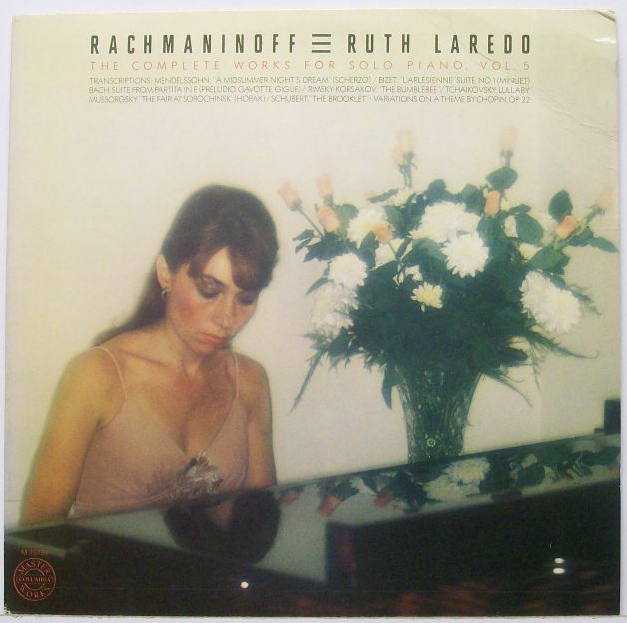 Laredo: Everybody loves Rachmaninoff who loves melody,
passion and romance. Those are the obvious externals of his music.
His music was not expected to last. That’s what it said in Grove’s Dictionary many years ago, but
it has lasted, and it’s more popular now than it’s ever been. [See
my Interview with Stanley
Sadie, Editor of The New Grove Dictionary
of Music and Musicians.] Those few concertos and certain pieces
of his are played constantly! Had I not embarked upon the process of
doing the complete piano solo works on recording, I would not have known
that there is such a wealth of music that he has left us! There is so
much music by Rachmaninoff besides the famous C Sharp Minor Prelude, the Second Piano Concerto, the Third Piano Concerto and the Rhapsody. There’s so much more than
that. He really was an extraordinary musician! There are ten
CDs that have just come out on RCA, The
Complete Recorded Works of Rachmaninoff, including a lot of works
that he played of other composers, plus, of course, some of his own music.
There are all the sonatas that he played with Fritz Kreisler. There’s
the piece that he plays with a gypsy named Nadezhda Plevitskaya and it’s
really cool. It’s wonderful! I just love those records, and
it gives some hint of his depth as a musician. He did everything.
Laredo: Everybody loves Rachmaninoff who loves melody,
passion and romance. Those are the obvious externals of his music.
His music was not expected to last. That’s what it said in Grove’s Dictionary many years ago, but
it has lasted, and it’s more popular now than it’s ever been. [See
my Interview with Stanley
Sadie, Editor of The New Grove Dictionary
of Music and Musicians.] Those few concertos and certain pieces
of his are played constantly! Had I not embarked upon the process of
doing the complete piano solo works on recording, I would not have known
that there is such a wealth of music that he has left us! There is so
much music by Rachmaninoff besides the famous C Sharp Minor Prelude, the Second Piano Concerto, the Third Piano Concerto and the Rhapsody. There’s so much more than
that. He really was an extraordinary musician! There are ten
CDs that have just come out on RCA, The
Complete Recorded Works of Rachmaninoff, including a lot of works
that he played of other composers, plus, of course, some of his own music.
There are all the sonatas that he played with Fritz Kreisler. There’s
the piece that he plays with a gypsy named Nadezhda Plevitskaya and it’s
really cool. It’s wonderful! I just love those records, and
it gives some hint of his depth as a musician. He did everything.
BD: Do you
learn as much or more from his recordings as you do from his notes on the
page?
Laredo: I think
both. I think it’s one and the same. To hear him play is really
an education, and it’s very interesting because there is more than one version
of several pieces on these recordings. You hear him play the same thing
twice or three times.
BD: Over different
years?
Laredo: Yes,
and that’s what’s really interesting because he doesn’t play it the same way!
It’s always super-human. Everything he does is spectacular and unlike
anyone else, but he varies it and he creates something new each time.
When he plays something like the Chopin Funeral March Sonata, the B Flat Minor,
he does not observe the markings that Chopin wrote. He, being a composer,
puts his own special stamp on the music, and that’s very interesting!
BD: Does that,
then, encourage you to put your stamp on his music?
Laredo: If
I can, yes. That doesn’t mean that I don’t want to follow what he put
on the paper. He left a blueprint besides the notes. The
dynamic markings or whatever else may be on the page gives you some hint
as to what he might have wanted, but it’s a blueprint at best.
BD: You have
to decide how fast to take his allegro.
Laredo: Oh,
sure. Nobody can tell you that.
BD: I assume
this changes, maybe even minute to minute?
Laredo: Oh,
it changes, certainly.
BD: Have you
played all of his works for piano?
Laredo: Yes,
I have, and right this very week the recordings that I made are due to come
out again on CD for the 50th Anniversary of Rachmaninoff’s death. It’s
1993 and he died in 1943, so they’ve just put out a special edition of all
of the Romantic and other works of Rachmaninoff on five CDs.
BD: I assume
you’re proud of those recordings.
Laredo: Oh,
I’m very happy that I did them! Yes, I really am.
BD: But there
is no desire to make a new set?
Laredo: Why
would I want to do that?
BD: It seems
like every performer wants to record everything twelve times.
Laredo: Not
me! [Both laugh] No, once is enough for those.
BD: Yet you’re
happy to play them again in concerts.
Laredo: Oh
yes, of course, but it’s too much of an ordeal to go through the recording
process again.
BD: Is there
any other composer that you have become so identified with —
perhaps Scriabin?
Laredo: I always
find Scriabin extremely intriguing and wonderful, and I keep playing Scriabin
as much as I can. There’s an enormous amount of music that he’s written
that has still not been recorded. I did a lot of recordings of Scriabin
— the complete Sonatas
and a bunch of Etudes and Preludes, but there’s still much more.
Do you know that he wrote several volumes of Mazurkas?
BD: No, but
I always enjoy the ones by Chopin.
Laredo: He
was very intrigued with Chopin as a young man. He did lots of early
mazurkas, and there are late ones, too. There’s
lots and lots of music that we don’t know!
BD: So is all
that part of your future recording projects?
Laredo: I don’t
know. We’ll see.
BD: Do you
like the life of a wandering minstrel?
Laredo: I suppose.
It’s the only life I know. It’s always interesting. You
don’t have office hours, but you sure do work hard!
BD: Do you
ever feel that you’re a slave to your fingers?
Laredo: Absolutely.
Yes, I am. Like any dancer would say, they have to do their work or
else they can’t live. It’s a two-edged sword. It’s very important
to keep working, yet you can’t get away from it.
BD: Without
mentioning names, are you optimistic about the future of pianism in this
country and in the world?
Laredo: Yes,
I think so. I’ve heard some very outstanding and wonderful young players,
and I think that as long as there are human beings and pianos, there are
going to be great artists around, there really are. The great ones
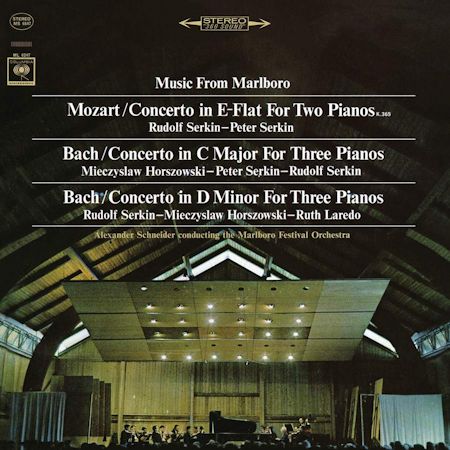
have died, and in the very recent past, Mr. Horszowski, who was one of my
teachers [and appears with her on the recording shown at right], died at the
age of officially a hundred, but I’ve heard people say that he was really
a hundred and seven! [Note: Mieczysław Horszowski lived from June 23,
1892 to May 22, 1993, a month shy of 101 years!] But with his death
goes the end of an era. Mr. Serkin and Horowitz and Arrau are all gone
now, and we have new ones. We have Kissin and other ones who are marvelous.
BD: Are they
ready to take the places of the old masters?
Laredo: I don’t
think anybody ever takes Rudolph Serkin’s place or Horowitz’s place.
It doesn’t happen.
BD: But I mean
are we getting new artists who continue that high level of work.
Laredo: There’s
always a chosen one. There’s always someone who has something very
special to say, and I think that there are inevitably those very special
human beings somewhere in the world. There are very few of them, but
we find them somehow... or they find us!
BD: One last
question. Is being a performer fun?
Laredo: Sometimes.
It’s more complicated than just fun. It’s very hard work, but it’s
fun when you give a good concert and people like it. I really enjoyed
myself today at that school. I loved those kids and they seemed to enjoy
what I did. That’s a good feeling.
BD: Thank you
for all the concerts and all the records, and thank you for speaking with
me today.
Laredo: Thank
you, Bruce. It was nice to meet you.
=== === ===
=== === === ===
-- -- -- -- --
=== === === === ===
=== ===
© 1993 Bruce Duffie
This interview was recorded in Chicago on June 21, 1993. Portions
(along with recordings) were used on WNIB the following year, and again in
1997. This transcription was made and posted on this website
in 2011.
To see a full list (with links) of interviews which have been transcribed
and
posted on this website, click here. To
read my thoughts on editing these interviews for print,
as well as a few other interesting observations, click here.
* * * *
*
Award -
winning
broadcaster Bruce Duffie was with WNIB, Classical
97 in Chicago from
1975 until its final moment as a classical
station in February of 2001. His
interviews have also appeared in various magazines
and journals since 1980, and he now continues his broadcast
series on WNUR-FM,
as well as on Contemporary
Classical Internet Radio.
You are invited to visit his website for more information
about his work, including selected
transcripts of other interviews, plus
a full list
of his guests. He would also like to call
your attention to the photos and information about
his grandfather,
who was a pioneer in the automotive field more than a century ago.
You may also send him E-Mail with comments,
questions and suggestions.