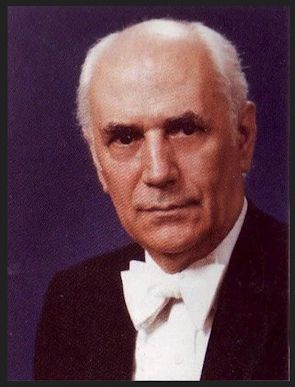
Composer / String Player  Vazgen  Muradian

A Conversation with Bruce Duffie


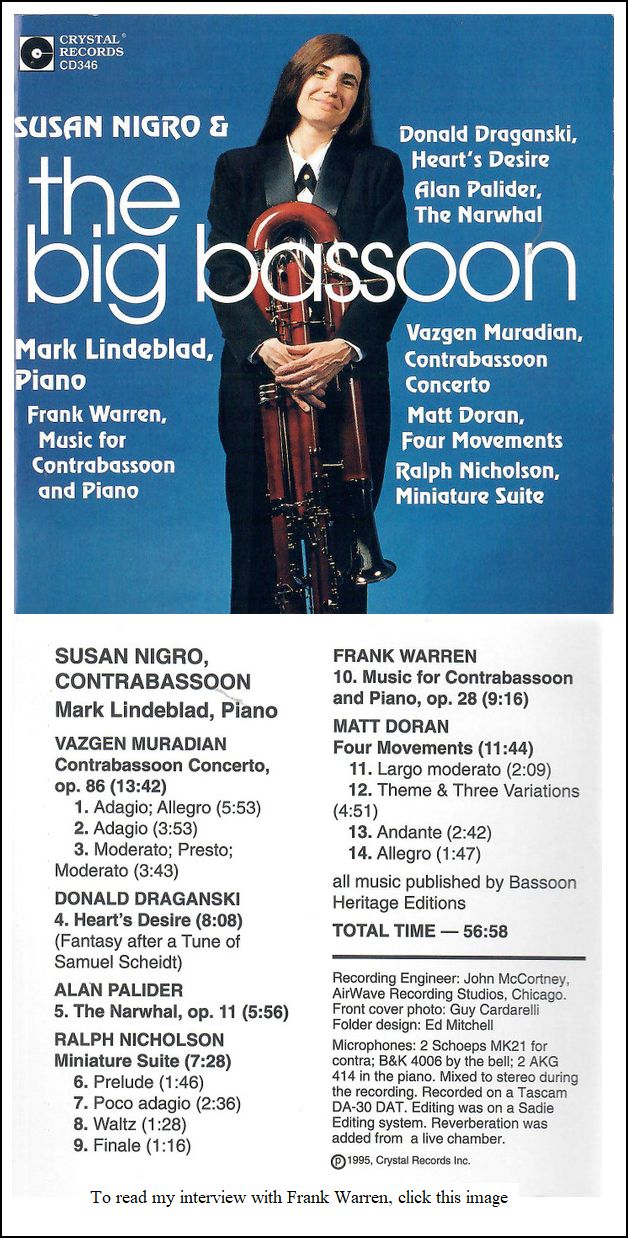
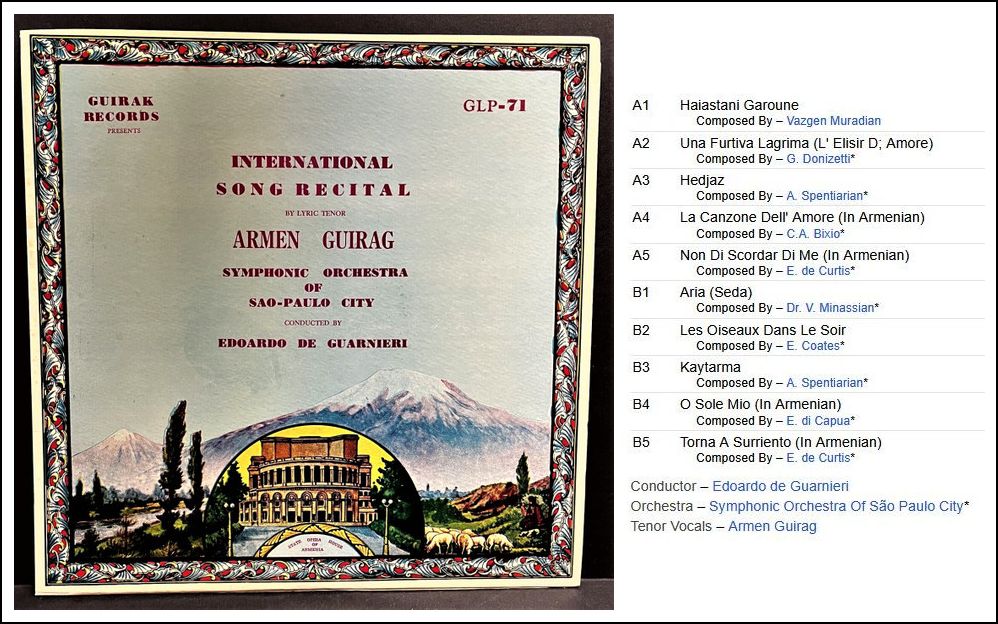
muradian Vazgen Muradian (October 17, 1921 - February 18, 2018) was an Armenian-American neo-classicist composer known for having written concerti for every instrument in the orchestra. Among the instruments he is most noted for having created works for are the clarinet, the tuba, the bassoon ("The Big Bassoon") and the Viola d'amore.

Born in Ashtarak, Armenia, Muradian was drafted into the Soviet Army during World War II and saw action against Nazi Germany on the Eastern Front. Following the Soviet collapse against the invading German army, he became a refugee from both Nazis and the Soviets and performed with the Stanislav Symphony Orchestra, the Lvov Opera, and on the vaudeville stage in Warsaw. His travels during this period also brought him to Berlin and Vienna and finally to Venice, where he settled to study. In Venice, he enrolled at the Conservatorio di Musica Benedetto Marcello di Venezia and studied composition with Gabriele Bianchi, violin with Luigi Ferro, and Viola d’amore with Renzo Sabatini.

1948 saw Muradian graduate from the conservatory with a degree as a professor of music. Still in Venice, he took a position teaching at the Moorat Raphael College. In 1950 he left Italy for to the United States, where he resided until his death in 2018 and where he wrote all of his major musical compositions. Henceforth he played violin in several musical ensembles including the New Orleans Symphony Orchestra. He then removed himself as an orchestra member to focus solely upon composition. His works have been performed by the Armenian Philharmonic Orchestra, the Chicago Chamber Orchestra, the Little Orchestra Society of New York, the New Jersey Association of Verrisimo opera, and the Viola d’amore Society of America, among others.

Muradian is known for having composed for every instrument in the classical orchestra as well as others not included in it. As of his seventieth birthday in 1991 he had composed 62 concerti for 35 different instruments. The Guide to the Tuba Repertoire, published by Indiana University Press and edited by R. Winston Morris refers to his Concerto for Tuba and Orchestra, Opus 85 as "A melodic neo-romantic work which takes the soloist through much of their range in a mostly diatonic fashion. The music contains passion reminiscent of the composer's homeland".

Vazgen Muradian resided in New York City until his death in February 2018. He was predeceased by his wife Arpi. Together they have two sons, Armen Morian and Vardges "Vago" Muradian and two grandchildren. His brother was the Armenian poet Gevorg Emin.


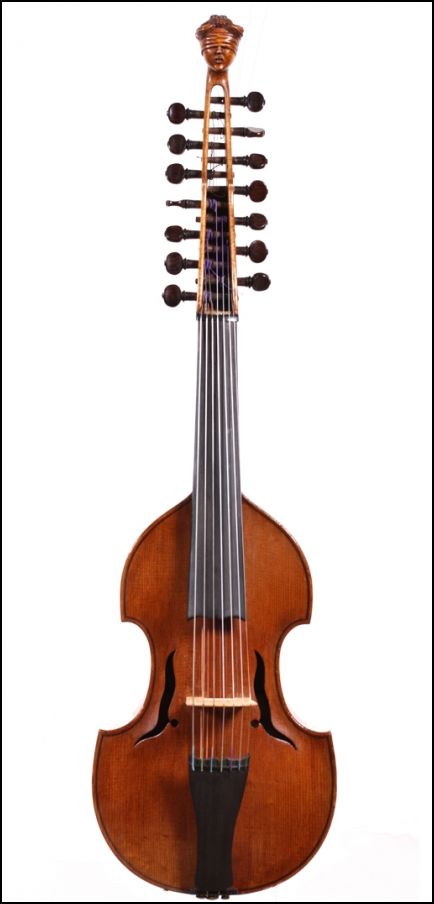
viola d'amore

In October of 1991, Vazgen Muradian was in Chicago for performances of his music.  He was very enthusiastic about all of his works, and especially the celebratory concert.  He was gracious enough to take time from his schedule for a conversation, and I was able to use portions of it on WNIB, Classical 97, to promote the event.
 
Now thirty-five years later, in 2026, I am pleased to present the entire interview . . . . .


Bruce Duffie:   You are both a composer and a performer, how do you divide your time between those two taxing activities?

Vazgen Muradian:   I have a very sad answer to that.  I don’t have time just to play anymore, because composing is taking so much time that it’s impossible.

BD:   You sound regretful about that.

Muradian:   Yes, because I love to play the viola d’amore [shown at left].  That’s my favorite instrument.  There are not too many viola d’amore players.  As a matter of fact, I should to mention that my Viola d’Amore Concerto Op 23 is the first one in American music.  I performed that concerto many times.

BD:   Do you feel that you’re at all out of place playing an instrument that no one writes for, and no one really seems to want anymore?

Muradian:   No, the question is a little better about the viola d’amore.  There are many more players now than there were twenty or twenty-five years ago.  We are still, as I say, a vanishing species, but things are better now.  More people are interested.  I hate to say this, because I don’t want to sound like a man who is bragging about it, but I wrote more for the viola d’amore than any living composer.  I’ve written six concertos for the viola d’amore with orchestra, a couple of sonatas, and other pieces.  I have one unique double concerto for two viola d’amores and orchestra, and one for violin and viola d’amore, and one with viola da gamba.  I also have a quartet for four viola d’amores together.  So, my contribution is enough.  When I was asked to write more for viola d’amore, I said that’s enough!  [Laughs]  First, you play what I’ve written, and when you run out, then I will write new ones!

BD:   Very briefly, what is the difference between a viola and a viola d’amore?

Muradian:   There is a lot of confusion.  People think that a viola is a big violin, but it’s just the reverse.

BD:   The violin is a small viola?

Muradian:   That’s exactly what it is.  The name of viola in Italian was used for the instrument from French vielle, and when they started making small violas, they were called violino.  That ‘-ino’ is a diminishing thing.  The mother of the instrument is not violin of that family, it’s the viola.  A regular viola is a little larger than a violin and has a deeper sound, but the viola has four strings like the violin, but the viola d’amore has fourteen strings.

BD:   Are some of the strings are sympathetic?

Muradian:   Yes, seven of them are sympathetic strings, which are underneath the bridge.  The other seven, which are on top of the bridge, are played strings.

BD:   So, it’s really seven doubles?

Muradian:   Seven doubles, yes.  The bottom seven vibrate and are sympathetic strings, and that gives a nice mellow sound.

BD:   It obviously has a larger range if you have seven strings.

Muradian:   Yes, it has a much larger range.  It’s lower than the viola, and as high as the violin.  Besides that, the effect of these sounds and pizzicatos make it a beautiful instrument.

BD:   I would think not only your own strings, but the accompanying instruments would also resonate within those sympathetic strings.

Muradian:   The sympathetic strings vibrate, which gives that instrument a particularly beautiful sound.

BD:   Then why did it go out of fashion?

Muradian:   It was never really in fashion.  It was an instrument of bravura, of color, of being special, and there were so many violas in that family
— violins, violas, cellos, etc.  These are bowed instruments, which by mistake are called stringed instruments.  I love to call them bowed instruments, in a bowed orchestra.  A string orchestra could include mandolins and guitars.  In Italian, they are called gli strumenti ad arco, of the bow.  That’s more correct.  There were so many bowed instruments that nobody really knows how many were around, or what shape and range they had.  It was so complicated and yet so versatile, but gradually the other instruments vanished, and the violin became a principal instrument, with its technical capacity and emotional power that no other instrument has, along with the viola, the cello, and the bass.

BD:   Did these sound a little stronger?

Muradian:   Stronger, and technically they have a definite technique which could not be developed any further.  The viola d’amore does not have that quality because, first of all, it has seven strings.  A regular viola with four strings is much stronger and technically easier to write for.  The fingering and the velocity are much more formidable.  The viola d’amore is a complicated instrument, with a technicality that could not go that fast. Tuning is also a problem.  In the past, the viola d’amore had seventeen kinds of tunings, so most of the time you have to tune the instrument according to the piece.
thompson
BD:   That’s standard tuning, not scordatura [deliberate mis-tuning]?
 
Muradian:   No, it isn’t scordatura.  They are just different tunings, but there is a big disadvantage in that which kills the instrument’s popularity.  When you have strings made for the particular D tuning, which is where it’s tuned most of the time, then when you tune the strings lower for a different tonality, the strings are sagging.  Or if you pitch them higher, they are too shrill and they might even break.  

BD:   It is at all like playing a natural brass instrument without valves?

Muradian:   No, but it makes it technically terribly difficult.  When you are tuned in a scale like an arpeggio, you are already playing an instrument that sounds beautiful.  As soon as you get out of the D tonality, you lose that power, and it becomes an instrument of more or less double chords or single melodies.  Once you lose that and tune it differently, you start losing the point of the instrument.

BD:   If you change the tuning, does that also change the space between the fingers for the intervals?
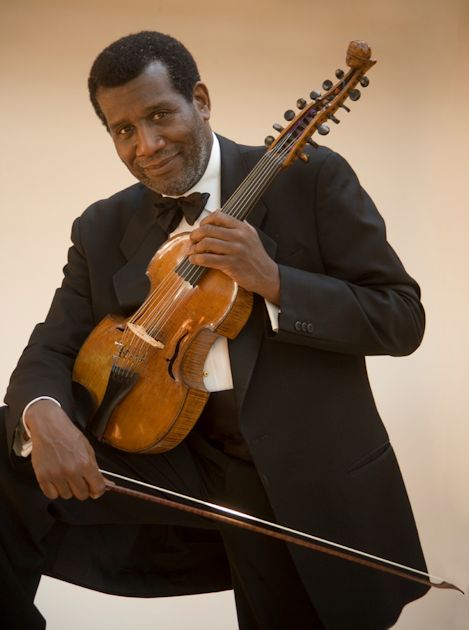
 [Shown at right is violist Marcus Thompson with his viola d'amore.]

Muradian:   No, but the instrument is already different.  You are playing with a different fingering, so it’s confusing.  That tuning problem is one of the biggest reasons the instrument didn’t become popular today.

*     *     *     *     *

BD:   You play the viola d’amore, and you write for the viola d’amore.  Is this harkening back to the old days when the instrumentalists were usually their own performer-composers?

Muradian:   [Thinks a moment]  Not really.  I love the instrument and I play the instrument.  If you are a composer, in that case it is a fantastic combination, because you know the instrument and so you really know how to write for it.  People who are writing for the violin don’t necessarily know the instrument, and their concertos for violin doesn’t become as great as pieces from the guy who knows the instrument.

BD:   So, to make a bad pun, your music perhaps more sympathetic for the instrument?

Muradian:   I’m lucky because I am a violinist myself.  I finished at the conservatory in Venice as a violinist.  Knowing the instrument makes it a different ball game.  For instance, Brahms wrote his violin concerto, and it’s a fantastic work, but actually the violinistic points were done for him by Joachim.  There are many composers like that, but nobody else wrote for the violin the way Paganini did.  Bach is an exception.  I don’t know if he played the violin, but he was exceptional, a had a stroke of genius that nobody else had in the history of the violin.  His music for violin is incredible.  If that man could not have played the violin, how could he have written like that?  Then you come to others like Henryk Wieniawski or Pablo de Sarasate.  They wrote so well for the violin because they knew the instrument.

BD:   Do you write well for the viola d’amore?

Muradian:   Ah, well, I think I do, and again I’m not trying to brag, but knowing the instrument really helps.

BD:   You mentioned that you got your degree in Venice.  When did you leave Armenia?

Muradian:   I left Armenia in 1939 when I was eighteen years old.  They took me into the army, and that was terrible because I wanted to go to school to learn.  I knew I had some spark in music, but it never materialized because then the War started.  I was at home for a couple of months, and then I went as a solder in the front.  With my life story you could make a movie!  For one month we were on the front line, and then we were taken to a German prison.  I knew I wouldn’t survive over there.  I’m not a strong man, so on one good occasion I just ran away.  I don
’t know how, but I succeeded.  I went to the village and I was lucky.  I survived.  I went to Poland where I knew a couple of people, so I started to live over there.  Then I went to Lvov where there was a big, beautiful opera house.

BD:   Were you playing the violin or the viola?

Muradian:   I was playing the violin in the orchestra.  Up to that point I was happy playing in an orchestra.  The Soviet Union was only forty miles from Lvov, and if they were to catch me, they would have sent me to Siberia.  So I ran from there.  I knew I had to go to Italy which I loved more than anything else for classical music.  So I went to Venice and studied there for five years.  I finished at the conservatory in 1948, and in 1950 I came to the United States, and started playing in orchestras.  I was playing the viola in the New Orleans Symphony Orchestra, and then I was with the Charles Wagner Opera Company.  We traveled all over the country, and I loved that because I wanted to see the United States.  But then it came to a point that I found that I had something to say in composing.  I was always delaying that, and I started to take it very seriously.  It was then I said I’m not going to play anymore, and would concentrate only on composing.  I started working seriously on it because I noticed that people loved my music.  I’m not beating up the modernists, but most of the music being composed lately doesn’t have a melody in it.  My motto is that without a melody there is no music.  Before anything else, music is a melody.  Then comes the harmony, counterpoint, orchestration, etc.  So, when I saw that people really liked my music, then I seriously worked on it.  The Concerto for Viola d’amore was the first concerto I wrote.  It sounded really good, and then I wrote a concerto for oboe.  After that I wrote another three, four, five concertos...
muradian
BD:   [With a gentle nudge]  Was it for oboe, not oboe d’amore?
 
Muradian:   [Laughs]  No, no, oboe.  I have not one for oboe d’amore, but I did one for the English horn, and others for bassoon and contra-bassoon.  So far I have written sixty-two concertos for thirty-five different instruments.  When I had written six concertos, I saw that my inside was not empty.  Then I wrote four concertos, all in sonata form. 

*     *     *     *     *

BD:   You left Armenia when you were eighteen.  Is your music still influenced by your Armenian heritage?

Muradian:   No, and that’s a point I was going to talk about because it’s very important.  I like Aram Khachaturian.  He became famous and is a good composer.  I respect his talent and what he’s done, but my music is totally different.  His music is mainly based on Armenian folk music, and he’s using that music lavishly like many other Armenian composers, and even American composers.  They are using these folk tunes, and are not mentioning that those tunes are actually by so-and-so.  When I ask questions to these composers, they say that everybody knows that this tune is by so-and-so.  I said that in Armenia they know, but in New York they don’t know, and they would think you composed it!  I had a very big conversation with Armenian composers when I was in Armenia twenty-five years ago, and I said if you don’t mention the source of those folk-tunes, then it’s plagiarism.  They should mention that the melody was composed ten years ago, a hundred years ago, or even five hundred years ago. 

BD:   So, all of the melodies you write are your own?

Muradian:   They are my own melodies.  That was the main achievement in my music.  I have never had a tendency to use ready-made music because I felt it’s not my child.  It’s like an adopted child for some people, but I would rather have my own children.  That way you know every single theme and all the melodies and songs are my own.

BD:   Are you still influenced by your early life, or are you more influenced the life you’ve had here in the United States?

Muradian:   I grew up in Europe, and for the last forty years I have been in the United States.  So definitely that European experience, education, as well as the American culture have had a lot of influence on me.

BD:   You’re your own melting pot!

Muradian:   Yes, and I am proud to mention this.  Some people may not like my music, and some people like it, but that doesn’t matter.  My contribution to American music is something to be appreciated, and I feel proud to have done that.

*     *     *     *     *

BD:   We were talking about music, and all the styles you have incorporated and made your own.  When you write for any instrument, especially those beyond the bowed ones, do you try to play them?

Muradian:   The instrument selection is a very interesting matter.  You have touched a very good subject, and it’s a very funny thing.  Nobody can tell you what to write for any instrument.  You have to have a sense that’s God-given.  You must know what melody would go for an oboe, and what good melody would go for the cello, or for a flute.  All of that you have to just feel in yourself.

BD:   That’s the musician in you?

Muradian:   I would say that.  After I finished at the conservatory, I asked myself if I had learned how to compose.  No!  I just learned the grammar of the music, how to read, how to write, the regulations, and that’s it.  They didn’t teach me how to compose.  That is always something which is or is not born in you.  Of course, with that help of education we develop our ideas, but anybody who thinks that going to a conservatory will cause him to become a composer is wrong.  You can learn English and become a good linguist, but you’ll never write poetry if it’s not born in you.  A composer is a poet of music.

BD:   Have you done any teaching of composition?

Muradian:   I haven’t got time to do that.  I have so many unfinished works.  Thank God I don’t feel it, but I’ll be 70 years old next week, on October 17th.  In fact, this concert is dedicated to my seventieth birthday.  But I have so much work that I have told my wife I haven’t got the right to die because I have a lot of music to write.  Particularly music copying takes up my time.

BD:   As you are  at your seventieth birthday, are you where you want to be at seventy?

Muradian:   No, because what I have in my mind I haven’t finished yet.  After a certain number of years Rossini stopped.  He didn’t write anymore because whatever he had inside of him was finished.  But when whatever is in me is finished, if I were to die, I wouldn’t mind.  But if I didn’t put everything down, I would be sorry that there is something that I should have said.

BD:   Can we assume that you are proud of everything you have said so far?

Muradian:   I am sort of, but how good that would be only time would tell.

BD:   Have you basically been pleased with the performances of your music that you have heard over your lifetime?

Muradian:   You mean quality-wise of the performance?

BD:   Yes.


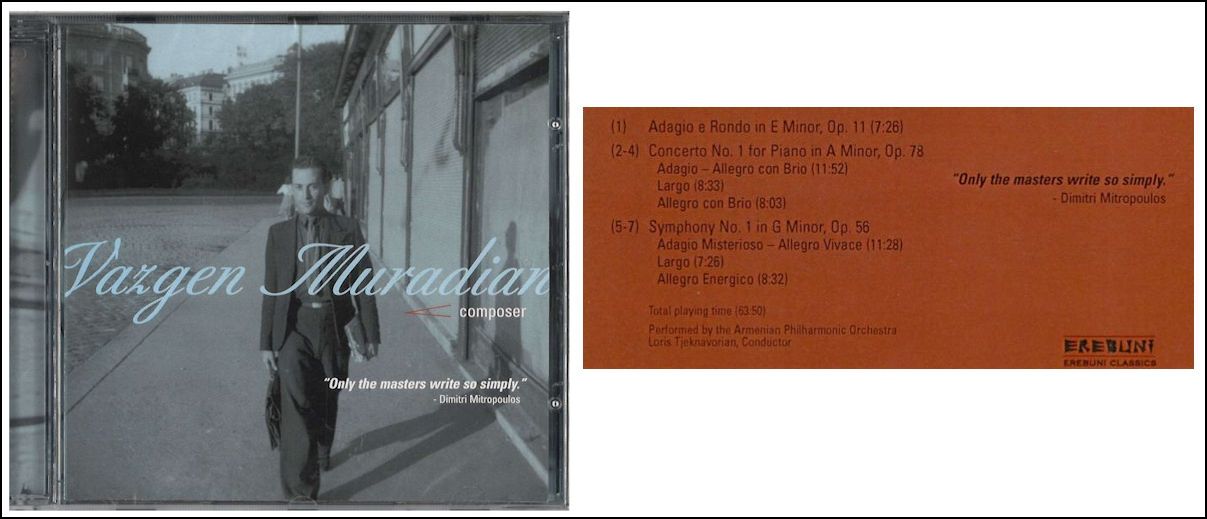
muradian


Muradian:   I haven’t have much luck with big orchestras or good orchestras generally, because unless your name is well-known, the big ones are not interested.  You could have a great talent, but if you are not well-known, you are not accepted in this circle.  I hope the big orchestras or big conductors will be interested, if nothing else than you cannot ignore a composer who wrote sixty-two concertos for thirty-five different instruments, twelve symphonies, fifteen sonatas, quartets, sixty-four songs, etc.

BD:   Let me change the question a little.  I assume that there have been some performances that have pleased you very much.

Muradian:   Oh, yes!  I had a very good performance in Tully Hall when Gerard Schwarz conducted.  Leonard Hindell played my bassoon concerto.  Lucine Amara from the Metropolitan Opera, and Lily Chookasian sang some of my songs.  Ani Kavafian, who is a very good violinist, also played my music.  Their performances were really great.  I have tapes, and once in a while I hear them with pleasure.
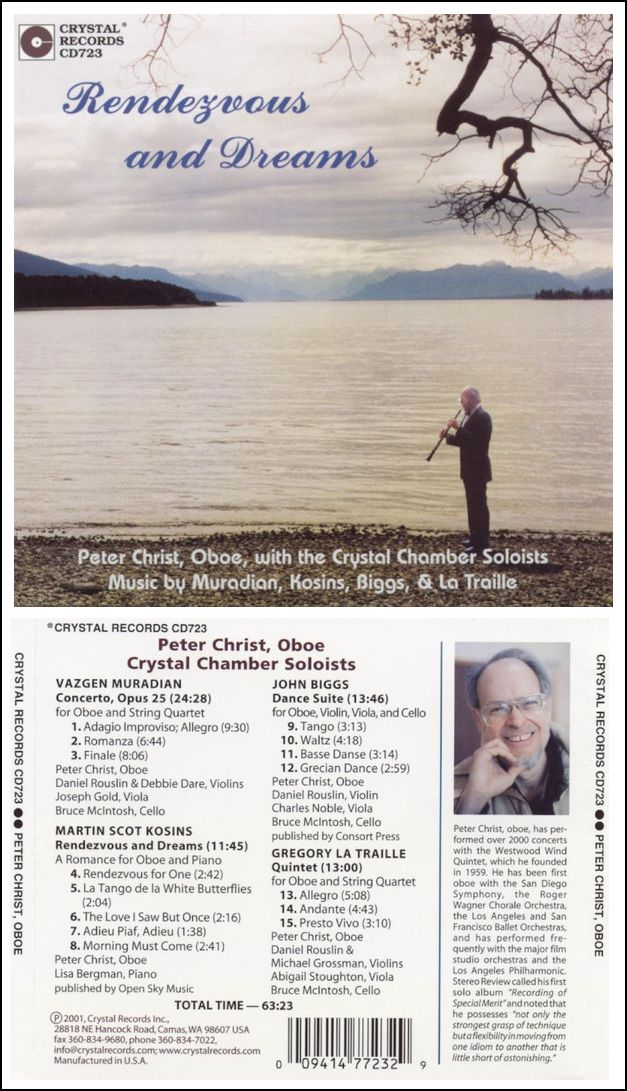
nigro
*     *     *     *     *

BD:   Let me ask the big philosophical question.  What’s the purpose of music in society?

Muradian:   That’s a good one!  Let’s see if I can answer it.  In my understanding, music is the most noble expression of the human soul.  All the arts have the same purpose, which is making man better and making tastes better.  The emotional and striking power of music has a lot of influence on human souls.  I agree with the saying that only the evil don’t love music.  A good soul loves music, and in music, as I said, what man looks for is a beautiful melody.  As Haydn said, the most difficult thing in music to write a beautiful melody, and whoever is capable of writing a beautiful melody has a stroke of genius.

BD:   When you’ve written something and it’s being performed, do you have any expectations on the part of the audience?

Muradian:   We would love to see that they like it, and so far I was very lucky because wherever they played my music, they really loved it.  This Chicago concert first started with Susan Nigro from the Chicago Chamber Orchestra.  She asked a friend who knew I had a concerto for contrabassoon.  It is generally accepted as a secondary instrument in orchestras, and a lot of people are skeptical about it, but I am treating all instruments like a bouquet of flowers, each of which has its own individuality.  When I wrote it, I was very skeptical about it.  I could not believe that this instrument could sound that beautiful, like a deep cello.  The impact was so strong on the audience that a lot of people came up to me afterwards and asked me where they could buy my recordings to hear more of my music.  Some people told Dieter Kober, and he showed an interest to put on] an all-Muradian program.  But this program unfortunately didn’t come out the way we planned.  I wanted there to be one of my symphonies, and the Violin Concerto, both of which are for big orchestra.  Kober said that he didn’t have enough time for that because there was only one rehearsal.  So, we dropped the symphony, and then the violinist got sick.  So I reshuffled it all, so now there will be the Trumpet Concerto and the Flute Concerto.  I
’m limited to a string orchestra, a bow orchestra as I call it, but I hope people will like it.  I’m pretty sure they will.

BD:   I’m sure they will, and I’m sure it will go very well.  Musicians here in Chicago all sight-read very well, and they are very quick to learn.

Muradian:   The next thing I would love would be to see the Chicago Symphony Orchestra get interested to play some of my symphonies or some of these concertos.  I would be glad to have it, but I know it’s just a dream.

BD:   Maybe you should work it through the Armenian Consulate.

Muradian:   I’m an American-Armenian composer, a member of the American Composers Society [ASCAP], but it would a great thing, and a lot of the Armenian community would jump in if the right person would organize it.

BD:   Is it pleasing that you managed to get away from Armenia during most of your creative life, so that there wasn’t the political suppression that had gone on in there?

Muradian:   That’s right.  I was lucky.  In fact, if I would be in Armenia, I would have been sent to rot in Siberia because I’m very much an outspoken man.  When I see something is wrong, I just say something is wrong.

BD:   Now the other side of the coin.  Are you pleased with the recent developments that seem to be easing the tensions?

Muradian:   Those recent developments are God-given.  That was a blessing, [gets a bit choked up as he speaks] otherwise it would have gone on for another twenty or fifty years, or maybe more.  From the American perspective, we don’t have that fear of Communism which is finally dead.  People in the former Soviet Union see how life is in the free world.  They are not dumb people.  They are smart people, and they see the difference, but they couldn’t do anything.  This has helped them to come to a better life.  I’m very much pleased, and hope things will be really good.

BD:   Is music at all political?

Muradian:   No.

BD:   Is composing fun?

Muradian:   [Laughs]  That’s a good one! It’s been said that creativity is 10% inspiration and 90% perspiration, and that is right.  When you create something it’s difficult, but when you are satisfied with what you did, it gives you such happiness that you cannot express it.  That thing was not there, and now it’s there.  You made something that was not there.  That is satisfaction.  The greatest achievement and success of the human brain is that we created something which was not there before.  That’s what we call creativeness, and that distinguishes man from animals.  Animals are not creating.  That’s the greatest satisfaction life gives me.

BD:   I hope you’re able to create for many more years to come.

Muradian:   I would be very glad to finish all the works I have started.

BD:   I don’t think you’ll ever be finished!  If you live to be 120, there’ll always be ideas in your mind.

Muradian:   [Laughs]  I know what you mean, but at least to finish what I have in my mind now...  I’m working on six symphonies at the same time, and there is always a delay.  I’m going to do it tomorrow, tomorrow, tomorrow...  Then if I finish that, I have twelve concertos for violin unfinished.  They’re sketched, and I have to orchestrate them.  Then I have a few sonatas, and I would like some day to write an opera if I could.

BD:   That’s a two-year project!

Muradian:   Yes, and if I finish all that, as you say, there are always new things come.  But whatever I would be able to finish up, then I would be happy.

BD:   Thank you for coming to Chicago.

Muradian:   Oh, thank you very much.  I love Chicago.  If Chicago really would be interested in my music, some day maybe I have to become a Chicagoan!  [Both laugh]


muradian


© 1991 Bruce Duffie

This conversation was recorded in Chicago on October 11, 1991.  Portions were broadcast on WNIB the following day, and again in 1996.  This transcription was made in 2026, and posted on this website at that time.  My thanks to British soprano Una Barry for her help in preparing this website presentation.

To see a full list (with links) of interviews which have been transcribed and posted on this website, click here.  To read my thoughts on editing these interviews for print, as well as a few other interesting observations, click here.

*     *     *     *     *

Award - winning broadcaster Bruce Duffie was with WNIB, Classical 97 in Chicago from 1975 until its final moment as a classical station in February of 2001.  His interviews have also appeared in various magazines and journals since 1980, and he continued his broadcast series on WNUR-FM, as well as on Contemporary Classical Internet Radio.

You are invited to visit his website for more information about his work, including selected transcripts of other interviews, plus a full list of his guests.  He would also like to call your attention to the photos and information about his grandfather, who was a pioneer in the automotive field more than a century ago.  You may also send him E-Mail with comments, questions and suggestions.