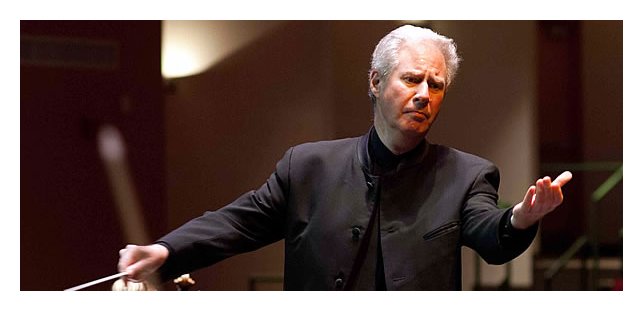
| Scottish born conductor Stewart
Robertson thrives on a wide range of musical interests. He has become particularly
associated with the music of Mozart, Beethoven, and Britten, and his close
involvement with new music has led to him having conducted over 100 orchestral
and operatic world premieres. He is Artistic Director and Principal
Conductor of the Atlantic Classical Orchestra in Florida and has been named
Music Director Emeritus of Glimmerglass Opera in recognition of the phenomenal
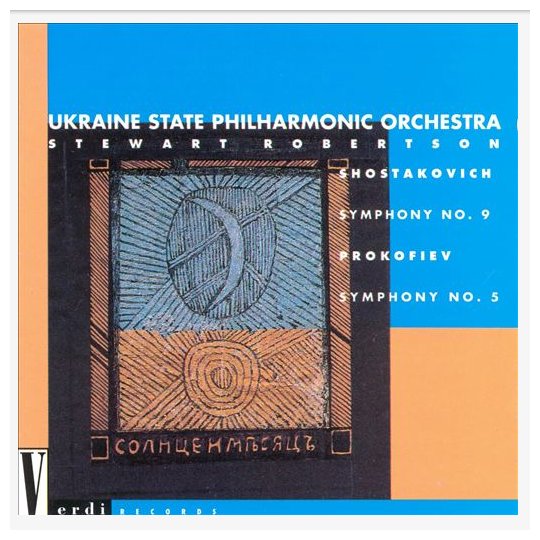
musical growth the company achieved under his direction over two decades. Robertson gained his early experience at the opera houses of Cologne and Zurich, and at Scottish Opera where he was Music Director of the touring company. Subsequently he became Music Director of the San Bernardino Symphony and the Santa Fe Symphony Orchestra, where he was champion of new music and a frequent broadcaster on National Public Radio. Additionally, he has enjoyed two highly successful periods as Artistic Director of Opera Omaha, and Music Director of Florida Grand Opera in Miami. Equally at home in the concert hall, Robertson has led performances with orchestras as diverse as the BBC Scottish Symphony Orchestra, the Hong Kong Philharmonic, Louisville Orchestra, Netherlands Symphony Orchestra, Mecklenburg Staatskapelle, Buenos Aires Philharmonic, Sicily Symphony Orchestra, Orchestra Sinfonica Nacional of Mexico, the North German Philharmonic, and the City of Birmingham Symphony Orchestra. Highlights include performances at the Lille Festival in France with the Orchestra of Maastricht with Igor Oistrakh as soloist, and at the Concertgebouw with the Ukraine State Philharmonic. He has also led this orchestra both in Kiev and on tour in Holland and has recorded with them symphonies of Shostakovich, and Prokofiev. Robertson made a highly successful debut with the Arturo Toscanini Philharmonic Orchestra and the chorus of the Maggio Musicale Florence conducting the closing concert of Italy’s famed Festival of the Nations in Citta di Castello, Umbria. 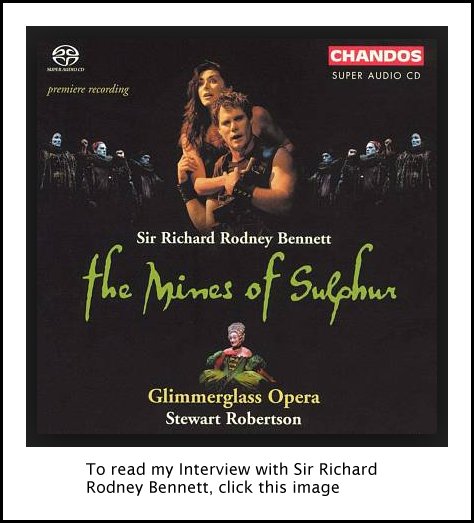 His operatic appearances include New York City Opera, the Lyric
Opera of Chicago, the companies of Montreal, Detroit, Philadelphia, the
Deutsche Oper am Rhein, Dusseldorf, the Norwegian National Opera, the Jesi
Festival in Italy, the Wexford Festival and Opera Ireland in Dublin.
His operatic appearances include New York City Opera, the Lyric
Opera of Chicago, the companies of Montreal, Detroit, Philadelphia, the
Deutsche Oper am Rhein, Dusseldorf, the Norwegian National Opera, the Jesi
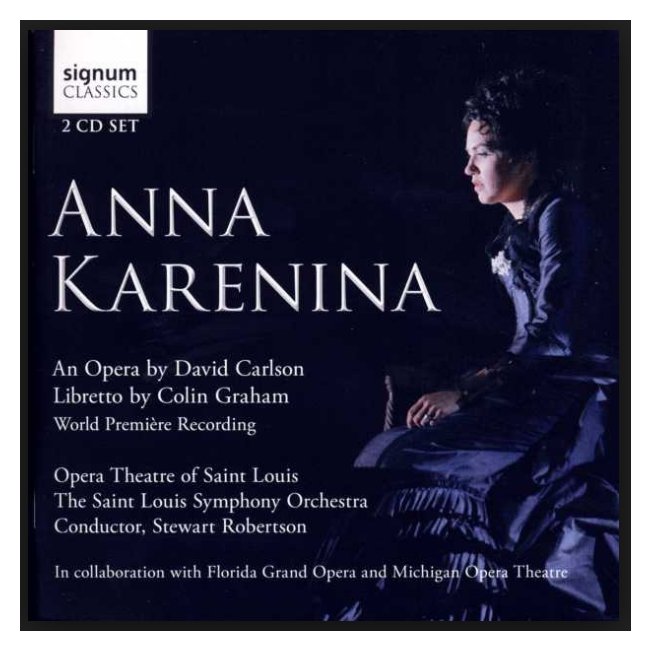
Festival in Italy, the Wexford Festival and Opera Ireland in Dublin.Robertson’s recordings with the Royal Scottish National Orchestra, Utah Symphony, Ukraine State Philharmonic and Glimmerglass Opera can be heard on the Chandos, Naxos, New World and Verdi/ EMI labels while his recording of Sir Richard Rodney Bennett’s opera The Mines of Sulphur was nominated for a Grammy Award [see photo (with link) at right]. His world premiere recording of David Carlson’s Anna Karenina with the St. Louis Symphony has recently been released on the Signum label, and his interpretation of Puccini’s La Bohème at the Puccini Festival in the composer’s hometown of Torre del Lago gained the unique distinction of becoming the first performance of the work by a non-Italian conductor to be released by the Festival as a commercial DVD. In the USA Robertson’s performances have been televised by PBS on both the 'Great Performances' and 'Live from Lincoln Center' series. Other guest engagements include appearances with Orchestra London, Canada, Symphony Syracuse, the New Jersey based virtuoso string ensemble ARCO, Fort Worth Opera festival, Opera San Jose and a return to Glimmerglass to conduct Copland’s The Tender Land. Further events include performances with the Cape Cod Symphony, Utah Opera, Opera Omaha and a return to The Fort Worth Festival to conduct the Marriage of Figaro. He has received much attention for his innovative work with the Atlantic Classical Orchestra, an orchestra based in Florida but drawing its personnel from throughout the USA. There, Robertson has developed a style of programming that is rich in its variety along with a presentational format that is both informative and audience friendly. Robertson’s lectures and seminars have become an integral feature, and contributed to the orchestra having doubled its concert attendances over the last three seasons. Flying in the face of the current recession and under Robertson’s direction, the Atlantic Classical Orchestra has embarked on a period of dynamic growth. Future plans include international touring and a series of recording projects, beginning with a disc of Schumann orchestral rarities including the Violin Concerto with Elmar Oliveira as soloist. A native of Glasgow, Scotland, Mr. Robertson is a graduate of the Royal Scottish Academy of Music. He studied piano with Denis Matthews, conducting with Otmar Suitner at the Mozarteum, Salzburg and with Hans Swarowsky in Vienna. He is married with two children, and he and his wife Meryl are, as a diversion from professional activities, attempting enthusiastically to restore a castle in Argyll, Scotland. |
 SR: [Laughs] Actually, we had a very nice
time. We had a good relationship. There’s one obvious problem...
SR: [Laughs] Actually, we had a very nice
time. We had a good relationship. There’s one obvious problem...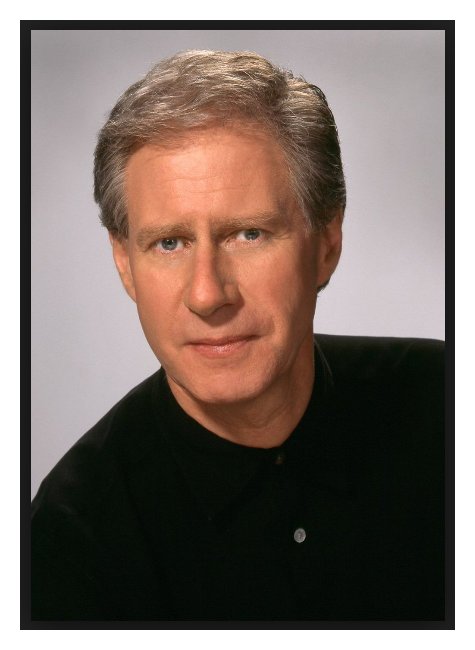 SR: Oh, absolutely. It really is team work,
and for me that’s what makes opera a lot of fun. I’ve always likened
it to playing a ball game. You are the singer and I’m the conductor
and the music is the ball. I have it and I bounce it around a little
while, and then I throw it over to you and you throw it and you run with
it, and then you pass it back to me again! There are certain moments
that are, shall we say, singer-driven, and other moments that are orchestra-driven.
As the conductor, the catch is to keep that all within some kind of coherent
structural framework. Having passed the ball over to the stage, if
they run with it a little too far, then it’s my job to try and pull that
back in, to try and keep the framework, keep the structure.
SR: Oh, absolutely. It really is team work,
and for me that’s what makes opera a lot of fun. I’ve always likened
it to playing a ball game. You are the singer and I’m the conductor
and the music is the ball. I have it and I bounce it around a little
while, and then I throw it over to you and you throw it and you run with
it, and then you pass it back to me again! There are certain moments
that are, shall we say, singer-driven, and other moments that are orchestra-driven.
As the conductor, the catch is to keep that all within some kind of coherent
structural framework. Having passed the ball over to the stage, if
they run with it a little too far, then it’s my job to try and pull that
back in, to try and keep the framework, keep the structure.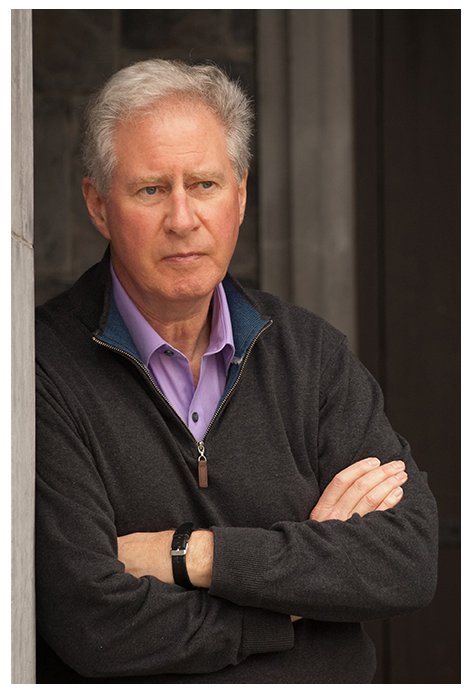 BD: It seems like it was more or less inevitable!
 SR: Yes, a sound-visual thing. It’s
as if suddenly a door opens in time, and you see the shape of the entire
piece. Now that all sounds very fancy and sort of arty, but I can
only tell you that this happens sometimes. Your mind goes into some
kind of overdrive and you become intensely aware of what a piece is about,
or what the shape of the piece is in one moment in time. That comes
with the act of performance.
SR: Yes, a sound-visual thing. It’s
as if suddenly a door opens in time, and you see the shape of the entire
piece. Now that all sounds very fancy and sort of arty, but I can
only tell you that this happens sometimes. Your mind goes into some
kind of overdrive and you become intensely aware of what a piece is about,
or what the shape of the piece is in one moment in time. That comes
with the act of performance.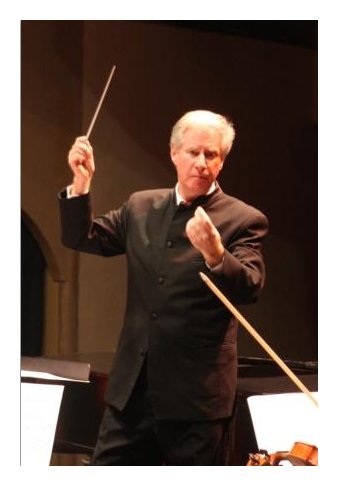 BD: What is it that makes a good opera?
 SR: I think so! Things have been moving
in a rather interesting fashion in the last few years. As you probably
gathered from my accent, I’m not American. I grew up in Scotland and
worked until I was 30 in Europe at the opera houses of Cologne and Zurich.
I conducted a lot of ballet and quite a lot of orchestral music. Then
in my early 30s I came to live in this country, and worked almost exclusively
here for about ten or twelve years. Now the interesting thing has
happened is that my career has branched out back to Europe again, and I’m
spending about two-thirds of my year in the United States and about a third
of it in Europe, which is nice. My time divides, I would say, almost
equally down the middle between opera and symphonic work, which again is
very satisfying. Recordings are beginning to happen and I do get the
opportunity now to indulge myself. [Laughs] In fact, my wife
calls it my jackdaw mentality, my flying around picking up shiny objects
that take my attention. I do have a sort of insatiable curiosity for
music. There’s a tremendous variety of music out there. There’s
a wonderful, wonderful world of music quite past the Brahms and the Beethoven
symphonies and the Verdi operas, wonderful as those are.
SR: I think so! Things have been moving
in a rather interesting fashion in the last few years. As you probably
gathered from my accent, I’m not American. I grew up in Scotland and
worked until I was 30 in Europe at the opera houses of Cologne and Zurich.
I conducted a lot of ballet and quite a lot of orchestral music. Then
in my early 30s I came to live in this country, and worked almost exclusively
here for about ten or twelve years. Now the interesting thing has
happened is that my career has branched out back to Europe again, and I’m
spending about two-thirds of my year in the United States and about a third
of it in Europe, which is nice. My time divides, I would say, almost
equally down the middle between opera and symphonic work, which again is
very satisfying. Recordings are beginning to happen and I do get the
opportunity now to indulge myself. [Laughs] In fact, my wife
calls it my jackdaw mentality, my flying around picking up shiny objects
that take my attention. I do have a sort of insatiable curiosity for
music. There’s a tremendous variety of music out there. There’s
a wonderful, wonderful world of music quite past the Brahms and the Beethoven
symphonies and the Verdi operas, wonderful as those are.© 1994 Bruce Duffie
This conversation was recorded in a conference room of the Civic Opera House in Chicago on May 27, 1994. Portions were broadcast on WNIB the following week, and again in 2000. This transcription was made in 2014, and posted on this website at that time. My thanks to British soprano Una Barry for her help in preparing this website presentation.
To see a full list (with links) of interviews which have been transcribed and posted on this website, click here. To read my thoughts on editing these interviews for print, as well as a few other interesting observations, click here.
Award - winning broadcaster Bruce Duffie was with WNIB, Classical 97 in Chicago from 1975 until its final moment as a classical station in February of 2001. His interviews have also appeared in various magazines and journals since 1980, and he now continues his broadcast series on WNUR-FM, as well as on Contemporary Classical Internet Radio.
You are invited to visit his website for more information about his work, including selected transcripts of other interviews, plus a full list of his guests. He would also like to call your attention to the photos and information about his grandfather, who was a pioneer in the automotive field more than a century ago. You may also send him E-Mail with comments, questions and suggestions.