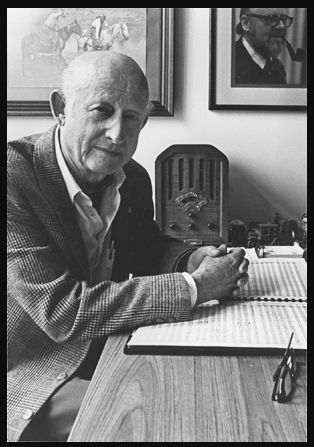
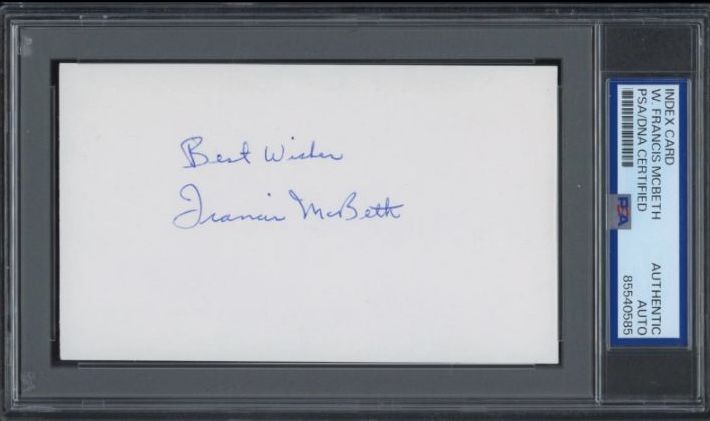
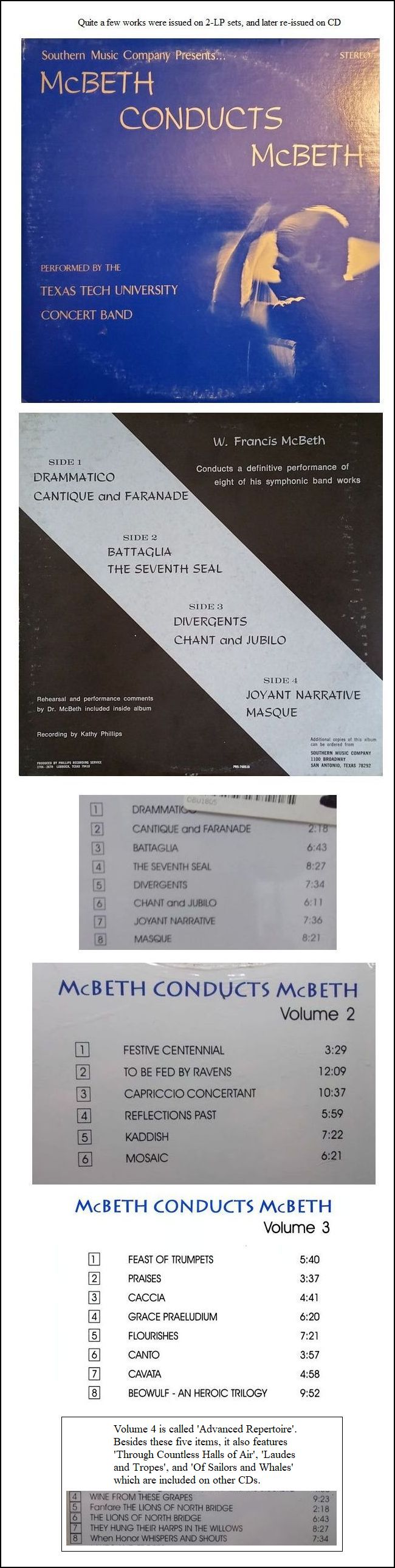
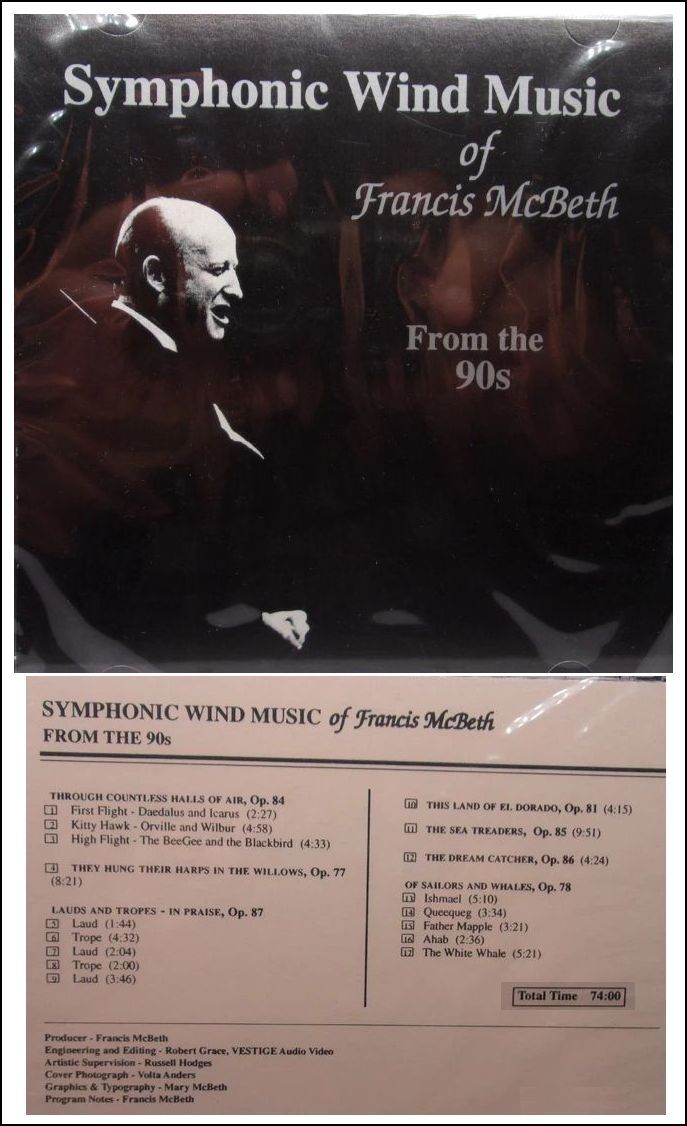
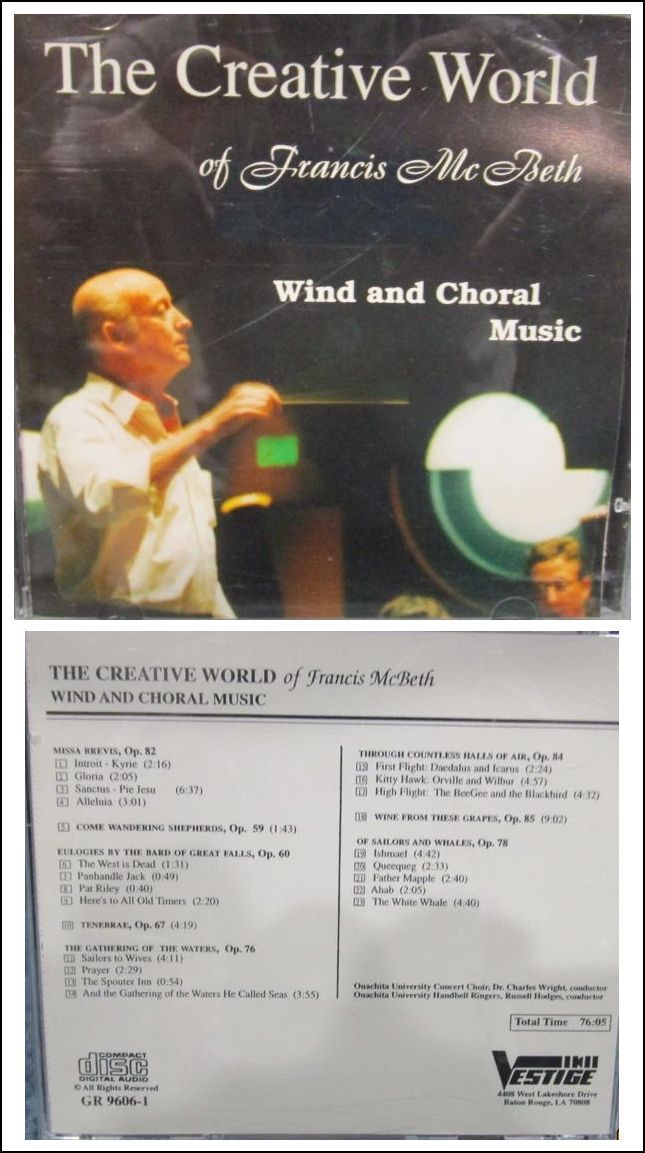
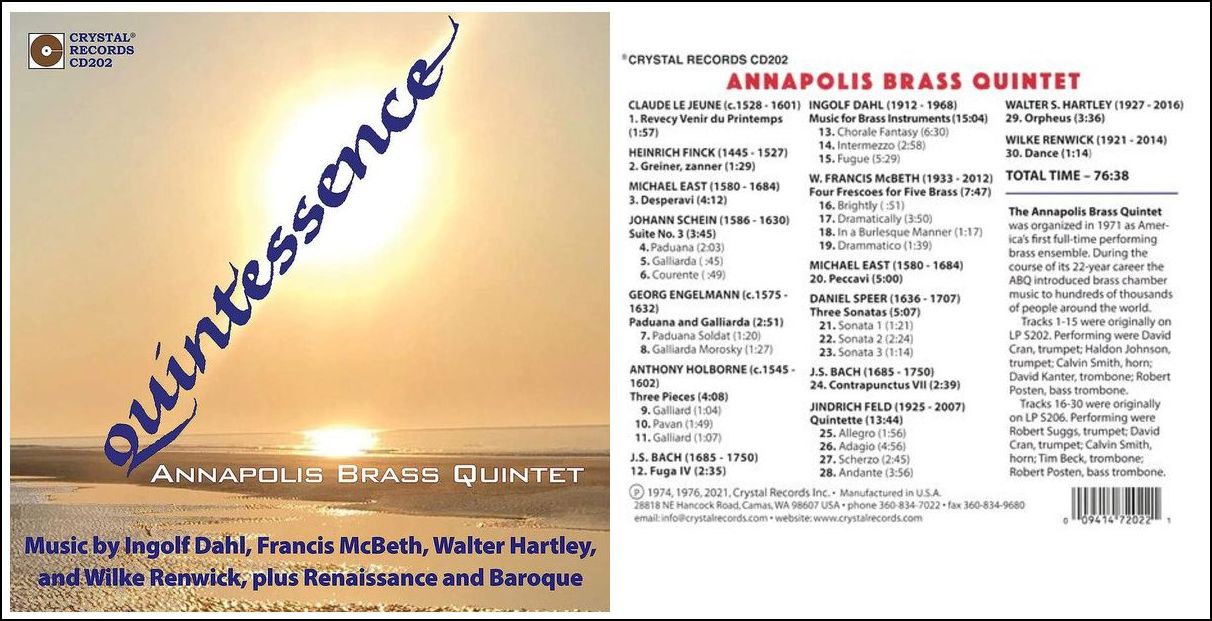
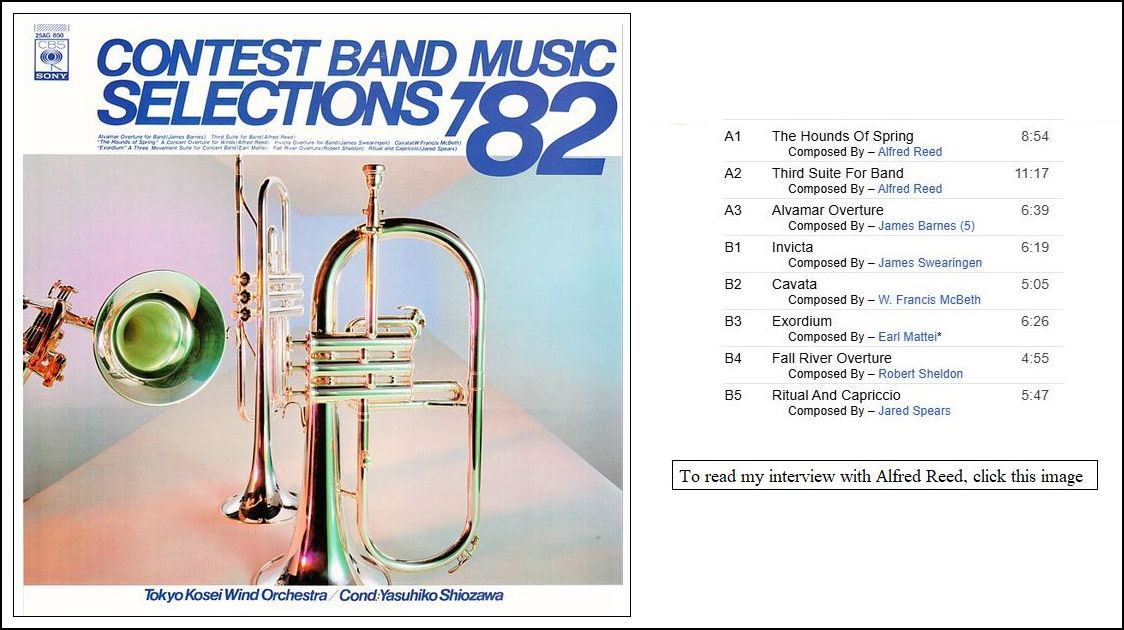
| William Francis McBeth (March 9, 1933 – January
6, 2012) was an American composer, whose wind band works are highly respected.
His primary musical influences included Clifton Williams, Bernard Rogers,
and Howard Hanson. The popularity of his works in the United States during
the last half of the twentieth century led to many invitations and appearances
as a guest conductor, where he often led the premiere performances of some
of his compositions, the majority of which were commissioned. His conducting
activities took him to forty-eight states, three Canadian provinces, Japan,
and Australia; and for a number of years he was principal conductor of
the Arkansas Symphony Orchestra in the capital of Little Rock. At one time,
his "Double Pyramid Balance System" was a widely used pedagogical tool in
the concert band world. From 1957 until his retirement in 1996, McBeth taught at Ouachita Baptist University in Arkadelphia, Arkansas. McBeth was born in Ropesville, Texas (near Lubbock). His parents were Joseph Phinis McBeth, a Baptist minister, and Lillie May Carpenter McBeth. William had a brother, Harold, and a sister, Laura Fay. He had an early start to his musical training, studying piano with his mother and taking up the trumpet in the second grade. He graduated from Irving High School in Irving, Texas where he served as President of the IHS Senior Class of 1951, as well as President of Future Farmers of America. He lettered in football and track and was a member of the Tiger Band and choir. (Mary Sue White McBeth, wife of Francis, was also in the Irving High Tiger Band class of 1951.) He attended Hardin-Simmons University in Abilene, Texas. While an undergraduate at H-SU, McBeth played in the university band. From December 1952 to January 1953, the band traveled with U.S. Camp Shows to Europe. He also played string bass in a jazz combo, which was unusual for the time period due to widespread segregation throughout the South. McBeth married Mary Sue White in 1953. They had a daughter, Laura and a son, Matthew. He served in the military from 1954 to 1956 with the 101st Airborne Band at Fort Jackson, South Carolina, and the 98th Army Band at Fort Rucker, Alabama. He was initiated into the University of Texas Alpha Iota chapter of Phi Mu Alpha Sinfonia in 1957. In 1962, McBeth conducted the Arkansas All-State Band, with future president Bill Clinton playing in the tenor saxophone section. The most outstanding of his awards have been the Presley Award at Hardin-Simmons University in 1954; the Howard Hanson Prize at the Eastman School of Music for his Third Symphony in 1963;an ASCAP Special Award each consecutive year from 1965 to present; the American School Band Directors Association's Edwin Franko Goldman Award in 1983; election as Fellow of the American Wind and Percussion Artists by the National Band Association in 1984; a National Citation from Phi Mu Alpha Sinfonia fraternity in 1985; Phi Mu Alpha Sinfonia's Charles E. Lutton Man of Music Award in 1988 for his achievement and continued contribution to American music; Kappa Kappa Psi's Distinguished Service to Music Medal in 1989; Mid-West International Band and Orchestra Clinic's Medal of Honor in 1993; the John Philip Sousa Foundations Sudler Medal of Honor in 1999; and election as President of the American Bandmasters Association. In 1975 McBeth was appointed Composer Laureate of the State of Arkansas by the governor, becoming the first Composer Laureate named in the United States. McBeth died on January 6, 2012 (age 78) in Arkadelphia, Arkansas. |
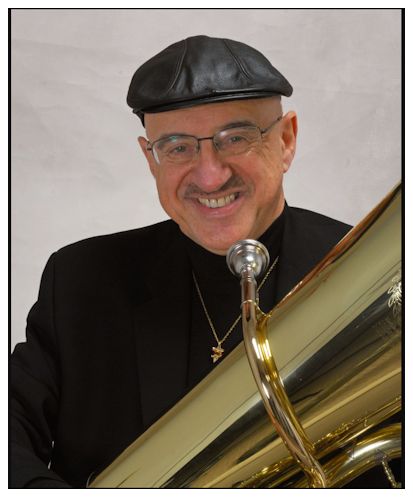
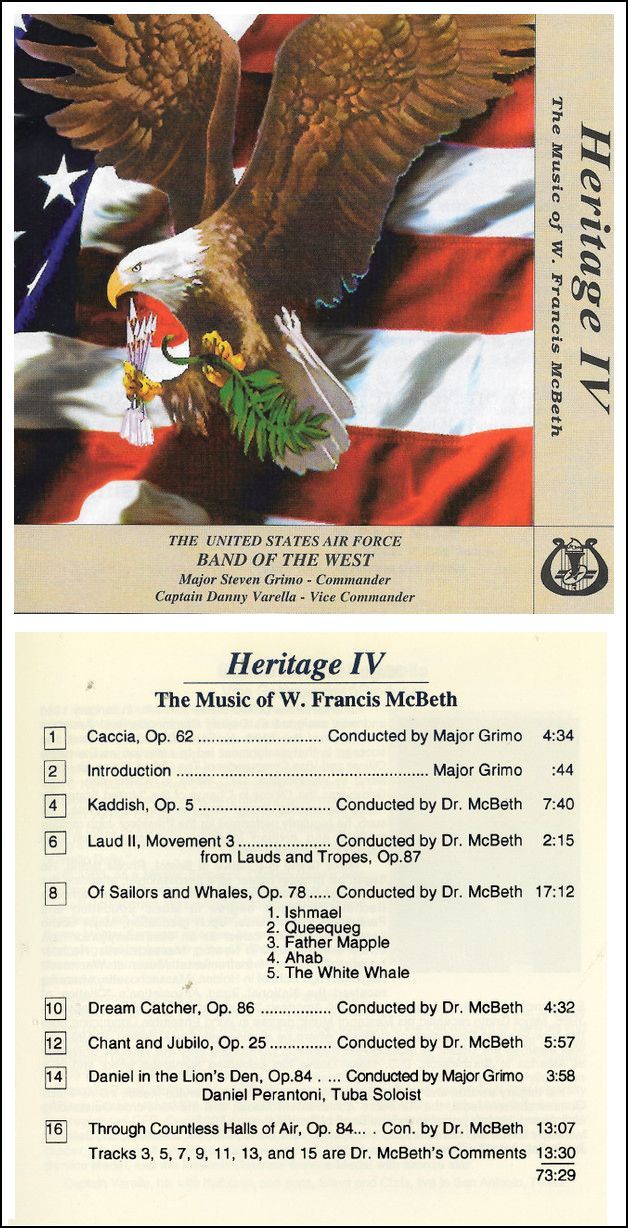
Tuba and euphonium player Daniel Perantoni has been notable for the wide range of his activities, encompassing both classical and jazz performance as well as instrument design, consulting, and a pedagogical career that has landed students in major teaching and performing organizations. A 1963 graduate of the University of Rochester, Perantoni went on for a master’s from the Catholic University of America, finishing in 1968. He has long been associated with the University of Indiana’s Jacobs School of Music, where he succeeded the legendary Harvey Phillips (who, in the words of New Yorker critic Whitney Balliett, was the main figure in elevating the tuba “from the laughingstock of musical instruments to one of its kings”). Following that feat, Perantoni chose to become active on a variety of fronts. His appearances as a soloist have occurred in such prestigious venues as Carnegie Hall and the Spoleto Festival, and have taken him to the Montreux Brass Congress in Switzerland and to Japan. Perantoni co-founded Summit Brass, “the first and only truly American brass ensemble to represent the United States”; this American all-star brass group has made numerous recordings. He has also performed with the St. Louis Brass Quintet and the brass ensemble Symphonia. On the jazz side, Perantoni was recruited by Phillips into the Matteson-Phillips Tubajazz Consort, a group consisting of three tubas, three euphoniums (euphonia?), and a rhythm section. Perantoni and Robert Tucci have designed their own line of low brass instruments, named Perantucci, and he has served as a consultant and liaison to the educational world for the Custom Music firm. Perantoni is the holder of a lifetime achievement award from T.U.B.A., the Tubists International Brotherhood Association (now the International Tuba and Euphonium Association). To his students at Indiana he is known as Mr. P. == Names which are links in this box and below
refer to
my interviews elsewhere on my website. BD |
© 2002 Bruce Duffie
This conversation was recorded in Chicago on December 19, 2002. Portions were broadcast on WNUR the following year, and again in 2006 and 2018. This transcription was made in 2026, and posted on this website at that time. My thanks to British soprano Una Barry for her help in preparing this website presentation.
To see a full list (with links) of interviews which have been transcribed and posted on this website, click here. To read my thoughts on editing these interviews for print, as well as a few other interesting observations, click here.
Award - winning broadcaster Bruce Duffie was with WNIB, Classical 97 in Chicago from 1975 until its final moment as a classical station in February of 2001. His interviews have also appeared in various magazines and journals since 1980, and he continued his broadcast series on WNUR-FM, as well as on Contemporary Classical Internet Radio.
You are invited to visit his website for more information about his work, including selected transcripts of other interviews, plus a full list of his guests. He would also like to call your attention to the photos and information about his grandfather, who was a pioneer in the automotive field more than a century ago. You may also send him E-Mail with comments, questions and suggestions.