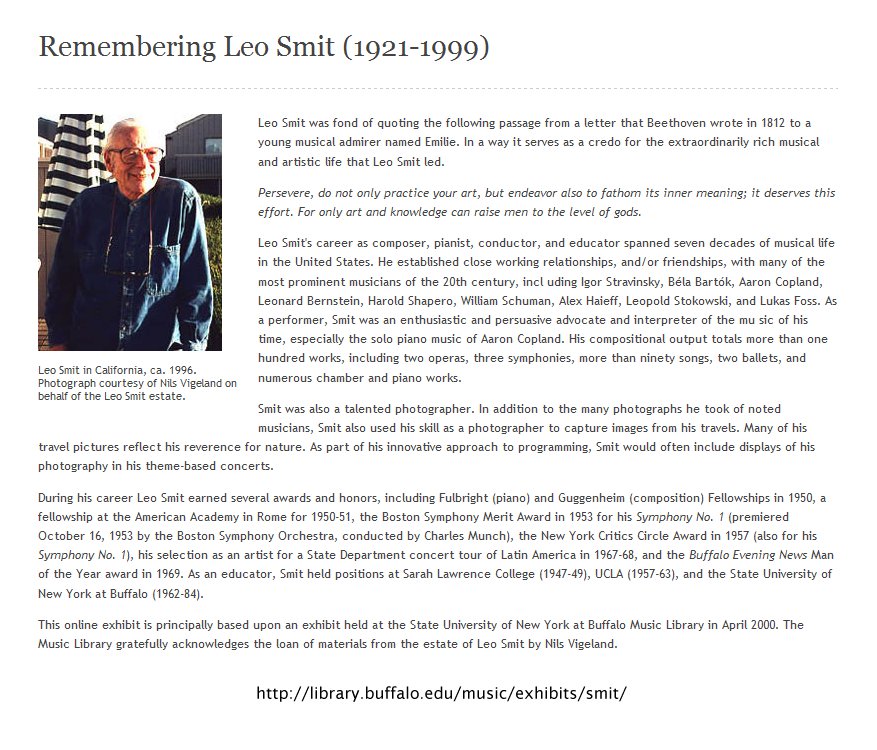
LS: When I’m playing somebody else’s music, I’m
a pianist/composer. When I’m playing my own, I’m a composer/pianist.
When you’re composing, you’re nothing but. I’ve also had some experience
conducting, and I find that very exciting to stand up in front of an orchestra
and conduct — or direct the airwaves
as they come blasting upon you. I’m thinking particularly of a performance
of Tchaikovsky’s Third Symphony,
the climax in the final movement. To be a conductor, you’ve got to have
tough knees, because they really buckled under me at that moment, it was
so overwhelming.
BD: Can people get to the bottom of the works of
Leo Smit?
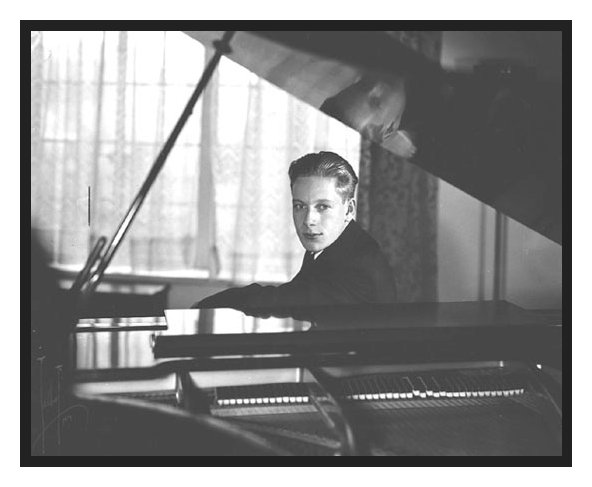
LS: I was pianist with the American Ballet at the
age of sixteen, after having auditioned for Balanchine. That was an
awesome experience because the sight reading was the key ingredient, the key
demand. He played a few pages of the Glazunov ballet Raymonda in front of me, and these were
two of the blackest pages I’d ever seen! You could see fourth-notes
crawling all over the place. He told me to go. I nearly blacked
out from nervousness, but I got the job — apparently
after several dozen other pianists had been auditioned. The initial
demands were to rehearse the dances and the ballets for operas, because the
company at the time was the official ballet company for the Metropolitan
Opera. A few months after I’d been working at that job, Balanchine announced
that Stravinsky was coming to America to conduct performances with the company
of three ballets of his, including one that he had written especially for
us, which was Jeu de cartes.
The other two were Le baiser de la fée
and Apollon Musagète.
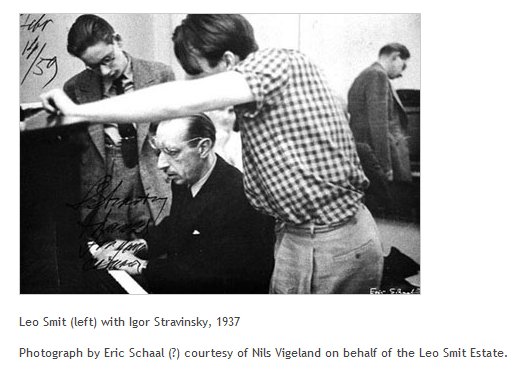
At the age of sixteen I thought of him as one of the greatest composers
who ever lived. When he made his first appearance in the studio, I
stood up and stared deep into his brain. It was just marvelous when
he sprang into the room on grasshopper legs, dressed in a sporty jacket with
a polka-dot bowtie. I was rather shocked at his outfit! I thought
great man only wore dark clothes. [Laughs] He sat down, back
to the mirror, looked at me a few times in order to see if I was ready, and
we launched into the first deal. After this he came over to where I
was sitting at the piano, and offered to play through the ballet, the entire
work, for me and for Balanchine to set the tempos. It was as though
he played without fingers, without tone, and in fact it was timed to a glissando
what should have been fingered scales. His grunting and singing and
breathing especially was very impressive. He seemed to be bumping into
surprising bits of melody in his own music which seemed to please him enormously!
He would grin in a kind of a bullfrog grin, as though some note had risen
to his approval. That performance was like some kind of introduction
to the deeper mysteries of life, and it’s just something unaccountable.
I just don’t know how he did it, but when he finished playing, my whole feeling,
my whole concept about time and rhythm, and about structure and the way in
which you put the fingers into the keys somehow had changed. It was
a unique experience for me, and of course it continued. I was his assistant
conductor during the performances at the Metropolitan, and I ran the whole
show backstage. I did the lighting. One of the more interesting
and curious moments was when the dancers, waiting in the wings for their cues,
didn’t go on on time because they’d become accustomed to hearing the music
on the piano. Having had only two rehearsals with the orchestra, they
simply didn’t recognize their music! So I ran around backstage, pushing
them out on cue because I knew the ballet quite well by then. Once
out on the stage they were able to pick up their beats and dance on happily
till the end. After the performance, I went to the green room to thank
Stravinsky for the marvelous experience of working with him, and he said
— in Russian and French — “Molodetz, you are worth beaucoup d’argent.” That’s three
languages, actually! It means “Fine lad, you’re worth a lot of money,”
which was the ultimate Stravinskian compliment!
Pianist and composer Alexander Goldenweiser was one of the great founders
of the Russian Piano School, a tirelessly dedicated pedagogue who helped establish
the very system of teaching piano in Russia that has led to many successful
concert artists. Born in what is now Chisinau, Moldova, Goldenweiser's musical
training as pianist and composer commenced once his family settled in Moscow
in 1883, taking private lessons with Vasily Prokhunin, a student of Tchaikovsky.
Goldenweiser's term as student at the Moscow Conservatory began in 1889,
where he studied with Alexander Siloti, Sergey Taneyev, Ferruccio Busoni,
and Anton Arensky; he made his debut in 1896 in a duet recital with fellow
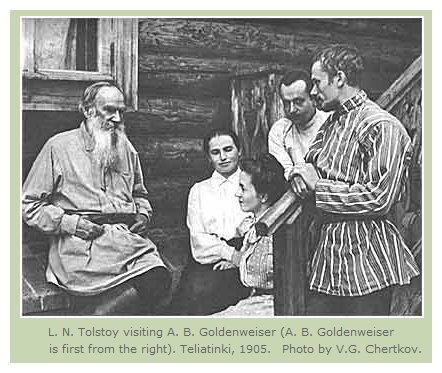
student Sergey Rachmaninoff. In his youth, Goldenweiser was a close friend
of author Leo Tolstoy, and transcribed practically every word they shared
together, publishing such comments in book form after Tolstoy died in 1910.
We also owe the existence of Tolstoy's only musical composition to Goldenweiser,
who took it down after Tolstoy played it to him in 1906.Just a year after his debut, Goldenweiser began to teach, and in 1906 was named to the staff of the Moscow Conservatoire, where he taught for the next 55 years. Goldenweiser also founded the Central Special Music School as an adjunct to the Moscow Conservatory in 1932 especially for the training of pianists; it remains in operation. Among the pianists who passed through Goldenweiser's instruction were Lazar Berman, Samuil Feinberg, Dmitry Kabalevsky, Tatiana Nikolayeva, Dmitry Paperno, and Nikolai Kapustin, though his favorite was Grigori Ginsburg who only outlived the master by less than a month. Goldenweiser was also a close friend to Alexander Scriabin and active in the founding of the Scriabin Museum in the 1920s. Rachmaninoff dedicated his Suite No. 2 for two pianos, Op. 17, to Goldenweiser and he enjoyed a lifelong friendship with Nikolay Medtner. Goldenweiser never made piano rolls and did not record until 1946, when he was named a People's Artist of the USSR. He was 71 at the time and would go on to make many records up until his death at age 86; while many of his recordings are outstanding, they are uneven owing to his advanced age and the poor sound of many Soviet-era recordings. As a composer, Goldenweiser published his first composition in 1887 and continued to compose through 1912, when he breaks off -- he did not pick it up again until the early 1930s, then continuing until his death. One of the last recordings he made was of his own Piano Trio in E minor, Op. 31, partnered by cellist Mstislav Rostropovich and violinist Leonid Kogan. -- Biography by Uncle Dave Lews,
from the allmusic.com website
|
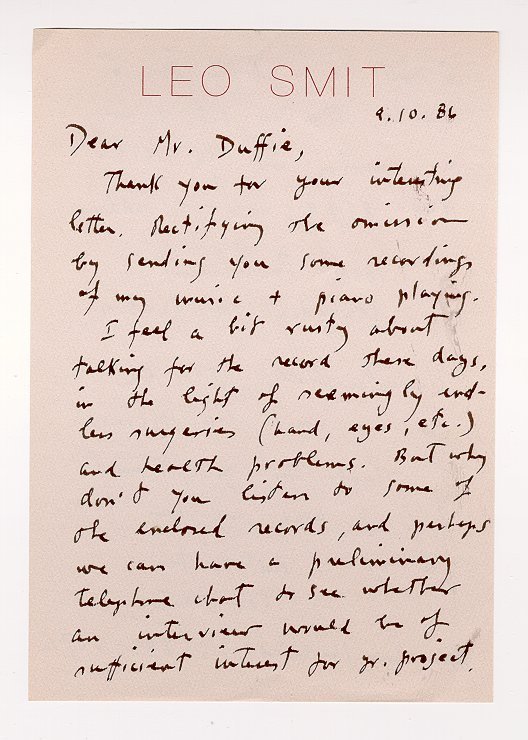
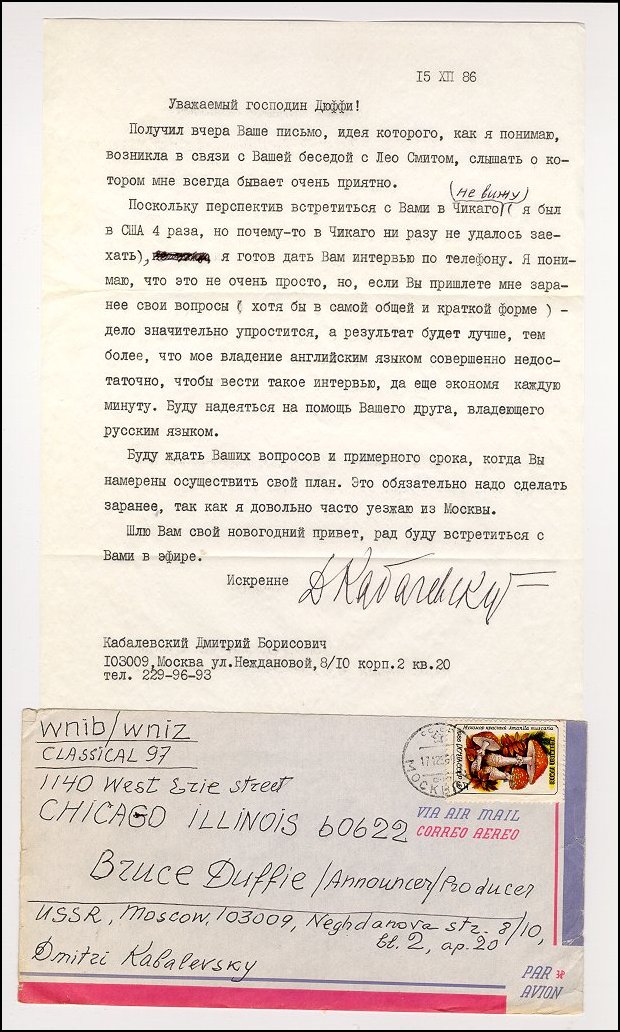
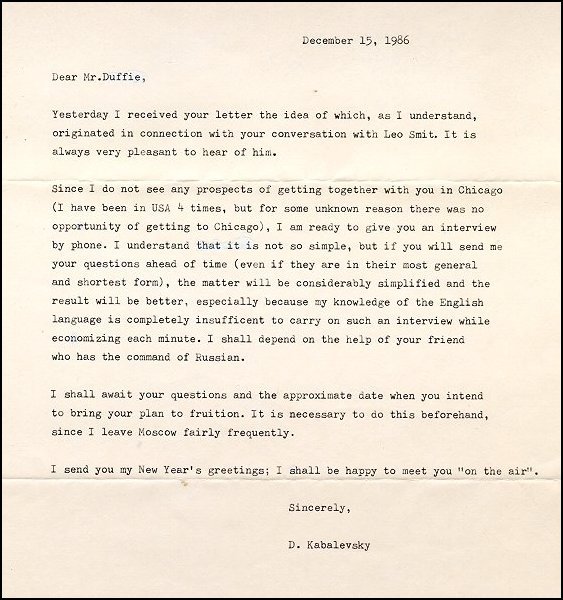
Whenever the opportunity presents
itself, I always ask my guests for contact information about others who might
be willing to do an interview. Naturally, I inquired about Kabalevsky,
and Smit was pleased to give me the address in Moscow. So I wrote the
Russian composer and got this positive reply...
A friend of mine translated it for me . . . . .
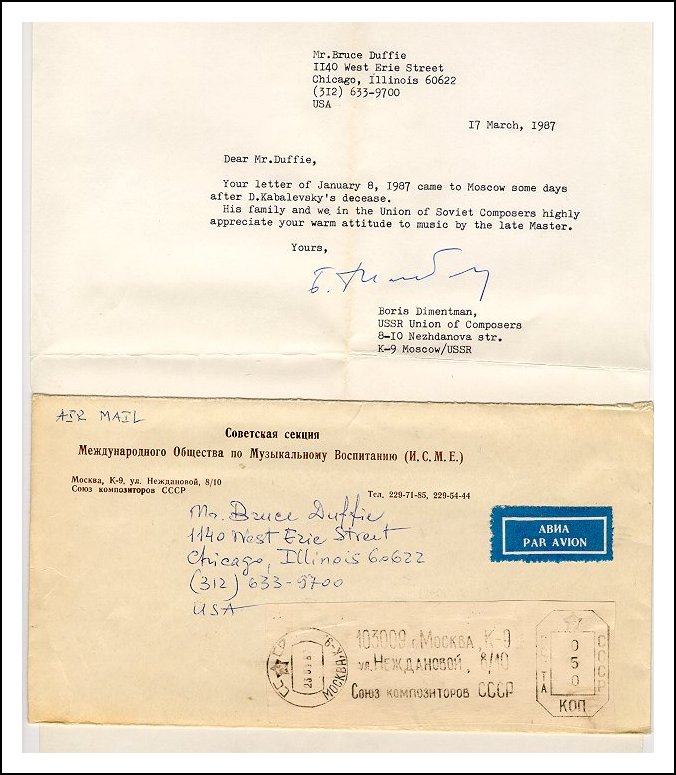
I dispatched another letter with the requested material, but alas, it was simply too late . . . . .
|
BD: If this is unperformed, then it was not commissioned?|
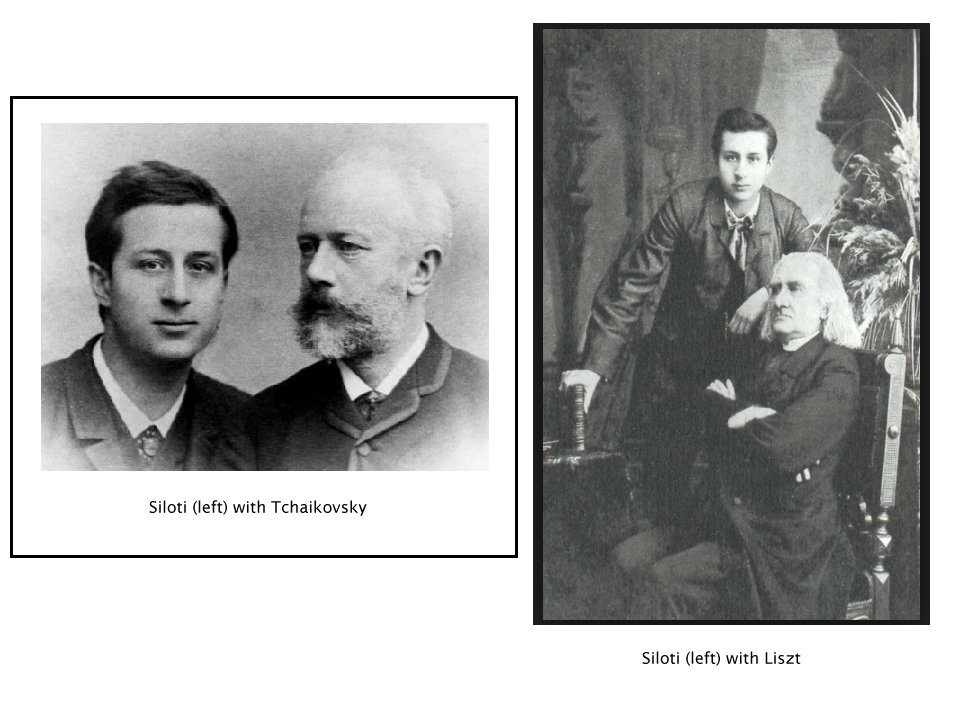
Alexander Siloti (1863 - 1945)
In the generation prior to 1917, Siloti was one of Russia's most important artists, with music by Arensky, Liszt, Rachmaninoff, Stravinsky and Tchaikovsky dedicated to him. At the Moscow Conservatory he studied piano with Zverev from 1871, and under Nikolai Rubinstein, Taneyev, Tchaikovsky, and Hubert from 1875. He graduated with the Gold Medal in Piano in 1881. He worked with Liszt in Weimar (1883-1886), co-founded the Liszt-Verein in Leipzig, and there made his professional debut on 19 November 1883. Returning in 1887 Siloti taught at the Moscow Conservatory, where his students included Goldenweiser, Maximov, and first-cousin Rachmaninov. In this period he began work as editor for Tchaikovsky, particularly on the First and Second piano concerti. He quit the Conservatory in May 1891, and from 1892-1900 lived and toured in Europe. He also toured New York, Boston, Cincinnati and Chicago in 1898.
From 1901-1903 Siloti led the Moscow Philharmonic; from 1903-1917 he organized, financed, and conducted the supremely influential Siloti Concerts in St. Petersburg. He presented Auer, Casals, Chaliapin, Enesco, Hofmann, Landowska, Mengelberg, Mottl, Nikisch, Schoenberg and Weingartner, and local and world premieres by Debussy, Elgar, Glazunov, Prokofiev, Rachmaninov, Rimsky-Korsakov, Scriabin, Sibelius, Stravinsky and others. Diaghilev first heard Stravinsky at a Siloti Concert. In 1918 Siloti was appointed Intendant of the Mariinsky Theatre, but late the following year fled Soviet Russia for England, finally settling in New York in December 1921. From 1925-1942 he taught at the Juilliard Graduate School, performing occasionally in recital, and in November 1930 gave a legendary all-Liszt concert with Toscanini. Siloti's private students included Marc Blitzstein and Eugene Istomin. He wrote over 200 piano arrangements and transcriptions, and orchestral editions of Bach, Beethoven, Liszt, Tchaikovsky and Vivaldi. Even though he had a great repertoire and was a famous figure during his life, his fame has gradually faded away making him quite unknown to most people of today . |
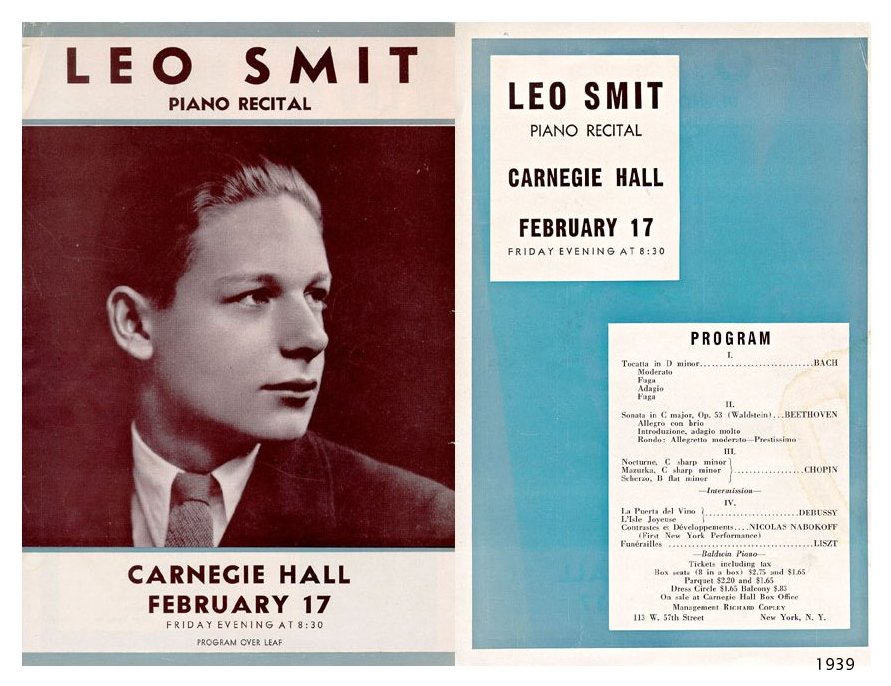
LS: He opened me up a little, without ever realizing
it, probably. Then came the Stravinsky episode, and after that I played
for Bartók. That was a moving experience. Then playing
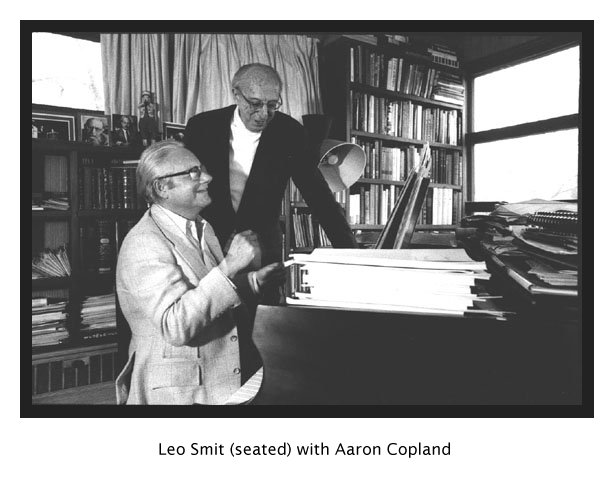
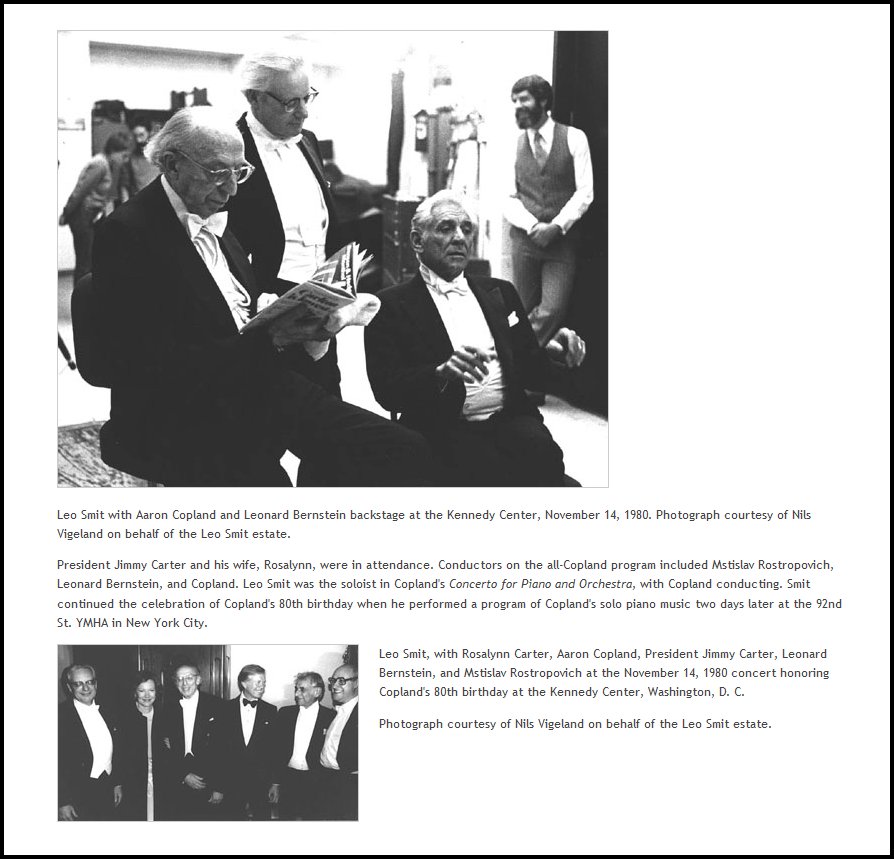
for Copland was the final encouragement, because after I played his Piano Sonata for him, which he had just
completed, he began to say nice things. I asked him if he had any hot
tips for me, anything that he would have wanted me to do or thought needed
some change or improvement, but he said, “No, not at all.” He said,
“I’m more interested in the variety of performances, and not in having everyone
play it the same way.” Obviously, everyone plays it the way he wants
it to go, to be played. It’s very impressive, that detached and objective
view, and the basic curiosity that lay underneath it affected me, also.
BD: So in that case, you are playing both sides
of the fence!
BD: But we’ve got to try and reach out catch more
people.
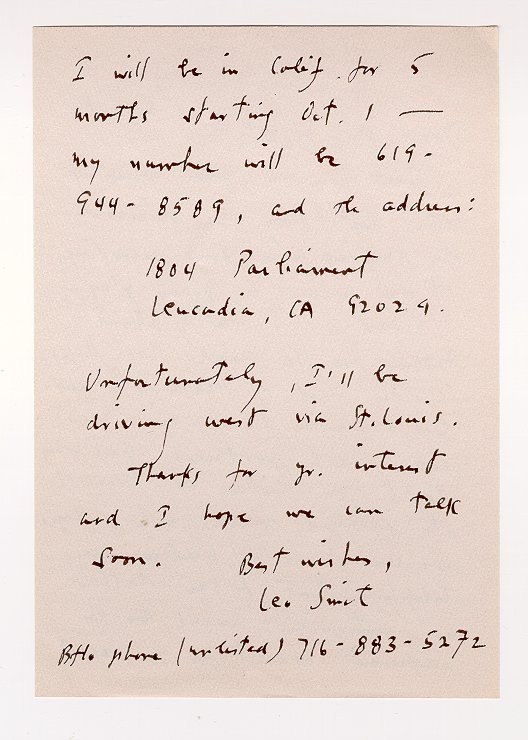
This interview was recorded on the telephone on November 5, 1986.
Segments were used (with recordings) on WNIB in 1991 and 1996. The
transcription was made and posted on this website in 2013.
To see a full list (with links) of interviews which have been transcribed and posted on this website, click here. To read my thoughts on editing these interviews for print, as well as a few other interesting observations, click here.
Award - winning broadcaster Bruce Duffie was with WNIB, Classical 97 in Chicago from 1975 until its final moment as a classical station in February of 2001. His interviews have also appeared in various magazines and journals since 1980, and he now continues his broadcast series on WNUR-FM, as well as on Contemporary Classical Internet Radio.
You are invited to visit his website for more information about his work, including selected transcripts of other interviews, plus a full list of his guests. He would also like to call your attention to the photos and information about his grandfather, who was a pioneer in the automotive field more than a century ago. You may also send him E-Mail with comments, questions and suggestions.