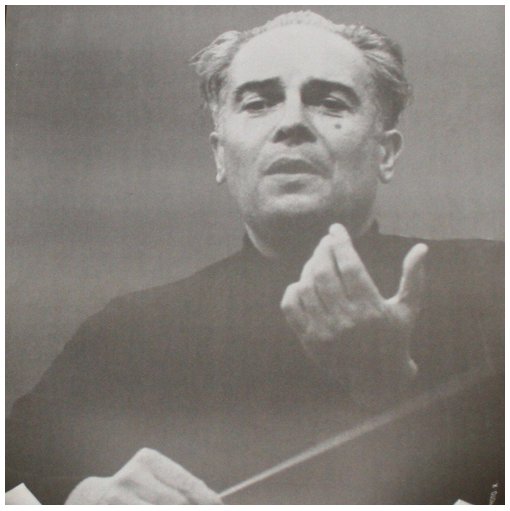
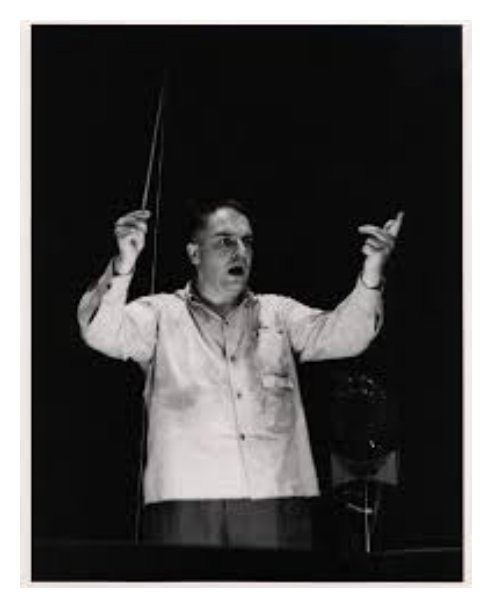
Conductor Vittorio Negri
A Conversation with Bruce Duffie
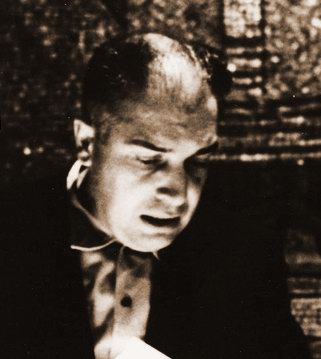
Vittorio Negri was born in Milan,
Italy, in 1923. He first studied composition and conducting at the Milan
Conservatory of Music, then at Siena under Antonio Guarnieri. In 1952, after
studying under Bernhard Paumgartner at Salzburg, he was appointed Assistant
Conductor of the Mozarteum there. Maestro Negri is a musicologist and a founding
member of the Societa Italiana di Musicologia; he is also editor-in-chief
of the Monumenta Italicae Musicae and has edited numerous works by 17th-
and 18th-century Italian composers. He occupied the chair of Chamber Music
at the Conservatory of Music of Perugia for two years and, since 1955, has
been artistic director of the recordings of the famous Italian chamber ensemble
I Musici. Maestro Negri’s musical activities have taken him all over Europe,
where he has conducted and recorded with many of the major choirs and orchestras.
|
Vittorio Negri made his first appearance at the Ravinia Festival, the summer
home of the Chicago Symphony, in August of 1992, leading a couple of single-composer
programs. One was instrumental and choral music of Vivaldi featuring
the return after a decade of flutist Jean-Pierre Rampal, and the other had
the six Brandenburg Concerti of
Bach. It was during this visit that I had the chance to speak with
this renowned maestro. While setting up the recorder, he mentioned that
his “bloody English was not good.”
Notwithstanding his opinion, it turned out to be quite good, and he was enthusiastic
about the entire subject. This transcript does smooth out a few of
the rough edges, but leaves several of his delightful turns of phrase . .
. . .
Bruce Duffie: We
will just talk about our favorite subject.
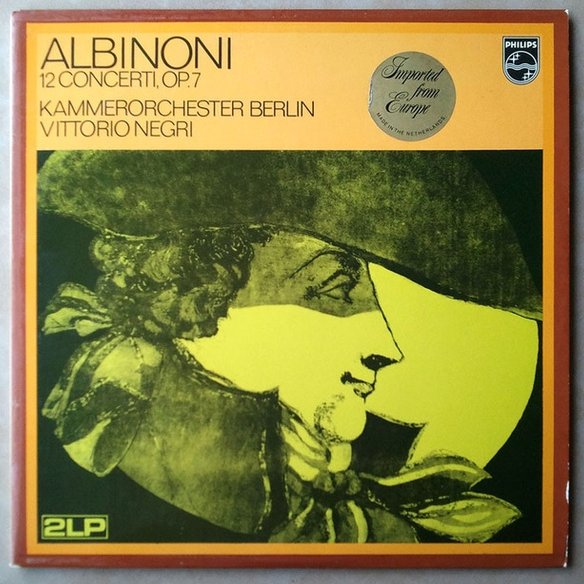 Vittorio Negri: What
is your favorite subject?
Vittorio Negri: What
is your favorite subject?
BD: Music!
VN: Ah, music!
That’s great, we are great. [Both laugh]
BD: Isn’t music
your favorite subject?
VN: It is, indeed.
BD: Has it always
been your favorite subject?
VN: I must say
yes. When I was like a very small boy, music — good music, I mean —
was giving me something special, a sort of excitement, a sort of joy, a sort
of feeling good. I don’t know; it is inexplicable.
BD: Does it still
do that for you?
VN: Fortunately,
yes. [Laughs]
BD: Is it a surprise
that almost seventy years later it still gives you that excitement?
VN: Yes.
I think it’s the presence of God — or
something like that — because it is easy to get into
a sort of routine and to think that this is just another concert, but the
good music is so great that even if I have done many times the same symphony,
every time I study again from the beginning and every time I discover something
new that I didn’t understand before. I think that our attitude toward
the music has to be of great humility, because this great composer has put
something so incredible in the compositions, that even I wonder whether they
were really conscious on what they put in. Maybe it was just God giving
us all this beauty through them.
BD: The composer
was just the conduit?
VN: Yes.
BD: Are you the
conduit to recreate the music?
VN: First of all
I’ll try to approach this great music with humility, starting from the point
of view that the composer is always right. If he would be here I could
talk to him, but he’s not here. He just left his message, and our duty
is to understand exactly what he wanted to communicate. This is the
early Baroque time, when the soul of the men got into the music. They
wanted to say something and they did say something. Sometimes it is
very easy to understand what it is and sometimes it is less easy, but there
is always a message in it. There is always something that we have the
tremendous responsibility to understand and to hand over to the audience.
That is what I think.
BD: Were they saying
the same things to the audience in their day as they’re saying to today’s
audience?
VN: I would say
yes because it is the soul of the man, and it’s always the same. It’s
sometimes something which could be ignorance, which could be violence, which
could be hatred, which could be all the worst things, but the soul is coming
from God. This is just the spark of God, and it’s always the same for
everybody in this world — for me, at least.
 BD: You work primarily with eighteenth century music.
Without naming names, are there composers today who are writing this same
kind of God-given music?
BD: You work primarily with eighteenth century music.
Without naming names, are there composers today who are writing this same
kind of God-given music?
VN: This is a very
good question because sometimes one could have doubts about that. But
I think that good composers still do something like that. The means
have changed and the taste of the audience sometime is changed, but a serious,
a deeply involved composer cannot go out of this way. He is forced
to express something coming from the high sky and from the friendly skies.
Let me say the ‘friendly’ and
the ‘high’ skies because these
skies are really friendly to us, even if we do not realize immediately.
We could say, “Oh, what kind of mess is this world,” but it’s us and what
we do. We do the mess.
BD: Not the inspiration
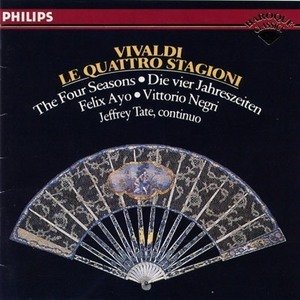
of the music? [Vis-à-vis the recording shown at left, see
my interview with Jeffrey
Tate.]
VN: No, no.
Certainly not.
BD: Let me ask
the great big question, then. What is the purpose of music?
VN: The purpose
of music is as the purpose of all the arts. It is testimony that there
are higher worlds with tremendous beauty. If you hear, for instance,
the second movement of the First Brandenburg
Concerto, it is a prayer. I make a distinction here. I
don’t think that the prayer is just to ask for something. It’s correct
to ask for something, but the real prayer is just a thank you. Thanks
for all the beauty you have given to us. If you think of it, these
great composers like Bach and Mozart and so on gave their music for nothing,
practically! We are so rich, and we didn’t pay anything to them.
BD: We are rich
because of them?
VN: Because of
them. Yes.
BD: Is there a
continuous line from, say, Palestrina through Bach, through many composers?
VN: Oh, I would
say certainly, no doubt about that. The communication was different
in the Baroque time — it was much faster than now! It seems a paradox,
but it’s not because all of these kings, princes and the Pope and Cardinals
were very eager to have the best artists. So they gave instructions
to their ambassadors to inform them first of all, not about the politics and
whatever, but about the composers, about the virtuosos, about that kind of
thing. The big explosion of Vivaldi, which is Opus Three, L'estro Armonico, was known by Bach a
few years after that. Bach would transcribe many of his concertos for
harpsichord or for orchestra and harpsichord in that horse-and-buggy period!
There was no fax, no telephone, and no airplane.
BD: Are we better
off today when there’s the truly instantaneous communication?
VN: I would say
‘yes’ and ‘no.’ Yes, certainly, because information is immediate, and
no because sometimes there are things that would be better not to know.
[Both laugh] This is a very selfish this position...
* *
* * *
BD: When you come
to an orchestra, you rehearse and then give the performance. Is all
your work done at the rehearsal, or do you leave something special for that
night of performance?
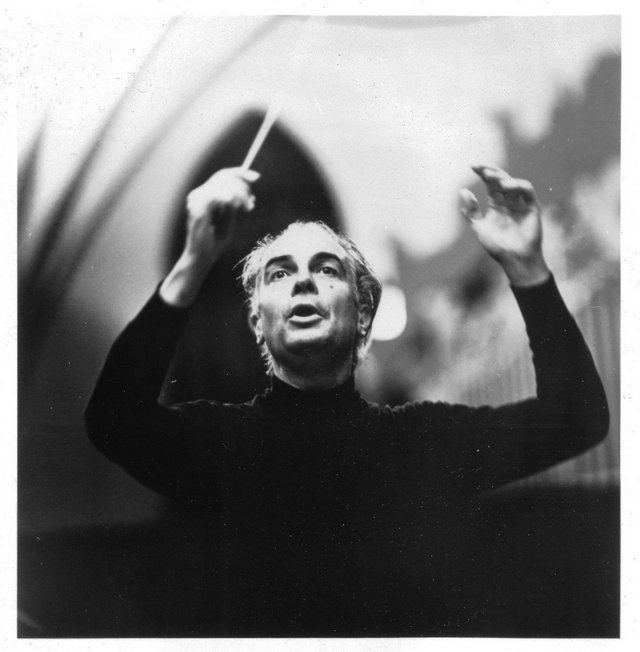 VN: These are very good questions you are putting
to me. I try. I say ‘I’ because I’m speaking, but we conductors,
we try. I think that my colleagues are the same. We try to do
everything during the rehearsals. Sometimes the rehearsal time is short,
particularly if the program is longer. I accept it is impossible to
have all the time one would like. We could have ten rehearsals for
the Brandenburg and still not finish
with enough work on everything.
VN: These are very good questions you are putting
to me. I try. I say ‘I’ because I’m speaking, but we conductors,
we try. I think that my colleagues are the same. We try to do
everything during the rehearsals. Sometimes the rehearsal time is short,
particularly if the program is longer. I accept it is impossible to
have all the time one would like. We could have ten rehearsals for
the Brandenburg and still not finish
with enough work on everything.
BD: Really???
VN: It is such
great, perfect music in how it is organized! We do our best and everything
is in place, but now I’m talking about me, not my colleagues. I know
exactly that the me who will make the concert is not the same person who
has made the rehearsal. It could happen that during the course of the
concert, suddenly a sort of inspiration arrives and tells me for the first
time, “Breathe there at this point.” I never thought about this before.
This is the big joy to make music with these outstanding musicians because
they will understand immediately and will follow immediately. This
communication, to be together just to celebrate the great music
— I don’t know a bigger joy in life!
BD: Are they getting
the same inspiration you are at the same moment?
VN: I think that
there are vibrations coming out. It’s sort of transmitting. I
transmit waves, they transmit waves, and we are in touch all the time.
BD: Do you get
transmissions also from the audience?
VN: Certainly.
Absolutely! There are people who say, “We can sit home very comfortably,
put on a CD and listen to the music and enjoy this.” I agree, but there
are two things on which I do not agree. First of all, the CD is an
industrial product. It’s as perfect as possible, and sometimes with
little tricks it’s improved. If there are mistakes, the mistake is
taken out and replaced by other takes. I don’t know that the mistake
is necessary but it’s part of the human weakness, and to avoid completely
these little things would make an un-human performance. It’s too perfect,
and man is not perfect. So I prefer very much a little imperfection
just for the moment. Little things might be not be quite together,
but the expression for me is the most important thing. Yesterday I
heard the second movement of the Sixth Brandenburg
with the two violas, and I really cried! They were so deeply involved,
so playing with the heart and with the soul, not with the fingers.
That is great! It was the same with the second movement of the Third Brandenburg and the second movement
of the Second Brandenburg.
It was all do the same.
BD: If you heard
those on a record, would you cry a little less, perhaps?
VN: Another thing
with the record is that one is alone, alone or with friends, but at the concert
the audience is there. It is a sort of community, in my opinion a religious
community. The fact that the audience is there listening to this music
and sees the people making music is something that makes both the audience
and the musicians more rich. There is this transmitting of these waves
going and coming. Now this is very important, I think. It is
very important to everybody.
BD: So no matter
what religion we are, we are all praying to Orpheus at that time?
VN: There is only
one religion, as there is only one God, and we are all brothers, like Beethoven
and Schiller say in the Ninth Symphony.
* *
* * *
BD: You’ve conducted
a lot of eighteenth century music. Do you also conduct some newer music,
too?
VN: Yes, I do.
Not some so-called avant-garde music. I’m not criticizing, but it’s
difficult for me to find the kind of expression I’m looking for. But
in modern music there are incredibly good things also. It’s really
worth it to do them and to give them to the audience, because without them
there is the danger that the audience gets in a habit of only wanting to
listen to the same things, and then it is difficult to push out of this habit.
To compare different performances is a sort of a sport, and is not very healthy.
 BD: Do you also explore for the forgotten composers
of the eighteenth century?
BD: Do you also explore for the forgotten composers
of the eighteenth century?
VN: Forgotten composers,
I must say yes, of course they deserve to be known. I made some research
because I like this, and part of my formation is musicology. I was
among the founder members of the Societa
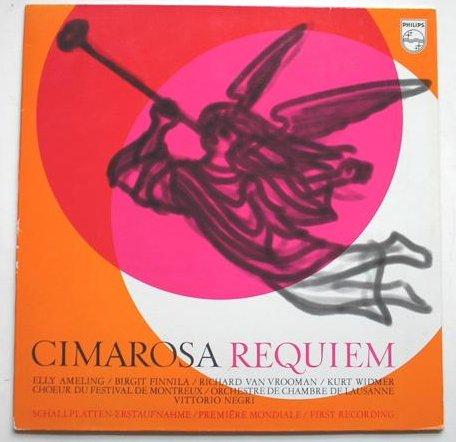
di Musicologia, and I found, for instance, a Requiem by Cimarosa, which is a beautiful
piece. Cimarosa is certainly a very good composer, but if you think
that one year after the death of Mozart, he arrived in Vienna and got the
salary of twelve thousand ducats, while Mozart got only eight hundred, then
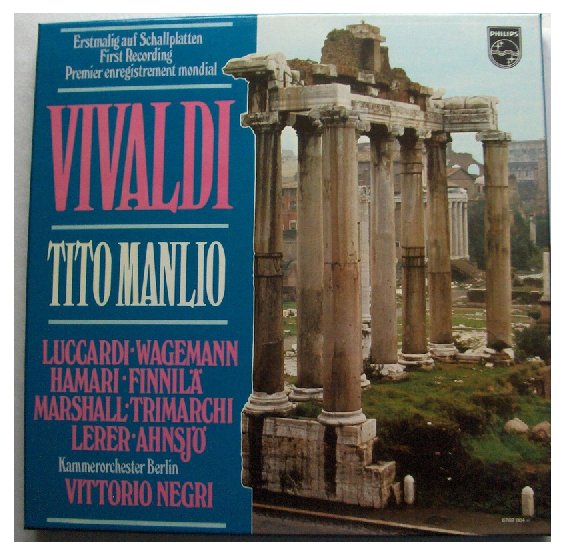
something is wrong in this evaluation of them. I do a lot of Vivaldi
because I thought there was injustice was done against him — calling
him a man who was only interested in money, and that he was a false priest
because he had this relationship with a girl. That he had the relationship
with the girls is uninteresting for me.
BD: [With a gentle
nudge] Perhaps, but not for him! [Both laugh] [Vis-à-vis
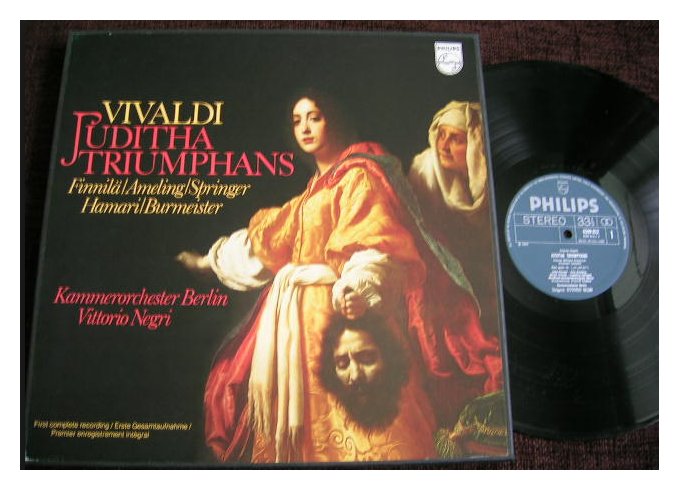
the recording shown at right, see my interview with Elly Ameling.]
VN: Well said!
But if this could have given him some inspiration to write what he did, why
not?
BD: So the relationship
with the women helped him put more spark into the music?
VN: I would say,
yes, because music is love and you feel this from him. If Vivaldi would
have been as greedy as some of the critics say, he would have died as a rich
man. But he had to leave Venice after thirty years because he was no
more fashionable, and he went to Vienna where he died in poverty, really
poverty. This was fifty years before Mozart, and we do not know where
he is buried — as we do not know where Mozart is buried.
I think there is a sort of justice to this because they do not belong to
this world. They belong to a better world somewhere.
BD: So in a way
it’s good that we can’t go to their graves — it’s better
that we go to their music?
VN: Exactly.
BD: You conduct
a lot of music from earlier times. Where do you come down on the original
instrument question?
VN: That is a very
interesting question because period instruments are, in a way, a reaction
to the way to play the modern instrument. We can still hear performances
made in the thirties and forties with the pianoforte instead of a harpsichord
or with the violin played with the huge vibrato, and this really don’t fit
with Baroque music. It is not that in those times there was no vibrato
at all; there was a sort of vibrato, always. Even before the Renaissance
there was a form of expression, not that vibrato started at the beginning
of this century just to adjust the notes a little bit or intonation of this
kind. It’s also not to say (in a critical way) like some gypsy music
where they go “woo, woo, woo!” [Both laugh] It’s a good reaction
to this idea. Of course, every exaggeration is not necessarily good.
With the old instruments — recorder, flute, for instance
— Mozart had no sympathy at all with the flutes, and it’s obvious because
these instruments did not have a big sound and the intonation was very doubtful.
He wrote two concertos for flute — one better than
the other [laughs] — but he didn’t love this instrument.
On the contrary, he loved the clarinet very much at the end of his life when
he wrote the Quintet and the Clarinet Concerto for Stadler.
BD: I really love
the basset clarinet. I’m glad it’s coming back.
VN: Yes!
In the Clemenza di Tito there’s
a marvelous part of the aria. It’s great this one, when it was written.
I think everything has to be so as not exaggerating one direction or the
other. But a good ensemble of period instruments is certainly something
very interesting and very pleasant to listen to where there are good players.
If not, why should we not enjoy the music because just we play with modern
instruments? Let’s enjoy the music; that is the first thing.
Don’t be so Calvinist to say, “If Bach is not played on period instruments,
it’s not Bach; if Vivaldi is not, it’s not Vivaldi; if Handel is not...”
We can enjoy Vivaldi played by modern instruments; we can enjoy Handel; we
can enjoy Bach, and this is the important thing for me.
* *
* * *
BD: Do you conduct
a lot of opera?
VN: Not a lot,
but many I would say, yes. I like very much opera. The big problem
is now the directors. Last year I did a Handel opera, and I was very
lucky because I had a director not too progressive. [Both laugh]
But in spite of that, there were people smoking in the scene. There
was a singer running all around, up and down the scene while singing so far
away from me, having problems with breath because he was running! [Laughs]
But there are people that make much worse things. I have this opinion
— these works were done in a certain period with then-current
subjects. They were actual like, for instance, Cosi fan Tutti, which was very modern,
in a way, or Don Giovanni because
Giovanni [winks] heh, heh, heh, any time! Because The Magic Flute is sort of an initiation,
all is symbolic, but we do not need just to put it in modern time because
then there is a discrepancy between what we see and what we hear. I
would leave this very modern scenario and direction with modern works.
There are plenty of these. There could be a little different idea than
usual, a fantasy, but still in a shape that is not too contrary to the music.
In another production, if you hear Handel’s music with
period instruments and then you see the harpsichord player was put in the
bar of a modern hotel in Baghdad... I don’t know. I would agree
even with this direction without period instruments — maybe —
but already we have this preoccupation of using everything of
the time, so the direction should also be in this time. That is what
I think.
BD: Even to use
the old stage machinery with the outdated rigging and the windlass and everything?
VN: They had, some
tremendous things! Don Giovanni
and Zauberflöte in Vienna in
the eighteenth century had big machineries, and there was no electricity,
nothing, and they could do all this kind of things!
BD: You could hear
all the ropes and pulleys creaking offstage! [Laughs]
VN: Yes.
Sometimes it was a mistake, but nowadays mistakes still happen.
BD: Who should
be the boss of the opera — the conductor or the stage
director?
 VN: I think that a cooperation is the best result,
and that these people are both cultivated and both not fanatic. I hate
fanaticism, I hate extremists. It’s quite possible for civilized people
to discuss and come to an agreement to do things. If all the responsibility
is on the shoulder of one man, it’s not impossible that the man becomes a
dictator, and this also is not good. A good balance is the perfect
situation, and this boss person, if he is a civilized person will make it
is easy to understand each other and not just to profit off the weakness
of the other. It’s always wrong to profit. Each should say their
own idea and then see what is positive about one and the other and then put
them together.
VN: I think that a cooperation is the best result,
and that these people are both cultivated and both not fanatic. I hate
fanaticism, I hate extremists. It’s quite possible for civilized people
to discuss and come to an agreement to do things. If all the responsibility
is on the shoulder of one man, it’s not impossible that the man becomes a
dictator, and this also is not good. A good balance is the perfect
situation, and this boss person, if he is a civilized person will make it
is easy to understand each other and not just to profit off the weakness
of the other. It’s always wrong to profit. Each should say their
own idea and then see what is positive about one and the other and then put
them together.
BD: And make the
finished product better from the two?
VN: Exactly because
that difference is what makes humanity rich. Everybody has his own
idea, developed it, thinks how to do the best, and if the two of them come
together and they put the best of both together, then the result is certainly
very good indeed.
BD: Is the composer
at all a dictator?
VN: I wouldn’t
say so. Beethoven could be taken as a dictator, because his way says,
“Sit down and listen what I have to tell you.” But not Mozart, not
Bach, and even not Beethoven because if you hear any piece by these composers,
you sit there and you listen to it and are captivated.
BD: Is the music
that we’re talking about for everyone?
VN: Oh, certainly.
Sure.
BD: Then how do
we get the rock audiences and the pop audiences to come to more classical
concerts?
VN: That is a good
question, but I don’t know. I don’t have an answer to this because
it’s this sort of over-fanticism. There are people who go to classic
concerts that don’t want to hear anything else, and there are people who
go to pop concerts that don’t want to listen to anything else. Maybe
it is also to let their energy explode because you can see scenes at the
pop concert that you will never see at the classic concert. Maybe these
young people need to shout, to roar, to strip themselves! [Both laugh]
But with time I think that any manifestation of a human being has a positive
part, and with age one’s energy is a little bit calmed down.
BD: So as they
get older, they’ll come to different kind of concerts?
VN: It’s not impossible.
BD: Are you optimistic
about the future of music?
VN: I would say
yes. [Laughs] Sorry for laughing, but your question was, “Are
you optimistic about the future?” and you added, “of music.” Because
of the other, I don’t know whether it’s possible to be optimistic, but let’s
be, because life is the greatest thing existing, and what we need is more
respect for life, more love for other people. It was all that was said
centuries ago. We have just only to read or to feel this and everything
is said. We don’t need many things. We don’t need much to be
happy.
BD: Just music?
VN: Just music.
Once I heard an interview with Artur Rubinstein, the Polish-American pianist.
He was seventy-five or something like that and he said, “You can tie me to
this chair and I will be happy. I have so many things to think about.
A flower is a joy. Beautiful ladies are a joy.” I remember having
seen him in a restaurant called Kaiser,
opposite the Concertgebouw in Amsterdam. He was sitting near the big
Dutch window eating a gorgeous meal and drinking very good wine. When
he was finished he took a huge cigar out of his pocket, light the cigar and
was looking out to the beautiful girls going by. Then I understood
more about what he said during this interview. “All this beauty costs
nothing. It’s there to be enjoyed.” If people would realize that
it’s useless to make money and all these things because one day one has to
go and to leave everything here. Probably the son and the daughter
will spend it all in two years what the father had put together.
So there are so many things he said to enjoy if I am tied here; I still would
be happy. It’s a great lesson.
* *
* * *
BD: Does it please
you to know that you are leaving to history the recordings that you have
made of many of these pieces?
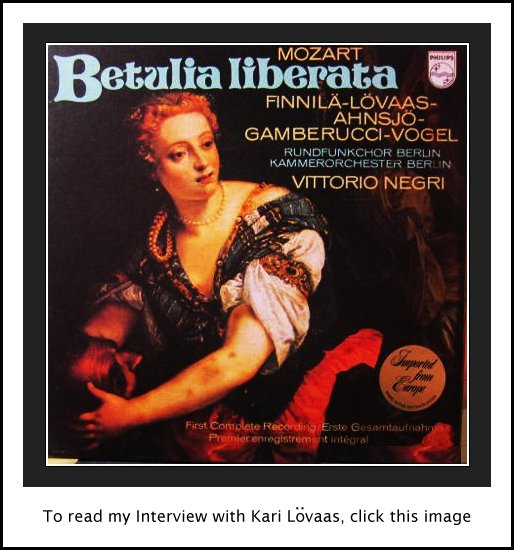 VN:
It’s good to have records because it is just a moment of your life you have
set down there. It’s a sort of book where you put your beliefs
— your love — and it remains there and could
be listened to by people after I’m gone. But to say I’m proud of that?
If there would be someone in fifty years, in a hundred years —
if still the records will be there — who will
listen to this and enjoy them, then everywhere I could be I would say, “I’m
happy for that.”
VN:
It’s good to have records because it is just a moment of your life you have
set down there. It’s a sort of book where you put your beliefs
— your love — and it remains there and could
be listened to by people after I’m gone. But to say I’m proud of that?
If there would be someone in fifty years, in a hundred years —
if still the records will be there — who will
listen to this and enjoy them, then everywhere I could be I would say, “I’m
happy for that.”
BD: You’ve conducted
all around the world. Are the audiences different from country to country
and city to city?
VN: Oh, yes.
BD: How so?
VN: It’s very different.
For instance, the audience in France is pickier. The French are pickier
people. It never happened to me, but a Frenchman is quite capable,
if he doesn’t like something, to stand and just walk out during the concert.
No problem for that. [Laughs]
BD: They would
just leave?
VN: Just leave.
On the other hand, I must say I got the best reviews from French critics.
There are some of them who really understand. They are very fine people.
They understand this and they write with beautiful words because French can
be a very beautiful language. If they don’t like someone, they kill
him. There is no medium — there is love or hate.
BD: Back to extremes
again.
VN: Yes, extremes
again. The German audience is very good indeed, and reacts slowly.
When you are finished with a piece, you have to wait a few seconds before
the applause. It’s not because they don’t know that it’s finished
— which sometimes could happen. It’s just because the reaction
is a little bit slower.
BD: They’re not
just digesting it?
VN: No, no!
They are digesting, but they have to realize it’s finished and then decide
it’s time to start the applause. They are very good audience.
Here in America is very good audience, too. The English also, it’s
a very good audience. They are faithful, the English, but I think the
Americans also are faithful. Once they like you, they like you for all
the rest of your life. It is the same with the Dutch, they are also
very, very faithful.
BD: Have you conducted
in Japan and Asia?
VN: I did in Japan.
It’s amazing experience because actually I was never able to go through their
eyes to understand what really they think. They are extremely gentle,
extremely kind. They always say, “Hai.” They never say no because
it’s not polite to say no. I tell you this story. In my program
there was the Seventh Symphony by
Dvořák. Before I had done Mozart, I did Beethoven, I did Vivaldi.
They are very good musicians with all of this mucic which is rather straight.
It’s done perfectly, but when you arrive to the Romantic period where it
has to be free, then it’s much more difficult for them. I admire Japanese
musicians because of the love they have for our music. I’m incapable
of understanding their music, to be honest. I’ve not really the will
to understand their music. Coming back to the Dvořák,
I arrived in the moment in the first movement where the flutes go up, and
I wanted to wait a little moment before coming to the next bar. So
I explained this. Most of them speak English well. Some speak
German and some speak French, depending from where they make their study.
So I said, “Here I stay up with my hands because I don’t want you to go down
immediately. Did you understand?” “Hai.” So we arrive at
it and they went on. I stopped again and said, “Sorry. I would
like to breathe a little bit there. That is why I stay with my hand
high. I don’t go down, so please don’t go down. Stay there just
a moment.” I tried to express myself clearly, to try to change the
form and they said yes, yes, of course. So we go back and again they
did not wait.
 BD: They didn’t understand your rubato?
VN: No. I
stopped again, and as a third time they were going on, then I didn’t stop
anymore. I went on with them and the performance was very good but
a little straight. But they are very good musicians, extremely good!
Have you seen the children with Suzuki who walk playing the violin?
BD: Sure.
VN: They are playing
Preludes of Bach. Unbelievable!
BD: Children with
their reduced-sized violins!
VN: Yes!
Of course there are people who understand Romantic music. Seiji Ozawa,
for instance, the Japanese conductor makes Romantic pieces beautifully.
But of course he lived maybe forty years in Europe and the States, which
makes still a difference.
BD: Do you have
any advice for young conductors coming along?
VN: Yes.
I would say the first rule is humility towards the great works that they
have to study. They have to study the scores. One never knows
really a score; even if he knows a score by heart, it is not completely known.
Study, study, study, and again, study. Secondly, I saw unfortunately
some young conductors who hate the musicians, who think they are enemies.
This is the biggest mistake we can do. The musicians are friends, the
best friends, because they want to do their best and they want to do their
best that you want from them. Therefore, consider them as friends.
Respect them; love them. For a young conductor this is very important.
The people who play in orchestra are their best friends and they have to
consider them. Always use love. Love is the answer to everything!
That is my opinion.
BD: Thank you so
very much for speaking with me today.
VN: I thank you,
really. It was easy. You put me in a very good mood.
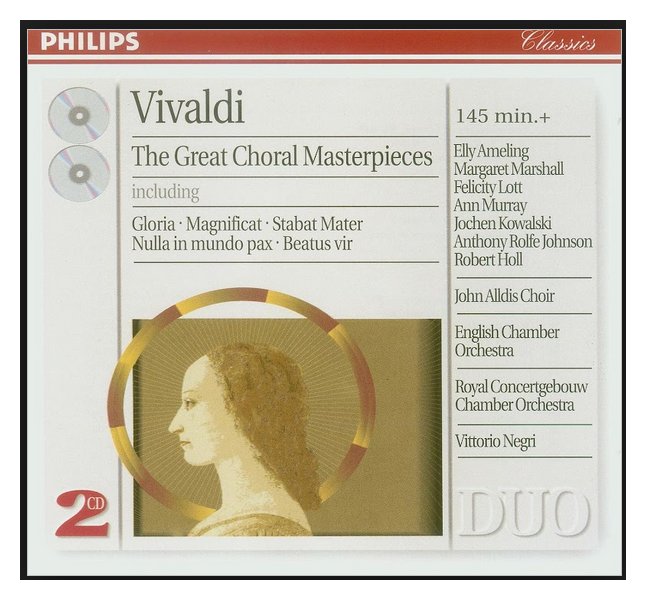
To read my Interview with Felicity Lott, click HERE.
To read my Intereview with Ann Murray, click HERE.
To read my Intreview with Anthony Rolfe Johnson, click HERE.
|
© 1992 Bruce Duffie
This interview was recorded at the Ravinia
Festival in Highland Park, IL, on August 27, 1992. Sections
were used (along with recordings) on WNIB in 1998. It was
transcribed and posted on this website in 2012.
To see a full list (with links) of interviews which have been transcribed
and posted on this website, click here.
Award -
winning broadcaster Bruce Duffie
was with WNIB,
Classical 97 in Chicago from 1975 until
its final moment as a classical station in February
of 2001. His interviews have also appeared in various
magazines and journals since 1980, and he now continues
his broadcast series on WNUR-FM, as
well as on Contemporary
Classical Internet Radio.
You are invited to visit his website for more information
about his work, including selected
transcripts of other interviews, plus a full
list of his guests. He would also like to call
your attention to the photos and information about his grandfather,
who was a pioneer in the automotive field more than a century ago.
You may also send him E-Mail with comments,
questions and suggestions.