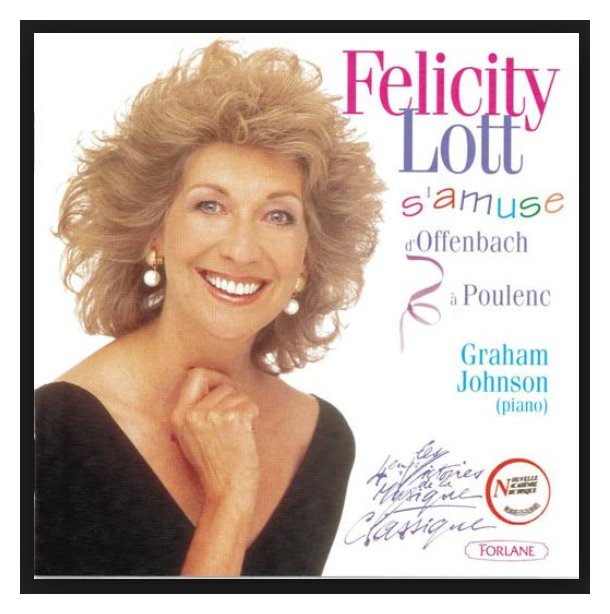
| Dame Felicity Lott was born in Cheltenham,
into a family of amateur musicians. From an early age she learnt piano and
violin, and took singing lessons. Her real love was the French language and
she took a degree in French and Latin at Royal Holloway College, University
of London, with a vague idea of becoming an interpreter. As part of the degree
course, Felicity spent a year as Assistante d’Anglais in a school near Grenoble.
Besides her teaching duties she enrolled at the Conservatoire de Grenoble
and found an excellent singing teacher who encouraged her to pursue her singing
studies. After returning to England to take her degree, she obtained an
Associated Board scholarship to the Royal Academy of Music, where she studied
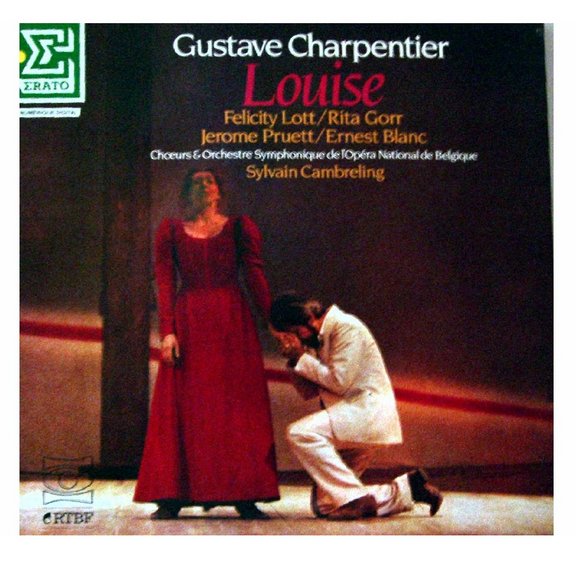
for four years, leaving in 1973 with the Principal’s Prize. In 1975 Felicity made her debut at the English National Opera as Pamina in Mozart's Magic Flute, in 1976 she took part in the first performance of Henze's opera We Come To The River at the Royal Opera House Covent Garden. In that year also began her long relationship with Glyndebourne, with the role of the Countess in Capriccio on the Tour, and in 1977 she appeared at the Festival for the first time, as Anne Trulove in Stravinsky's The Rake's Progress. Since then, Felicity has appeared at all the great opera houses of the world: Vienna, Milan, Paris, Brussels, Munich, Hamburg, Dresden, Berlin, New York and Chicago. Her many roles include the Marschallin (Rosenkavalier / Strauss), Countess Madeleine (Capriccio / Strauss), Arabella (Strauss), Christine (Intermezzo / Strauss) Countess Almaviva (Le Nozze Di Figaro / Mozart), Fiordiligi (Così Fan Tutte / Mozart), Donna Elvira (Don Giovanni / Mozart), Ellen Orford (Peter Grimes / Britten), The Governess (The Turn Of The Screw / Britten), Lady Billows (Albert Herring / Britten), Louise (Charpentier), Blanche (Les Dialogues des Carmelites / Poulenc) and Elle (La Voix Humaine / Poulenc). Conductors she has worked with on the opera stage include Andrew Davis, Bernard Haitink, Vladimir Jurowski, Carlos Kleiber, Antonio Pappano and Simon Rattle. More recently, Felicity has shown her affection for operetta. In 1993 she sang the title role in Lehar's Merry Widow with Glyndebourne Festival Opera on a recording for EMI, but she had sung the role on stage in Nancy as well as in Paris in the 1980's. In 1999 she appeared as Rosalinde in Johann Strauss' Fledermaus in Chicago. Her performance as Hélène in Offenbach's La Belle Hélène at the Chatelet in Paris, in a production directed by Laurent Pelly and conducted by Marc Minkowski brought her a great success in 2000. In the 2004-2005 season Felicity appeared with the same team as Offenbach's La Grande Duchesse de Gerolstein. Felicity is well known as a concert artist, working with all the great conductors and orchestras. She is an experienced recitalist after many years of singing with Graham Johnson, whom she met when they were students at the Royal Academy of Music. Her repertoire includes songs by Strauss, Schubert, Schumann, Wolf and Brahms as well as the masters of French Mélodies. As might be expected, Felicity is also very fond of English songs, particularly those of Benjamin Britten and William Walton. She is a founder member of Graham Johnson’s Songmakers’ Almanac. Felicity has received many honorary doctorates, including those from the Universities of Oxford, London, Leicester, Sussex, the Royal Scottish Academy of Music and Drama Glasgow and the Sorbonne in Paris. By the French Government she was awarded the titles Officier dans l'Ordre des Arts et des Lettres in 1990 and Chevalier dans la Legion d'Honneur in 2001. In 1990 Felicity was made a CBE. In 1996 she was created a Dame Commander of the British Empire. In 2003 Felicity was awarded the title of Bayerische Kammersängerin and in 2010 she was awarded the Wigmore Hall Medal. -- Biography from her personal
website.
-- Names which are links throughout this webpage refer to my interviews elsewhere on this website. BD |
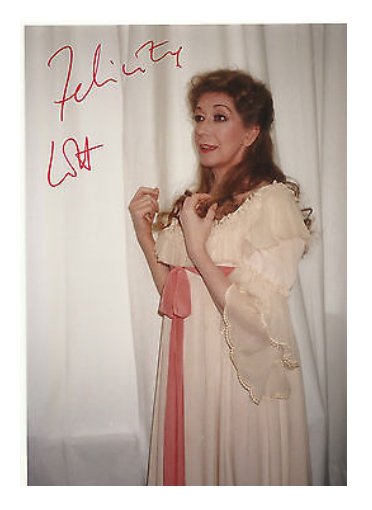 FL: It’s wonderful to be able to do it. My
husband is an actor, reader, recitalist, and gives recitals about the lives
of poets and dramatists and novelists. So he’s freelance, and he’s doing
some programs in America while I’ve been here. He’s limited to English-speaking
countries, of course, because of the language, but he gets work if he can
in the places where I am, so that’s very useful. And my mother looks
after our daughter, which is wonderful for everybody, and great for me as
she looks after me too! And she cooks for us all. My parents
are leaving tomorrow, but we’ve all been here together for a month.
My husband just arrived last week, and then he’ll take our daughter back
on 3rd December, and I do the last few days alone.
FL: It’s wonderful to be able to do it. My
husband is an actor, reader, recitalist, and gives recitals about the lives
of poets and dramatists and novelists. So he’s freelance, and he’s doing
some programs in America while I’ve been here. He’s limited to English-speaking
countries, of course, because of the language, but he gets work if he can
in the places where I am, so that’s very useful. And my mother looks
after our daughter, which is wonderful for everybody, and great for me as
she looks after me too! And she cooks for us all. My parents
are leaving tomorrow, but we’ve all been here together for a month.
My husband just arrived last week, and then he’ll take our daughter back
on 3rd December, and I do the last few days alone.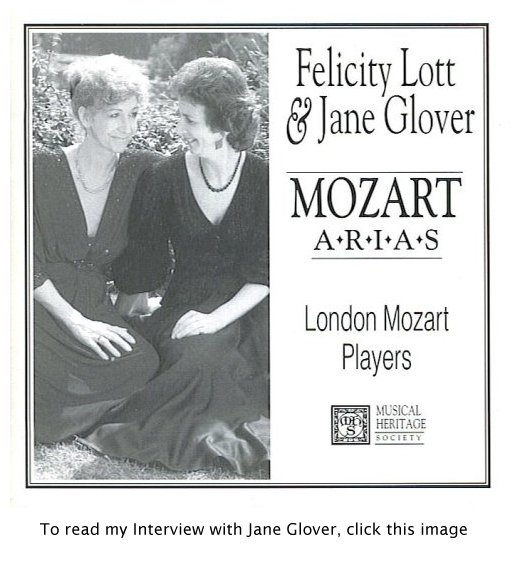 FL: Well, I think it’s a nice idea considering
what late invention the conductor is really! [Both laugh] But
the orchestra is very small so there aren’t any balance problems. We
used to use very basic staging for these Handel operas. His arias have
three sections — the first one, a middle, and the
Da Capo. We sang the first
section by one pillar, the middle section by the other pillar, and the Da Capo in the center. To vary the
production, you vary the order of the pillars! But it was wonderful,
wonderful music.
FL: Well, I think it’s a nice idea considering
what late invention the conductor is really! [Both laugh] But
the orchestra is very small so there aren’t any balance problems. We
used to use very basic staging for these Handel operas. His arias have
three sections — the first one, a middle, and the
Da Capo. We sang the first
section by one pillar, the middle section by the other pillar, and the Da Capo in the center. To vary the
production, you vary the order of the pillars! But it was wonderful,
wonderful music.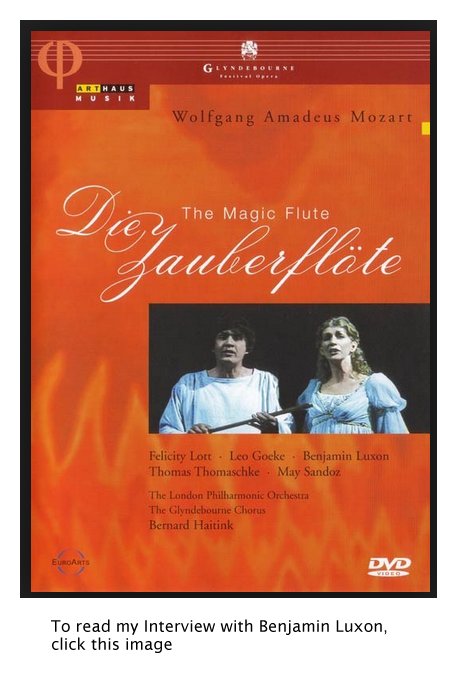 BD: So there’s a chance she’ll run off with
Cherubino, or does she think about that?
BD: So there’s a chance she’ll run off with
Cherubino, or does she think about that?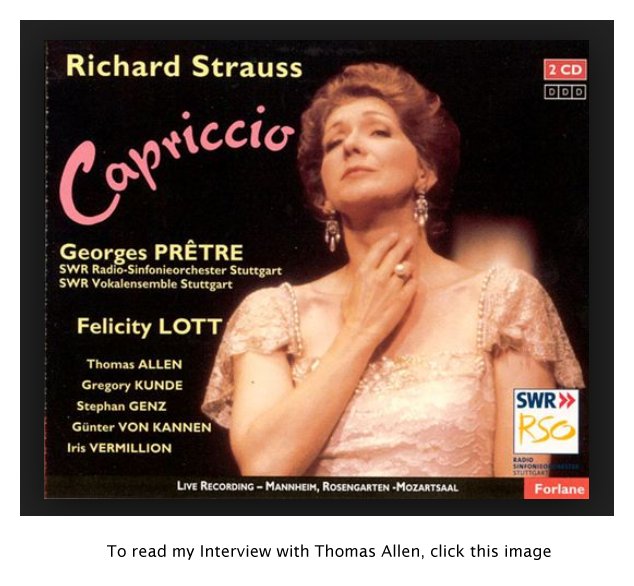 FL: Yes. I’ve sung Octavian, and Sifare
in an early Mozart opera Mitridate.
It has wonderful, wonderful music in that very static opera seria.
But Octavian was great fun. I really did enjoy that. It was a
big gamble. Everybody said I wouldn’t be able to do it, and it was sort
of fifty-fifty success.
FL: Yes. I’ve sung Octavian, and Sifare
in an early Mozart opera Mitridate.
It has wonderful, wonderful music in that very static opera seria.
But Octavian was great fun. I really did enjoy that. It was a
big gamble. Everybody said I wouldn’t be able to do it, and it was sort
of fifty-fifty success.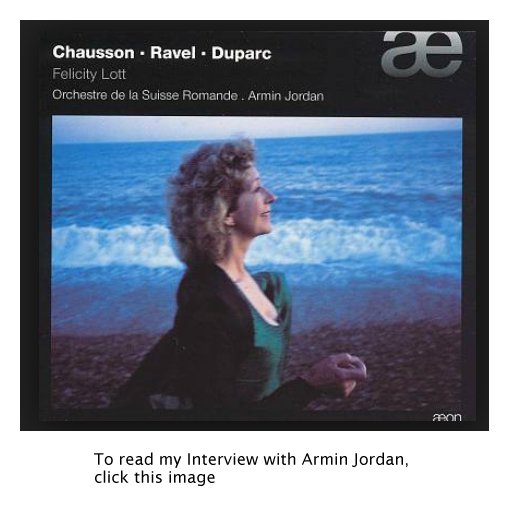 BD: Is it easier to do because there is no
intermission?
BD: Is it easier to do because there is no
intermission?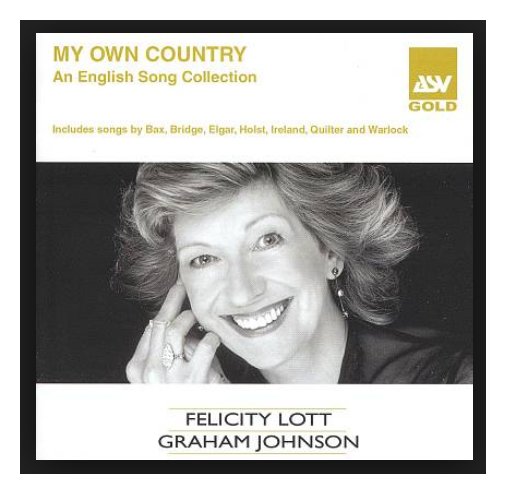 BD: Is it confusing going from one part to another
in the same opera?
BD: Is it confusing going from one part to another
in the same opera?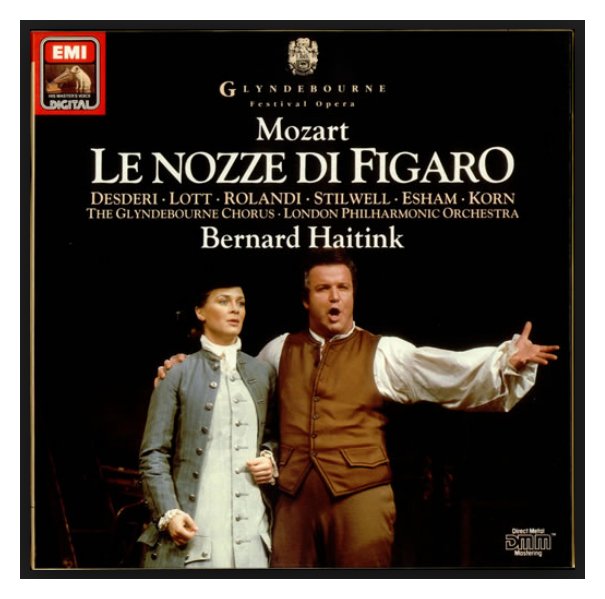
To read my Interview with Claudio Desderi, click HERE. To read my Interview with Gianna Rolandi, click HERE. To read my Interview with Richard Stilwell, click HERE. To read my Interview with Faith Esham, click HERE. |
 BD: But do you really know what you sound like?
 BD:
Do you sing any modern opera?
BD:
Do you sing any modern opera?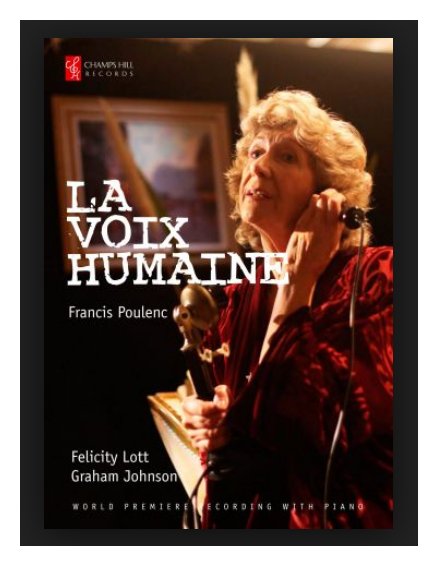 FL: He did, yes, and I don’t know it. I don’t
know what happened in that. But I do love the music, especially the
wonderful aria, the only thing everybody knows, ‘Depuis le jour’. I will
be doing La Voix Humaine, which is
great.
FL: He did, yes, and I don’t know it. I don’t
know what happened in that. But I do love the music, especially the
wonderful aria, the only thing everybody knows, ‘Depuis le jour’. I will
be doing La Voix Humaine, which is
great.Felicity Lott in Chicaago
Lyric Opera of Chicago 1987-88 Marriage of Figaro (Countess) with Ramey, Ewing, Raimondi, von Stade, Korn, Kern, Benelli; Davis, Hall
1991-92 Marriage of Figaro (Countess) with Ramey, McLaughlin/Hall, Shimel, Mentzer/von Stade, Loup, Palmer, Benelli; Davis, Hall 1994-95 Capriccio (Countess) with Streit, Gilfrey, Rootering, Finley, Bottone, Lawrence; Davis, Cox, Tallchief 1999-00 Fledermaus (Rosalinda) with Evans, Bottone, Allen, Castle, Nolen, Del Carlo; Hager, Copley, Tallchief |
© 1987 Bruce Duffie
This conversation was recorded at her apartment in Chicago on November 19, 1987. Portions were broadcast on WNIB in 1992, 1997 and 2000. This transcription was made in 2014, and posted on this website at that time. My thanks to British soprano Una Barry for her help in preparing this website presentation.
To see a full list (with links) of interviews which have been transcribed and posted on this website, click here. To read my thoughts on editing these interviews for print, as well as a few other interesting observations, click here.
Award - winning broadcaster Bruce Duffie was with WNIB, Classical 97 in Chicago from 1975 until its final moment as a classical station in February of 2001. His interviews have also appeared in various magazines and journals since 1980, and he continued his broadcast series on WNUR-FM, as well as on Contemporary Classical Internet Radio.
You are invited to visit his website for more information about his work, including selected transcripts of other interviews, plus a full list of his guests. He would also like to call your attention to the photos and information about his grandfather, who was a pioneer in the automotive field more than a century ago. You may also send him E-Mail with comments, questions and suggestions.