|
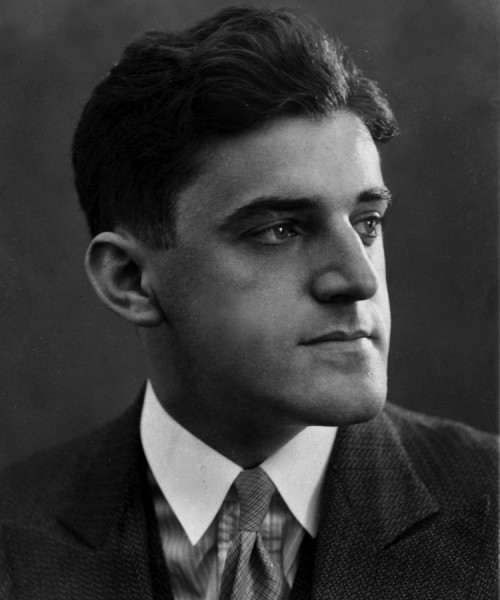
Herbert Fromm (born February 23, 1905 in Kitzingen, Lower Franconia; died March 10, 1995 in Brookline, Massachusetts) was a German-American organist, conductor and composer. In the 1930s he was celebrated in Germany as a “renewer of synagogue music”. He emigrated to the USA after the Nazi seizure of power in 1937 and continued his work there, which is why his work is also attributed aa great importance for the Jewish-spiritual song in America. The city of Kitzingen was located in the Kingdom of Bavaria and was known for its wine trade. The father Max Fromm specialized as a merchant in the trade in wine, the mother Mathilde Maria, born Maier worked as a housewife. He had a total of four siblings, including his twin brother Alfred who later followed in the father's footsteps and took over the wine shop [and brother Paul, with whom he played four-handed piano duets]. In addition, his father brought two half-sisters into the marriage. All the siblings and the father managed to emigrate to the United States in the 1930s. Fromm was also cousin of the psychoanalyst Erich Fromm, whose father was a brother of Max Fromm. The young Fromm learned four-handed piano playing together with his twin brother, and the other siblings were also promoted musically early on. Many members of the family later became involved in the promotion of artists. After Fromm had injured his finger in his youth and thus had to give up the plans to become a concert pianist, he began to compose and conduct. In the early days of the musicians, local poet and lawyer Armin Knab, who had also grown up in Kitzingen, rose to become a sponsor. From 1925 to 1928, Fromm studied composition at the State Academy of Tonkunst in Munich. This training was followed by a two-year master class, with Fromm now learning to conduct in addition to composition. After his training, Fromm initially took up a position as a conductor at the Stadttheater Bielefeld. He moved to Würzburg in 1931. Fromm was released there a few weeks after the Nazis seized power. In the following years, he became involved in the Jewish Cultural Association in Frankfurt am Main, and soon became a choir director and concert attendant. During this time, a large number of his own compositions were created, which also had their first performance in the context of the Kulturbund activity. In addition, Fromm soon appeared as an organist. From 1934 he assisted his organ teacher Siegfried Würzburger at the Westend Synagogue in Frankfurt am Main, and in 1935 he was also able to be proven at the main synagogue in Wiesbaden, Mainz and Bingen. Fromm lived in Bingen at that time. In the 1930s, he was celebrated as a “renewer of synagogue music” 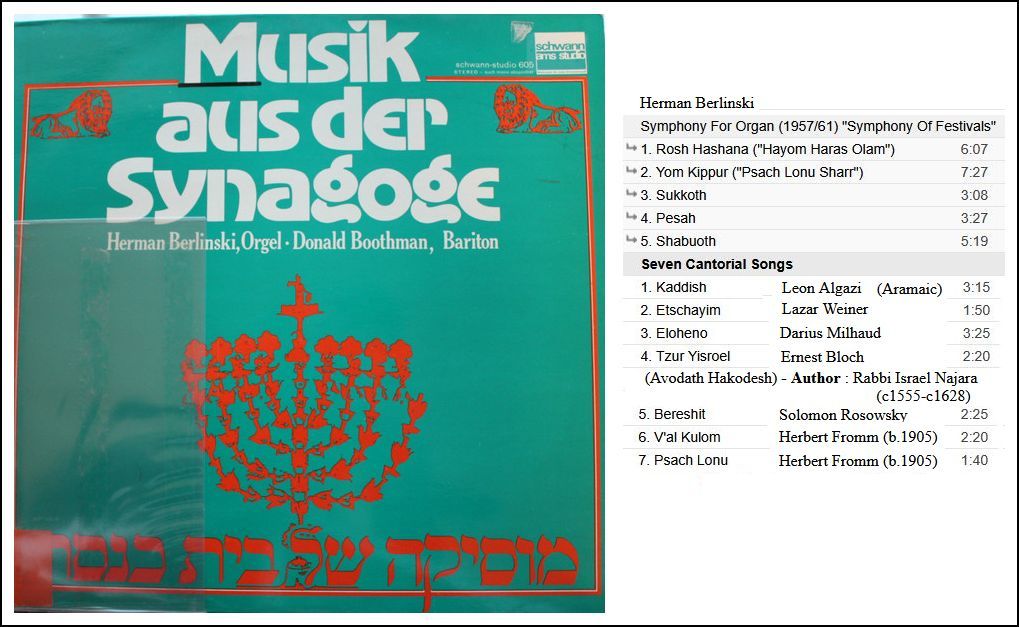
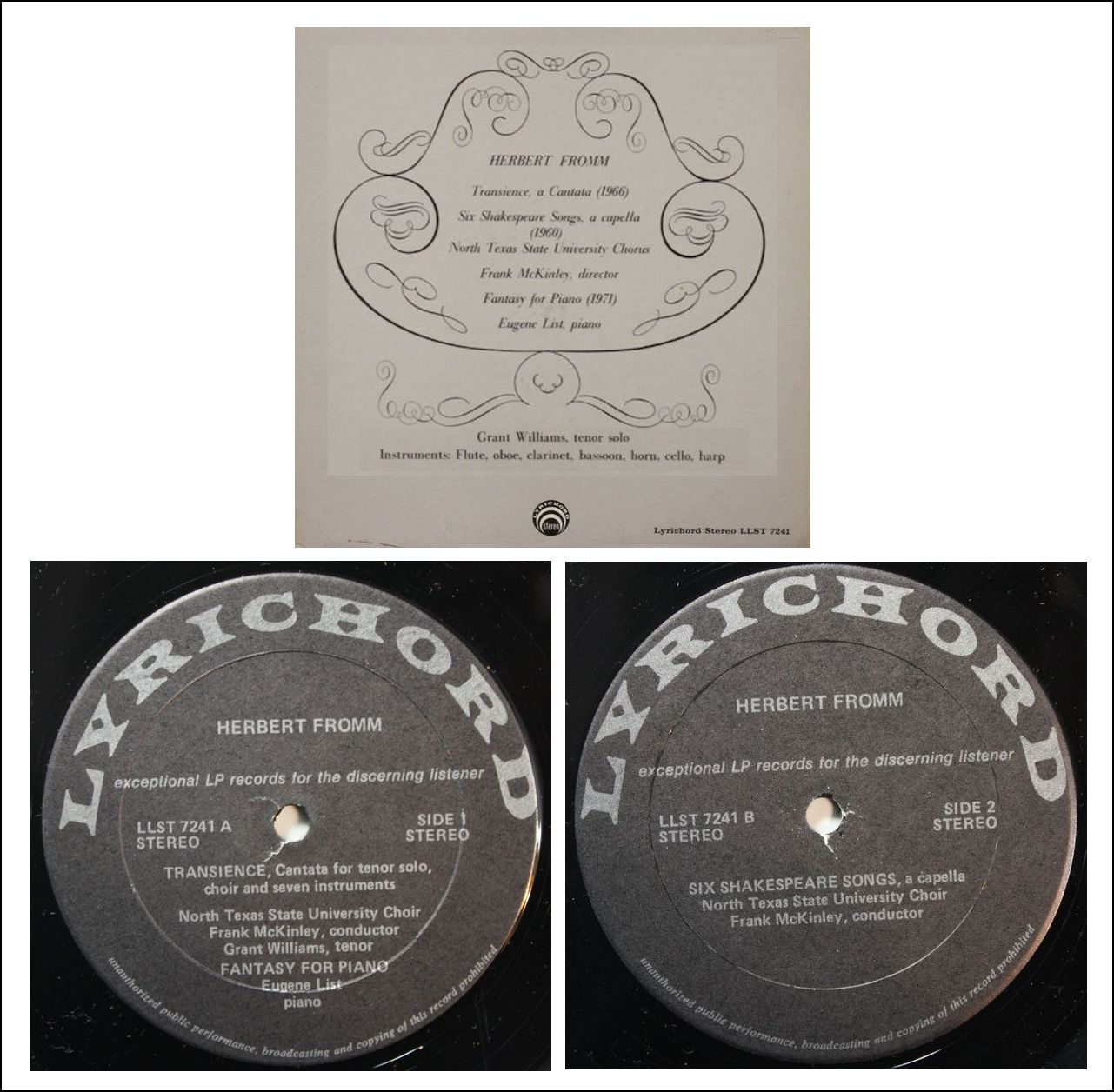
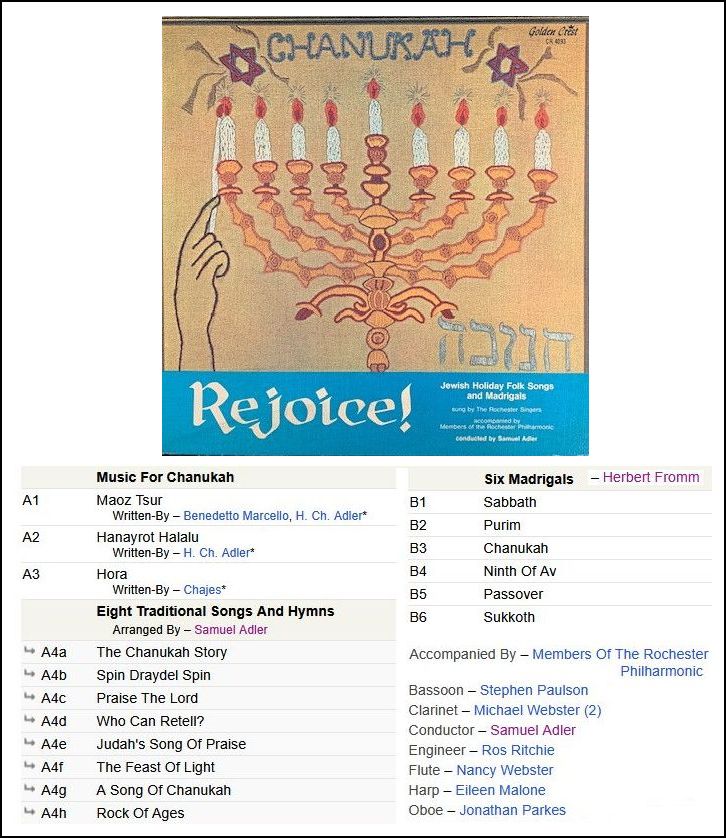
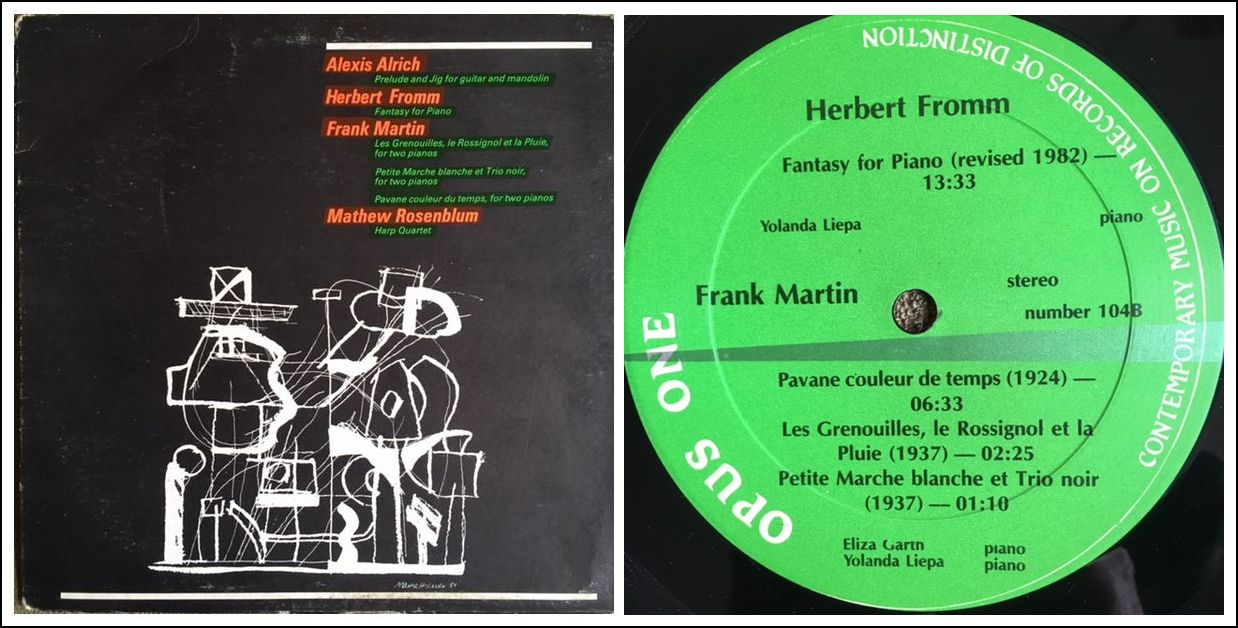
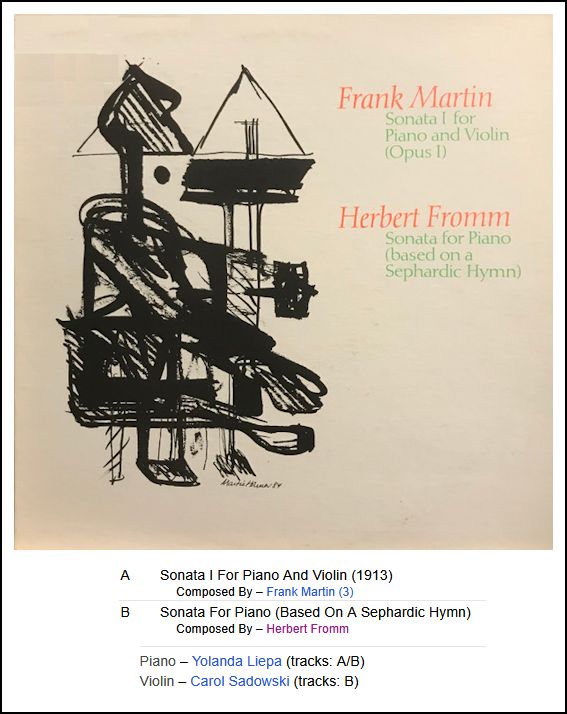
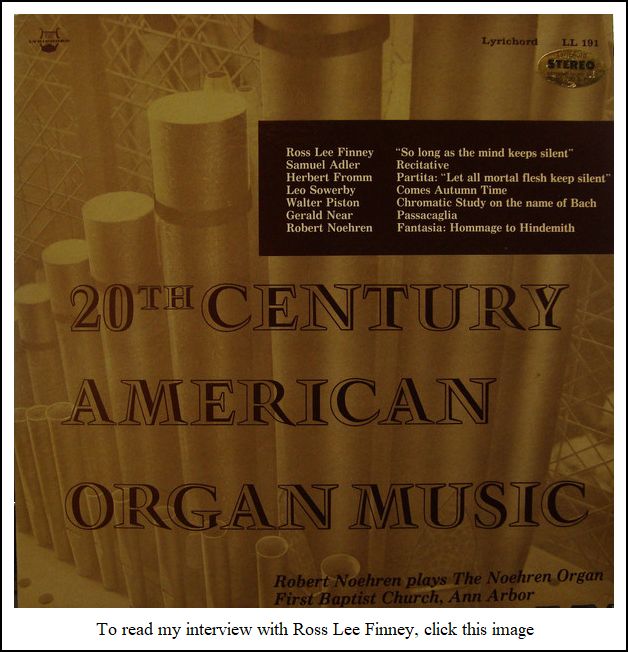
At the beginning of 1936, Fromm first traveled to New York. There he gave a concert with the baritone Ernst Wolff, at which his own compositions were also performed. In January 1937, he finally emigrated to the United States. He said goodbye to his hometown of Bingen with a concert. He reached New York on February 1, 1937. The migration was preceded by an application for a position as an organist and music director at Temple Beth Zion in Buffalo, New York. In addition, from 1939 Fromm was appointed organist and choir director of the First Presbyterian Church of East Aurora, New York. He continued his education in counterpoint with Paul Hindemith at the University of Buffalo, which had an impact on the diversity of his compositions. On January 22, 1942, Fromm married the Frankfurt-based actress Leni Steinberg. In June 1941, he had left Buffalo and took up a position at Temple Israel in Boston, Massachusetts. There, until his retirement in 1972, Fromm worked as a music director and organist. He wrote and led a variety of works. In addition to synagogue music, he also composed a number of secular pieces. Among Fromm's works from the time in Boston are choral music, song cycles, chamber music, spiritual cantatas, organ and piano music. In the United States, Fromm’s work also had a lasting influence on music in the synagogue, and earned him several prizes and awards. In the autumn of 1960, Fromm returned to Germany as part of a trip to Europe, where he gave concerts in Munich and Frankfurt. In March 1944, he had accepted U.S. citizenship. Reparation proceedings were initiated in 1962. In the course of this, Fromm visited Germany again. He returned to his native city in 1966. He died in 1995 in Brookline, Massachusetts. After his death, the Temple of Israel in Boston established the Herbert and Leni Fromm Composers Fund, which promotes the composition of new spiritual works. Leni Fromm lived until March 20, 1997. Fromm published a large number of works from the 1920s onwards. The focus was on the compositions, but he also published writings. With his relocation to the USA, his music production steadily increased, at times more than five works per year appeared. Fromm preferred to work for his compositions with the New York City-based label Transcontinental Music. In 1961, a music edition of his works was published under the title Hymns and songs for the synagogue. The last works date to 1990. In his estate there are other handwritten pieces. From the 1960s, Fromm's books were published, including several biographies of American-Jewish composers. They appeared in American specialist publishers for music history. Compositions
Books
Memberships and Awards
== Text in this box is a Google translation (slightly edited) of the biography in the German edition of Wikipedia == Photos are from a different source |
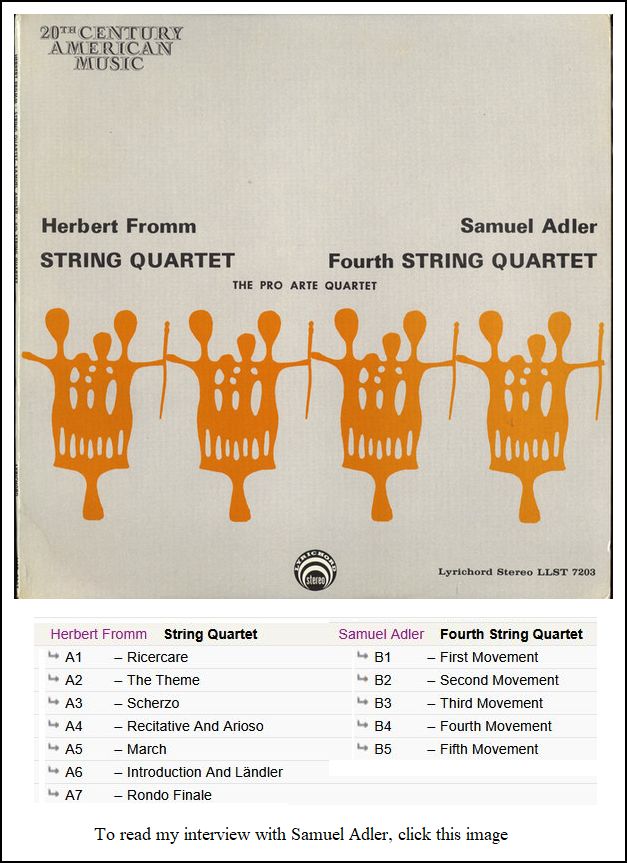
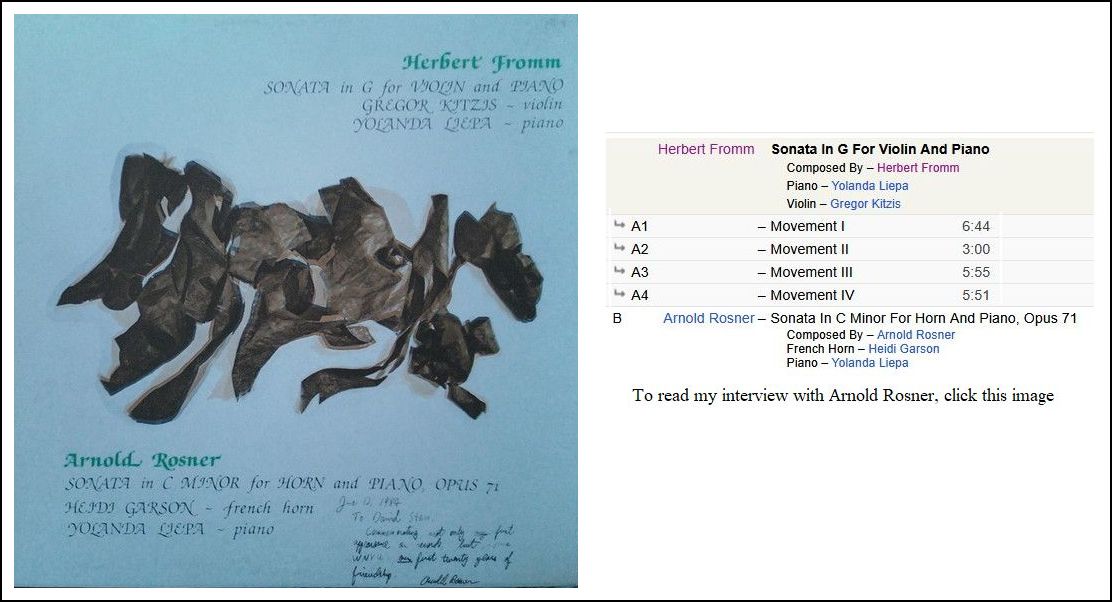
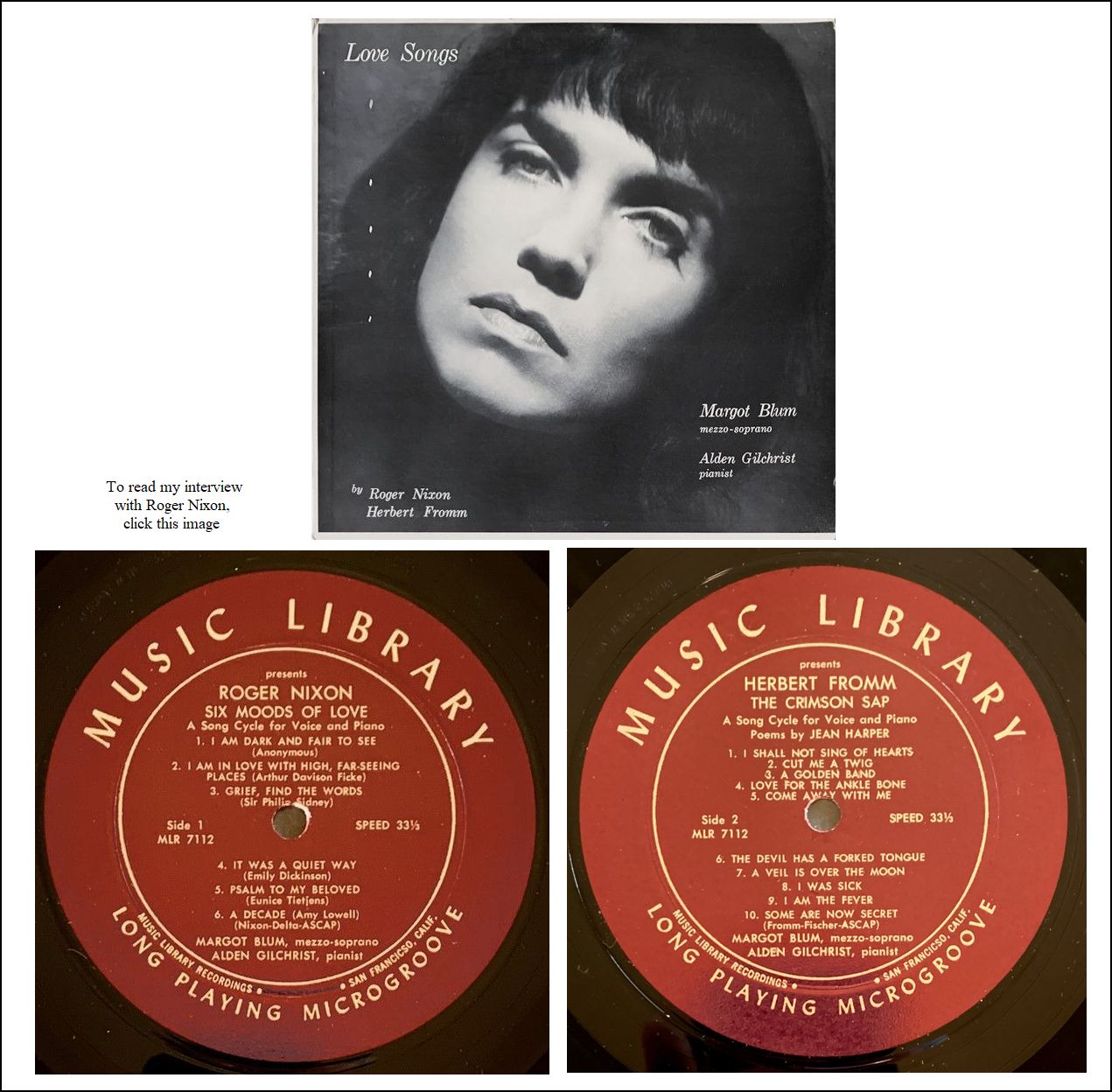
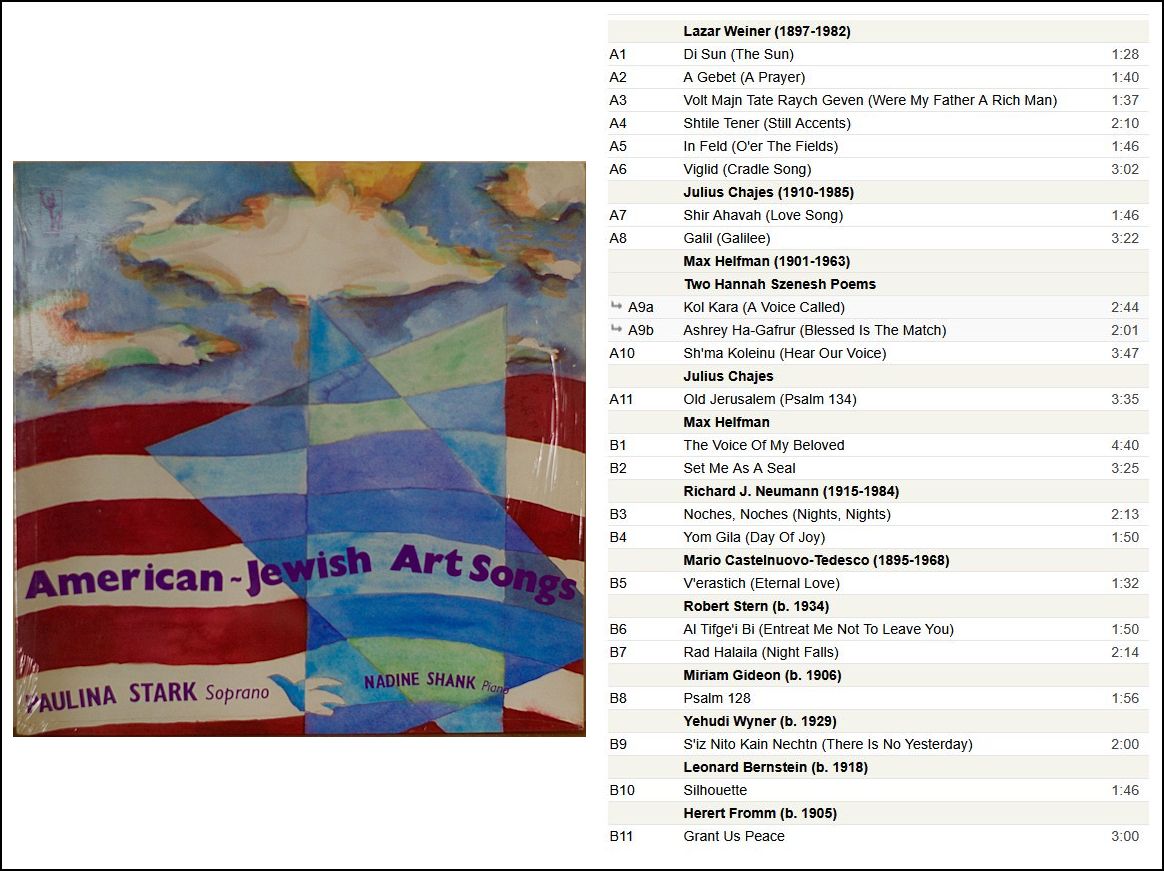
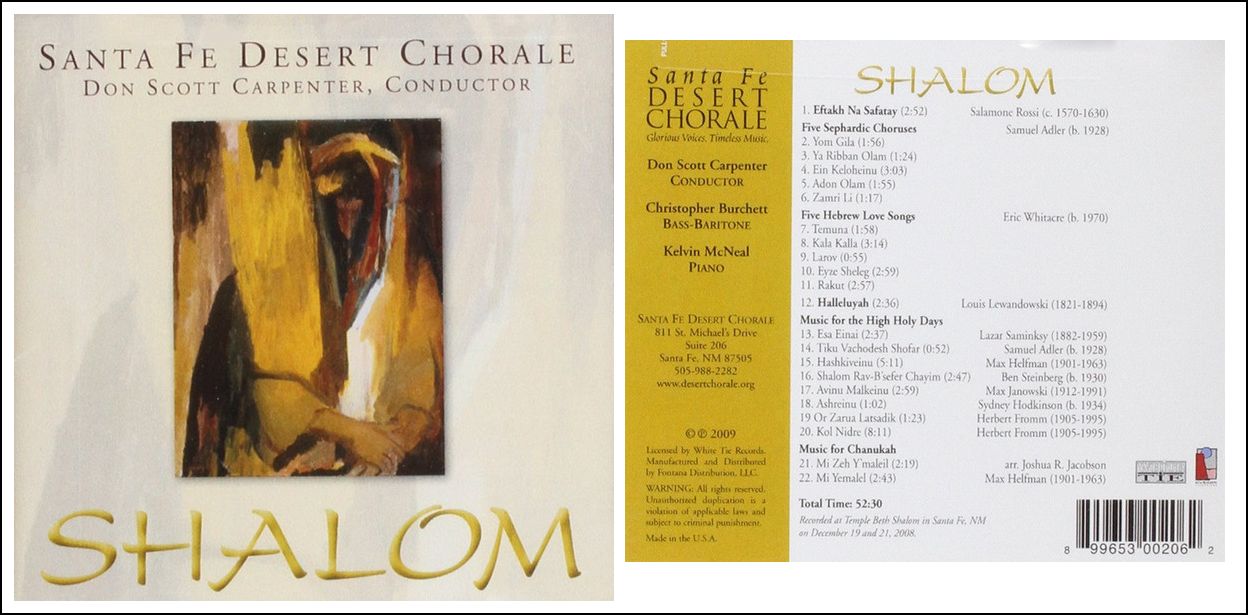
See my interviews with Robert Stern, Miriam Gideon, and Yehudi Wyner
© 1988 Bruce Duffie
This conversation was recorded on the telephone on April 23, 1988. Portions were broadcast on WNIB four months later, and again in 1990 , 1995, and 2000. This transcription was made in 2026, and posted on this website at that time. My thanks to British soprano Una Barry for her help in preparing this website presentation.
To see a full list (with links) of interviews which have been transcribed and posted on this website, click here. To read my thoughts on editing these interviews for print, as well as a few other interesting observations, click here.
Award - winning broadcaster Bruce Duffie was with WNIB, Classical 97 in Chicago from 1975 until its final moment as a classical station in February of 2001. His interviews have also appeared in various magazines and journals since 1980, and he continued his broadcast series on WNUR-FM, as well as on Contemporary Classical Internet Radio.
You are invited to visit his website for more information about his work, including selected transcripts of other interviews, plus a full list of his guests. He would also like to call your attention to the photos and information about his grandfather, who was a pioneer in the automotive field more than a century ago. You may also send him E-Mail with comments, questions and suggestions.