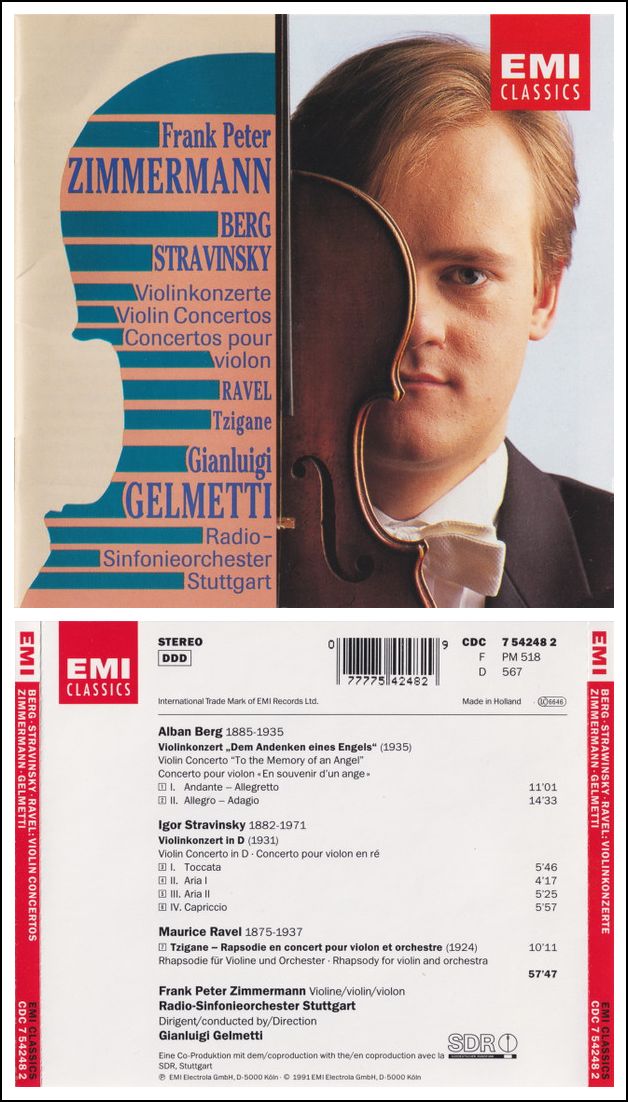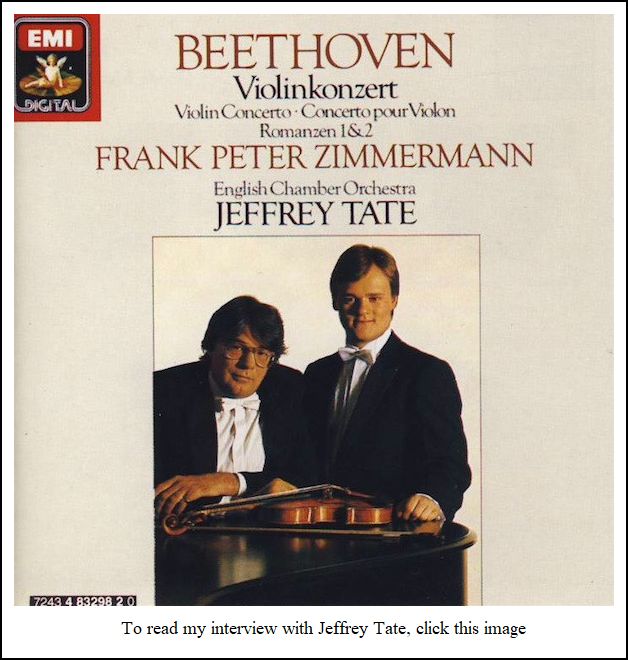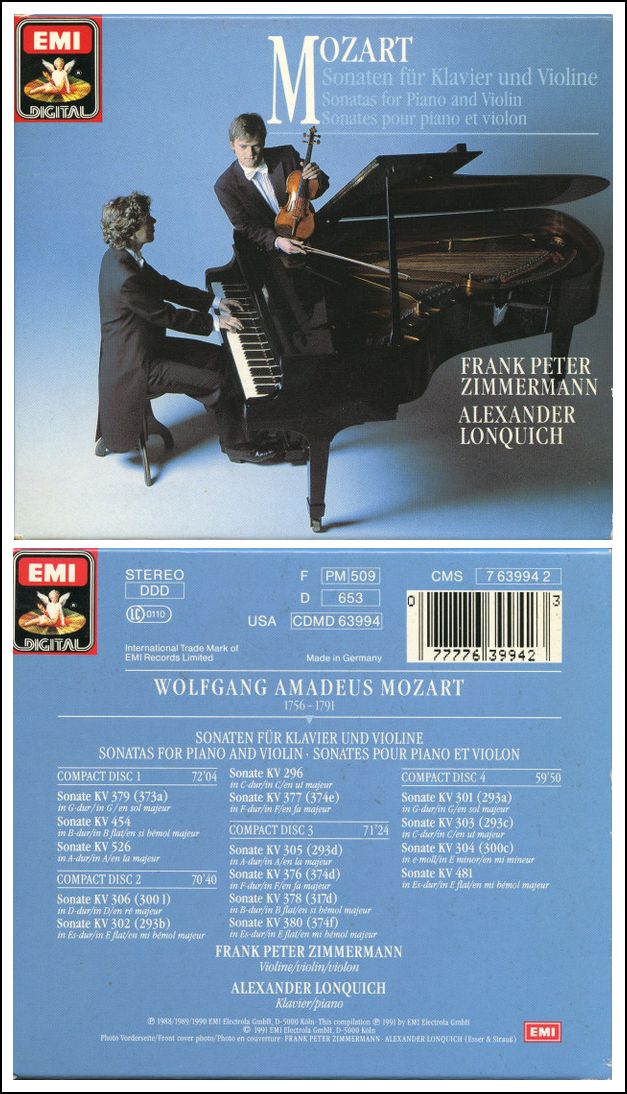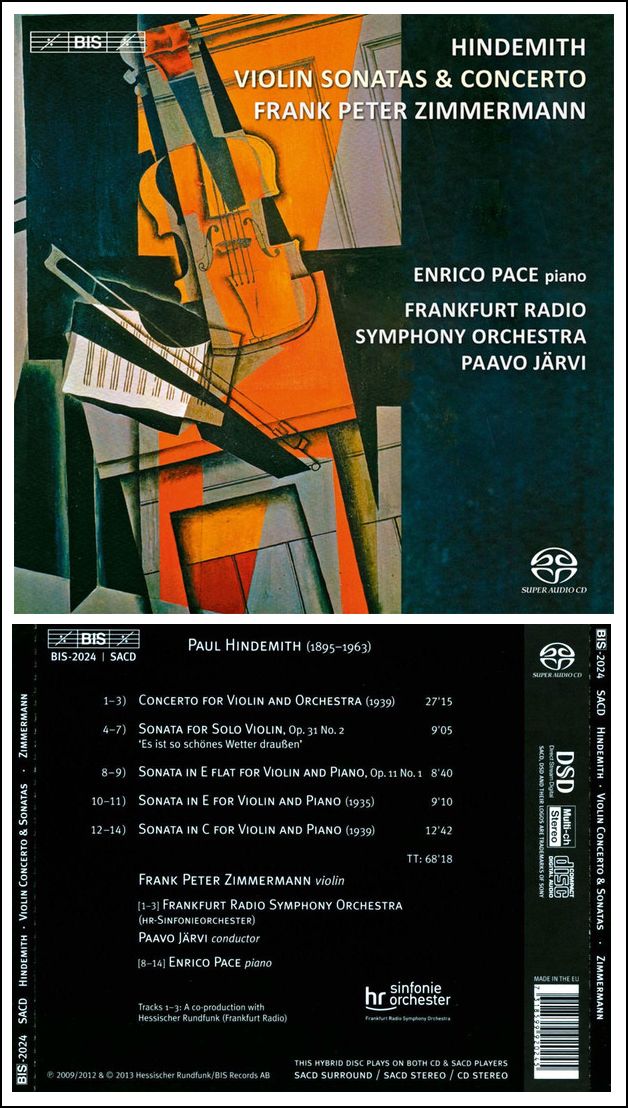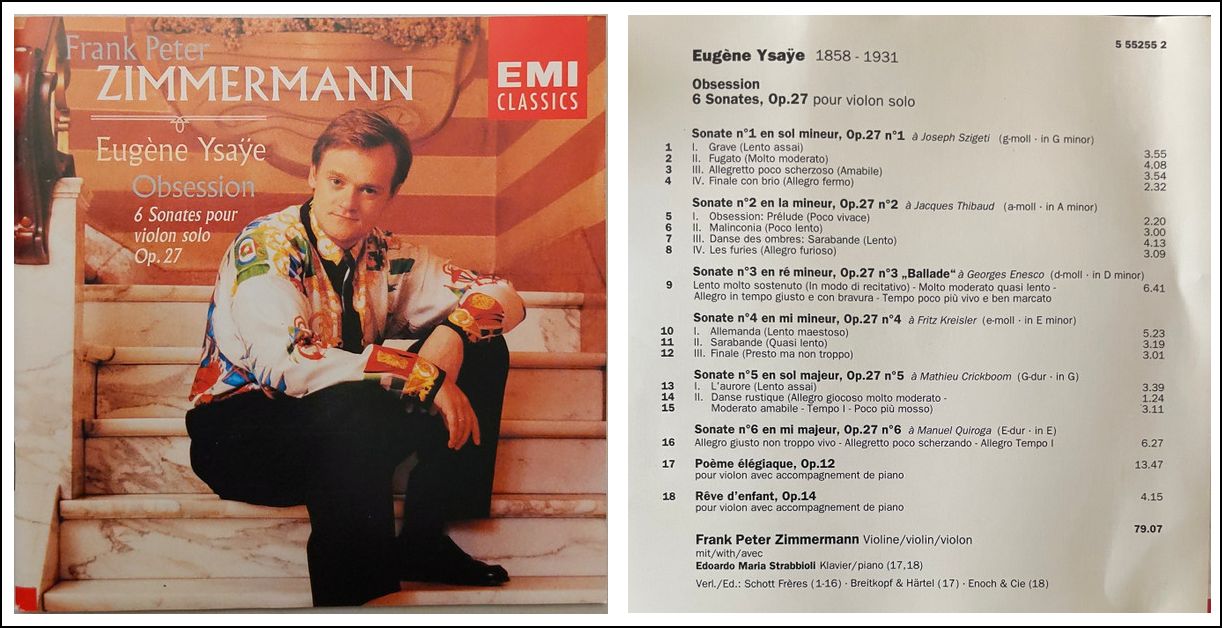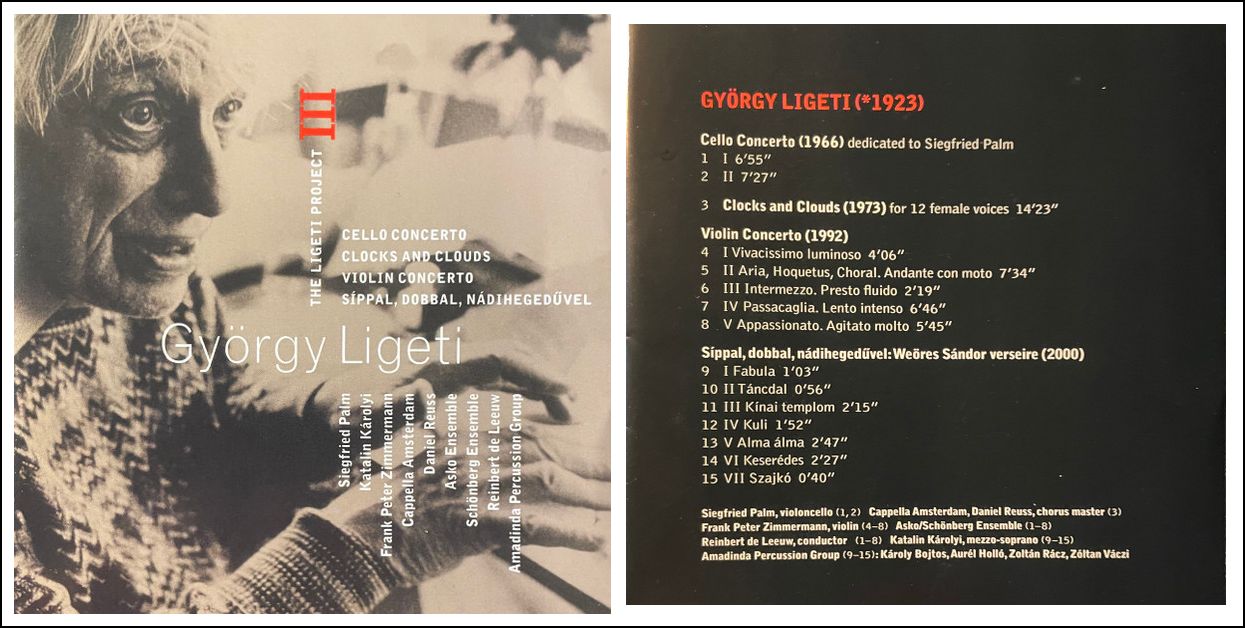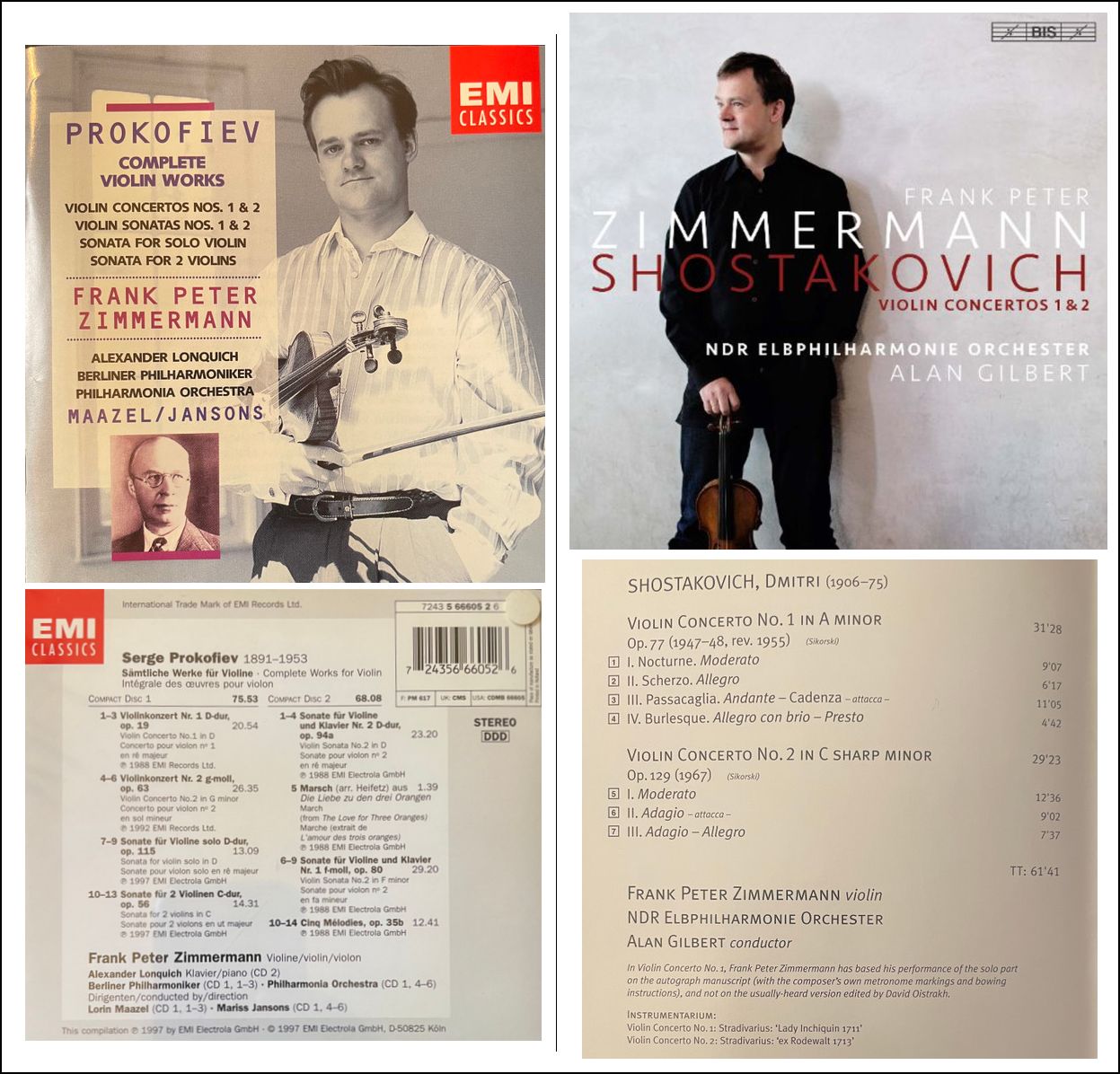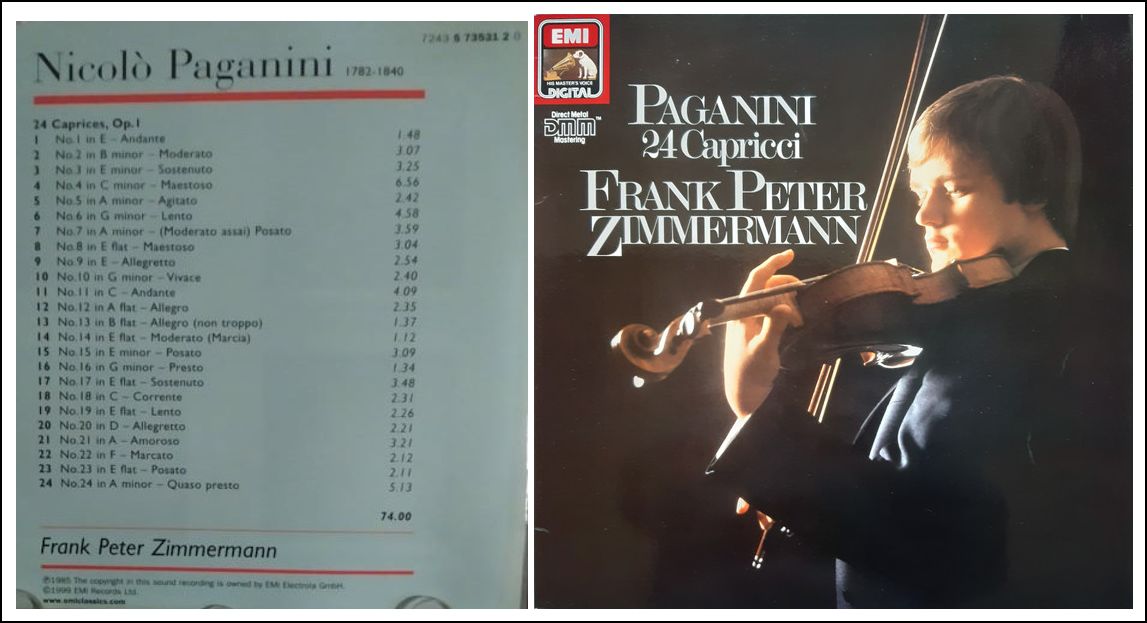
Violinist  Frank  Peter  Zimmermann

A Conversation with Bruce Duffie


fpz


Frank Peter Zimmermann was born on February 27, 1965 in Duisburg, West Germany. He started playing the violin when he was five years old, giving his first concert with orchestra at the age of 10. He studied with Valery Valentinovich Gradow, Saschko Gawriloff, and Herman Krebbers.  Since 1983, Zimmermann has been performing with a considerable number of major orchestras and conductors around the world. Highlights include engagements with, among others, the New York Philharmonic, the Boston Symphony Orchestra, the National Symphony Orchestra of Washington, D.C., the Chicago Symphony Orchestra, the Berlin Philharmonic, the Philharmonia Orchestra, and the Bavarian Radio Symphony.  

Apart from engagements with orchestra, Zimmermann also gives solo recitals, and participates in chamber music.

From 2001 to 2015, Zimmermann played a 1711 Stradivarius violin known as the "Lady Inchiquin", previously played by Fritz Kreisler. The violin had been loaned to Zimmermann by Düsseldorf-based bank WestLB AG, but was reclaimed in February 2015 at the termination of the loan contract by the bank's legal successor, Portigon Financial Services, owing to the bank's bankruptcy. In January 2016 Zimmermann was loaned the 1727 "Général Dupont" Stradivarius for an initial period of two years. Also known as the "Grumiaux" Stradivarius, it had been owned by the celebrated Belgian virtuoso Arthur Grumiaux. The instrument is owned by entrepreneur, philanthropist and amateur violinist Mr Yu, who purchased it in February 2015 through Rare Violins of New York for an undisclosed sum – making the violin the first Stradivarius to be owned by a private individual in mainland China. In July 2016, Zimmermann regained the 1711 ex-Fritz Kreisler 'Lady Inchiquin' Stradivarius violin.


In February of 1998, violinist Frank Peter Zimmermann was back in Chicago while on tour with the Royal Concertgebouw Orchestra.  On the first half of the concert he played the Violin Concerto by Alban Berg.  Then, during the second half of the concert, we met in his dressing room for a conversation.  We spoke of many musical things, and, as usual, there was quite a bit of laughter as we bantered back and forth.

Portions were aired on WNIB, Classical 97, and elsewhere, and now in 2026 I am pleased to present the entire chat.

fpz
Bruce Duffie:   Just a moment ago, someone was asking you about concert etiquette on the part of the audience.  Do you find that audiences around the world are more or less considerate of you these days?

Frank Peter Zimmermann:   In this hall it’s extremely loud when somebody coughs.  I listened to the Guarneri Quartet two days ago, and I found that when somebody coughs normally it’s like a really loud shot.  It was okay tonight, though it could be worse!  [Both laugh]  In the last part, a lady in the first row unwrapped a candy, and it was so loud that it was very upsetting.

BD:   Is there more disturbance during a new piece as opposed to a romantic piece?

Zimmermann:   Of course, the Alban Berg is really a piece that, even as a professional, you have to dig yourself into.  You have to listen to it at least fifteen or twenty times to get used to it.  So I can understand a lot of people, even a lot of classical music fans, who, after a hardworking day, just are not ready to hear it.  But it depends.  Just last week I played the Shostakovich First Violin Concerto, which is also a great piece, but after two minutes I had to pay attention to everybody who was there.  It was very hard, and that’s a pity because the piece is one of the two or three great concertos this century.

BD:   Do you only play great concertos?

Zimmermann:   No.  I have a big repertoire.  I play Paul Hindemith, Benjamin Britten, Ferrucio Busoni, Karol Szymanowski, and I also like to find new things.  Only last year I played Kurt Weill, which is not performed so often.  I played György Ligeti’s Violin Concerto, and was just the second violinist to play that one.

BD:   Is it your responsibility as the performer to find these concertos and bring them to the public?

Zimmermann:   I think so.  If you yourself are a hundred percent sure, then you should battle for it, even if the public is coughing or groaning.

BD:   Before you begin to work on it, are you sure it’s the right concerto for you?

Zimmermann:   [Thinks a moment]  You always need a couple of tries in a concert performance.  Then you’ll see.  Even now I question some of the Brahms Violin Concerto which I adore.  There are times when I don’t feel well with it, even if I have played it seventy or eighty times in my life already.  There are periods where you can say that Shostakovich was great and Berg was bad, or the other way around.

BD:   From this large repertoire for the violin, how do you decide which works you are going to spend time learning and working and bringing before the public?

Zimmermann:   I like much more to dig into a very complicated but high-valued musical piece instead of playing Henryk Wieniawski or Vieuxtemps.  That’s my problem because a lot of people would also like me to play those others, but I really don’t like to.  So already this kind of repertoire is off to the side.

BD:   [With a gentle nudge]  You don’t want to be a show-off?

Zimmermann:   [Smiles]  There are other pieces where you can show very well.  I still play Tchaikovsky sometimes... maybe every four years!  Otherwise you get sick of it!  [More laughter]  I also play the Saint-Saëns Third, but I feel the best at times like tonight, when I’m with a big symphony orchestra, and just a part this action which is going on.  It’s not at all like being an entertainer who does these kinds of jokes in front of the orchestra.

BD:   This leads me to one of my favorite questions.  In the music you play, where is the balance between the artistic achievement and the entertainment value?

Zimmermann:   For me, the music is the most important.  Maybe somehow I’m really too closed off from the public.  My main aim is to bring 100% to the performance, and not think about presenting just the famous portions.  Of course, sometimes it depends on each venue.  There are halls where from the first note you can feel the public even in the last rows getting the fire that you give.  But there are concerts where you could even take off your pants, and they wouldn’t react to anything.  [Both laugh]

BD:   Is it your job to speak to them, or is it the composer’s job to speak to them?

Zimmermann:   I wouldn’t force myself too much to be an entertainer that way, and nowadays it is sad that the attention is sometimes really too much attracted to the things around the performer, and not really to the music.

BD:   Don
’t you put something of yourself into every piece you play?

Zimmermann:   Of course!  Yes!  As a violinist you have your own sound, and you have your own vibrato, and your own way of using the bow, so that’s already quite your own personality and your own style.  I like to change radically with every different composer.  For example, Alban Berg I play absolutely differently than Prokofiev or Busoni.  For me, if you have a wide range of repertoire, it is most interesting not only just to play it your way, but the way you feel the composer and the sound of the violin should be for each piece.  I like to be a chameleon in some way.

BD:   If it’s in the music?

Zimmermann:   If it’s in the music, yes.  Maybe the music which is closest to me is Mozart.  I feel I don’t need to change myself.  I can be just myself when playing it.

BD:   Are you the spirit of Mozart playing his violin?

Zimmermann:   No, I don’t think so, but Mozart for me is like my own blood.  I have never had problems thinking how the sound should be, or what the interpretation is.  It just goes very, very smoothly, whereas with Beethoven, you always have to dig so far with the music.  Otherwise you don’t find the solution.  I seem to have had to struggle with his music.
fpz
BD:   Do you always find the best solution?

Zimmermann:   Never!  I’ve played the Beethoven Concerto at least 150 times already, and I still adore it, of course, but I will never be ready to say that’s the solution for it.

BD:   You say Mozart comes easy for you.  Is there a secret to it?

Zimmermann:   Maybe it’s just that for me it’s easy.  [Both laugh]  Maybe some other people say that my Mozart playing is lousy.  But it’s just so natural for me.  If you play Mozart for two weeks, the violin really starts to sound so natural.  I feel the Berg is a fantastic piece, and he
’s one of my favorite composers of modern music, but after a while the sound of the violin really starts to close up.  If you play dissonance all the time, it’s not so healthy for violin.  Then if you come back to Bach, or Mozart, or Schubert, or Handel, the violin starts sounding again.  [Laughs]

BD:   Singers I talk to say that Mozart cleans the throat.  Are you saying it actually cleans the violin?

Zimmermann:   Yes, it does, it really does.

*     *     *     *     *

BD:   When you have the violin under your chin, are you holding an instrument or does it become a part of you?

Zimmermann:   It is somehow a part of me.  I’m not holding it.  I started playing the violin at the age of five, and now I will be 33, so that’s almost thirty years of violin playing.  The instrument has become just a part of yourself.  If you have a natural way of playing, then somehow it’s just like your third arm.

BD:   Did you start on a smaller instrument, a quarter-size?

Zimmermann:   Yes, of course.

BD:   Was it difficult to shift into the larger instrument?

Zimmermann:   I don’t remember so well, but of course it’s a big change when you are a child and you have to move from a quarter-size to a half-size.  It’s like a whole world changing if you take it seriously.  Then you have to play the full-size.

BD:   Is is like you’re holding a viola?

Zimmermann:   Yes.

BD:   Do you ever play the viola?

Zimmermann:   I have played it sometimes, but not in the last years.  I like very much to play this dark burgundy sound, but it’s very difficult to change back to the violin.  The intonation is a big problem, and the violin is too small.

BD:   Back to the half-size again.

Zimmermann:   Yes, that’s right!

BD:   You mentioned that you change your sound from composer to composer.  Do you change your technique if you are in a large house or a very small recital hall?

Zimmermann:   In a recital hall you can do whatever you like, and you don’t need to force anything.  I must say honestly tonight I didn’t feel the sound was so good.  I had a very good impression of the atmosphere of the hall, which is quite intimate, but since my last concert here, which was in 1990, the hall has been changed, and now I find the hall very dry.  Somehow I felt that my violin really didn’t show off as it normally does.

BD:   We in the audience get a better or warmer sound than you do onstage.

Zimmermann:   Yes, that’s what I felt two days ago.  It was a wonderful sound.  I don’t know how my sound came over tonight to the public.

BD:   It was very good, of course!  It sounded just as the other violinists we have heard in this hall.
fpz
Zimmermann:   Okay!  So at least the public enjoyed it.  [Bursts out laughing]

BD:   Should you not enjoy it, as well?

Zimmermann:   Of course, yes!  [Both laugh]

BD:   Is there such a thing as a perfect performance?

Zimmermann:   I wouldn’t say no.  I play 100 concerts per year, and maybe seven or eight performances where you really say the orchestra was great, and it went perfectly, and the hall was fantastic, and the public was 100%.  But that’s not very often.  You change every day, and also the violin is a living creature, so you never know, even if you prepare the most.  Normally, if I prepare more than usual, then the concert is not as good.  If you just relax and think of nothing, then very often the best results come out.  I find that’s the case.

BD:   Speaking of perfection, let me ask about recordings.  Do you feel that those can be, or have to be perfect?

Zimmermann:   I intend to make an almost perfect thing, but a recording is just a documentation of that moment, and after two months when you get the first edit from the record company, you already feel very strange and think there are so many things that I have already changed or would play differently.  So it’s just for that moment a kind of photo that you have given.  Of course, some recordings I did I’m quite proud of.

BD:   Do you play differently for the microphone than you do for a live audience?

Zimmermann:   Yes, I do.  The most recent recordings I did were live recordings, and you always ask yourself if I should play for the public and not think about the microphones, and then produce a sound that is sometimes too crude for the digital sound, or shall I just play for the microphones?  That’s not a very easy choice.  I remember the Brahms Concerto went very well, because that’s a piece you really have to go straight into.  But a piece like the Kurt Weill, which I also recorded live, you start wondering how I shall do it.  But I had four performances, and it worked quite well.

BD:   I would think that would make you schizophrenic, knowing that you have audience now and audience later on disc.

Zimmermann:   Yes, and somehow it’s for eternity.  That’s very, very strange.

BD:   Does it bother you to know that your recording will be listened to twenty, forty, or a hundred years from now?

Zimmermann:   As I said, it was a statement of that moment, and I just hope for the best.  [Both laugh]

*     *     *     *     *

BD:   Let me ask a real easy question.  What’s the purpose of music?

Zimmermann:   [Smiles, and thinks a moment]  For me as a performer, as a musician, for myself, it’s my life.  Honestly, I would die without music and without making music.  On the other hand, I really like to give people some kind of feeling inside.  The world is becoming increasingly faster and more and more crazy, and hopefully we’ll always have this small amount of classical music lovers who still get caught by this very special feeling.  Somehow, it is the music which goes the deepest into us.

BD:   Is it partly your responsibility to help and encourage more and bigger audiences, or should we leave that to the press representatives and the managerial staff?

Zimmermann:   I’m also happy to play open rehearsals and things like that, so then people that normally wouldn’t be able to pay for a ticket, or normally wouldn’t go to a classical concert, could attend and listen.  But it should start in the schools.  Children really should be educated in it more seriously with musical education.  Especially in my country it’s very, very sad how they cut down on the teachers for music.  Germany has always been a country of making Hausmusik, and it’s really dying.

BD:   Are we losing that tradition?

Zimmermann:   I think somehow we are.  If you see all the athletics, who cares about playing German music at all?  When I was a child, I was already an outsider when I came to school.  Both my parents are classical musicians, and I got in touch with pop music when I was ten or eleven.  I went to birthday parties of friends, maybe one or two of my friends went to a concert that I played in.  They never really cared, and they laughed about it.  Later, when they grow old, it’s a kind of fashion that when you get to forty-five or fifty and you start going gray, then you have to go to a classical concert or to the opera.  But until then, mostly the people just don’t care.  I wonder about the public which is here tonight.  Do the 2,400 people in the hall really know what’s going on, especially for such a very special piece as the Alban Berg?  Maybe a handful do.

BD:   [Optimistically]  But at least they’re here for the concert!

Zimmermann:   Yes, and I will have moved some of them.

BD:   Oh, I’m sure you did.  The reception was good, of course.

Zimmermann:   Yes.

BD:   You mentioned that you play about a hundred concerts a year.  How do you divide them between concertos and recitals?

Zimmermann:   I used to play a lot of recitals years ago, and I separated from my pianist, Alexander Lonquich in 1995.  I’m still looking for a close partner so we can build up something.  I would play Beethoven cycles with Christian Zacharias, but he himself is a very famous pianist and wants to play a lot himself.  It’s very hard to find dates.  I have some accompanists, but I never like to have a big violin solo and then this little man behind playing just this mezzo-piano accompaniment.

BD:   You want a real collaboration?

Zimmermann:   Yes.  When I play with a middle class orchestra, or even sometimes I will try out a new piece in provincial cities where the orchestras are not so good, but it’s okay.  But if you make chamber music, there you really have the advantage of preparing everything almost a hundred percent right.  You really should care a lot that the balance of the partnership be absolutely equal.  I couldn’t stand playing the Brahms or the Beethoven sonatas because they are for piano and violin.
fpz
BD:   What advice do you have for the next generation of violinists coming along?

Zimmermann:   There are very, very hard times coming up, and I feel so sorry for teenagers or those in their twenties.  They almost don’t get any chance to record, because the recording industry is really down.  Somehow you need it very much to make an international career.  On the other hand, concerts always turn on twenty-five or thirty violin concertos that the international music scene wants to hear, and the problem is that nothing new is written that can be put next to these old works.  So the market gets thinner and thinner.  I don’t know what’s going to happen in a hundred or two hundred years.

BD:   Do you have any advice for composers who want to add to the repertoire?

Zimmermann:   I’m just a little soloist, a violin player, a musician.  As to a genius like Alban Berg or Bartók, there are few of them now.  There is Ligeti, whom I really adore, but their music is so special that it’s really hard to attract the regular public with that.  On the other hand, you can’t always play Mendelssohn or Beethoven.  That would be a very, very big question for the next hundred years.  I don’t want to think of two hundred or three hundred years!  [Laughs]  Maybe you’ll get a date for a concert performance on Mars or Jupiter!  [Both burst out laughing]

BD:   There
’s a whole new audience to tap into!  Wait until you see that on your tour schedule!

Zimmermann:   Give yourself eight days because of the time difference there!  [Raucous laughter continues]

*     *     *     *     *

BD:   Tell me about your instrument.

Zimmermann:   It’s a Stradivarius. I’m very proud of it.  A German bank is lending it to me.  I found that one in 1992 in a Swiss collection.  This man came to a concert once, and then after a while I couldn’t believe it when he wanted to sell it.  He had a fantastic collection of great Italian violins, and he wanted to sell his best instrument to me because he seemed to like my playing very much.  As I could not afford it myself, the bank bought it, and they have loaned it to me.  It’s a Stradivarius built in 1706, the beginning of the so-called golden period, and since then I must say that my musical development and my ideas have grown.  With a great Strad of the golden period, you never feel any kind of limit.  You’re always being taught by this incredible sound, and the way this violin reacts.  It’s like a living creature.

BD:   What is it about the Strad instruments that makes them so special?  Is it the wood?  Is it the glue?  What is it?

Zimmermann:   I can’t really tell.  I also try to play on a Guarneri, which I can’t do very well because it’s a totally different approach.

BD:   A different approach to the sound?

Zimmermann:   To the sound, yes, and also to the instrument.  Guarneri are fantastic violins, but the Strad always wants to be played its way, and you need weeks, months, maybe years to feel comfortable.  I remember Nathan Milstein told me once that he had had his wonderful Strad for almost five years, and there were still things which suddenly came to him.  There’s a sound that the instrument hadn’t shown him at all!  It’s a very big experience, and for making an international career you need this kind of support that you feel the instrument gives you.  I had had other instruments before which were also fantastic, but I almost came to a musical dead end.

BD:   So this Strad will be one you will never outgrow?

Zimmermann:   Hopefully, yes.

BD:   Will it really surprise you if ever discover everything it has to offer?

Zimmermann:   I don’t know.  I’m sure that when other players used it, they would find different things from it.  The Strad is very delicate.  It’s a very strange thing what I say now, but it’s like a fantastic Formula One car.  If you really know how to drive it, then that’s like driving to hell!

BD:   I trust that in the end it’s all worth it.

Zimmermann:   Yes.

BD:   What about the bow?

Zimmermann:   I found one about eighteen months ago by this famous bow maker, Hans-Karl Schmidt, who was a student of Kurt Dölling.  He sold me this bow which he had just made.

BD:   So it’s a new bow and an old instrument?

Zimmermann:   Yes.  I only play with new bows.  I have not yet found the right old French bow which I want to play, but it’s about $100,000.  If you don’t find the right one, then you are better off playing with a modern one, and I feel very well with this one.  I also remember David Oistrakh used to play with modern German bows.  You are always afraid of your violin when you’re leaving hotels, and bows can also disappear very easily.  So you don’t have this kind of fear with a modern bow, because you can still afford to replace it.  [Laughs]

BD:   [At this point we stopped momentarily to take care of a few technical details.  He recorded a station break, and then I asked him for his birthdate.]

Zimmermann:   My birthdate is February 27th, 1965, the same day as Gidon Kremer, who was born in 1947.  So we always think of each other!

BD:   Is there a camaraderie among violinists?

Zimmermann:   I’m sometimes a bit sad because now we have quite a number of very good German-speaking violinists, like Christian Tetzlaff, and Thomas Zehetmair, and the great star Anne-Sophie Muttter, but we never really get together like the famous violinists in Israel Itzhak Perlman and Pinchas Zuckerman.  They meet and play together, and we don
’t, which is very sad somehow.  There’s never their kind of friendship and fun.  Maybe it’s just the German attitude... I would like to do that, and maybe we will be able to when we get a bit older and have settled all of our careers.


fpz


BD:   One last question.  Is playing the violin fun?

Zimmermann:   It depends.  It’s my life, and each day there’s a kind of struggle and battle going on.  At the moment, I have to prepare a solo program to perform from March 5th, with Bach solo sonatas and the Paganini Caprice.

BD:   [Somewhat surprised]  A completely unaccompanied program???

Zimmermann:   Yes, an unaccompanied program which I will perform in Amsterdam, Barcelona, and in German cities.  So this is quite a challenge.  I do this every two or three years, and the preparation is really very, very hard.  To play the Brahms Concerto is like singing a Kinderlied [children
’s song] compared to that!  But it’s incredible, because there you can really create your own world, and especially in Bach.  I will play the C Major Fugue, which is new to me, and is really a monster.  But even if you have cold fingers in the hotel room, once you start to play this music, you feel like creating your own cathedral.  This is really the fun, and if you have good friends and make wonderful German music together, this is the life I would die for.

BD:   I hope all of this continues coming your way.  Will you be back in Chicago?

Zimmermann:   Hopefully, but I don’t have a date yet.
 [Besides this tour of the Concertgebouw Orchestra, Zimmermann played with the Chicago Symphony on several occasions, both downtown and at the Ravinia Festival in the summer.]

BD:   Do you like being booked two and three years in advance?

Zimmermann:   That’s how it normally is.  I’m now booking concerts for 2001.  [Remember, this interview was held early in 1998.]  2000 is already full, and I have to go to Australia.  So you’re always thinking in advance two or three years, and then suddenly it’s all over.  I just spoke to my wife... she was with me in Boston two weeks ago, then I
’ve been on my own for two weeks here in Chicago.  We talked about the fact that we have so many things we remember from the traveling to these concert places where we were, and somehow it’s worth it even with all these long flights and hotel rooms.  But things stay in your mind when you come to Chicago or New York or Tokyo every two, three or four years.  I have a little boy who joins us.  He’s now seven, and it’s really very moving to think back when he was only one and we were all in Tokyo, and when he was two-and-a-half we went to Uluru/Ayers Rock in Australia.  But I must honestly say I’m here now, and the orchestra is fabulous.  That’s what I came for!

BD:   With it all, do you keep enough time for yourself?

Zimmermann:   I play about five or six weeks in the States, and maybe one or two weeks a year in Japan, and the rest is in Europe, and still I’m half of the year in my house at home.  I really take a lot of time with my son and my family.  I don’t teach at all, so I have enough time to be with myself, and do things like gardening or watching videos.

BD:   [With mock horror]  You mean you want to be a real person???

Zimmermann:   [Has a huge laugh]  Yes, yes!

BD:   Thank you for including Chicago in your itinerary.

Zimmermann:   Not just because this is for the radio, but I’m saying that for me it’s my most favorite American city.  My wife is Korean-born, and my in-laws live in San Francisco.  I also like that city very much, but Chicago has everything.  I prefer it to New York, honestly, and the Chicago Symphony Orchestra is really the best.

BD:   Hurray for us!  Thank you for the performances, and for spending this time with me today.

Zimmermann:   Thank you!


fpz


fpz

See my interviews with Lorin Maazel, and Mariss Jansons


© 1998 Bruce Duffie

This conversation was recorded in his dressing room in Orchestra Hall, Chicago, on February 13, 1998.  Portions were broadcast on WNIB in 2000; on WNUR in 2009 and 2017; and on Contemporary Classical Internet Radio in 2009.  This transcription was made in 2026, and posted on this website at that time.  My thanks to British soprano Una Barry for her help in preparing this website presentation.

To see a full list (with links) of interviews which have been transcribed and posted on this website, click here.  To read my thoughts on editing these interviews for print, as well as a few other interesting observations, click here.

*     *     *     *     *

Award - winning broadcaster Bruce Duffie was with WNIB, Classical 97 in Chicago from 1975 until its final moment as a classical station in February of 2001.  His interviews have also appeared in various magazines and journals since 1980, and he continued his broadcast series on WNUR-FM, as well as on Contemporary Classical Internet Radio.

You are invited to visit his website for more information about his work, including selected transcripts of other interviews, plus a full list of his guests.  He would also like to call your attention to the photos and information about his grandfather, who was a pioneer in the automotive field more than a century ago.  You may also send him E-Mail with comments, questions and suggestions.