|
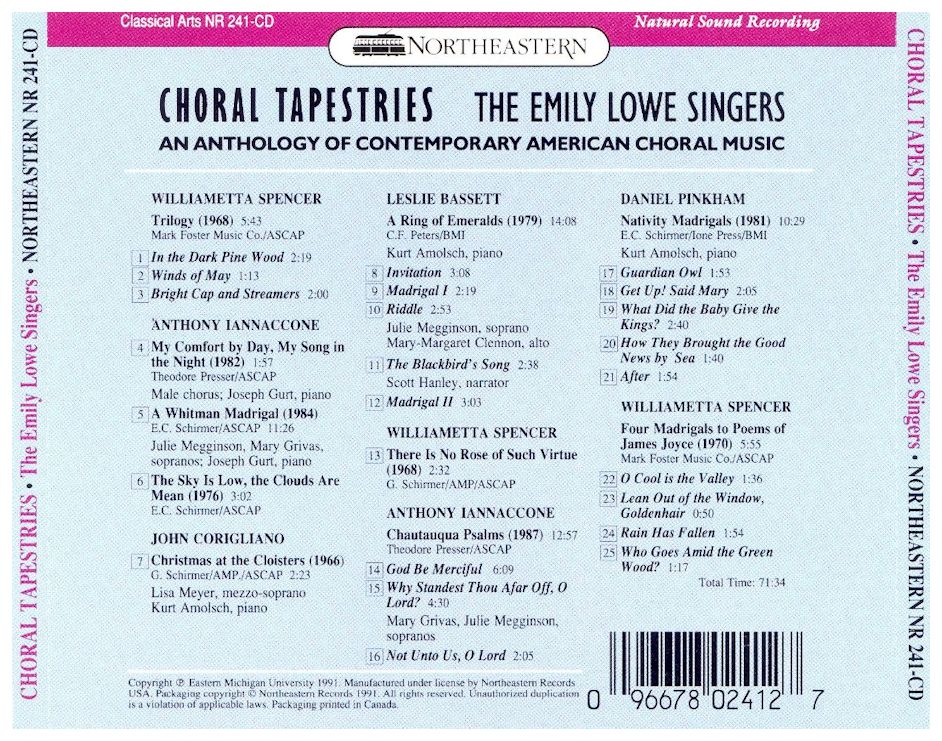
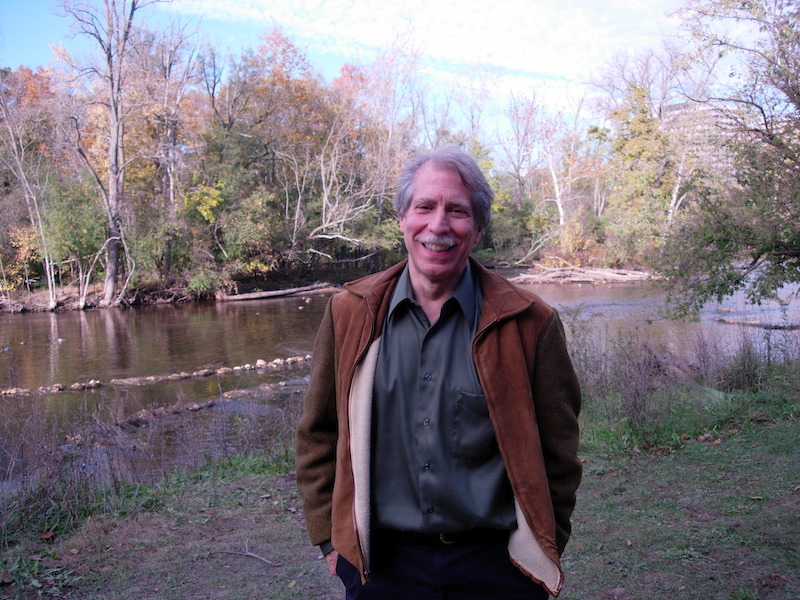
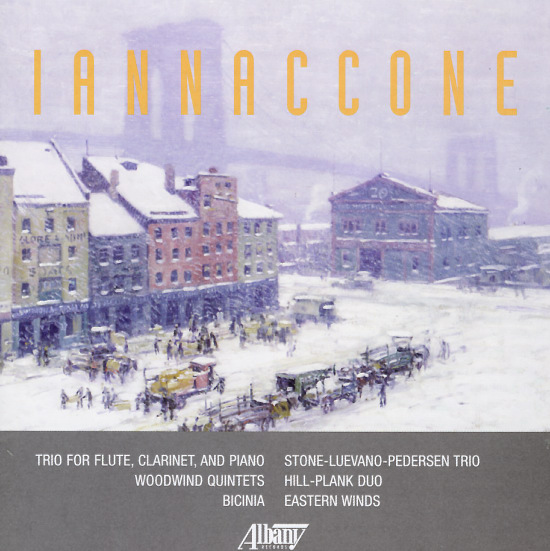
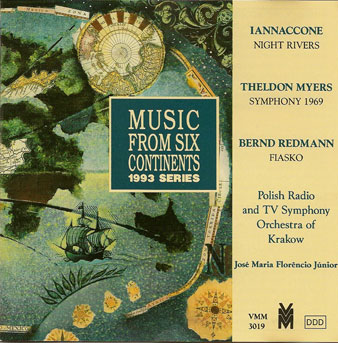
Anthony Iannaccone (born New York City, October 14, 1943) studied with Vittorio Giannini, Aaron Copland, and David Diamond to learn principles of music. During the 1960's, he supported himself as a part-time teacher at the Manhattan School of Music, and as an orchestral violinist. His catalogue of approximately 50 published works includes three symphonies, smaller works for orchestra, several large works for chorus and orchestra, numerous chamber pieces, large works for wind ensemble, and several extended a cappella choral compositions. His music is performed by major orchestras and professional chamber ensembles in the US and abroad. He is an active conductor of both new music and standard orchestral repertory. In addition to conducting numerous regional and metropolitan orchestras in the US, Iannaccone has conducted European orchestras including the Bohuslav Martinu Philharmonic, the Bavarian Festival Orchestra, the Janacek Philharmonic, the Moravian Philharmonic, and the Slovak Radio Orchestra. Iannaccone's WAITING FOR SUNRISE ON THE SOUND was chosen as one
of five finalists in the 2001 London Symphony Orchestra Masterprize
competition from a field of 1151 orchestral works submitted. Other
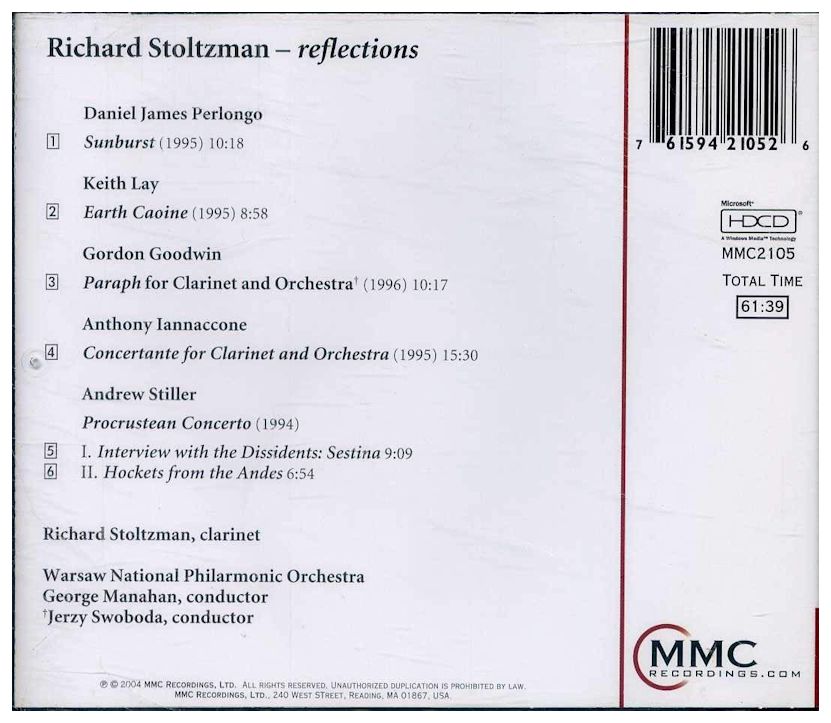
recent commissions include a quintet for clarinet and strings for Richard Stoltzman.
See my interview with George Manahan
More information about Anthony Iannaccone is available at www.iannacconeworks.com. -- Names which are links refer to my interviews
elsewhere on this website. BD |
 BD: Did the thought that you had to be European come
from Europe, or did it come from America?
BD: Did the thought that you had to be European come
from Europe, or did it come from America?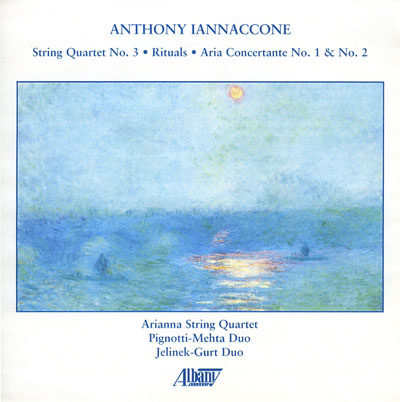 BD: Does it please you that it seems the current large
trend now is more towards this radical center?
BD: Does it please you that it seems the current large
trend now is more towards this radical center?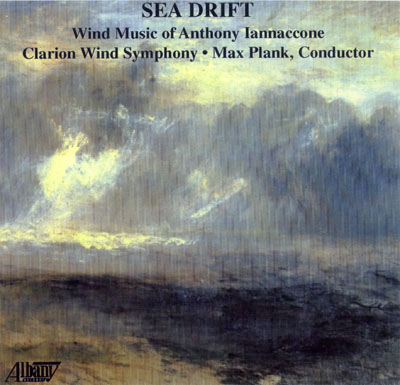 AI: Yes, I like that, and especially
being with the serious students. There are always some really gifted
ones in every batch. Also I’m a conductor, so I enjoy that... although
sometimes learning another Mozart work and coming back to a Brandenburg
Concerto is so engrossing that it begins to diminish the amount
of energy I have to perform my own music. But it’s something I
do by choice. I do enjoy conducting, but when I change hats, I
tend to divide up my available amount of energy, and you might say that
while my composing benefited from my work over the years as a conductor,
the time available for composing has been less.
AI: Yes, I like that, and especially
being with the serious students. There are always some really gifted
ones in every batch. Also I’m a conductor, so I enjoy that... although
sometimes learning another Mozart work and coming back to a Brandenburg
Concerto is so engrossing that it begins to diminish the amount
of energy I have to perform my own music. But it’s something I
do by choice. I do enjoy conducting, but when I change hats, I
tend to divide up my available amount of energy, and you might say that
while my composing benefited from my work over the years as a conductor,
the time available for composing has been less.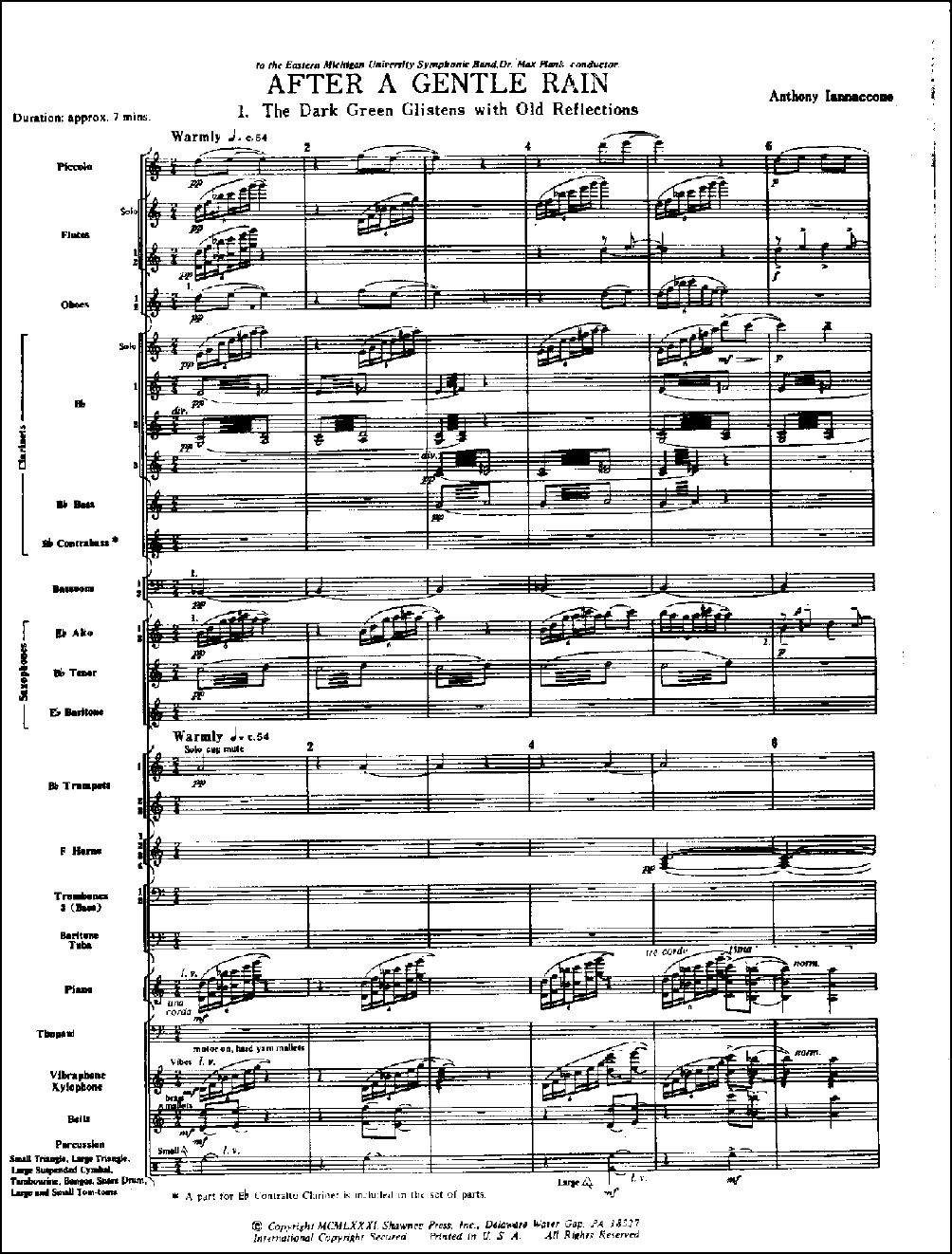
 BD: Theoretically they can come back, or they’re
in libraries, or you can hear them on the radio. [Again, this
was in the days before the ubiquitousness of the internet and downloads,
etc.]
BD: Theoretically they can come back, or they’re
in libraries, or you can hear them on the radio. [Again, this
was in the days before the ubiquitousness of the internet and downloads,
etc.]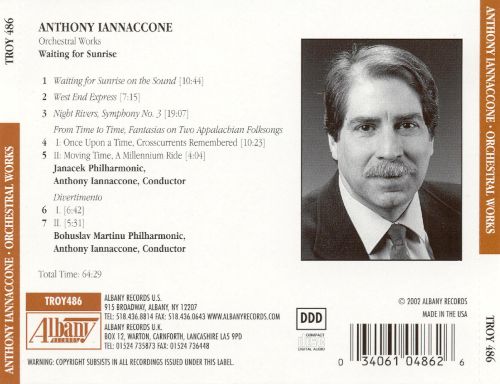 BD: We’re dancing around it a little
bit, so let me ask the big question straight out. What is the
purpose of music?
BD: We’re dancing around it a little
bit, so let me ask the big question straight out. What is the
purpose of music? AI: I’m optimistic about the art of
music in America. We’re going through some tough times financially,
as you know, and so that makes it tougher. But tough financial
times really don’t stop the production of great art. I can’t
give you the words exactly, but in The Third Man, which is a
wonderful Carol Reed movie, Orson Welles plays the character of Harry
Lime, and Lime says something to the effect that basically chaos and
difficulties can sometimes produce wonderful results. The example
he gives is Italy, which is beset with chaos and produced Michelangelo,
while Switzerland had 500 years of peace and produced Swiss cheese!
[Much laughter] I’m not sure the Swiss would agree, but there’s
something to that. In other words, stress and difficulty don’t
preclude creativity. In many ways it can help foster the production
of a very deeply felt kind of artistic work... not that I’m advocating
that composers go out and starve to death. [Laughs] No, but
I think it actually helps to produce a healthy body of work to support
yourself, and I would like to see artists given a chance to do that.
I think we would have more art and better art as a result. But
I don’t think you can create an equation whereby as the standard of
living goes up, the quality of art goes up. I don’t think there’s
any kind of formula to that effect, unless you get to the point where
a society is so depressed politically, socially, and economically that
people are just basically going with the prospect of staying alive, or
just keeping body and soul together. That does make it difficult
for any kind of large community of artists to work in a meaningful way.
AI: I’m optimistic about the art of
music in America. We’re going through some tough times financially,
as you know, and so that makes it tougher. But tough financial
times really don’t stop the production of great art. I can’t
give you the words exactly, but in The Third Man, which is a
wonderful Carol Reed movie, Orson Welles plays the character of Harry
Lime, and Lime says something to the effect that basically chaos and
difficulties can sometimes produce wonderful results. The example
he gives is Italy, which is beset with chaos and produced Michelangelo,
while Switzerland had 500 years of peace and produced Swiss cheese!
[Much laughter] I’m not sure the Swiss would agree, but there’s
something to that. In other words, stress and difficulty don’t
preclude creativity. In many ways it can help foster the production
of a very deeply felt kind of artistic work... not that I’m advocating
that composers go out and starve to death. [Laughs] No, but
I think it actually helps to produce a healthy body of work to support
yourself, and I would like to see artists given a chance to do that.
I think we would have more art and better art as a result. But
I don’t think you can create an equation whereby as the standard of
living goes up, the quality of art goes up. I don’t think there’s
any kind of formula to that effect, unless you get to the point where
a society is so depressed politically, socially, and economically that
people are just basically going with the prospect of staying alive, or
just keeping body and soul together. That does make it difficult
for any kind of large community of artists to work in a meaningful way.© 1993 Bruce Duffie
This conversation was recorded in Chicago on August 20, 1993. Portions were broadcast on WNIB later that year, and again in 1993 and 1998; on WNUR in 2005 and 2009; and on Contemporary Classical Internet Radio in 2006 and 2011. This transcription was made in 2018, and posted on this website at that time. My thanks to British soprano Una Barry for her help in preparing this website presentation.
To see a full list (with links) of interviews which have been transcribed and posted on this website, click here. To read my thoughts on editing these interviews for print, as well as a few other interesting observations, click here.
Award - winning broadcaster Bruce Duffie was with WNIB, Classical 97 in Chicago from 1975 until its final moment as a classical station in February of 2001. His interviews have also appeared in various magazines and journals since 1980, and he now continues his broadcast series on WNUR-FM, as well as on Contemporary Classical Internet Radio.
You are invited to visit his website for more information about his work, including selected transcripts of other interviews, plus a full list of his guests. He would also like to call your attention to the photos and information about his grandfather, who was a pioneer in the automotive field more than a century ago. You may also send him E-Mail with comments, questions and suggestions.