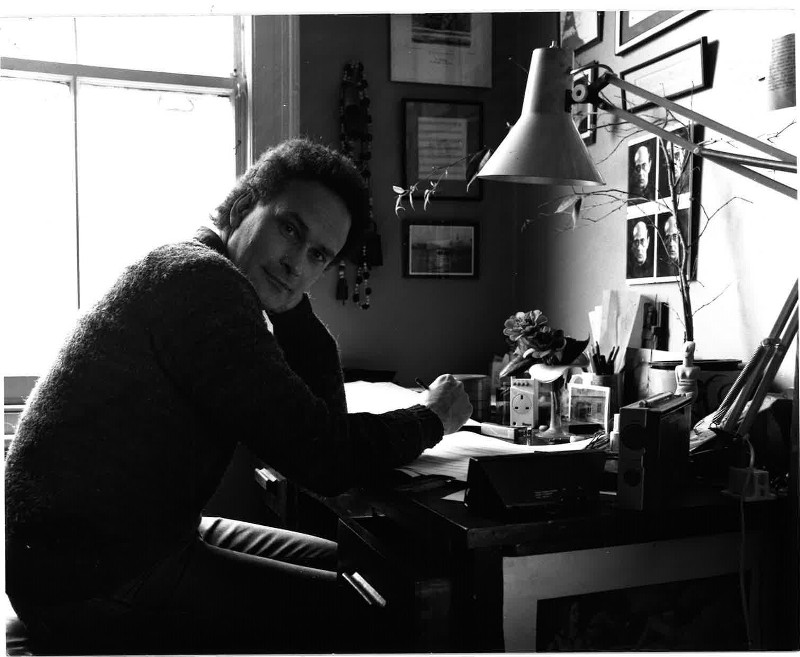
Composer / Record  Producer  Colin  Matthews

A Conversation with Bruce Duffie


matthews


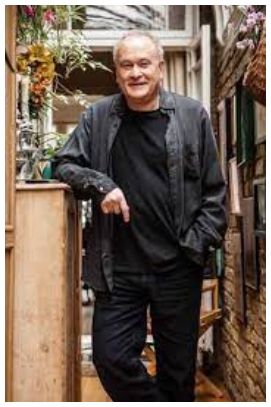
Colin Matthews, OBE (born 13 February 1946) is an English composer of contemporary classical music. Noted for his large-scale orchestral compositions, he is also a prolific arranger of other composer's music, including works by Berlioz, Britten, Dowland, Mahler, Purcell and Schubert. Having received a doctorate from University of Sussex on the works of Mahler, from 1964–1975 Matthews worked with his brother David Matthews and musicologist Deryck Cooke on completing a performance version of Mahler's Tenth Symphony.

Colin Matthews read classics at the University of Nottingham, and then studied composition there with Arnold Whittall, and at the same time with Nicholas Maw. In the 1970s he taught at the University of Sussex. During this period he also worked at Aldeburgh with Benjamin Britten and Imogen Holst. His music has been published principally by Faber Music since 1976.

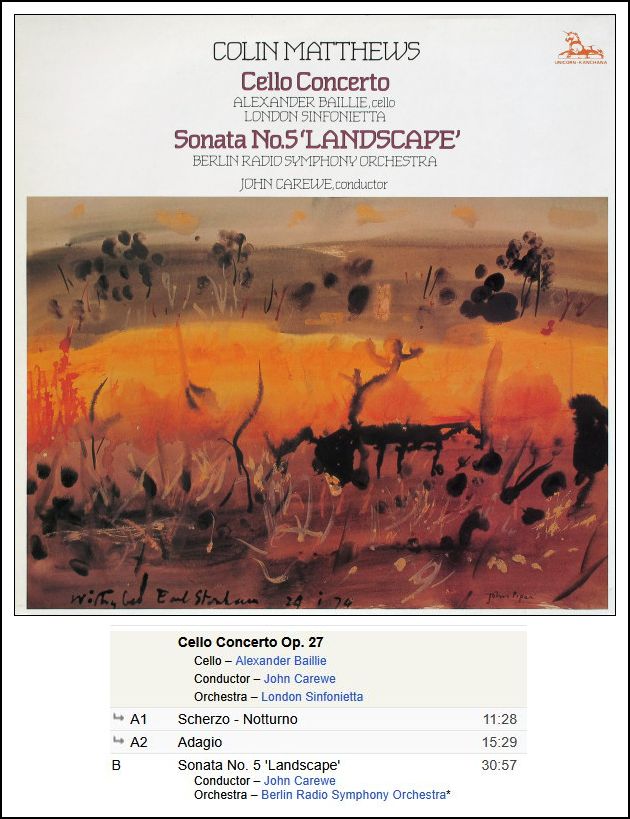
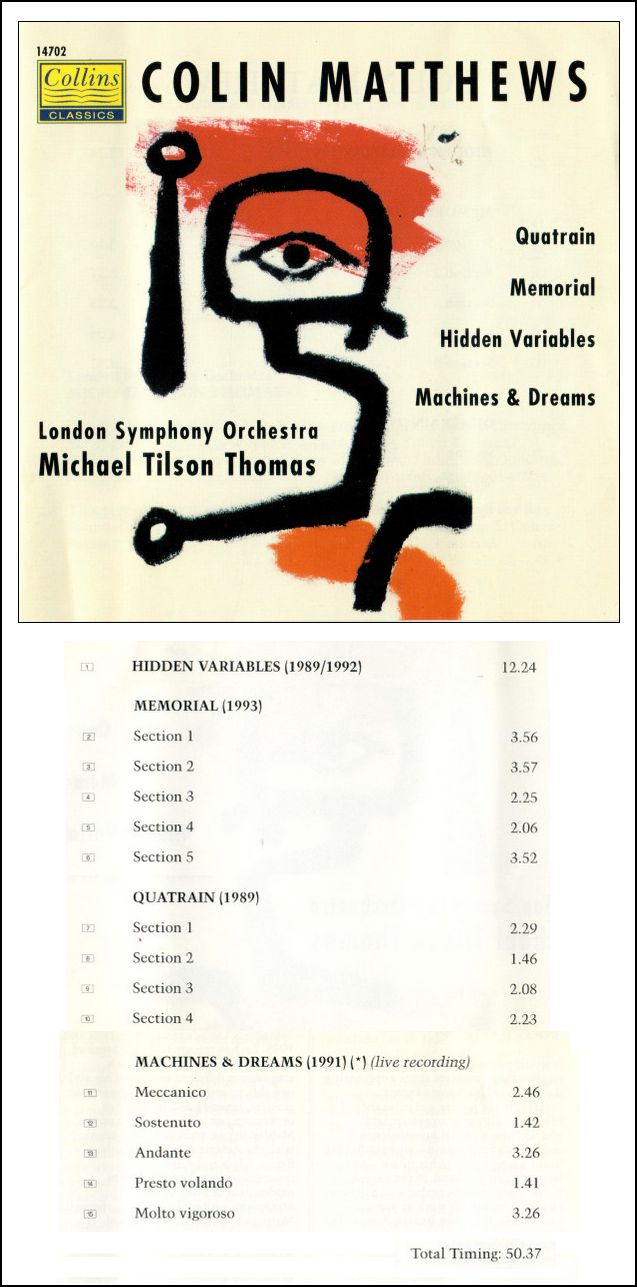
matthews In 1975 his orchestral Fourth Sonata (written 1974–75) won the Scottish National Orchestra's Ian Whyte Award. Subsequent orchestral works include the widely performed Night Music (1976), Sonata No. 5: Landscape (1977–81), and the First Cello Concerto, commissioned by the BBC for the 1984 Proms. In 1989 Cortège was given its first performance by the Orchestra of the Royal Opera House under Bernard Haitink, and Quatrain by the London Symphony Orchestra and Michael Tilson Thomas. This was the first of a series of LSO commissions, followed by Machines and Dreams for their 1991 Childhood Festival, Memorial in 1993 with Mstislav Rostropovich as conductor, and the Second Cello Concerto for Rostropovich in 1996. In 1990 he made a setting of three comic poems by Wendy Cope, Strugnell's Haiku. Matthews was Associate Composer with the LSO from 1992 until 1999. The orchestral version of Hidden Variables was a joint commission for the LSO and the New World Symphony Orchestra, who gave the American première in Miami under Michael Tilson Thomas in 1992. In the same year the Cleveland Orchestra gave the American première of Machines and Dreams.

The BBC commission Broken Symmetry was first performed by its dedicatees, the BBC Symphony Orchestra under Oliver Knussen, in March 1992, and repeated at the 1992 Proms. It forms the third part of the huge choral/orchestral Renewal, commissioned by the BBC for the 50th anniversary of Radio 3 in September 1996. Renewal received the 1997 Royal Philharmonic Society Award for large-scale composition. The Dutch première of Cortège was given in December 1998 by the Concertgebouw Orchestra under Riccardo Chailly. The ballet score Hidden Variables, incorporating a new orchestral work, Unfolded Order, was commissioned by the Royal Ballet for the reopening of the Royal Opera House in December 1999, with choreography by Ashley Page.

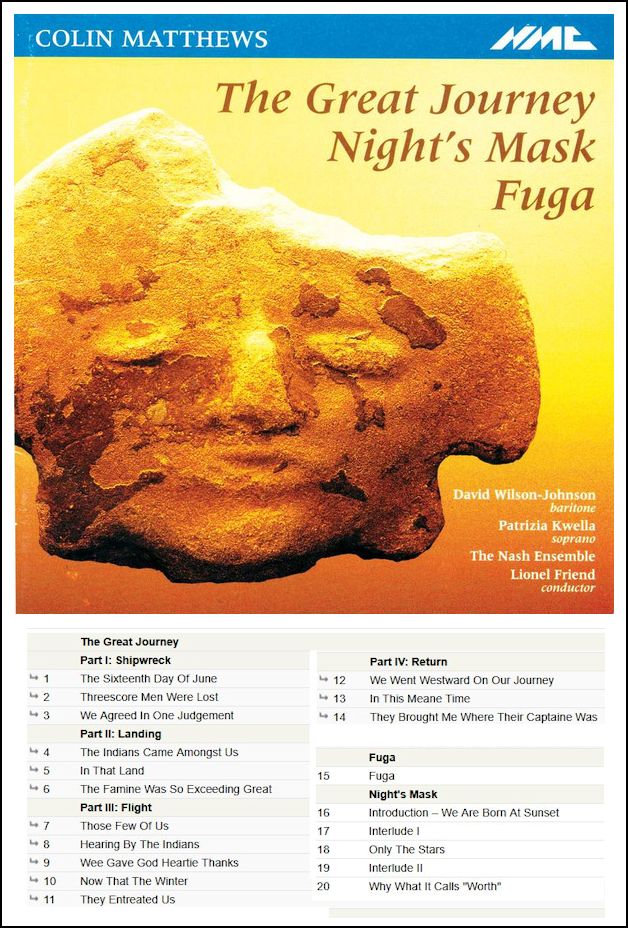
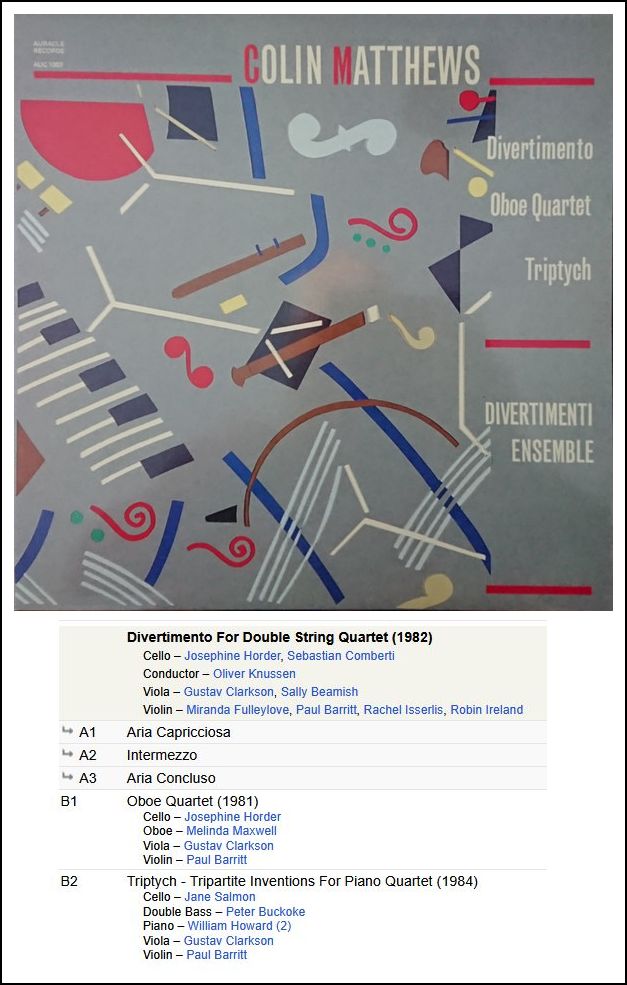
Colin Matthews' chamber music includes six string quartets, two oboe quartets, a Divertimento for double string quartet (1982), and a substantial body of piano music. Between 1985 and 1994 he completed six major works for ensemble: Suns Dance for the London Sinfonietta (1985, reworked for the Royal Ballet as Pursuit), Two Part Invention (1987), The Great Journey (1981–88), Contraflow, commissioned by the London Sinfonietta for the 1992 Huddersfield Festival, and two commissions for the Birmingham Contemporary Music Group, Hidden Variables (1989) and ...through the glass (1994), the latter given its first performance under Simon Rattle, who also conducted it in 1998 at the Proms and in Salzburg. Matthews' music was featured at the Almeida Festival in 1988, at the Bath Festival in 1990, at Tanglewood where he has been visiting composer many times since 1988, at the 1998 Suntory Summer Festival in Tokyo, at the 2003 Avanti! Festival in Finland, and the 2004 Berlin Festival.

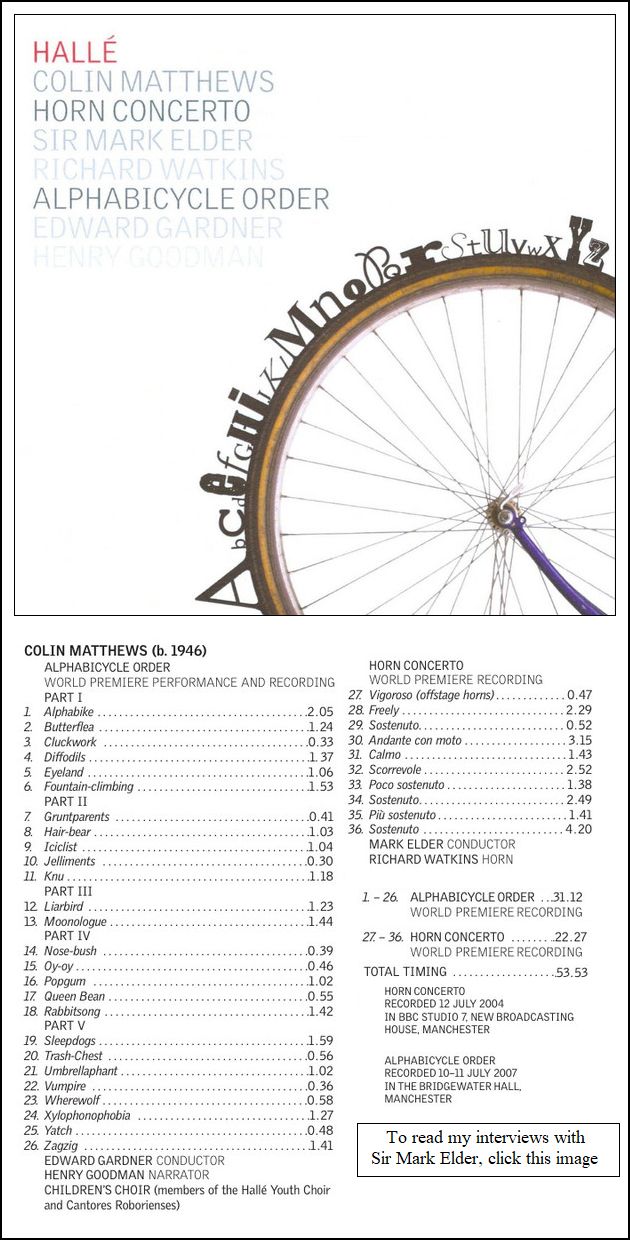
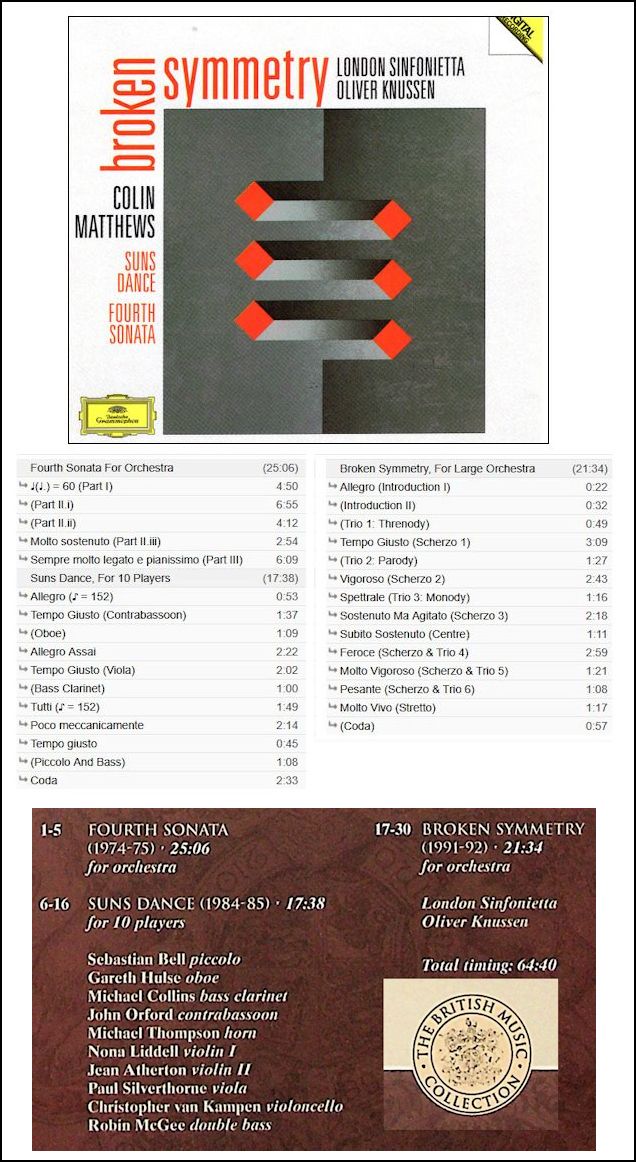
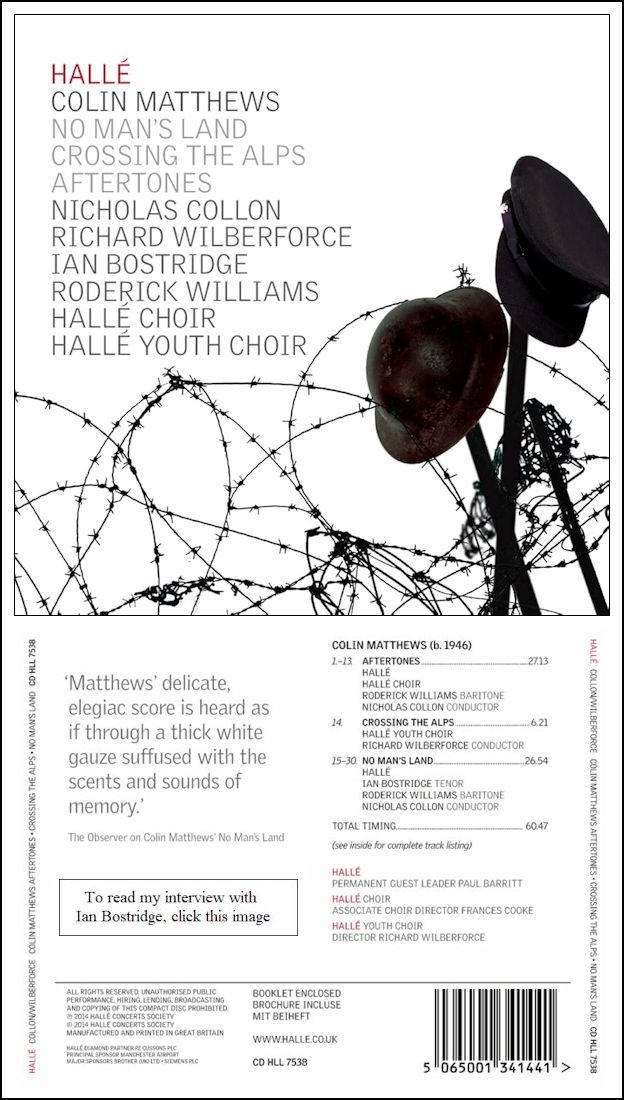
He is founder and Executive Producer of NMC Recordings, and has also produced recordings for Deutsche Grammophon, Virgin Classics, Conifer, Collins, Bridge, BMG, Continuum, Metronome and Elektra Nonesuch (Górecki's Third Symphony, for which he received a Grammy nomination). Photos of a few of his recordings are used as illustrations on this webpage.

He is active as administrator of the Holst Foundation, was Chair of the Britten Estate for many years, and is Music Director and Joint President of Britten-Pears Arts. He was a Council Member of the Aldeburgh Foundation from 1983 to 1994, and retains close links with the Aldeburgh Festival and the Britten-Pears School, particularly as co-director with Oliver Knussen of the Contemporary Composition and Performance Course, which they founded in 1992. He was a member of the Council of the Society for the Promotion of New Music Performing Right Society from 1992 to 1995. Since 1985 he has been a member of the Music Panel of the Radclffe Trust. He was an Executive Council Member of the Royal Philharmonic Society from 2005 until 2019.

In 1998 Colin Matthews was awarded an honorary doctorate by the University of Nottingham, where he has been honorary professor since 2005. He is currently Prince Consort Professor of Music at the Royal College of Music, where he was made FRCM in 2007, and distinguished visiting fellow in composition at the University of Manchester. He was a governor of the Royal Northern College of Music (where he is FRNCM) from 2001 to 2008. In 2010 he was made an Honorary Member of the Royal Academy of Music. He was presented with the Royal Philharmonic Society/Performing Right Society Leslie Boosey Award in 2005, honoring an individual who has made an outstanding contribution to the furtherance of contemporary music in Britain; and the Gramophone 2017 Special Achievement Award in recognition of his work for NMC.

He was appointed Officer of the Order of the British Empire (OBE) in the 2011 New Year Honours for services to music. In 2024 Matthews was nominated for an Ivor Novello Award at The Ivors Classical Awards.

Matthews and his wife Belinda, a former publishing executive at Faber and Faber, have three children, Jessie, Dan and Lucy.

==  Names which are links in this box and below refer to my interviews elsewhere on my website.  BD  


matthews
In January of 2006, Colin Matthews was in Chicago for a performance of his Continuum, part of the MusicNOW program featuring members of the Chicago Symphony.  The mezzo-soprano was Janice Felty, and it was conducted by Esa-Pekka Salonen.  The other work on the program was a Wind Quintet composed by Salonen.

On the afternoon before the concert, Matthews graciously allowed me to sit down with him at his hotel for an interview.  He is a multi-talented individual, and we spoke of several things relating to music.  His experience was on display, as was his humor.

Portions of the chat were later aired on WNUR, and on Contemporary Classical Internet Radio.  He was about to turn 60, and now, twenty years later, as he is about to turn 80, I am pleased to present the entire conversation.


Bruce Duffie:   You’re a composer, a record producer, a lecturer, and probably half a dozen other things.  How do you divide your career amongst all of those taxing activities?

Colin Matthews:   I suppose the big thing is that my time, to a large extent, is my own.  I have never done regular teaching, although I do a lot of administrative things, including working on the Britten and Holst estates.  They’re largely things I can control, or don’t take up too much time at any one time.  So it does allow me a certain amount of freedom, but not enough.  There are whole periods when I forget I’m a composer at all, and other times when I just have to block it off, and try to get longer stretches.  But I rarely seem to get a stretch of more than a week at a time.

BD:   You’re an administrator of other people’s things.  Can
t you then be an administrator of your own career?

Matthews:   [Laughs]  I’m not very good at that somehow!  I need somebody to administrate me.  My wife always tells me I need somebody to look after me, but I’m a bit of a control-freak, so I prefer doing it myself.

BD:   You can’t detach and look at your career from above?

Matthews:   I keep trying to do that.

BD:   Is that in any way correlative of the music?  Can you look at the music in a detached way, or is it just part of you as it comes up?

Matthews:   Oh, I think I can be fairly detached from my own music, yes.

BD:   You get a number of commissions, and you must decide, yes, you’ll accept this one, or no, you’ll turn it aside.  What goes into that decision?

Matthews:   [Thinks a moment]  I suppose it depends on if it fits with what I want to do.  But it’s also very easy to be deflected by the offer of a commission, and suddenly deciding that was what I wanted to do in any case.  At the moment, I’ve rather let myself accept a bit too much, because I’m slightly behind with what I should be doing.  What I’ve got to do over the next eighteen months is a bit scary.

BD:   Deadlines are looming, and you wonder if you will get it done?

Matthews:   Yes, to a certain extent that’s what it is.  The things are spread out, but I just allowed myself to accept perhaps a bit more than I should have.

BD:   I assume you still work with pen or pencil on paper?

Matthews:   Yes, I do.

BD:   When you sit down at the desk with the blank paper, does the muse always strike you?

Matthews:   No, it doesn’t.  Particularly with a new piece, I’ve spent so much time staring at the blank paper, and never feeling it will come.  I wonder if perhaps I have no idea how to write.  Will I ever manage to put pencil to paper at all?  With a big piece, it’s always like that.

BD:   [With a wink]  You should just accept smaller pieces.

Matthews:   [Laughs]  Yes!  That would be one answer.

BD:   When you get the commission, does that start the juices flowing?

Matthews:   Oh yes, it always immediately starts something.  Like a lot of people, I rely on something always going on at the back of my head, even if it’s not in the front of my mind.  Something is going, and there’s something there which makes it work, even if I’m not fully conscious of what it is.

BD:   Do you shape it, or do you wait for it to appear fully-formed?

Matthews:   I do a lot of shaping architecturally.  I do tend to map out shapes and forms, but often the piece will then take on a life of its own.  What I always find puzzling is when you hear of novelists saying that the characters take over the book, because you somehow think surely it’s a narrative, and they must know what’s happening, whereas music is so much more fluid.  Even then, there is the ability for something to change at any stage in quite unexpected ways.  I take it for granted that something will happen, but, as I say, I find it’s the parallel with the writer saying the characters carry it away.  The same thing happens, and I can accept that.

BD:   So, when you start, you truly don’t know where you’re going to end up?

Matthews:   I might... it depends on the piece.

BD:   If you’re surprised by where you go, are you pleased with where you go, or are you ever angry because you didn’t want to go in some other direction?

Matthews:   Usually, I find that the process of finishing a piece is a disappointing one, in the sense that it hasn’t done what I hoped it might, however much I’ve controlled the process.  With rare exceptions, what I get on paper is never quite what was in my imagination.  Sometimes, if I’m very lucky, it will be better than I hoped!  But more often than not, the process of finishing is a rather depressing one, I find.
matthews
BD:   It
s post-partum depression?

Matthews:   Yes, I think so.  [Both laugh]

BD:   Is it not satisfying then when players take it up and you actually hear the sound in the air, rather than just seeing it and hearing it in your mind?

Matthews:   Yes, there is always that, but by that time, I’m usually moving onto something else.  But the first rehearsals are exciting.  Regarding the first performance, I sometimes feel I would rather not be there.  I’ve moved on, and I’m doing something else, and it’s really for other people.

BD:   Coming back to an old piece must be very distressing for you.

Matthews:   [Thinks a moment]  Sometimes.  I don’t follow pieces round a great deal.

BD:   But you must occasionally hear one, or there might be a ten-year-old piece being played in your town.

Matthews:   Yes, but with that amount of time I distanced myself from the dissatisfaction with the piece.  Then I can perhaps feel better about it.  For instance, only last week I was rehearsing with a pianist who’s playing some pieces which are thirty years old, and I wondered if I really wanted to hear them.  But she played them so well that I really found it exciting, and I could divorce myself from whoever that composer was in the 1970s.

BD:   Has the piece grown over the years, even though it is black spots on paper?

Matthews:   In a way I think that’s true.  It’s become a different piece, and I can be very detached from it.  Detachment is a good thing.

BD:   Does it please you that the pieces are taken up at least by a few different people around the world?

Matthews:   Yes, it’s good to know that’s happening.

*     *     *     *     *

BD:   You write the piece, and you want it done a certain way.  Do you allow a little bit of interpretation?

Matthews:   Oh, yes.  I do tend to be a little bit of a control-freak in terms of notation.  I don’t want to leave a huge amount to the choice of the performer, but there’s obviously a certain amount of freedom, and if somebody has a very good and thought-through reason for wanting a different interpretation, then I’m happy to go along with it.

BD:   How far is too far?  At what point does the performer pull it out of shape?

Matthews:   That can happen, but it can always still be intriguing.  If a really good performer has a specific wish to do it in a different way, then it’s their prerogative.

BD:   Are there ever times that you think you should add those ideas as an amendment to the score?

Matthews:   It has happened, yes.  [Both laugh]  Even wrong notes sometimes get put in!

BD:   Really???

Matthews:   Yes!

BD:   Is there such a thing as a perfect performance?

Matthews:   No, I don’t think so, but there are things that get quite near to it.  But I wouldn’t even think of it in terms of my works.  There have been performances of some pieces which I thought of as being so good that they couldn’t be any better, but I don’t think of my music in that way in any case.

BD:   Are you basically pleased with the performances that you’ve gotten?

Matthews:   Yes, I’ve been very lucky, particularly recently with some of the performers I’ve had.

BD:   Is it because performers are understanding your style more?

Matthews:   I think so, and it’s also a question of players being so much quicker, so they get into the wavelength.  I’m also getting better myself!  [Both laugh]  Still, there’s room for improvement.

BD:   You are getting more accurate with conveying on the paper what you want?

Matthews:   Yes, or making sure that what I do is very playable.  That’s a very important part.

BD:   [With mock horror]  You mean you take the players into consideration???

Matthews:   Oh yes!  [Both laugh]
matthewes
BD:   Was there ever a time when you just wrote what you wanted, and the players simply had to do it?

Matthews:   No, I don’t think so.  I’ve never thought in that way.  I’ve never wanted to push people so far that things are almost technically unplayable.  I wanted to push, but always within limits.

BD:   Do you find yourself growing as your compositional process gets better?

Matthews:   That I don’t know.  Somebody else would have to tell me that.  In certain respects, yes, but not in certain other aspects.  It’s a good thing to always have something in front of you, and this dissatisfaction I feel at finishing a piece is actually a good thing, because it’s moving me onto the next.  One of the things I’m very wary of is any sense of wanting to repeat myself.  Far too many composers fall into the trap of finding a way of doing things that becomes relatively easy for them.  I always want it to be something of a struggle.  Hard as it is to cope with this struggle every time a new piece begins, I would be happy if I felt I knew how I do it, and just sit down and write it.

BD:   Do you want to reinvent the wheel every time you sit down?

Matthews:   Oh no, but there’s always some new process, and just finding the notes is always difficult.  I don’t like repeating processes.  I try to put a piece behind me, and not remember.  I’m very bad at analyzing my own music because I’ve gone through a process of deliberately trying to forget how I do things, so I don’t repeat them.

BD:   Would it be impossible for you to come to a new piece the same way as you’d approach somebody else’s work?

Matthews:   I’m sure I could do that, but I wouldn’t particularly want to.  Somebody else can do that, but not me!

*     *     *     *     *

BD:   When you get a commission, is the length of the performing time usually specified?

Matthews:   Usually, but it’s fairly free... unless it’s a relatively short work.  The shorter pieces tend to be very specific.  I’ve just finished a piece for the Concertgebouw, which they said was to be around 15 minutes.  But it was up to me, and I always intended it to be slightly longer.  In fact, I intended it to be about twenty, but it ended up as eighteen.  That’s about right.

BD:   You don’t need to cite a specific example, but are there times when it goes wildly off schedule, and turns out to be either much shorter or much longer?

Matthews:   No, I don’t think so.  I generally have an idea of the length, because the shape is always an important aspect for me.  So generally I know the rough length I’m working to.

BD:   As you’re working on a piece, do you ever get ideas that won’t work in this piece, but they’ll work in another piece?

Matthews:   [He thinks] I’m not sure if anything has happened as precisely as that.  There might be off-shoots.

BD:   What if you’re working on a string quartet, and you get a tune that would be great for a trumpet concerto?

Matthews:   One of the things is that I tend to work on several pieces at once, so what I’m doing is fairly channeled.  So I would be surprised if something like that came to me.  Usually, strange ideas come when I don’t know what piece they’re going to be for.  They might be used and they might not.

BD:   Do you put them in sketch books?

Matthews:   Yes... not sketch books as such but...

BD:   Scraps of paper?

Matthews:   Sketch scraps, yes, [both laugh] which I may find later or not.

BD:   I was going to ask if you ever referred to them.

Matthews:   Yes, but if something particularly striking comes, then I’ll know what to do with it.

BD:   Do you take advantage of the latest electronic machinery to help you compose, or to ease in transcriptions?

Matthews:   I have been using a computer for the fair copies for at least ten years.  I started fairly early because I knew it was going to be the thing, and that’s what publishers would want... although it has its drawbacks.  I find that is actually fast.  With some scores, the actual physical labor of doing a score by hand, which I enjoy, just sometimes becomes too much, and the computer does have ways of making shortcuts.  The danger is fitting things because the computer can do it, and I’m certainly aware of that.  I see quite a lot of scores by younger composers where you know the computer has dictated the material.

BD:   You’ve come to the music as an old-school writer, and some of these younger composers are going to be coming to the computer first, and then to music.  Is that going turn this whole process on its head?

Matthews:   There’s a danger in that, because you really do have to know it from the inside.  You mustn’t think that the computer knows better than you do, and if you’ve never done it yourself, then you’re not going to know that.  With the small amount of teaching I’ve done, I was always amazed that people who could perform and read had no way of writing it down.  Even though they were looking at music every day, the actual act of writing it down was completely alien to them, and there is a younger generation to which that is the case... although it is quite heartening to see a lot of people still start with pencil and paper.

BD:   With the little bit of teaching that you have done, have you arrived at some kind of idea of a general way that they should proceed, or should not proceed?

Matthews:   [Laughs]  It’s usually pretty impossible to predict.  I can offer advice but...

BD:   Well, what advice do you have in general for the younger composer coming along?

Matthews:   Oh, don’t do it!  [Both laugh]

BD:   So music will die, and then we’ll all go away!  [More laughter]

Matthews:   No, the point is that the ones who really want to do it can’t be stopped.  I have a sympathy with what Schoenberg said,
It is my duty to stop you from composing, to make you realize how difficult it is, or how impossible it is.  There’s a certain sense in that, because the people who are deterred by that are the ones who would never make it anyway, and the ones who want to do it are going to find their way through whatever.  The aim is recognizing that, and just trying to help them along.

BD:   It sounds like you’re weeding them out.

Matthews:   No, that’s not my role.  I don’t think it’s a process quite like that, but it’s being fairly tough with them.  I do a regular course each year, teaching at Aldeburgh.  Most years, after the main Aldeburgh Festival in July each year, Oliver Knussen and I run a ten-day composition course, and we usually have good young composers.  But sometimes it happens, there are ones that you can’t really do anything with, and I suppose you just do less for them.  They have to find their own way, whereas the ones who actually ask for help are the ones you really want to help.  The ones who are trying to do it on their own don’t really want advice.  We are not weeding them out, but it’s not helping them in the same way.
matthews
BD:   Are you optimistic about what you see coming off the pages of the younger composers?

Matthews:   Generally yes, although it does worry me a little that, in a sense they know how to do it, but they don’t know why they’re doing it.  Technically, some of them can be very assured, but I don’t know really what is motivating them, or whether there’s a real burning wish to create.

BD:   Then let me turn the question around.  Why do you compose?

Matthews:   [Laughs]  Because I have a burning desire to do it.  I come from a rather strange start.  I don’t have a musical background.  I sort of forced myself into it, and that’s one of the reasons I still have a struggle, and that does give me a very different perspective.

BD:   Why did you force yourself into this, and not into something else?

Matthews:   I knew I wanted to do something creative.  When I was younger, I thought it would probably be painting, and I put off the decision.  I didn’t read music or art, although at university both of them thought I might go that direction.  I made the decision to become a composer at a later stage, so I was a relatively late developer.

BD:   Do you feel that you’re painting in sound?

Matthews:   Sometimes.  I do think in terms of colors, but it’s gone a long way now.  I probably could have made it as a painter, but not anymore.  I don’t relate the two.  I can’t do it now to my satisfaction.

BD:   [Trying to be helpful?]  So rather than program notes, you could present a painting.

Matthews:   [Laughs]  That would be easier than writing a program note sometimes!  That
s the one thing I really hate!

BD:   Why?

Matthews:   If I could write the program note, I wouldn’t have written the music.  I can say a few things, but my program notes are getting shorter and shorter.

BD:  
Here’s the piece.  Just try and listen to it.

Matthews:   Right!  
Here’s the piece.  It’s ten minutes long.  [Both laugh]

*     *     *     *     *

BD:   I asked you before if you had the performers in mind.  Do you have the audience in mind when you’re writing?

Matthews:   Yes, I do.  I wouldn’t say I’m writing to please the audience as the main aim, but I would never think of writing without the audience in view.  Whether that helps or not, I don’t know.  Generally, I will know the circumstances of the first performance, and it will affect the way the piece goes to a minor degree.

BD:   Do you have a specific audience in mind, or is it just a general audience?

Matthews:   Pieces are very much driven by the circumstances of who commissioned them, and where they’re going to be done.

BD:   If you write a certain piece for the Concertgebouw, it’s that orchestra and that audience.  Does it then not translate well to the Chicago Symphony Orchestra, or to some small ensemble?

Matthews:   I’m sure it would do, but I know what that orchestra is like.  I know the audiences in Holland, in Amsterdam, are wonderful, so in a sense it’s sort of
no holds barred.  I know how appreciative they are, and how seriously they take it.

BD:   Would you be more careful of an audience in a different city?

Matthews:   I might be, but it’s a rather crude way of looking at it.  I wrote a piece for the reconsecration of the Frauenkirche in Dresden last November [2005], and there I could not but be aware of the circumstances in which it was going to be performed, even though it also involved two performances in New York.  But the Dresden performance had to determine the pace almost more than any other piece I’ve written.

BD:   How do you guard against it becoming an
occasional piece?

Matthews:   That is a slight problem in some ways.  It meant that it would be very suitable for that occasion, but that doesn’t mean to say that it’s so site-specific that it can’t move on.

BD:   Would you reject a commission for a very specific kind of situation?

Matthews:   I’ve done very small-scale things.  About five years ago, I wrote the Opening Fanfare for the Proms, and because of the configuration of the Royal Albert Hall, I wrote it for three separate brass groups and percussion that would be right up in the balcony.  I knew that this was a one-off, and it wouldn’t work anywhere else.  There would be no other occasion for doing it, but that was a small specific occasion.  If I had been asked to write a big piece that was to be only performed in the balcony of the Albert Hall, I wouldn’t do it!  [Both laugh]

BD:   We could make a wager as to whether that piece actually does show up someplace else, either in a new hall, or some other place that happens to have a similar configuration.  [Both laugh]

Matthews:   It would be interesting if it did!  No, this was a one-off, and it was fun.
matthews
BD:   Do you try to push some of your pieces, perhaps something that hasn’t gotten enough performances for your taste?  If someone comes to you with a commission, and you know that in your repertoire, in your library, you have something from two or three years ago that would be very good for that situation, or good for them, do you suggest that, rather than give them something new?

Matthews:   It hasn’t happened, but it might.  I can’t really think of a way in which that might work.  I can’t think of anything that I’ve done that might work again.

BD:   Perhaps it’s because you’ve been divorcing yourself from all these pieces!  You don’t remember your own stuff!  [Both laugh]

Matthews:   Well, that’s true.  I do have to look at my own catalogue sometimes when somebody asks me what I’ve got.

BD:   Does it please you that your catalogue is growing and growing?

Matthews:   It’s nice.  There’s a sense of security, I suppose, in that.

*     *     *     *     *

BD:   Are you pleased that a number of your pieces have been recorded?

Matthews:   Yes.  I think anybody feels that.  It’s one sense of perpetuating these pieces, and usually I’ve been involved with the performance.  I’ve produced quite a lot of my own discs when they’ve happened.

BD:   Is that a good thing to have the composer there?

Matthews:   Because I’ve done a lot of producing, in that case I think it is.  Obviously, it’s just not my say of what’s happening, but it’s been quite strange on the occasions when I have sat and somebody else has been producing, because I feel it should be my job.  [Both laugh]  I don’t conduct, and I don’t have the wish to conduct my own music.  But in terms of production, it
s just as a good composer-conductor will prefer to do their own recordings.  In terms of production, I prefer to do it myself.

BD:   When composers are conductors, I ask if they’re the ideal conductor of their works.  So, are you the ideal producer of your music?

Matthews:   Possibly!  [Both laugh]

BD:   Of the ones you have not produced, have they been successful in your eyes?

Matthews:   Yes, I think so.  One was a particularly difficult one, because I was actually in charge of the editing process, and I was able to solve the problems that the producer had left.

BD:   But at some point, because of the CD format, when it
s all finished, you are literally handed your work on a silver platter.

Matthews:   Yes, and it’s a good feeling.

BD:   Do you like the idea that at any moment someone in a hotel room, or a living room, or a kitchen, or a bar could be listening to your piece?

Matthews:   It would be very nice if they were doing that, yes!  [Laughs in disbelief]

BD:   Is your music for everyone?

Matthews:   No, it isn’t!  We’re in such a small minority now, and even for the music lovers in general, contemporary music is such a small area.  I don’t think we should get too worried about that because, it’s always been the case that the audience for classical music has always been small.  But it’s particularly difficult for us, because we’re fighting for shelf space with four hundred years of western music.  It was never the case before.

BD:   So you’re not even just competing against Beethoven, you’re always competing against Rock music, and all other genres?

Matthews:   Oh yes.  The extraordinary thing is the fact that popular music 150 years ago was a simple matter of just songs and dances.  There was great popular culture.  The way that popular culture has grown hugely over the past 100 years, let alone the last fifty, has made it is very much a part of the game.

BD:   [Again, trying to be helpful?]  Perhaps you could angle to get your music played at a football match, or some kind of popular event.  You could commission something that would take place at the beginning of a ceremony, or, as we have over here, the seventh inning stretch.

Matthews:   [Somewhat flabbergasted]  I’ve done things that were more populist in that way.  I have a piece in which there’s an invasion of football fans at the end.  It might come about, but I don’t think I would be the person that somebody would come to for that.  The market has just moved away so much that no one would even perceive it as something that was relevant.

*     *     *     *     *

BD:   Should there be more music education in schools?

Matthews:   Yes!

BD:   How do we get that?
matthews
Matthews:   I have no idea.  I don’t know what the situation is here, but certainly in the UK it’s become terrible that music education is being taken right off the curriculum.  It’s had a disastrous effect on general musical appreciation and culture, but it doesn’t stop composers and instrumentalists and vocalists coming through.  I’m a governor of the Royal Northern College of Music in Manchester, and the standards there are phenomenal.  Yet they’ve had to do it against the odds.  In a way there’s a strength in that because they’ve really had to fight for it, but there’s been a complete cutoff.  Either they do it, or they don’t do it at all.  It has to come from the parents, and there’s no incentive to the schools unless you have a really committed head teacher.

BD:   Gaze into your crystal ball just a little bit.  Where is music going to be twenty, fifty, or a hundred years from now?

Matthews:   I don’t know.  I think there will come a realization that this form of education as a complete act of any culture is wrong.  I can’t believe it can go on.

BD:   Is the internet going to help or hinder that?

Matthews:   It can be a help with people.  It opens things up to people.  It gives people an insight that they wouldn’t otherwise get.

BD:   [Gently protesting]  But they have to go hunting for it.  They have to do a Google search.  They just can’t stumble on it.

Matthews:   But that’s good.  I think you should have to work for it.

BD:   When you come to a concert, should you have to work to enjoy the music?

Matthews:   Oh yes, I think you should.  One of the bad aspects of culture is that it’s expected to be wallpaper, because the only way people confront classical music in general is in tiny bite-size chunks.  They have no idea how to cope with a concert.  They have no idea that it might be demanding, or that they’re actually going to have to concentrate.  It’s very strange that this should have happened to music, because nobody would go to a film and wander around looking at something else, or thinking of something else, or reading a book with a quarter of a mind.  But somehow, music is something that you can just use as background.  It’s become far too much background, and there’s too much of it around.  That’s the trouble.

BD:   There is too much music everywhere?

Matthews:   Yes, too much music of all kinds everywhere.

BD:   [Musing]  You don’t like it in elevators?

Matthews:   [Sarcastically]  Oh, I love it in elevators, yes!  [Both laugh]  How did you guess???

BD:   Would you be surprised, or would you be dismayed if a piece of yours was playing as you were going up or down in the elevator in this hotel?

Matthews:   I’d be surprised, yes!  I wouldn’t particularly want it.  I don’t think I’ve written music that would necessarily help an elevator ride.  I prefer silence in most circumstances.

BD:   [Continuing the weird scenario]  So we get this benevolent magnate who is building a new hotel.  He comes to you and says he wants something for the elevators, and asks you to tailor it so that if someone pushes a certain floor, it’ll be that length of time.  Do you tell him that this is a wonderful idea and get to work, or do you suggest he should look elsewhere?

Matthews:   [In disbelief at this situation]  I don’t know.  It sounds rather too hypothetical a case.  That sounds like it would become more like an art installation than a piece of music.  Something that was actually a sound installation might work in that case, but that doesn’t really need a composer.

BD:   You wouldn’t want to shape that sound installation?

Matthews:   I don’t know whether I’d know quite where to start.

BD:   Even though I’ve been a little facetious, I do want to ask the question straight out.  What’s the purpose of music?

Matthews:   [Genuinely surprised]  Oh, goodness!  Do you ask everyone that?

BD:   [With a broad smile]  Yes, and I usually get an answer!

Matthews:   I don’t know if I could say what the purpose is.  What it should do is touch something very deep inside that can’t be touched in any other way.  You could say that applied to any art form, but because it’s the only art form that really takes place in time, and is so time-dependent, music has a very special place.  I can only say what it does for me.  It does things for me that nothing else can, but I can’t then apply that as being the purpose of music.  I can only say what I would like it to do for other people.

BD:   That’s the direction you want to send it off into?

Matthews:   Yes.

BD:   Do you consciously try to send your music off in that direction, or is it just that it happens to go there?

Matthews:   I would say it happens to go there.  I have the highest aspirations, but I know how far short I have fallen of them.  I would certainly like to move people, and make them think in ways that they wouldn’t otherwise have thought, but it feels rather pretentious to even think in those terms.

*     *     *     *     *

BD:   You mentioned earlier that you become detached from your pieces.  Do you ever go back and revise them?

Matthews:   To a certain extent I might make small changes, but I would rather always be writing something new.  To make a major revision to a piece is sort of elevating it into something that I don’t think it really is.  The pieces that I’ve got relatively right, I’m happy with.  The pieces that I’ve got wrong, I would rather let them sink or swim.

BD:   Have you suppressed any works?

Matthews:   I have withdrawn a few pieces, yes.
matthews
BD:   [Playing Devils Advocate]  But there must be scores out there, and someone might say it’s a cool piece and want to do it.

Matthews:   They probably aren’t really out there.  It would quite difficult for people to get hold of things I’ve suppressed.  There is one particular work, my Second String Quartet, which was originally in two movements, and is now in six.  Only the original first movement survives.  I suppose it might be possible for somebody to get ahold of the material for the original second movement, but I hope not... although I do have a recording of it.

BD:   If there’s a recording of it someplace, then someone can painstakingly transcribe it.

Matthews:   [Laughs]  If they have the patience, they’re welcome to it.

BD:   For example, the Mahler First Symphony has that extra movement which is sometimes done and sometimes not, and it’s interesting to hear it.  But Mahler has no choice because he’s gone!  You have a little choice, and you can say whether you like it or not.

Matthews:   I can say so, and that’s my right, but as somebody who has dabbled in other people’s unfinished pieces rather probably more than is good for me, I do feel that once it’s in the public domain, it’s available.  If it’s there, it’s fascinating to find out.

BD:   So, should we listen to your words, or should we adapt to the work?

Matthews:   If I cared enough about it, I could destroy the material completely.  It
s the same with unfinished pieces.  I could make it so that nobody would get their hands on them, but I probably wouldn’t think it was worth bothering with.

BD:   But we’ve learned so much from Beethoven’s sketchbooks.

Matthews:   Yes, we have.

BD:   Would we not learn much from your sketchbooks?

Matthews:   I don’t know!  [Laughs]  You might do, but I wouldn’t presume to it!  For great composers it’s an endlessly fascinating process.  The thought of Sibelius deliberately destroying and burning the Eighth Symphony is a terrifying one.  I just wish he hadn’t.

BD:   You bring up a word I want to pounce on, and that is ‘great’.  What is it that makes a piece of music ‘great’?

Matthews:   [Thinks a moment]  I can only be specific about pieces of music that I find great, or are obviously pretty well undeniable masterpieces.  It goes back to your question about the purpose of music.  It’s music that has a transcendent value, particularly music that is cathartic, that actually puts you through a process that has changed you in listening.  For me, that’s great music.

BD:   Is any of your music cathartic?

Matthews:   Possibly, but in a rather harsh way.  In one or two pieces, the intention is to put you through the mill.  There’s an orchestral piece of mine called Broken Symmetry [shown at right], which is a twenty-minute rampage that should leave you feeling pretty limp, but better for it!  [Laughs]

*     *     *     *     *
 
BD:   Tell me the joys and sorrows of writing for the human voice.

Matthews:   [Sighs]  I find that one of the toughest things.  It doesn’t come naturally to me.  I don’t find it easy thinking in vocal terms.  The toughest thing for me is always the finding the appropriate text, and finding something I’m totally committed to.

BD:   Do you have to find it, or might someone suggest it to you?

Matthews:   I wish people would!  I would like to have texts pushed at me much more than actually happens, but usually it’s a pretty solitary process of reading, and reading, and trying to find, or hoping to come across almost accidentally the sort of text I want to set.  I haven’t done a great deal of vocal music.  There are only two big pieces of mine where I’ve had control of the text.  One is a piece called The Great Journey, which sets Conquistador
s Narrative, which I was able to completely edit myself from a sixteenth century original, and, to a certain extent, even rewrite some of it so that it did exactly what I wanted it to.  With Continuum, which is happening tonight, happily, I did find the right texts.

BD:   Should you not, perhaps, write your own texts?

Matthews:   I’m not good enough for that.  It would be an ideal solution, and I have thought of that in operatic terms.  But then there are too many bad examples of composers writing their own librettos.  [Both laugh]

BD:   Do you like having a voice with your music?

Matthews:   It doesn’t, as I say, really come naturally, but I’m trying more and more.  I want to write more vocal music, and I would like to write more choral music as well, which is a very small part of my output.
 
BD:   Would you ever think of using the voice just as a different color, without text on open sounds or open syllables?

Matthews:   Not really.  I have done one little choral piece, which is just syllabic, but it doesn’t appeal greatly.

BD:   Not even for effect?

Matthews:   It can be.  I think highly of Esa-Pekka Salonen
s Wing on Wing.  That was a clever use of vocalism, particularly of two such extraordinary voices.  That’s a very beautifully done piece, but it wouldn’t be something that would have occurred to me to do.  A voice immediately asks for words.

BD:   [At this point we stopped to take care of a few technical details, and I asked his birthdate, which, as noted above, is February 13, 1946, meaning he was about to turn 60.]  Are you pleased with where you are at this milestone?
matthews
Matthews:   [Laughs]  Ah, no, no!  I would like to have been where I am about fifteen years ago, with plenty of time to move on.

BD:   Just in the composing, or with all of your career?

Matthews:   Oh, I’m happy with my career as a whole.  I made a decision five or ten years ago that what I was doing was what I wanted to do.  I had various teaching offers, one actually being a chair.  I did think about it, but I’d made the right career decisions the way I’ve done, and I’m proud of what I’ve done, particularly with the Holst Foundation, which has given away about £5 million over the years.  I have also founded a record company with the help from the Holst Foundation, and I’m happy with what I do with Britten and various other charities, as well as the small amount of teaching I do.  I think it’s a good balance.

BD:   In the end, is the composing you have squeezed in worth it?

Matthews:   [Thinks again]  It isn’t a question that would occur to me, because there isn’t any option.  Why I answered your last question that I’m not happy with where I am now is because ultimately I haven’t done what I would have liked to have done, which is to have written better music.  The worthiness of it doesn’t really come into it, but I’m still aspiring to be able to produce something which I will feel is 95% exactly what I wanted to do.  I’m probably nearer to 80% or 85% with those pieces.

BD:   But that’s pretty good, right?

Matthews:   That’s pretty good, but some of them are much lower than that.

BD:   You’re probably too self-critical.  Most composers are!

Matthews:   And that’s a good thing.  For me, what makes a composer is the ability to be self-critical.  You’ve asked me very specific questions, and I’m trying to be honest about it, but I don’t go around as a general rule saying that.  I don’t volunteer it without being asked!  [Both laugh]  It’s slightly off-putting to tell an audience I don’t think much of this piece.

BD:   You need to put a positive spin on it?

Matthews:   Yes.  The pre-concert talk has become the art of the positive spin, and I recognize it as a very important part of the process.  It is something I used not to like doing, but now I almost miss it if it’s not there, because it does help to make that relationship with an audience, which is important to prove you’re a real person.  You asked if I think of an audience, and a lot of audiences think the composers don’t think of them.  You often sense this feeling of discomfort in the audience.  They’re trapped, and they don’t want to listen, and then they think the composer has got it in for them.  But if they have been made aware of the composer, and feel he is on their side, and is a reasonably nice person, then they’re going to have a lot more sympathy.

BD:   Aside from all of these things that you’re fighting, such as the shades of Beethoven and the other giants, are you also also fighting what happened in the 1960s and
70s, with all of the discordant music?

Matthews:   It’s left a legacy.  I still enjoy a lot of that music, and a lot of very positive things happened.  It was almost inevitable that things went that way, but it is a pity that it has still colored people’s attitude to new music.  It was a short phase, and it didn’t take over the world, even as so many composers seem to have rewritten the history.  They were forced into writing all this terrible music while studying at university, so they went in the other direction when they could.  There were plenty of other ways out.

BD:   [With mock horror]  You mean they could have written a tune???

Matthews:   [Laughs]  They could have always written a tune, if they were capable of it!  It is a slight myth that this was the case.  There’s always been an alternative mainstream, but perhaps not so much for the young composers.  It might have been difficult, but it was by no means impossible.

BD:   One last question.  Are you optimistic about the future of music?

Matthews:   I think so.  I hear plenty of good music being written, and what is important is a feeling that people who care for it still care very much.  It’s very heartening.  It’s growing slowly, but there is a core of people who really appreciate what living composers are doing, and it’s a wonderful feeling when you meet those people.  Over here, in America particularly, sometimes the enthusiasm is terrific.  They really do appreciate it.  There are not huge numbers of people, but they make up for their smallness in numbers by their bigness of heart!

BD:   We
re a very dedicated bunch.

Matthews:   Yes!  [Both laugh]

BD:   Thank you for being a composer, as well as all of your other hats.

Matthews:   [Laughs]  I don’t have a choice!

BD:   Thank you so much for spending some time with me today.  I appreciate it.

Matthews:   Not at all.  It’s a pleasure.


= = = = = = = =                 = = = = = = = =                 = = = = = = = =
- - - - -        - - - - -        - - - - -
= = = = = = = =                 = = = = = = = =                = = = = = = = =


© 2006 Bruce Duffie

This conversation was recorded in Chicago on January 23, 2006.  Portions were broadcast on WNUR the following month, and again in 2015; and on Contemporary Classical Internet Radio in 2007, and 2009.  This transcription was made in January of 2026, and posted on this website at that time.  My thanks to British soprano Una Barry for her help in preparing this website presentation.

To see a full list (with links) of interviews which have been transcribed and posted on this website, click here.  To read my thoughts on editing these interviews for print, as well as a few other interesting observations, click here.

*     *     *     *     *

Award - winning broadcaster Bruce Duffie was with WNIB, Classical 97 in Chicago from 1975 until its final moment as a classical station in February of 2001.  His interviews have also appeared in various magazines and journals since 1980, and he continued his broadcast series on WNUR-FM, as well as on Contemporary Classical Internet Radio.

You are invited to visit his website for more information about his work, including selected transcripts of other interviews, plus a full list of his guests.  He would also like to call your attention to the photos and information about his grandfather, who was a pioneer in the automotive field more than a century ago.  You may also send him E-Mail with comments, questions and suggestions.