|
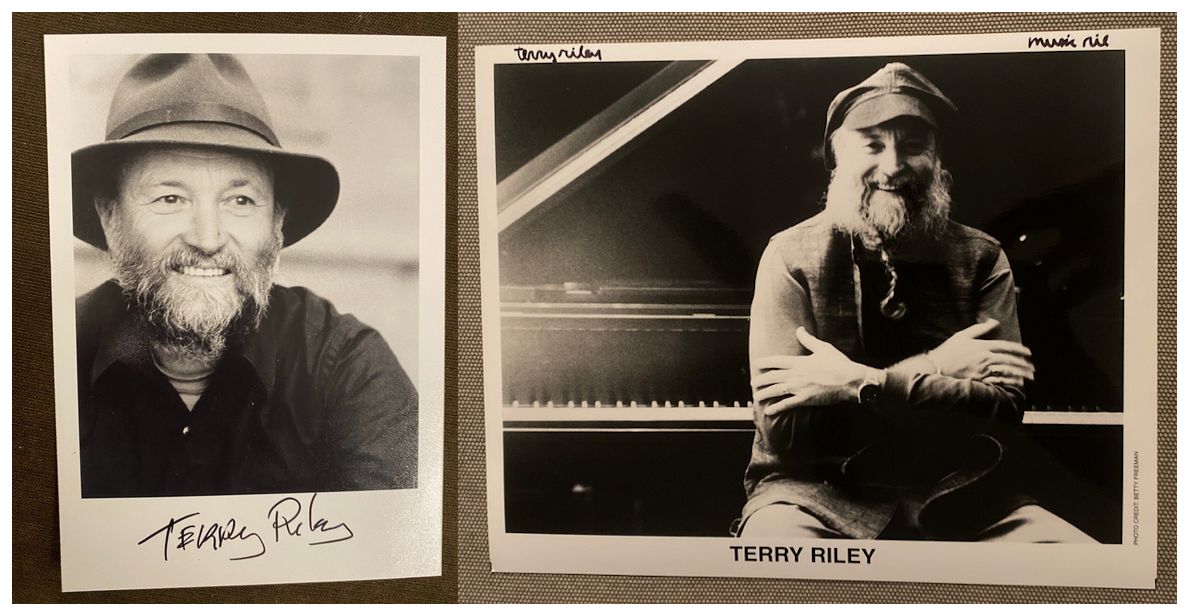
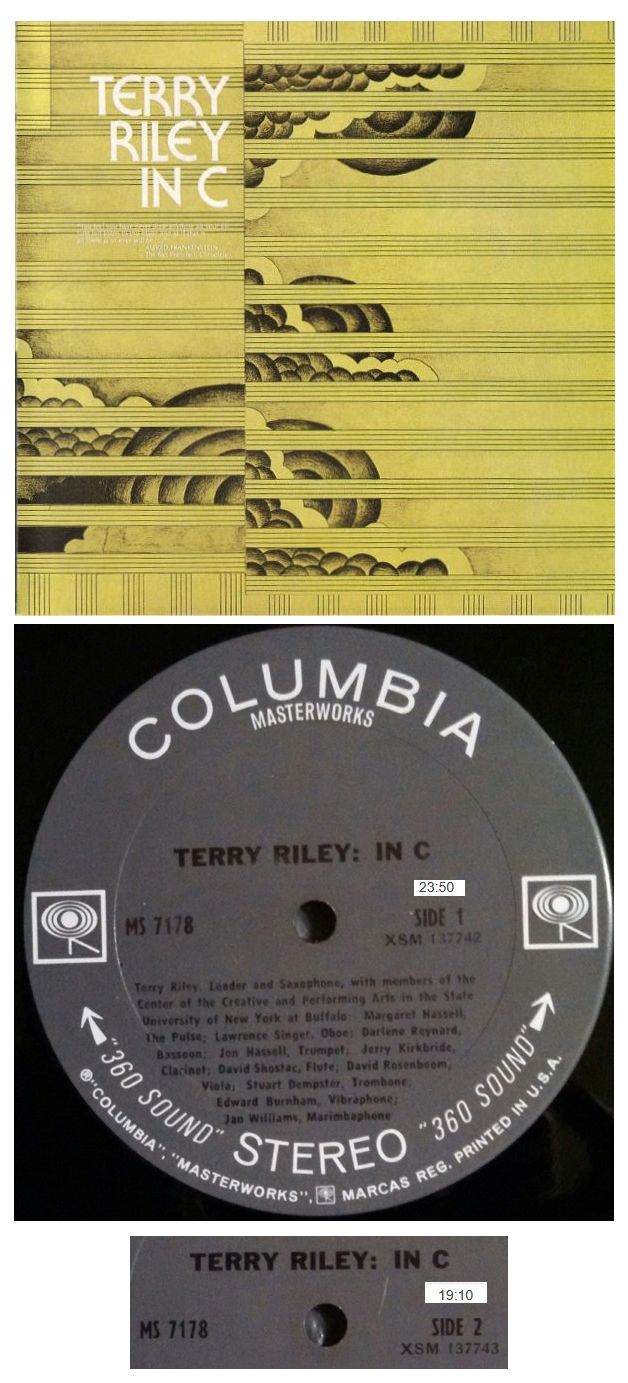
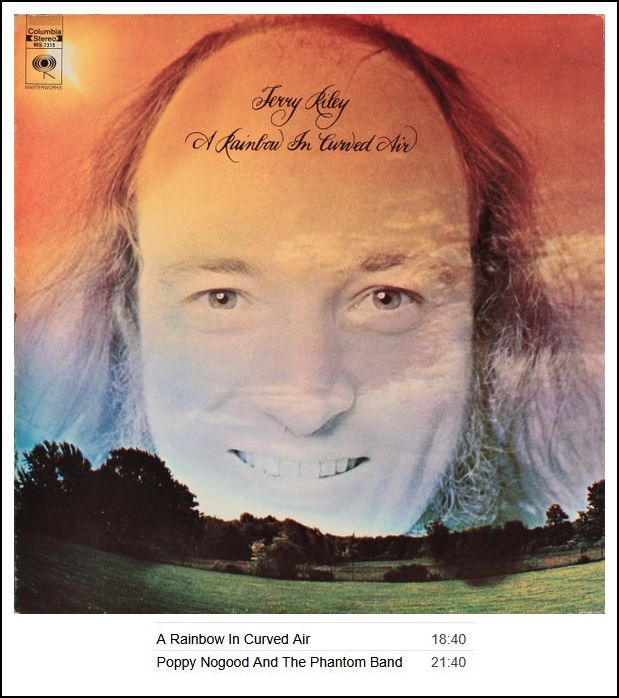
Terrence Mitchell Riley (born in Colfax, California, June 24, 1935) is an American composer and performing musician best known as a pioneer of the minimalist school of composition. Influenced by jazz and Indian classical music, his work became notable for its innovative use of repetition, tape delay systems, and improvisation. His best known works are the 1964 composition In C and the 1969 album A Rainbow in Curved Air, both considered landmarks of minimalism and important influences on experimental music, rock, and contemporary electronic music. Raised in Redding, California, Riley began studying composition and
performing solo piano in the 1950s. He befriended and collaborated with composer
La Monte Young, and later became involved with both the San Francisco Tape
Music Center and Young's New York-based Theatre of Eternal Music. A three-record
deal with CBS in the late 1960s brought his work to wider audiences. In 1970,
he began intensive studies under Hindustani singer Pandit Pran Nath, whom
he often accompanied in performance. Subsequent works such as Shri Camel
(1980) explored just intonation. He has collaborated frequently throughout
his career, most extensively with the Kronos Quartet and his son, guitarist
Gyan Riley. He studied composition at San Francisco State University, the San Francisco Conservatory, and the University of California, Berkeley, studying with Seymour Shifrin and Robert Erickson. He befriended composer La Monte Young, whose earliest minimalist compositions using sustained tones were an influence. Together, Young and Riley performed Riley's improvisatory composition Concert for Two Pianists and Tape Recorders in 1959–60. Riley later became involved in the experimental San Francisco Tape Music Center, working with Morton Subotnick, Steve Reich, Pauline Oliveros, and Ramon Sender. Throughout the 1960s, he also traveled frequently in Europe, taking in musical influences and supporting himself by playing in piano bars. In 1965 he came to New York City and performed for eight months with La Monte Young's Theatre of Eternal Music. His most influential teacher was Pandit Pran Nath, a master of Indian classical voice who also taught La Monte Young, Marian Zazeela, and Michael Harrison. Riley made numerous trips to India over the course of their association to study and accompany him on tabla, tambura, and voice. In 1971 he joined the Mills College faculty to teach Indian classical music. Riley also cites John Cage and "the really great chamber music groups of John Coltrane and Miles Davis, Charles Mingus, Bill Evans, and Gil Evans" as influences on his work. He was awarded an Honorary Doctorate Degree in Music at Chapman University in 2007. Around 1980, Riley began his long-lasting association with the Kronos
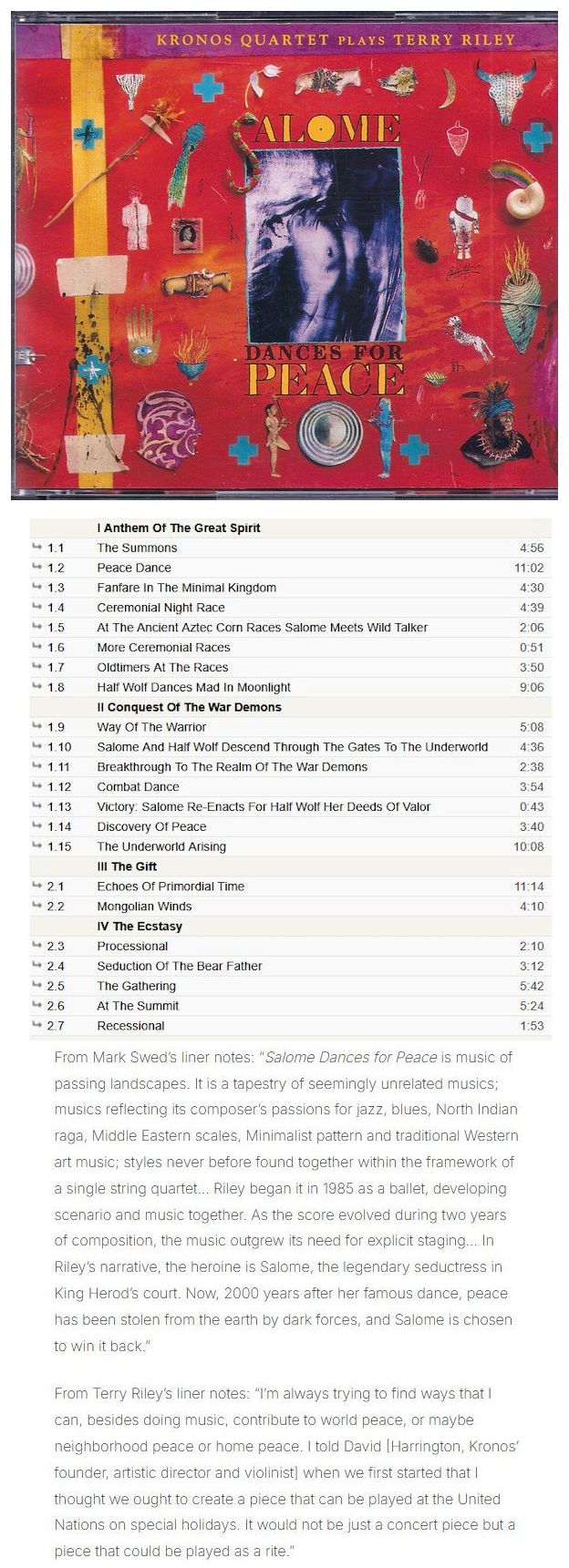
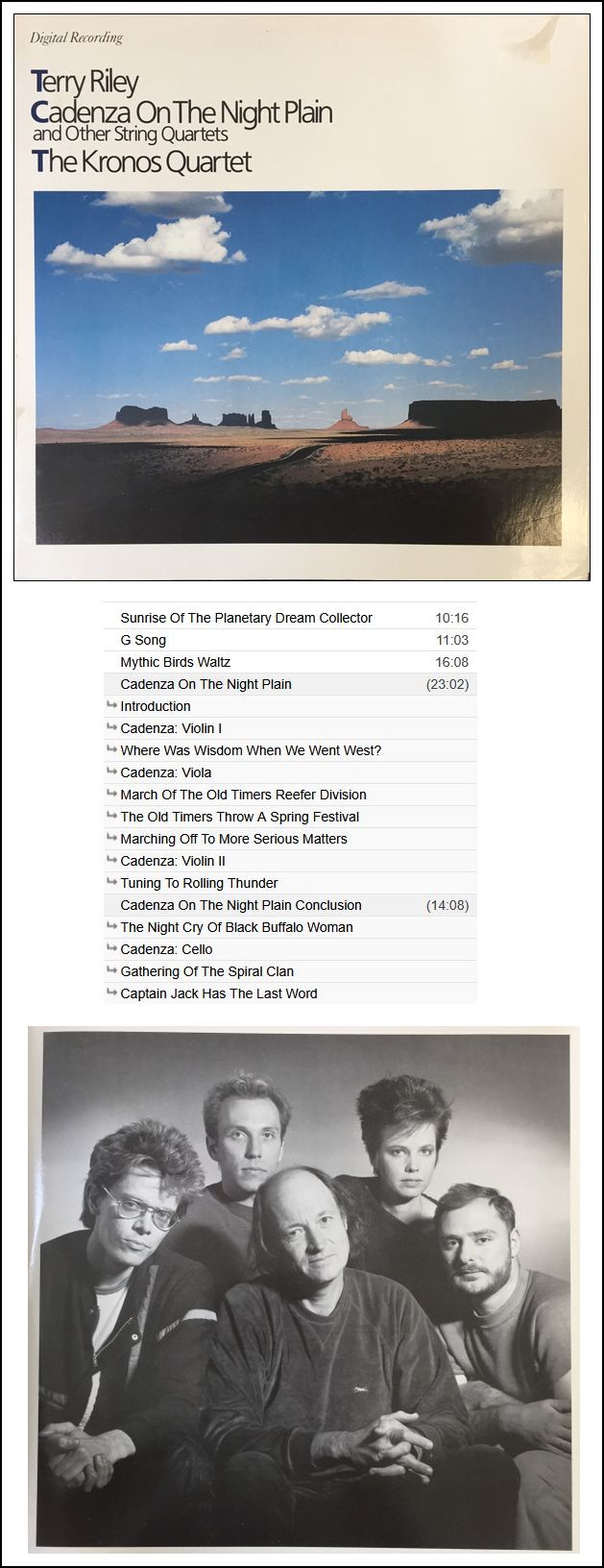
Quartet when he met their founder David Harrington while at Mills. Throughout
his career, Riley composed 13 string quartets for the ensemble, in addition
to other works. He wrote his first orchestral piece, Jade Palace,
in 1991, and has continued to pursue that avenue, with several commissioned
orchestral compositions. == Throughout this webpage, names which are links
refer to my interviews elsewhere on my website BD |
© 1988 Bruce Duffie
This conversation was recorded in Chicago on May 22, 1988. Portions were broadcast on WNIB the following year, and again in 1990, 1995, and 2000. This transcription was made in 2026, and posted on this website at that time. My thanks to British soprano Una Barry for her help in preparing this website presentation.
To see a full list (with links) of interviews which have been transcribed and posted on this website, click here. To read my thoughts on editing these interviews for print, as well as a few other interesting observations, click here.
Award - winning broadcaster Bruce Duffie was with WNIB, Classical 97 in Chicago from 1975 until its final moment as a classical station in February of 2001. His interviews have also appeared in various magazines and journals since 1980, and he continued his broadcast series on WNUR-FM, as well as on Contemporary Classical Internet Radio.
You are invited to visit his website for more information about his work, including selected transcripts of other interviews, plus a full list of his guests. He would also like to call your attention to the photos and information about his grandfather, who was a pioneer in the automotive field more than a century ago. You may also send him E-Mail with comments, questions and suggestions.