|
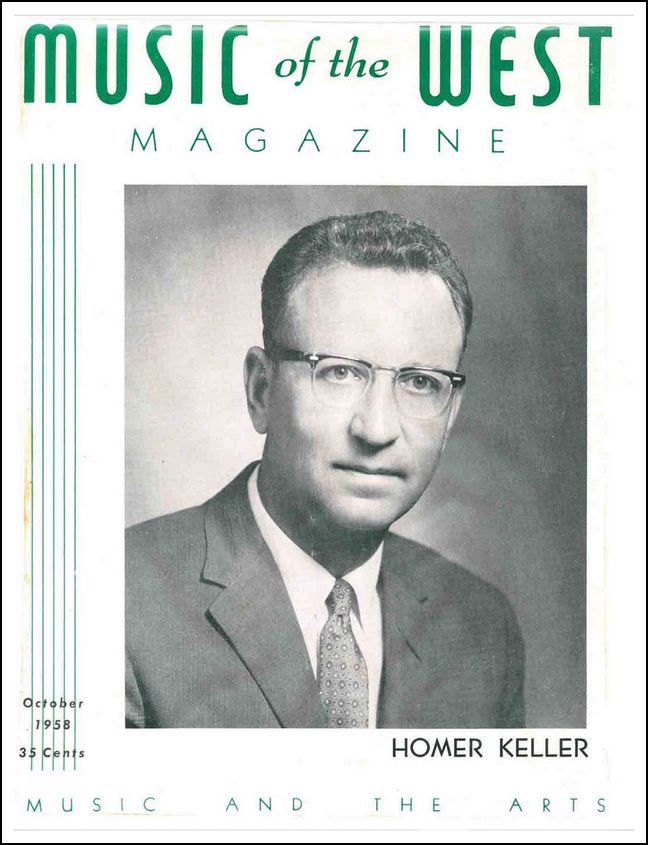
Homer Todd Keller (February 17, 1915 – May 12, 1996) was an American composer of contemporary classical music. He graduated from Oxnard Union High School in Oxnard, California
in 1933, after which he attended the Eastman School of Music, where he
studied with Howard Hanson, obtaining B.M. (1937) and M.M. (1938) degrees. He was awarded $500 in the 1939 Henry
Hadley Foundation competition for his First Symphony, which was premiered
the following year by the New York Philharmonic under John Barbirolli. As
a Fulbright scholar in Paris, he studied with Arthur Honegger at the
Ecole Normal de Musique. His Second Symphony was performed
by the National Symphony Orchestra in Washington, DC, in 1950. Howard
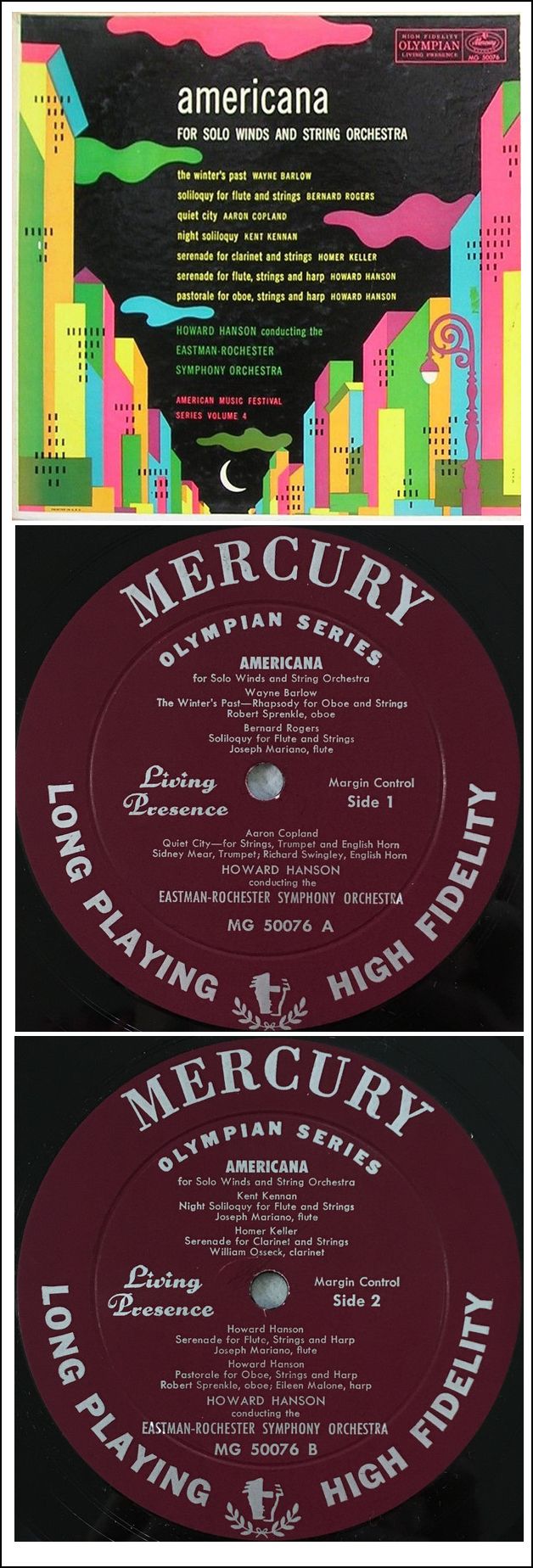
Hanson and the Eastman-Rochester Symphony recorded Keller's Serenade
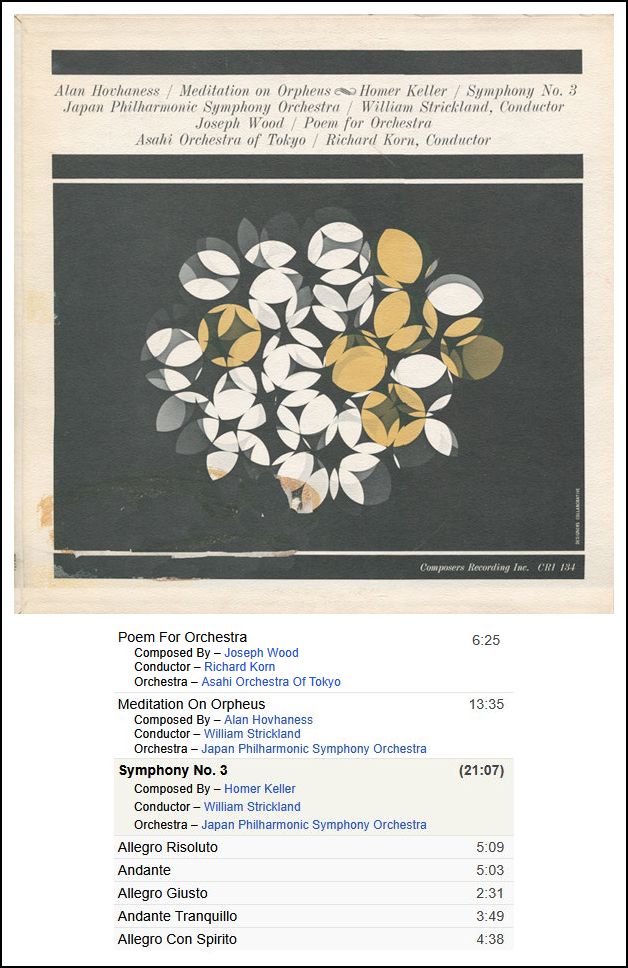
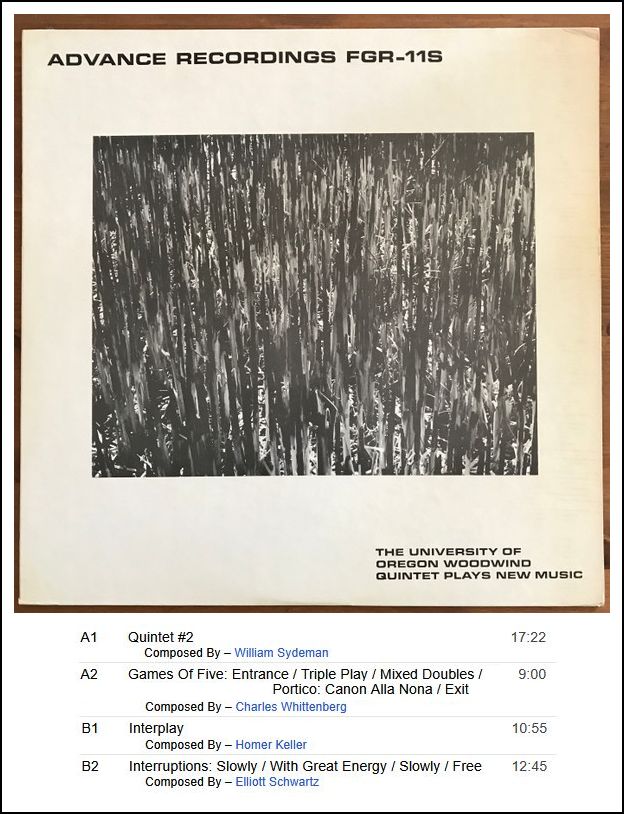
for Clarinet and Strings for Mercury Records. For three years, he resided in Honolulu, Hawaii, where he first taught at the Palama Settlement and the Punahou Music School, later becoming a lecturer in msuic at the University of Hawaii. He was President of the Honolulu Chapter of the National Society of Arts and Letters. His work in Hawaii exposed him to Pacific Island folk musics, which he credited with widening his own musical thought with regard to melody and harmony. In December, 1956, the Honolulu Symphony, with George Barati conducting, gave the premiere performance of Keller's Third Symphony. Austin Faricy, the music critic for the Honolulu Star Bulletin, reported, "Written richly and idiomatically for orchestra, Keller's symphony alternated between nervous energy and large repose, with a wealth of allusion to contemporary rhythm and themes, and some reference to folk material...Mr. Keller received an ovation at the end." He taught at the University of Michigan (where his notable students included Leslie Bassett, George Balch Wilson, Norma Wendelburg, and Donald Harris), then at the University of Oregon in Eugene, Oregon from 1958 to 1976. His notable students at the University of Oregon include Ralph Towner, Dean C. Taylor, Stephen Scott, and Robert Scott Thompson. Also at the University of Oregon, Keller worked with Jon Appleton to set up that university's electronic music studio. [Throughout this webpage, names which are links refer to my interviews elsewhere on my website. BD] While at the University of Michigan he also served on the Interlochen Music Camp staff where he helped and influenced many aspiring young musicians including Dwight Beckham in 1950. Many of his music scores and some biographical and publishing history documents are with the American Composers Alliance. His official papers and manuscripts are held by the Eastman School of Music Library; The ACA collection is held at Special Collections in Performing Arts at University of Maryland. The Homer Keller Papers are held by the Eastman School of Music. Keller's last residence was Montclair, California. 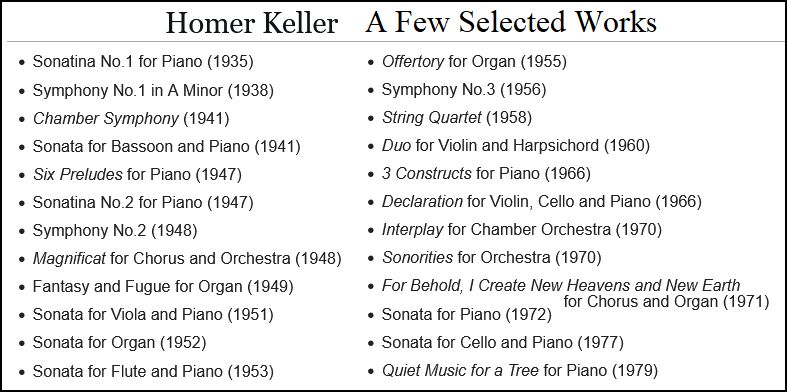
|
© 1988 Bruce Duffie
This conversation was recorded on the telephone on November 26, 1988. Portions were broadcast on WNIB in 1990, and again in 1995. While not including any interview material, I placed some of his music on the in-flight entertainment package aboard Delta Airlines in March-April, 1989. This transcription was made in 2026, and posted on this website at that time. My thanks to British soprano Una Barry for her help in preparing this website presentation.
To see a full list (with links) of interviews which have been transcribed and posted on this website, click here. To read my thoughts on editing these interviews for print, as well as a few other interesting observations, click here.
Award - winning broadcaster Bruce Duffie was with WNIB, Classical 97 in Chicago from 1975 until its final moment as a classical station in February of 2001. His interviews have also appeared in various magazines and journals since 1980, and he continued his broadcast series on WNUR-FM, as well as on Contemporary Classical Internet Radio.
You are invited to visit his website for more information about his work, including selected transcripts of other interviews, plus a full list of his guests. He would also like to call your attention to the photos and information about his grandfather, who was a pioneer in the automotive field more than a century ago. You may also send him E-Mail with comments, questions and suggestions.