Conductor  Paul  Anthony  McRae

A Conversation with Bruce Duffie


mcrae


[This brief biography was posted on the Prabook website.  Though not a 'reliable' source, this accounting seems to be accurate though the early 1990s.  A much more complete biography (from the conductor's own website) appears at the bottom of this webpage.]

*     *     *     *     *

McRae, Paul Anthony was born on December 4, 1945 in Liverpool, England. Son of Thomas and Florence (Gordon) McRae. He came to the United States, 1946.

Education included: Student, Juilliard School, 1962-1963; Bachelor of Music, Eastman School Music, 1963-1967; master classes in conducting, Aspen (Colorado) Music Festival, 1964, 69, 79, 82; diploma, Accademia Musicale Chigiana, Siena, Italy, 1984.

Assistant conductor, Hochstein Sinfonia, Rochester, New York, 1965-1967; 2d and associate principal trumpet player, Rochester (New York) Philharmonic Orchestra, 1966-1974; music director, conductor, Boca Raton (Florida) Symphony Orchestra, 1982-1984; guest conductor, Philharmonia Hungarica, Recklinghausen, German Democratic Republic, 1984; guest conductor, Russe Symphony Orchestra, Bulgaria, 1984; guest conductor, London Symphony Orchestra, 1984, 85, 87, 88; resident conductor, Philharmonic Orchestra Florida, Fort Lauderdale, 1985-1987; guest conductor, English Chamber Orchestra, 1985; guest conductor, Royal Philharmonic Orchestra, London, 1986-1987, 88; guest conductor, Pittsburgh Symphony Orchestra, 1986; guest conductor, Anchorage (Alaska) Symphony Orchestra, 1986; guest conductor, Lake Forest (Illinois) Symphony Orchestra, 1986-1987; music director, Lake Forest Symphony Orchestra, since 1987; music director, Greensboro (North Carolina) Symphony Orchestra, since 1987; music director, New Orchestra of Illinois, since 1988. Director music Ballet Florida, West Palm Beach, 1983-1984.

Married Sherry Louise Williams, November 23, 1979. Children: Blaine, Ashley, Tyler.


In May of 1995, I had the pleasure of chatting with conductor Paul Anthony McRae.  At that time, he had been music director of the Lake Forest Symphony and the Greensboro Symphony for eight years.  Needless to say, I was unaware that this would completely change just a few months later.  That part of the story appears at the bottom of this webpage.

The brief biography above was probably assembled in the late 1980s.  A more complete accounting of his early life is also included at the bottom of this webpage, as well as his comments on LinkedIn from 2022, and finally a few lines which also appear on his current website.

I am very glad to have been able to catch him when I did.  His thoughts and ideas were those of a dedicated musician, and the sequence of topics moved along very nicely.  He was thoughtful about his responses, and there were many humorous instances.

Parts of the conversation were aired on WNIB, Classical 97, and now, in 2026, I am pleased to present the entire interview.

mcrae
Bruce Duffie:   We’re talking about building repertoire.  How much do you take into account things that your audience wants to hear, and yet things that you want your audience to hear?

Paul Anthony McRae:   One has to be very careful how he goes about doing that.  Most audiences feel that they don’t want to hear new music and new ideas, so one has to be very careful about how they present new ideas and new music.  But I’ve been very lucky, because this has been a very accepting audience of new works, as long as they’re presented in a very special way.  On one of the subscription concerts this year, I dedicated half of the entire performance to works by very successful women composers.  The theme of the concert was A Salute to American Women Composers and Artists, and I featured works of Joan Tower, Libby Larsen, Ellen Taaffe Zwilich, and Tania Léon, who is the current resident composer of the New York Philharmonic.  She and I talked little bit about each of the works, and the audience loved it.  Even today I get very favorable comments from many of the subscribers.  So it all depends.  [Names which are links refer to my interviews elsewhere on my website.]

BD:   Were they surprised that women actually did compose concert music?

McRae:   I think they were!  If you asked any of the average audience to name two or three American women composers, I don
t think they could do it.  But they really enjoyed the concert, and they love the programs behind the music.  They were very favorably moved.

BD:   You gave these women their opportunity, but then each piece of music had to stand or fall on its own merit?

McRae:   Exactly right!  The one by Tania Léon was the most challenging, not only for the orchestra but the audience, and afterwards I looked back and asked,
“Are we still friends? and of course they all chuckled.  We tried to make lightness about it, but it was a lot of fun and it was a big success.

BD:   Did you bring all the composers to the performance?

McRae:   We tried, but unfortunately or fortunately, however you look at it, they were all very busy!  Libby Larsen has a sister who lives in Lake Forest, so we had her stand in Libby’s absence.  [Both laugh]

BD:   In a much more general sense, how do you decide from this vast array of orchestral literature what you’re going to program on each concert, and what you’re going to let go until next season, or what you’re never going to do at all?

McRae:   What I like to do is choose something perhaps the audience is not familiar with, but that I know is a very exciting piece, and that the orchestra will enjoy performing.  When it meets those criteria, I usually give it a shot if I think it will work.  I’m not the kind of conductor that begins every single concert with a fairly new work.  That’s traditional in many orchestras, but I don’t do that.  There are many great twentieth-century pieces that audiences are not familiar with, but once they’ve experienced them live, they are won over.

BD:   Perhaps they’d be familiar with the composer, just not that work?

McRae:   Right, exactly.  We gave the United States premiere of Respighi’s Belkis, Queen of Sheba, and the audience had no idea what they were coming to hear.  They might have thought it would be one of these modern works that would scare everyone out of the house, and of course they went crazy for it.

BD:   But they all knew The Pines of Rome.

McRae:   Yes, sure, and they loved Belkis.  It’s a good piece!

BD:   [Coming back to my question]  From this vast array, what is it that grabs you and make you say,
“Yes, I want to do this piece?

McRae:   It’s a situation that not all works are really worthy of being performed.  I would probably say ninety-five per cent of contemporary works today will get their first performance, and then they sit and collect dust on the shelves.  So I’m not one of those conductors that just feels that anything new we must try.  I have to study the work, and really feel the composer has got something to say.  In order to be successful, composers today seem to think that they’ve got to compete with Berlioz... and they don’t!  They write what they think they’d like to hear, but they’ve got to think about the audience, and the conductor, and the orchestra.  So I like to look for works that really will compete and stack up with Berlioz.  So I’m discerning about the works I choose and play, but that’s very important criteria for me.

BD:   Do you have any advice for composers who want to write for the orchestra these days?

McRae:   Yes!  That’s it!  The advice that I have for composers is that you’re not competing with Berlioz.  Why should we play your work when we have so much of Berlioz that we don’t even get to play?

BD:   [With a wink]  You don’t want to get
Son of Waverley, [Waverley Overture, Op. 1] and Son of Corsair [Corsair Overture, Op. 21]???

McRae:   [Laughs]   
Son of Corsair!  I like that.  That’s clever!  [More laughter]  No, but it’s got to have the magnitude of something like that in an individualistic way.  If it doesn’t, it doesn’t really deserve to be played, and it doesn’t deserve to be listened to.  People have to be much more careful about how they write, and what they write today.

BD:   Is it easier or harder thinking about a work that doesn’t have any performance history, as opposed to a Beethoven symphony which everyone has done to death?

McRae:   When you’re doing six pairs of concerts with one orchestra, or eight pairs of concerts with another orchestra such as I have in North Carolina, i
ts difficult to allocate a very important part of a program to something that one has never heard before.  You have to be very careful about how you choose a work, and I’ve got to be absolutely convinced that it’s worthy of being played by the orchestra.  First, it’s got to be worthy of the musicians’ time, and then will the audience really appreciate this?  Will they be moved by what they’re going to hear, and say that it was really a great success?  So I’m just very careful, but I’m careful in a positive way, and in a very good way.  I have a very open mind about presenting new works.

BD:   Then you bring the audience along with you in that exploration?

McRae:   Exactly, that’s right.

BD:   What about standard works?  You have all of these old pieces to decide from.  How do you choose what makes up this concert, and what makes up another concert?

McRae:   That really hurts because if you’ve got just six subscription concerts in Lake Forest, there’s a multitude of works to choose from.

BD:   I assume that without any new pieces, you could still do a thousand concerts and not repeat anything.

McRae:   Right, and the easiest thing in the world would be to program six classical concerts, because there’s such a great array to choose from.

BD:   Is it really easy, or is it difficult because you have to pick this or that or the other thing?

McRae:   The difficulty is coming up with companion pieces that fit.

BD:   So you start with your centerpiece?
mcrae
McRae:   It’s like preparing a gourmet meal.  You’ve got to have a nice appetizer, maybe a salad, the main course, and then a delicious dessert.  If you think that way, it’s a lot easier to program, and that really works well for me.  I like to have something for everyone in the audience on every concert, and that’s what I do.

BD:   Just as diets have changed in the last few years, has the musical diet changed and the way you pick pieces?
 
McRae:   Yes and no.  The typical diet of an overture and a concerto and then a symphony has definitely gone out.  [Both laugh]  Anybody who is programming in that vein today will be gone very shortly.

BD:   That’s a high-fat, high-cholesterol diet!

McRae:   [Both laugh]  It really is!  The beauty about what I do is that there are so many great works to choose from.  There is such a multitude of fantastic twentieth-century works that people don’t even know exist.  Lots of Kodály works are just marvelous, colorful, and pictorial.  The Dances of Galánta are fabulous, and the Peacock Variations is one of the most colorful works you could ever imagine.  It’s delightful for an orchestra to play.  It really is brilliant.

*     *     *     *     *

BD:   You have two orchestras which are giving roughly the same number of performances each year?

McRae:   In North Carolina I have the Greensboro Symphony Orchestra and we have eight pairs of classical subscription concerts.  Here in Lake Forest we have six pairs.

BD:   How do you divide your time between the two places?

McRae:   Both orchestras are growing, and it becomes a little bit of a juggling act.  But we’re very careful how we arrange programs and dates a year in advance to make sure that everything works out all right.  So far, knock on wood, it’s worked out quite well.  The last time I was here, I was back and forth to North Carolina every day on a flight.  I was doing a rehearsal in the morning in North Carolina, and then catching an afternoon flight to do evening rehearsals up here, and then getting a six o’clock in the morning flight to make it back.  I did that four days in a row.  I’ve never had to do that in the eight years that I have been here, but we just had so much going on that it became necessary.

BD:   I trust you’re going to make sure that never happens again?

McRae:   You better believe it!  [Both have a huge laugh]  I promised that to myself!

BD:   Do you try to coordinate the programming one to the other, so that there are some similarities and you don’t have quite so much music that you have to learn?

McRae:   That’s a good point.  I really like to do different programs.  I like to stretch, and to force myself to keep learning new repertoire.  But every once in a while, I’ll come up with something that is very special, and I don’t want to leave the other orchestra out.  For example, some of the great composers were also film composers, and there seems to be much more of an interest in finding some of the wonderful works that they have written, and to give them opportunities in the concert hall.  So, I came up with a theme for next season called The Magic Behind the Cinema.  It’s not at all intended to be a ‘pops’ concert.

BD:   Is this going to be film music, or concert music that the film composers have written?

McRae:   Both!  From a marketing aspect, it’s interesting to some people, but for others who are really interested in finding out something new about film composers, there’s an opportunity.  Jascha Heifetz commissioned Franz Waxman, one of the great film composers, to write another Carmen Fantasy.  We all know the one by Pablo de Sarasate, but Heifetz asked Waxman to do a set of variations on a Carmen theme, and he said to make it so difficult that he would be the only one that will able to play it!  So he did, and it was fiendishly difficult.

BD:   [Glibly]  But of course, now it becomes a contest piece.

McRae:   Right, it’s a contest piece, like something by Paganini.  [Both laugh]  We have a brilliant young British violinist named Pip Clarke.  In talking to Franz Waxman’s son, John Waxman, who lives in New York, he told me that this young violinist plays the Carmen Fantasy of his father better than Jascha Heifetz ever played it.  So I’m looking forward to doing that.  She’s also going to do the Korngold Violin Concerto.  He’s a brilliant composer.

BD:   Korngold started out as a concert composer, and then went to films, as did Miklós Rózsa.

McRae:   Haydn and Mozart were writing ‘dinner music’ because they had to support their families.  When composers write a symphony, maybe a thousand or fifteen-hundred people will hear it in the concert hall.  When they wrote a film score, millions of people heard it almost overnight around the world.  So they were lured to the financial rewards of writing for the cinema, as well as the international notoriety they could almost get overnight.

BD:   Or if you’re someone like Shostakovich or Prokofiev, you were leaned on by the politburo to write the film scores.

McRae:   Exactly right.  [Both laugh]

BD:   So, there are numerous reasons why people write music.  Is there a purpose for music in general, or for concert music?
 
McRae:   I think it is to inspire not only the audiences but the musicians as well.  It is all pretty much based on inspiration, whether it be a brand new work or an established one.  I’m working on a new piece now called The Open Field by Hilary Tann.  She is a terrific young composer, and the program behind this work is the massacres that took place at Tiananmen Square.  It is very militaristic, and you can almost feel the anguish that takes place during that massacre.  Its a bit like the Shostakovich Eleventh.  I’m going to be doing that next year on one of the programs.
china
BD:   [With a wink]  Is there any way that you could possibly get that work programmed when you go to China and conduct one of their orchestras?

McRae:   I doubt it!  [Both roar laughing]  I would never say no, but I would say it was highly doubtful.  You were in China, weren’t you?

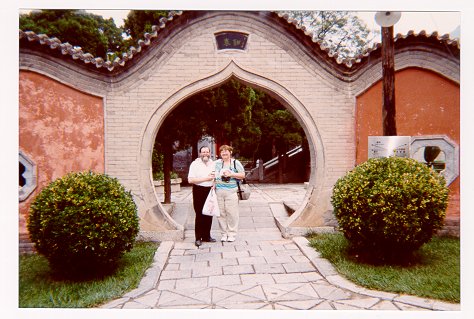
BD:   Yes, I went to China last year as a guest of the Classical Symphony Orchestra (a youth orchestra in Chicago), and I’m going back again this year.  [Photo at right shows us during a subsequent trip in 2001.  As it happened, we flew home on September 9, blissfully unaware of what was about to happen!  To see more photos from a couple of trips to China, click HERE.]

McRae:   That’s great.  I was there three years ago.  As a matter of fact, I was one, if not the first American conductor that was invited to conduct in Communist China, the first one after the Tiananmen Square uprising.  I had a wonderful month there.

BD:   Did you have any sense of trepidation going there after that event?

McRae:   Not really, no.  But of course they assigned a translator/interpreter that literally was by my side twenty-four hours around the clock, other than sleeping in my room.  If we were dining and I had to go to the restroom, the translator would get up and escort me to the men’s room.  So it was quite an experience.  I didn’t get to stay at any of the tourist-type hotels.  I was living in actual Chinese hotels, and it was a wonderful experience.  It was tremendous.

BD:   How did the Chinese musicians relate to you as a Western musician?

McRae:   They were very kind.  These are wonderful people.  Chinese people are beautiful people, and they were very good to me.  They had banquets in my honor, and musicians still write to me.  I still get letters from them.  We had wonderful collaborations, and I really enjoyed my trip there.  It’s very difficult for them to capture the style of Western music because they have not played this for a long time.  It’s still very new to them, so the most difficult part for me was communicating the style necessary to in order to perform this music.  They gave us as many rehearsals as we needed.  When I asked the manager of the orchestra that I was conducting what time to stop this rehearsal, and when do we take break, he said to me through the translator that it’s totally up to you, maestro!  We started at ten in the morning, and if I wanted to go until six o’clock, that was at my discretion.  So that was unique, and a lot different than our Union rules here!  [Laughs]  I also had as many rehearsals as I felt were necessary.

BD:   So you came in and rehearsed, but the concert date was set only when you were finished rehearsing?

McRae:   No, the concert dates were set prior to that, but we started rehearsing two weeks before a performance, and if I felt that it needed two or three rehearsals in a day as opposed to just the one or maybe the two, it was at my discretion.

BD:   Did you take advantage of that?

McRae:   In the beginning I did because it was difficult stylistically for them to grasp.  I was doing some unique repertoire, including the Dvořák Fifth Symphony.  This was not the ‘New World’, but the F Major, and it was difficult.  They’d never heard that before, so I had to go note by note by rote a lot of times.

BD:   Did you play any Chinese music at all, or was it all Western music?

McRae:   They wanted me to play as much American music as I could bring, so we got to do some American things.  But I did the 
Dvořák, and the Tchaikovsky Romeo and Juliet Overture.  We had a lot of fun.

BD:   Did the audience respond to it?

McRae:   What was really fun was that the Communist Party runs the country, and after each concert the orchestra would bow, and all of a sudden about sixteen members of the Communist Party would come walking up on stage, and they would start bowing to the audience.  This indicated that you must thank us for bringing this to you, because we’re the Communist Party.  I asked permission to do the ‘Stars and Stripes Forever’ at the concert hall there.  It was completely sold out, and we did it as an encore.  All 3,000 people in the hall gave us a standing ovation, and they were all clapping to the music.  It was one of the most inspirational moments of my life to be in Communist China playing the ‘Stars & Stripes Forever’, and having the people standing up, clapping in tempo, and just beaming from ear to ear.  It was really inspirational.

BD:   Has this helped to open the door for other Western musicians and orchestras?

McRae:   I definitely think so.  There are many American conductors now going over there.  A lot of them are conducting the Central Philharmonic and the Shanghai Philharmonic.  There are terrific opportunities.

BD:   So I should thank you for helping pave the way for the trips that I’ve taken over there with the youth orchestra?

McRae:   [Laughs]  Well, I don’t know if you should thank me, but it’s probably the ripple effect.  Every time a Westerner goes there, it’s the ripple effect.  It’s helping ease tensions and open doors, and it’s exciting.
mcrae
BD:   Then music is really a universal language?

McRae:   No question.  It really is.  It’s the only universal language.

*     *     *     *     *

BD:   Coming back to the United States and to Europe, do you find that audiences react differently from city to city, and country to country?

McRae:   Absolutely, no question about that either.  There’s a vast difference in the audiences that I have in North Carolina versus right here at Lake Forest.

BD:   How so?

McRae:   The funny thing is that there’s this misconception that people are really Hillbillies, and that they really don’t know their music, and it’s a cultural wasteland.  Well, nothing could be further from the truth.  These are cultural trendsetters.  There are three major orchestras and two regional orchestras in North Carolina, and it’s incredible.  The audiences are very sophisticated, and they are very loyal, and they’re very supportive, and very, very enthusiastic.

BD:   How much of this is due to your concerts, and how much of this is due to the availability of television and records?

McRae:   Probably it has a little to do with everything that you mentioned.  Up here in Lake Forest, for example, many of the subscribers go to the Chicago Symphony Orchestra.  I hate to say anything negative, but many of them have told me they’ve given up their subscription to the CSO because they really enjoy the quality of the performances that they hear with this orchestra.  Also, they like the programming, and they find it’s been difficult with all the arterial highways having been torn up over the last three or four years, to get downtown.  Then there is the parking.  They like the accessibility of the hall up here, and it is five minutes from home.

BD:   They’re perfectly happy to forego downtown because your standards are high enough that they can enjoy themselves here?

McRae:   Right... not that they can’t be better, because we’re always working to try and make them better.  But it’s a very high standard of performing.  The orchestra is excellent, but there are times when many of the people are just so used to hearing the CSO give an exuberant performance, and we’ll get a lukewarm, mildly enthusiastic response.  Yet there will be something that we will do up here that they will go crazy for.

BD:   How many years have been conducting in Lake Forest?

McRae:   Eight years both at Greensboro and at Lake Forest.  I accepted both positions simultaneously.  I was the resident conductor of the Florida Philharmonic Orchestra.  That’s America’s newest major orchestra.  It’s got about a $9 million budget now, and I was conducting about sixty-five concerts a year there, but I was the Associate or the Resident conductor, and I was looking for a Music Director post.  So I was fortunate enough to be chosen for both of these, and it’s been working out great.

BD:   Have you been able to build each orchestra the way you want it to?

McRae:   Yes, but there’s always room for improvement when you have an orchestra that is terrific, but it doesn’t pay full-time, so it’s difficult to keep the cohesion always together.  Many of my players in the Lake Forest Symphony Orchestra are first-call extras with the Chicago Symphony Orchestra.  Just this concert series my principal bassoonist had been chosen to go to Japan to work, and my second trumpet was called today on the eve of the first rehearsal to go on the Japan tour.  This cuts out some of my terrific people, but Chicago is a real cultural mecca.  It’s got a wonderful pool of very talented musicians, and we’re blessed to be able to choose from the multitude of great talent.

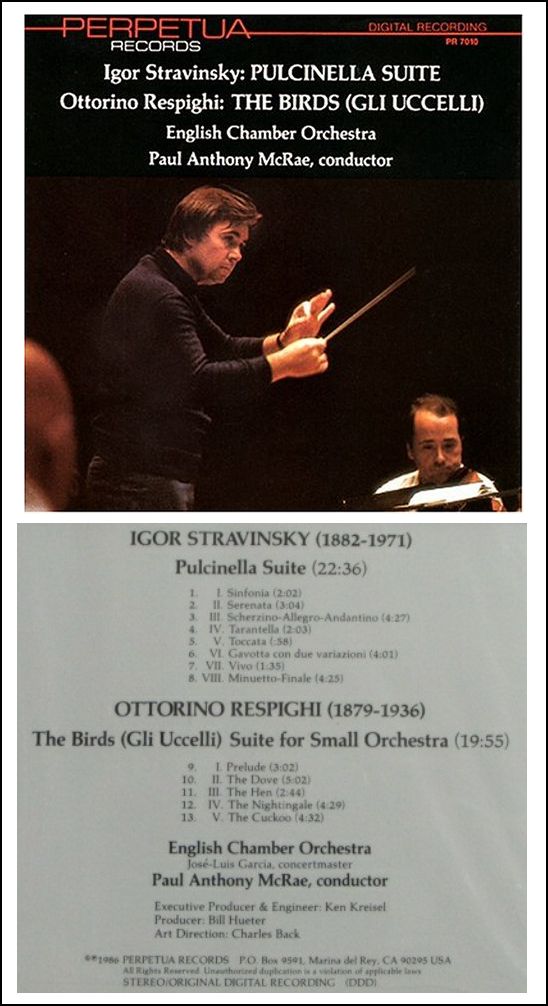
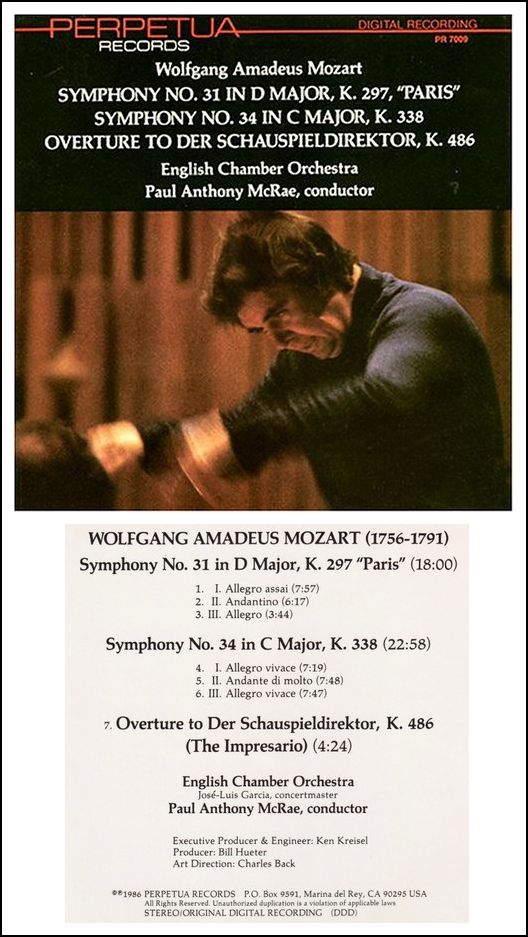
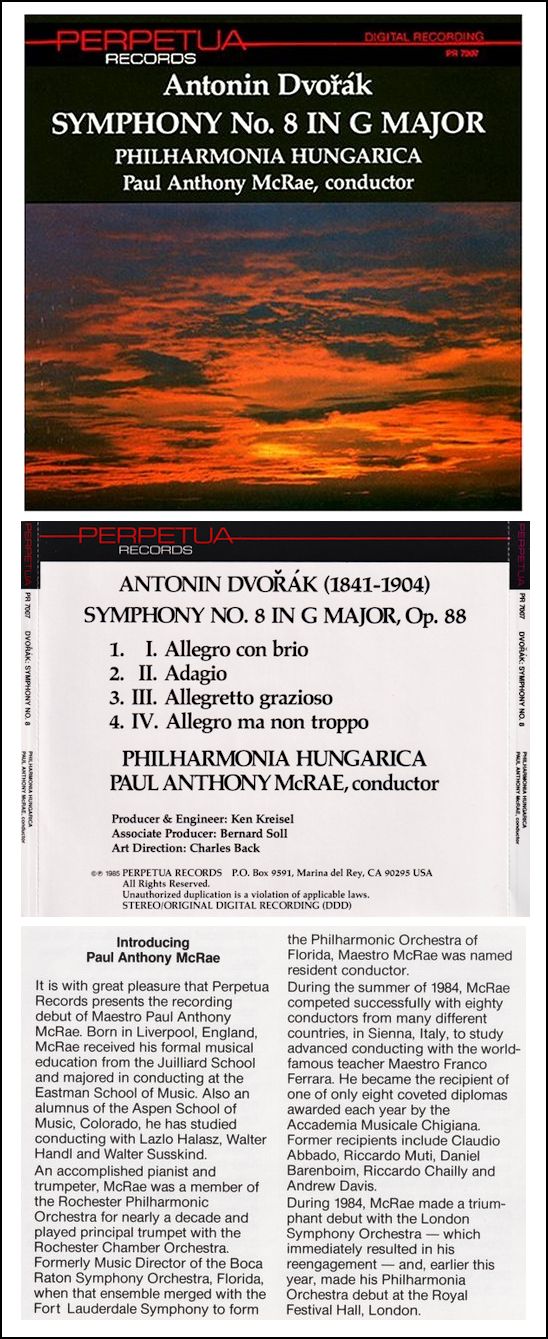
BD:   You’ve lost the trumpet and bassoon, but you can go into this pool and replace them fairly easily?  [Vis-à-vis the biography shown at left, see my interviews with Laszlo Halasz, Claudio Abbado, Daniel Barenboim, Riccardo Chailly, and Sir Andrew Davis.]

McRae:   That’s right.  We’re very fortunate, and I wouldn’t be able to do that in North Carolina.  The one thing about North Carolina that’s different is that musicians are under contract for the whole year.  They do about 125 services, so my seating is all standardized.  The same people are always there, so I get the opportunity to create a real cohesion, a real orchestral sound.  Up here some of the musicians are better, but I don’t yet have the opportunity to have 125 services with all these same players, because the CSO or the Lyric Opera or Grant Park will call.  And of course the pay scale is vastly different.  I would never hold the players back when they have opportunities to play with the CSO.  They know that I am 1000% behind them, and I encourage them to go.

BD:   Does this enter into your programming, or do you just put up with it, and do your programming the way you want, and simply work with the players that you have?

McRae:   That’s a good point.  I always program what I feel the orchestra needs to play, and what I think the audience needs to hear.  Then if we do get caught in a
Catch-22 situation, there is a great multitude of talent, and we can always come up with great back-ups.

BD:   How much is it your responsibility as music director to shape and build the sound of each orchestra?

McRae:   I am a very enthusiastic musician and conductor.  I am a very passionate conductor, and try to put lots of poetry and character in my music.  So that’s the kind of sound that you’re going to hear, whether I conduct the Lake Forest Symphony Orchestra or the Greensboro Symphony or the Cincinnati Symphony Orchestra.  That’s the kind of music-making that I’m known for.  I look for players that can deliver more character and more passion in the music when I hire them, because that’s the kind of sound I want.  I would probably say that my style is like Eugene Ormandy in the sense of that lush romantic passionate sound.

BD:   If you do a guest week in Cincinnati, it’s their sound and you have to work with that.  The Lake Forest Symphony or the Greensboro Symphony are your orchestras, so you are responsible for shaping that sound.  Do you work on it in rehearsals, as opposed to just this piece or that piece?

McRae:   As much as you can.  With respect to the musicians and myself in working together as a collaboration, when an orchestra gets to play six times a year, you have a multitude of talents coming together.  The most important thing is coming up with the interpretation that everyone agrees on, with all the dynamic levels and the character in the music.  It would be nice if I could spend much time on just developing a real sound for the Lake Forest Symphony Orchestra.  An orchestra can be known for its sound, but an orchestra also has the adaptability to conform to whatever conductor is on the podium that week.  Christopher Hogwood could be conducting the Chicago Symphony Orchestra, but he can make them sound much more like one of the Academy of Ancient Music if he wanted to.  They would adapt to that, as opposed to the Solti sound that everybody knows, and is synonymous with the Chicago Symphony.  I believe that whoever is on the podium can really bring out his or her concept in sound, even though a certain orchestra might be tagged with a specific kind of concept of sound.

BD:   Do you conduct all the concerts of each orchestra?

McRae:   Pretty much so.  We had a guest conductor this year, a Chinese fellow who is the former co-concertmaster of the Shanghai Philharmonic.  He started a conducting career about four years ago.  I got an opportunity to be invited to conduct the Tucson Symphony Orchestra, which is a major regional group, when their conductor was doing a pair of subscription concerts with the Pittsburgh Symphony Orchestra at the last minute.  But generally I’m expected to do most of the concerts.

BD:   I was just wondering if in future years you should make sure that there’s one guest conductor each season so the orchestra will get that experience.

McRae:   That’s ideal, and I would just as soon have it twice a year, because it’s important, not only for the musicians to work with someone who can bring new fresh ideas, but for the audience to experience something that’s new and fresh, and not the same person all the time.  The problem is budgetary restraints.  We always have guest artists, so that’s quite an expense for each performance series.  Then to bring in another conductor increases the budget, and Boards frown on that.  They say,
“No, no, we’re happy with what you’re doing.  We want you to be doing these.  But if it was up to me, maybe two out of the six subscription series should have guest conductors.  I think it’s important, I really do.

BD:   Now where do you go looking for these guest conductors?  Are they out of the ranks of other regional orchestras, or out of the great orchestras, or young talent coming along?

McRae:   [Smiles]  Most conductors of major orchestras don’t want to conduct regional orchestras.  They want to always upgrade, and keep conducting the top five or ten.  It’s difficult to think that Daniel Barenboim would conduct the Lake Forest Symphony Orchestra if we called and asked.
mcrae
BD:   From your perspective, would it be a good thing for the top ten conductors who are dealing with the top thirty orchestras in the world to go and do a regional orchestra once a year?

McRae:   That would be a great experience for the musicians to be able to do that.  Now remember, many of the Lake Forest players also play occasionally in the Chicago Symphony Orchestra, and they play in the Lyric Opera Orchestra.  So they get to play under the major conductors of the world.  They experience that, and that’s why I’m very fortunate to have them in Lake Forest because of their expertise and their experience.

BD:   I’m looking at it from the other direction.  Would it be good for the conductor to work with the regional orchestra?

McRae:   No, it wouldn’t be good... it would be great!  [Both laugh]  I don’t know of a lot of great conductors who are conducting only major orchestras that could come in and work with my Greensboro Symphony Orchestra or the Lake Forest Symphony.  Both of these orchestras are as good as the smaller major orchestras in the country.  They are both really high-level orchestras, but it would be very difficult for a conductor who is only used to working with the great orchestras, the world-class orchestras, to come in and have to resort to what he or she would have to do to get that orchestra to sound really great.  It would be very difficult for them to do that.

BD:   How so?

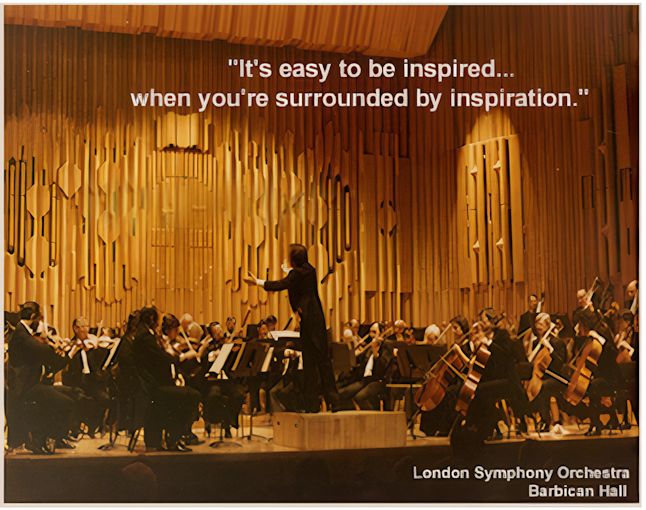
McRae:   It’s hard to explain.  I’ve conducted the London Symphony Orchestra about twelve times, and the Royal Philharmonic Orchestra eight or nine times, and the Pittsburgh Symphony Orchestra and the Minnesota Orchestra.  When you stand on the podium in front of one of these orchestras, there’s a total cohesion that will come just by the fact that they’ve played together for so many years, and they play together seven or eight times a week.  It’s a family.  They just play together, they eat together, they tour together, they make music together.  It’s a wonderful camaraderie they have, and a real esprit de corps [group spirit].  Now, when you put seventy-five or eighty-five musicians together only six times a year, you can’t expect them to have that cohesion.  You’ve got to spend a lot of time getting section by section to play together, and to listen, and to develop tonal evenness.  If you have eight or ten violas that are freelancing all around Chicago, when they come in, one of them is the principal of one orchestra, and another’s an assistant principal elsewhere, and they all start playing at their own level of volume, for example.  You can’t just leave it like that, because it’s tonally uneven.  The conductor has to be willing to take the valuable time, because it’s really Beat the Clock [referencing the old TV game show].  With regional orchestras, you’ve got four rehearsals in which to get a complete conception delivered to the musicians.  There’s got to be enough information in what you are delivering with your gestures, with the character of your facial expressions, and with the baton itself so that they can really develop a mature interpretation in a very short period of time.  Yet you’ve got to make sure that there’s tonal evenness.

BD:   It’s not just balancing the violas against the cellos against the seconds, it’s balancing within the viola section?

McRae:   Within!  Each one of them has to realize that they’re part of a team, not just a soloist anymore.  They’ve got to make sure they don’t stick out, and that they really blend.  I’m always telling my people to listen to each other.  Let it just sound like one viola or one cello.  That’s very important.  A lot of people get it, but you have a little difficulty from time to time, but the end results can be really gratifying.  I walk off stage and I’ll literally be choked emotionally because I can’t believe the level that the musicians have achieved.  Living in Chicago and always having musicians they all emulate, it is such a great standard for them.  We’re doing [Mussorgsky’s] Pictures at an Exhibition this week, and many of them have never had a chance to play the work.  They’ve studied it, and they’ve played all the excerpts in the auditions for these great orchestras, but this is maybe the first opportunity for them to do it complete and in a concert situation.

BD:   Is it fair to compare your first trumpet player with Bud Herseth [principal trumpet of the CSO 1948-2001]?

McRae:   Is it fair???  Is life fair???  [Both roar laughing]  No, but you better believe that my principal trumpet could play principal trumpet in any orchestra in the world.  He’s fabulous, and as a matter of fact, he went and took a lesson with Bud, just a refresher, because even though he’s played it in practice rooms and for auditions everywhere, this is the first chance he’s gotten to really play this, and it’s a revelation for him.

BD:   He wants to get it right?

McRae:   Oh, he’s going to be great.  I’m not concerned about it.  It’s a great challenge to conduct a regional orchestra, but it would be a great challenge and a great opportunity for major conductors to be able, every once in a while, to come down on this regional level, and try to make great music, and realize how difficult it is.


Robert Kalter and William English founded the Lake Forest Symphony in 1957 as a chamber orchestra of volunteer musicians. By 1965 the group had over 60 players, and in 1988 became fully professional. Under the visionary leadership of conductors Victor Aitay, Paul Anthony McRae, and David Itkin, the Symphony firmly established a distinguished reputation. In 1991 the Symphony was chosen from twelve orchestras in the Midwest to be a featured guest orchestra at the American Symphony Orchestra League’s National Conference in Chicago. In October of the same year pianist Andre Watts performed two benefit concerts with the Symphony to celebrate its 35th anniversary. In 1995 and again in 2006, the Illinois Council of Orchestras named the Lake Forest Symphony the Illinois Orchestra of the Year.


BD
:   You mentioned that you have to beat the clock.  Is all your work done in the rehearsal, so that the concert is a duplicate of that last rehearsal, or do you leave something for the inspiration of that night?

McRae:   The fun thing for me is having a good orchestra like the Lake Forest Symphony Orchestra.  Friday night is the first performance, so everyone will be sitting on the edge of his or her chair, and there will be such vitality and exuberance and ultra concentration on that first night that it will be electrifying.  What I love about the orchestra is that it’s very supple, so I can conduct the orchestra in a very different way on Saturday night, and that’s special.  Major conductors will do a series of four performances, and every one will be totally different.  That suppleness and facility is there, but it’s really a need to get that from the Lake Forest Symphony Orchestra.

BD:   Is it a purposeful difference, or is it just the way the inspiration happens to hit you that night?

McRae:   It’s the inspiration of the moment for me.  Sometimes you want to hold onto phrases just a little bit longer, just to make it a little more exciting.  Or we can take this tempo just a little bit faster than we did last night to make it a little brighter.  But be careful not to push, because it became a little unsettled at the Friday night concert.  There’s a beautiful expansion, and a spaciousness within the music on a Saturday night that I find is very different, and that’s exciting for me.  I enjoy it, and I like to compare when listening to the tapes.  That’s what is so exciting about live music.  It’s never the same way twice.

*     *     *     *     *

BD:   Are you at the point in your career that you want to be at this age?

McRae:   [Thinks a moment]  It’s a great question.  I started conducting when I was thirty-seven, twelve years ago.

BD:   It’s very late!

McRae:   Very late, but my degree from the Eastman School of Music is in Applied Performance and Orchestral Conducting.  I was a pianist.  I was a dual major when I started at the Juilliard School of Music.  I was a pianist and a trumpet player, but I soon realized that Madame Lhévinne was turning out some of the great pianists in the world, and I was much more suited to concentrate on trumpet.  During my second year at Juilliard I won a national audition to play principal trumpet in the Rochester Philharmonic Orchestra, which was one of twenty major orchestras at the time.  I was playing in the Rochester Philharmonic for almost ten seasons, and I got to play under many of the great conductors who came as guests, including Georg Solti, Leonard Bernstein, and Seiji Ozawa.

BD:   When you were playing, did you know that eventually you were going to be up there waving the stick?

McRae:   I did.  I wanted that, but you have to want something really bad enough to make it happen in life.  Although I say now, many years later, that I wanted that, I didn’t want it bad enough.

BD:   Do you remember it all, and did you learn much from these guest conductors?

McRae:   I did.  I learned a lot from them, and what I said to myself was that by the time I reached forty, I really want to be conducting a major orchestra.  I didn’t start until I was thirty-seven, but by the time I was forty, I was the resident conductor of the Florida Philharmonic, which is a major orchestra.  So I did achieve that goal, and I’m very blessed.  I’ve conducted many of the world’s greatest orchestras.  I have some compact disc recordings that have received wonderful notices, so I’ve achieved a lot of the goals that I’ve set out to do.  Personally, I’m at a point in my life where I need a reevaluation.  I need to reevaluate where I’ve come, and the accomplishments that I’ve made, but I also need to reevaluate the fact that we are all at different points in our lives, and we need to become super focused.  I would have to look at myself in the mirror, and I see that this is a turning point.  This is the point where I really need to be super focused, and I made a commitment to do that.  This is a confidential sharing of my personal feelings, but it’s a time in my life where I’ve made a commitment to become very, very focused about what I want to do.  I believe very strongly that a lot of the greater things that I really want to do in life are still ahead, and I’m very optimistic about my new feeling of being focused.
mcrae
BD:   Is Lake Forest part of that new focus, and are you going to continue with this, or are you going to move on?

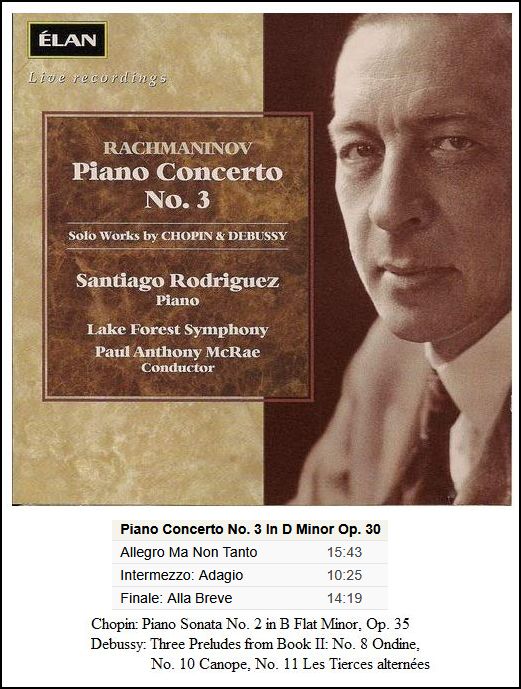
McRae:   First all of all, I must say that for any conductor to be musical director of the Lake Forest Symphony Orchestra is a privilege.  These are great players, and there isn’t anything that I can’t do with this orchestra.  But when I talk about being more focused, this orchestra needs to be heard more in Chicago.  It’s really a great secret, and it’s kind of locked into Lake Forest.  One of my goals for the next two or three years is to really have the orchestra be heard.  We’ve done our first compact disc [shown at right], a live recording with the Cuban-American pianist, Santiago Rodriguez, and it’s brilliant.  It
s one of the most incredible live performances youll ever hear, and it’s coming out on a Élan Recordings this summer.  The orchestra is of the caliber that it can be recorded and stand up to many of the small major orchestras.

BD:   Would it be reasonable to expect the Lake Forest Symphony to play elsewhere in Chicago, and do a third series?

McRae:   That is a dream of mine.  I would very much like to have the orchestra heard in a proper concert hall, such as Pick-Staiger [on the campus of Northwestern University].  Unfortunately, we don’t play in a great hall.  We play in the Chicago Medical School, in Rhoades Auditorium which was designed as a lecture hall.  I don’t know why, but the acoustics are quite good.  Luckily it’s a decent hall to play in, and it seats about a thousand.  We have terrific audiences both nights.  About three years ago, André Watts, agreed to do two benefit concerts with me and the orchestra.  He’s a great friend, and we played in Lake Forest and then we played one of the concerts in Pick-Staiger, and the orchestra was just exhilarated to hear itself there.  That’s a proper concert hall, and it sounded like a major orchestra in that facility.  I’m working on getting another series, perhaps at Pick-Staiger.

BD:   Armed with that, you can go to the trustees and say this is what we’ve done, and we need to do more.

McRae:   Exactly, that’s right!  The trustees and the directors do a marvelous job.  The budget’s about a million dollars now, and remember it
s a small community.  Lake Forest is a very affluent community, but it’s only got 17,000 people, so to have a million-dollar budget with 17,000 people is exemplary.  I don’t know of any other community in the country that has a regional orchestra with a million-dollar budget that only has a population of 17,000.  That’s quite unheard of.

BD:   Is there any kind of camaraderie amongst conductors of regional orchestras?  [If I may, besides Lyric Opera, Chicago has its own regional company, the Chicago Opera Theater.  Having interviewed many of their artists, let me suggest four of their conductors -- Hal France, Pier Giorgio Calabria, Alexander Platt, and Robert Carter Austin.]

McRae:   [Thinks again]  There is to a certain a degree, but there really should be more.  There’s so much that I could share with other conductors.  Unfortunately, in my field and in my career, conductors don’t normally want to help each other.  There’s this fear that he’ll get ahead if I share something with him!  [Both laugh]  Unfortunately, that’s the stigma which is attached to conductors of regional orchestras.

BD:   Maybe there’s more competition on this level than at the top level?

McRae:   There’s competition on all levels, but more so perhaps on the regional level.  Each is very protective of his or her turf, and is always looking to do things that he or she can take credit for, and they don’t necessarily want to share.  I’m happy to share with other conductors the things that have worked for me, and successes that I’ve had with my orchestras.  But I could do more, and maybe I should do more.  I’ll be the nice guy...  You know what they say about nice guys... it’s not that nice guys finish last.  That’s not true.  Nice guys just don’t finish!  [Both laugh]

BD:   I trust you want to be sure to finish?

McRae:   I want to make sure that I’m finishing right.

BD:   What do you see ahead for your own career?  Are you focusing on these two orchestras?

McRae:   Yes.  I’ve done some really wonderful things.  I listen to the recordings of the concerts, both in North Carolina and Lake Forest, and I marvel at them.

BD:   Is North Carolina going to be mad that your first commercial recording with either orchestra is with Lake Forest?

McRae:   No!  No, not at all.  Both my boards are very supportive of the work I do in both communities, and in the last few years, Lake Forest has received national acclaim.  It’s performed at the American Symphony Orchestra League Conference.  This year it was chosen the Illinois Orchestra of the Year, which is a nice plum, and very deservingly so for the orchestra.  Literally all the guest artists that come here are blown away at the quality of the performance level.  They are really very, very shocked and surprised, and they always love coming back.  They want to come back as much as we can bring them.  We have certain favorites that we keep inviting back because the audiences love them so much, and we just have a kinetic energy, and an esprit de corps that really clicks.  There is an electricity that really works, and the same thing happens in Greensboro.

*     *     *     *     *

BD:   You mentioned that you’ve made some recordings.  Do you conduct differently in the recording studio than you do in the concert hall?

McRae:   In the recording studio, one is always looking at the red light, and when that red light’s on, that means the tape is rolling.  So of course we’re always concentrating on what it’s going to sound like.  It’s an anticipatory feeling that you’ve got to be careful of every motion and every gesture that you give, because it’s going to affect what the red light is going to pick up.  In concerts you just let it all go, and there’s such a great degree of contrast and passion and electricity and fire.  That’s why I really enjoy getting live recordings.  I’m a great proponent of that.  Leonard Bernstein in the later years was fanatical about only recording live.

BD:   Do you have some advice for young conductors coming along?

McRae:   [Thinks once again]  To really get ahead today as a conductor, you have to be able to have something that’s very individual.  We’re not looking for the average run-of-the-mill conductor.  We’re looking for something that’s individualistic, and unfortunately that entity is cyclical.  For many of the last eight to ten years, the young conductor who was very much in demand was the one that would stand up and deliver a very clean performance of a given work.  Now the tables or the cycles have turned a little bit, where we’re looking for conductors that can really bring a lot of passion.  That may be what we used to hear back in the 1940s and
50s, with the Bruno Walter-type of recordings.  That’s been missing for a long time now, but it’s important for any conductor to be very individualistic about his or her own work.

BD:   I trust we don’t want to get someone being individualistic just to be individualistic?

McRae:   No, but there’s got to be something different about the way one conductor can generate sound from an orchestra.  It’s important to find something that’s unique or different about you, and focus on that.

BD:   I wish you lots of continued success both here and in North Carolina.

McRae:   Thank you very much, Bruce.  I marvel at the wonderful work you do for listeners here in Chicago.

BD:   Thank you.  [At this point, I let the cassette run, and we continued our discussion...]  Is there a classical station in North Carolina?

McRae:   Yes, there are National Public Radio (NPR) stations, quite a few of them actually.  There’s the University of North Carolina in Chapel Hill, and then WFTD in Winston-Salem at Wake Forest University.
mcrae
BD:   So you go from Wake Forest to Lake Forest!

McRae:   [Amused]  Wake Forest to Lake Forest, right!  [Much laughter]  When I tell people that I’m the conductor of the Lake Forest Symphony Orchestra, they say that I travel over to Winston-Salem!  I say no, Lake Forest is in Chicago!  [More laughter]  We have a lot of fun with that.

BD:   However, we’re a commercial station.  That’s what sets us apart from most of the others which play classical music.

McRae:   I’d much rather have it that way too.  It’s much more fun, much more creative, and much more innovative...

BD:   ...and more music, too!  The NPR stations will do All Things Considered, and other network programs.  Those are fine, and should be done...

McRae:   ...but you can get the news and features from any station.

BD:   On the subject of cutting funding for the arts, is that going to hit regional orchestras more than the CSO?

McRae:   I don’t think so.  Musicians in general have to be very grateful and thankful for any funding that we get from any government agency, whether it be the Illinois Arts Council, the State of Illinois, or the National Endowment for the Arts.  The Lake Forest Symphony Orchestra has a million-dollar budget, and does so much educationally for the children up and down the North Shore.  We give terrific children’s concerts, yet we will get only about $5,000.  So, when I hear about all this shake-up at the NEA, and I hear there might be a cutback, it couldn’t hurt regional orchestras because we get such little funding from them.

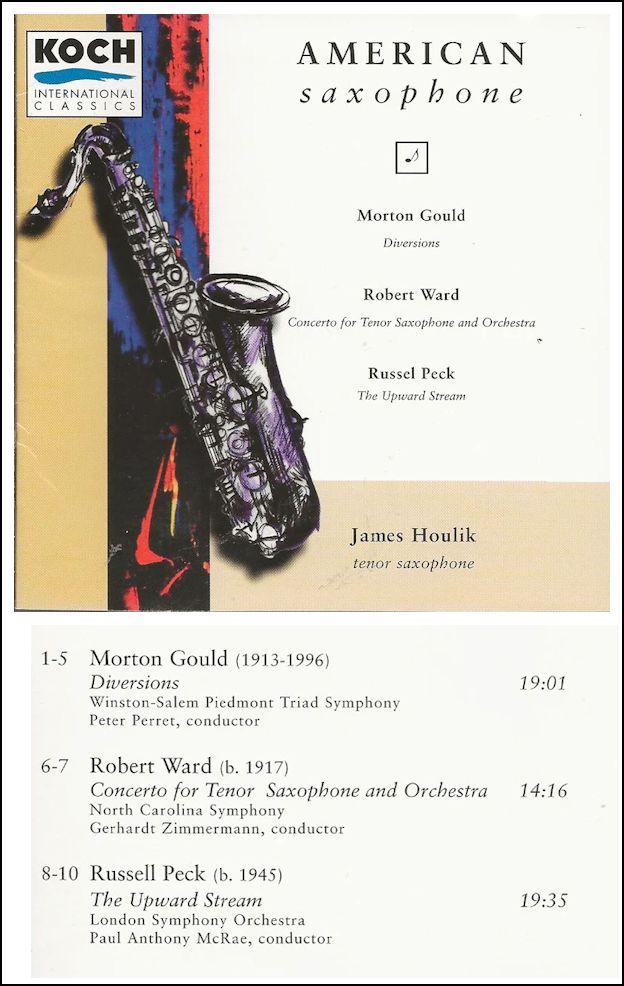
BD:   I didn’t realize you were getting so little.  [Vis-à-vis the recording shown at left, see my interviews with Morton Gould, and Robert Ward.]

McRae:   Most people don’t realize this.  The constituency that we serve in Lake Forest gets twelve classical concerts each year, and the Fourth of July where we have 6,000 people, and the Concert on the Green, and all the educational concerts.  We just had concerts last week for over 7,000 children of Northern Illinois.  Now, when we reach and impact that many people with a budget of a million dollars, we should be receiving a lot more than just $5,000!  If the NEA was to be taken away tomorrow and abolished and folded, it wouldn’t really stop the Lake Forest Symphony, or hurt us.   We would just go out and find another sponsorship somewhere.

BD:   There are probably a number of people in Lake Forest who could write a check for $5,000 and not bat an eye!

McRae:   Not only that, but in order to get funding from the NEA, you have to submit cassette tapes of recent performances so that they know that the artistic standard meets their requirements.  It costs maybe $6,000 a year for a sound engineer to come in and record all the concerts.  So we would pay $6,000 in expenses to receive a grant of $5,000. 

BD:   So, you think the priorities should be reshuffled?

McRae:   I really do!  In the long run, a reshuffling might help regional orchestras or orchestras in general, as well as major art museums, and dance companies.  The funding should be based on the constituency, or the population that you serve, as opposed to single individuals that have good contacts in Washington who are able to muster up large grants.

BD:   Despite all this, are you optimistic about the future of the regional orchestra in America?

McRae:   Very much so.  A couple of years ago, the American Symphony Orchestra League had a taskforce that came with a terrific plan called The Americanization of the American Orchestra.  They talked about conductors and boards having to be much broader in their thinking about programs, and reaching more of the population, and trying to be more things to more people, as opposed to just the gray-hairs that keep coming and looking for the
overture and the concerto and then the symphony.  I’ve always tried to do that, certainly in the last four or five years, even before the taskforce commission came up with this new plan.  But I find that with that thinking and that kind of focus, it is attracting newer people.  Younger people today don’t know Beethoven’s Fifth.  They really don’t know it!  When they turn on the TV, and when they go to the cinema, they’re used to hearing twentieth-century harmonies and rhythms, and that’s not synonymous with Beethoven and Brahms.

BD:   [Sighs]  They’re also used to twentieth-century dynamics!

McRae:   Exactly, that’s right!  It seems that younger people today want to hear music that is indicative of their thinking.  In other words, they want sounds with contemporary harmonies, and architecture, and rhythms.

BD:   Is this the way to get the MTV generation into the concert hall?

McRae:   I don’t know if that’s the real answer, but we have to have a smattering of that to be able to turn some of these younger people on, because they didn’t grow up with Beethoven.  You did and I did, but that’s alien to so many young people who have no musical background.

BD:   What about the idea of Family Concerts?

McRae:   I came up with a concept that was very successful earlier this year, and the program was called Symphonic Heavy Metal.  It was designed for eighth-grade children in North Carolina, and we had about 6,000 kids over the course of the week, 2,000 for each show.  It was terrific.  We had a whole potpourri of symphonic works as well as some things that they would like.  We played some Beatles things, and even had a little bit of a rap group that came out and did some rap music.  I discussed all this with the audiences.  I asked them what is it about rap music that really turns you on, because you all love it so much?  They said they love the melody!  [Both are astounded]  Then I said,
There is no melody in rap music!  It is a social message that is delivered rhythmically.  In having this discussion from the podium, I said that classical music has many components or elements that make classical music eternal, and that it will go on in perpetuity.  Then I said, But lots of popular music is very much like a fad.  It might be here today, and then six months later it’s gone.

BD:   You could play some rap music, and then play part of The Rite of Spring which is so very rhythmically-driven.

McRae:   We did exactly that.  After the rap, we played a Russell Peck work called The Glory and the Grandeur.  That’s how it ended... we brought this percussion trio up from the pit.  It begins with a cadenza for three tom-toms, and the kids didn’t know where the drum sounds were coming from.  The orchestra was up on stage and the pit was rising, and we got a standing ovation from the kids.  They loved it!

BD:   Will this translate into getting them into the regular concerts?

McRae:   One doesn’t know on one hearing whether that will happen, but if they experience that at a Tiny Tots concert when they are in kindergarten, and then they go to a third and fourth grade concert that is a real treat for them, and really inspirational for them, and then they go to a concert like this in the eighth grade, then perhaps when they graduate from college they might be more interested in developing themselves individually and culturally in wanting to attend concerts by symphony orchestras.  That’s what we need to do.  We need to get children before they’re preprogrammed and brainwashed that symphonic music is not fun, and it’s ho-hum.  If we can do that, that’s how we build audiences for tomorrow.  But you’ve got to start when they are in Kindergarten, and that’s what I do.  I’ve won many educational awards.  I have a series called Discovering the Orchestra with London’s Royal Philharmonic Orchestra, that won the American Library Association Award as the best music video project in 1989.  Then we came back the next year with another series called The Elements of Music, which was a six-part music education video cassette series that won the American Library Association Award the following year as the best music education video project.  I’ve done seven or eight really wonderful education projects on video over the last six or seven years.  I love children, and I just feel that we need to really cater to young ones before they’re pre-programmed.

BD:   Get to them first!

McRae:   Yes!  I love to let one or two of them guest conduct the orchestra at each concert.  You can hear a pin drop!  When we have them do that, the musicians are great.  They love to see these little five- and six-year-old kids come up and conduct a Sousa March, or something like that.  We make a big to-do for them, and make them feel very special.  With a lot of participation at these concerts the kids get very much involved, and they walk away believers, they really do.  That’s what it takes, but it needs to be not just one experience, but a variety.  
The greatest challenge is programming for children, because you cannot afford to make a mistake.  If you make a mistake, you destroy those children from ever having any interest in symphonic music for the rest of their lives.  It’s got to be magical.

BD:   I wish you lots of continued success with all of these programs.

McRae:   Thank you, Bruce.


To each performance he conducts, Paul Anthony McRae brings an electrifying passion to his music, combined with intense poetic lyricism and impeccable attention to detail. Concert audiences from all around the world have been touched by his fresh musical ideas and a special energy that radiates from the stage during his live inspired performances.

Born in Liverpool, England, he received his music education at the famed Juilliard School in New York, the Eastman School of Music, and at the Conducting Institute of the Aspen Music Festival in Aspen, Colorado. Early in his career, Mr. McRae was awarded the highly-distinguished Artist's Diploma in advanced orchestral conducting from the Accademia Musicale Chigiana in Siena, Italy, under the tutelage of the legendary Franco Ferrara.

Among the many orchestras conducted by Maestro Paul Anthony McRae include numerous performances with the London Symphony Orchestra, Royal Philharmonic Orchestra, English Chamber Orchestra, Pittsburgh Symphony Orchestra, Cincinnati Symphony, Minnesota Orchestra, Philharmonia Hungarica, New World Symphony (Miami), Seoul Philharmonic, Russe Symphony, Shanghai Symphony, Pacific Symphony Orchestra and Chorale (California), Rochester Philharmonic Orchestra, Jacksonville Symphony, Santa Monica Symphony, Hong Kong Philharmonic, Shenzhen Symphony Orchestra (China), and the Tucson Symphony Orchestra. In addition, Mr. McRae served as the founding music Director of the Boca Raton Symphony in South Florida, Resident Conductor and Interim Artistic Director of the Florida Philharmonic Orchestra, Music Director of Chicago's Lake Forest Symphony and the Music Director of the Greensboro Symphony Orchestra in North Carolina.

Highly recognized for his creative expertise in the field of orchestral programming, McRae is deeply committed to offering his audiences a wide range of diverse and challenging symphonic works. His personal philosophy is that "Audiences should enjoy making evaluations of different works, whether positive or negative, knowing that the very process of reaction is what keeps all art alive." Throughout his career, Paul Anthony McRae has presented many world, North American, and European premieres to much critical acclaim.

Following his early musical studies, McRae became the founding music director of the Boca Raton Symphony Orchestra in Florida and its success was virtually unprecedented anywhere in the United States. Within a matter of only three months from the orchestra's debut performance, all 2,400 subscriptions to the symphony's concert series were completely "sold out", making it necessary to repeat performances to accommodate many music listeners on waiting lists.

Attending the opening performance of the Boca Raton Symphony's second season was Ralph Black, Vice President of the League of American Orchestras. Black traveled throughout the United States listening to orchestras and observing their quality and growth. In an interview with the South Florida Sun Sentinel, Black explained that there are 1,572 orchestras in the United States, "more than the rest of the world combined." When asked his opinion of the Boca Raton Symphony, he replied, "This orchestra is vastly better than it has a right to be in only eighteen months." He attributes this to a "first class conductor" and claimed he was "absolutely astounded at the music being made by this orchestra." His prediction is that South Florida would have a "major orchestra stemming from McRae's capabilities." And soon it did.

After three highly successful seasons of immense artistic growth with the Boca Raton Symphony, an ever-increasing appeal for "orchestral regionalism" in South Florida finally prevailed culminating in a merger between the 37-year-old Fort Lauderdale Symphony and its three year old counterpart, the Boca Raton Symphony. The newly merged orchestra was named the Florida Philharmonic Orchestra and became America's newest major symphony orchestra with an impressive annual budget of approximately $16 million. Paul Anthony McRae was named Resident Conductor and Interim Artistic Director and conducted the orchestra in about 80 performances each year throughout South Florida, including Miami, Fort Lauderdale, Boca Raton and Palm Beach.

Prior to the completion of his successful 3-year tenure with the Florida Philharmonic, McRae was appointed music director of two American orchestras – the Greensboro Symphony Orchestra in North Carolina, and Chicago's Lake Forest Symphony in Illinois. Under his dynamic leadership, both orchestras received outstanding local, state and national attention, as well as tremendous critical acclaim from the international arts community.

Paul Anthony McRae was selected by a distinguished artistic panel from the League of American Orchestras, to perform an All-American composer's concert with his Lake Forest Symphony at the League's annual conference for 6,000 world-wide delegates in Chicago. Immediately following the performance, League of American Orchestras Executive Vice President, Donald Thulean, praised McRae and the Lake Forest Symphony's performance, declaring..."It was a triumphant event – one that will long be remembered by those delegates who were fortunate enough to attend"

==  Biography from the conductor's current (2026) website  


SYMPHONY DIRECTOR QUITS AMID QUESTIONS

  • Updated
The Greensboro Symphony Orchestra's director resigns abruptly to pursue a real-estate career.

Paul Anthony McRae, the dynamic maestro who drove the Greensboro Symphony Orchestra to new heights during his eight years on the podium, resigned abruptly to pursue a real-estate career in Florida.
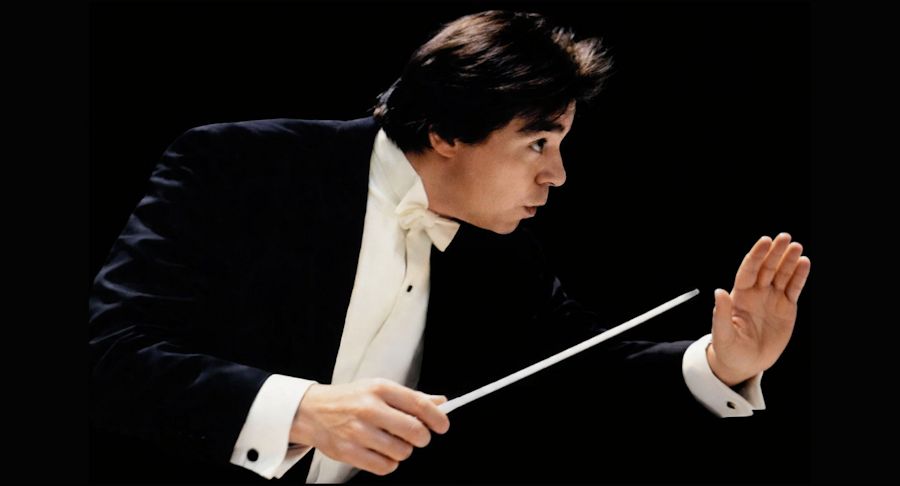
At midday Thursday, less than 48 hours after conducting the symphony's annual Christmas concert, McRae faxed a letter from Florida to the symphony's president. He said he was resigning immediately to pursue a business opportunity unrelated to music. The symphony has five classical, four pops and eight student programs remaining in its season.

"Of course it was a shock," said Edward Cordick, the symphony's executive director, whose first hint of the impending bombshell came during a phone conversation last week with McRae.

"That was the first I knew he was considering a career change," Cordick said. "He told me ... he had the opportunity to pursue a very exciting business venture in Florida, outside the music business. It's some type of real-estate business on the coast, in the Boca Raton or Fort Lauderdale area. I can't be precise because I don't know."

McRae's wife Leeann, the principal flutist with the orchestra, also resigned. Calls to the couple's Greensboro home were not returned.

The unexpectedness of McRae's departure sparked speculation among local classical music critics and patrons. The speculation was inevitable, perhaps, because of McRae's charisma and high profile and because Greensboro enjoys a thriving classical music scene, including the Eastern Music Festival, a renowned music school at UNCG and the highly regarded symphony orchestra, which is the major player in the local arts scene.

In the 24 hours after McRae's resignation, Cordick received dozens of phone calls about the vacancy from agents, organizations and individuals across the country.

Cordick said guest conductors are being interviewed to lead the symphony in its Jan. 13 concert.

Guest conductors will be used for the remainder of the season.

"We would hope to have a new conductor in place by next season, which opens in September," Cordick said. "But of course this depends on the search process. We're just now putting together a search committee. We'll begin going full steam after Christmas. We could certainly begin next season using guest conductors as well."

Concurrent with his Greensboro job, McRae was music director of the Lake Forest Symphony in suburban Chicago. He also resigned that position Thursday, and Lake Forest seemed as puzzled as Greensboro.

Dorothy Andries, who covers the symphony for suburban Chicago newspapers, said: "Everyone liked him. It was under his direction that the Lake Forest Symphony became the Illinois Orchestra of the Year in 1994, which is a great honor."

Before coming to Greensboro in 1987, McRae had worked in real estate in south Florida. There, in 1982, he helped found the Boca Raton Symphony Orchestra. When that orchestra was merged with the Fort Lauderdale Symphony, McRae, reportedly disenchanted at not receiving the top job, moved to Greensboro.

There was speculation Friday among local music critics that the periodic talk of a merger between the Greensboro and Winston-Salem orchestras might have chased McRae from here as a merger had from Florida. But Stuart Weiser, executive director of the Winston-Salem Piedmont Triad Symphony, dismissed that notion.

And David Parker, president of the Greensboro symphony, said: "Unfortunately, Paul feels this is an opportunity that he has to pursue for personal and financial reasons. He's extremely remorseful about turning his back on the music business. I think because of what he has done here and because of the overall strength of the symphony, we'll have no trouble attracting a qualified successor as music director. We're disappointed, but it's not a disaster."

Asked whether there was pressure on McRae to resign, Cordick said: "Absolutely not. The board had renewed his contract last year for a couple of years. They were very happy with his work. I'd say he was being paid over $50,000. He was happy with his compensation."

By the end of the day Friday, the symphony's staff had shifted its focus from the shock of McRae's departure to the challenges ahead.

"We're sorry to see Paul go," Cordick said. "But the music will go on."


[The following item is from the conductor's LinkedIn account, Oct 9, 2022]


"Experience isn't expensive...experience is everything!"​ Real estate and classical music are my life's two passions. Throughout my unique dual career as a highly-experienced real estate broker with more than $5 billion in sales volume, and as an international symphony orchestra conductor, I have clearly learned that .... "perfection is the only guarantee for success."​

During my thirty-three-year real estate career as a broker in both New York and Florida, I have exclusively managed and sold-out over thirty-two of Florida's most well-known oceanfront, Intracoastal, and urban pre-construction tower projects from Miami to Jacksonville. In addition, I have personally sold three of the top ten most exclusive waterfront estate residences in Fort Lauderdale, Florida, the "Yachting Capital of the World."​

As a symphony orchestra conductor, I have conducted many of the world's finest orchestras including the London Symphony Orchestra, Royal Philharmonic Orchestra, English Chamber Orchestra, Pittsburgh Symphony, New World Symphony (Miami), Florida Philharmonic, Pacific Symphony Orchestra, and numerous others in China, Japan, Korea and Europe.

Currently, I am the Broker/Managing Director of the new Miami Condo Center by Spectrum Realty Group which is strategically located in the popular Miami Design District. The Miami Condo Center's luxurious 3,000 square foot real estate showroom provides International and domestic buyers with a unique opportunity to preview all of Miami's major new pre-construction developments as well as 200 of South Florida's existing condominium buildings, in a magnificent "one-stop-shop"...all under one roof.

Spectrum Realty Group provides exclusive sales representation and elite marketing services for real estate developers in addition to owners of distinctive luxury condominiums and residences.


=  =  =  =  =  =  =  =  =  =  =  =  =


[What follows currently (2026) appears on the conductor's website]

For over two decades, Paul Anthony McRae led some of the world's most prestigious orchestras, earning acclaim for his interpretive depth and passion. His performances were described as "transcendent" and "utterly transformative."

In 2014, at the height of his career, he stepped away from the spotlight. Not from exhaustion, but from his desire to rediscover what first drew him to music...the silence between the notes, and the moment of anticipation before the baton rises.

Now, after a decade of reflection, intense studies, and enthusiastic renewal, Maestro Paul Anthony McRae returns to the podium with a deep personal desire and profound new appreciation of orchestral music.


© 1995 Bruce Duffie

This conversation was recorded in Lake Forest, Illinois, on May 15, 1995.  Portions were broadcast on WNIB later in the year, and again in 2000.  This transcription was made in 2026, and posted on this website at that time.  My thanks to British soprano Una Barry for her help in preparing this website presentation.

To see a full list (with links) of interviews which have been transcribed and posted on this website, click here.  To read my thoughts on editing these interviews for print, as well as a few other interesting observations, click here.

*     *     *     *     *

Award - winning broadcaster Bruce Duffie was with WNIB, Classical 97 in Chicago from 1975 until its final moment as a classical station in February of 2001.  His interviews have also appeared in various magazines and journals since 1980, and he now continues his broadcast series on WNUR-FM, as well as on Contemporary Classical Internet Radio.

You are invited to visit his website for more information about his work, including selected transcripts of other interviews, plus a full list of his guests.  He would also like to call your attention to the photos and information about his grandfather, who was a pioneer in the automotive field more than a century ago.  You may also send him E-Mail with comments, questions and suggestions.