Conductor  Edo  de Waart

A Conversation with Bruce Duffie


de waart


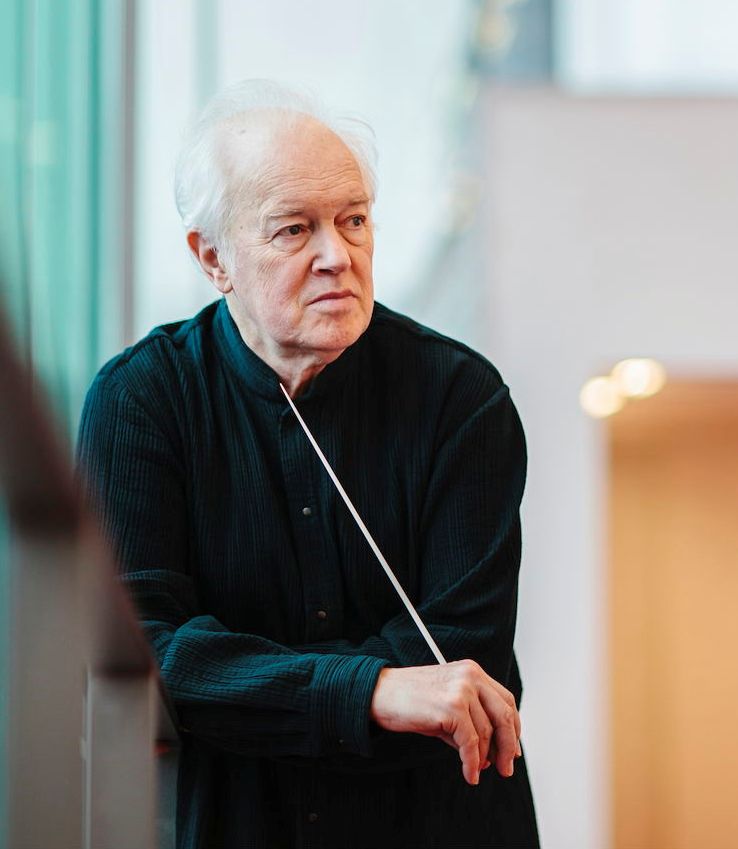
Throughout his long and illustrious career, renowned Dutch conductor Edo de Waart (born June 1, 1941) has held a multitude of posts with orchestras around the world, including music directorships with the Rotterdam Philharmonic Orchestra, San Francisco Symphony, Minnesota Orchestra, Netherlands Radio Philharmonic Orchestra, Hong Kong Philharmonic Orchestra, Milwaukee Symphony Orchestra, Antwerp Symphony Orchestra, New Zealand Symphony Orchestra, and Sydney Symphony Orchestra, as well as a chief conductorship with the De Nederlandse Opera and Santa Fe Opera.

De Waart served as principal guest conductor of the San Diego Symphony, conductor laureate of both the Antwerp Symphony Orchestra and Netherlands Radio Philharmonic Orchestra, and music director laureate of the Milwaukee Symphony Orchestra.

As an opera conductor, de Waart has enjoyed success in a large and varied repertoire in many of the world’s greatest opera houses. He has conducted at Bayreuth, the Salzburg Festival, Royal Opera House, Covent Garden, Grand Théâtre de Genève, Opéra Bastille, Santa Fe Opera, and the Metropolitan Opera. With the aim of bringing opera to broader audiences where concert halls prevent full staging, he has, as music director in Milwaukee, Antwerp, and Hong Kong, often conducted semi-staged and opera in concert performances.

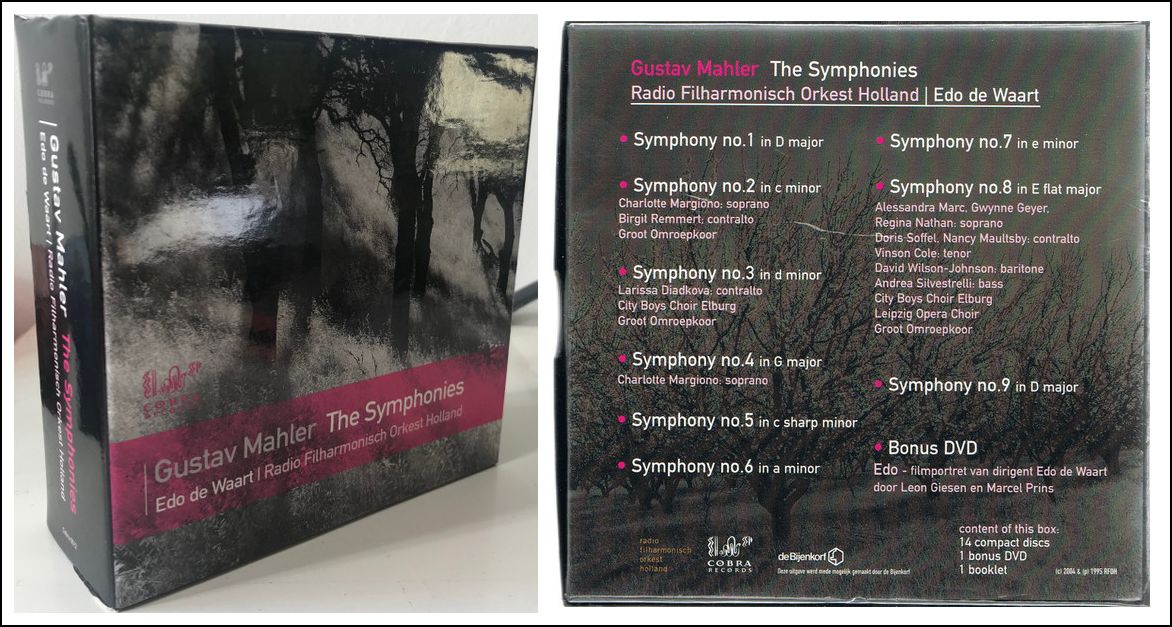
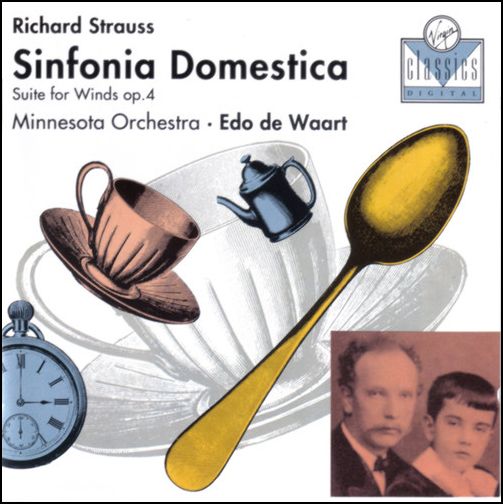
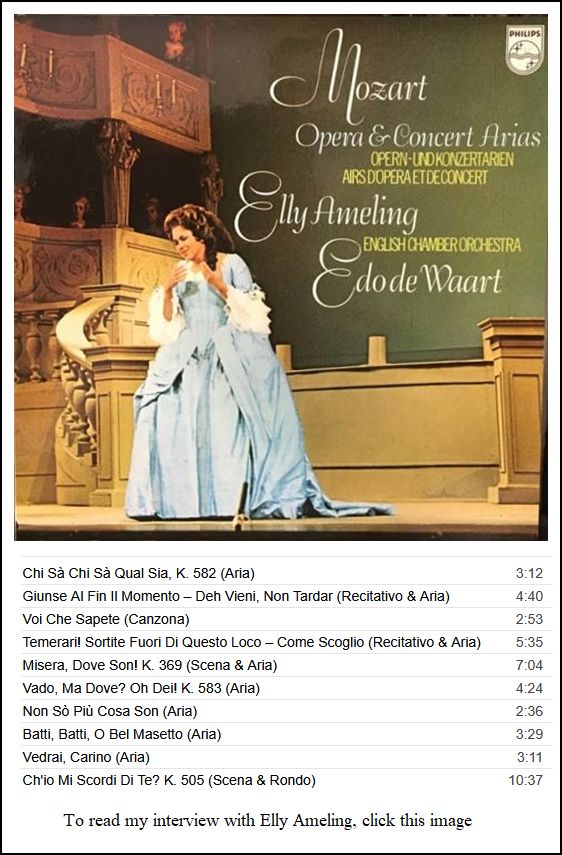
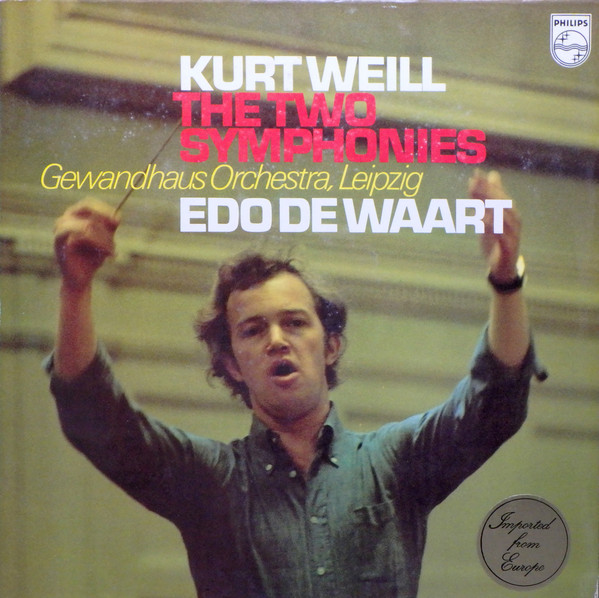
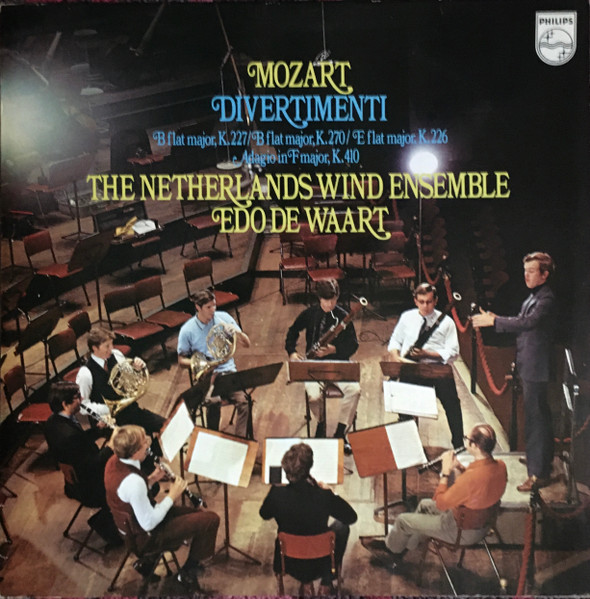
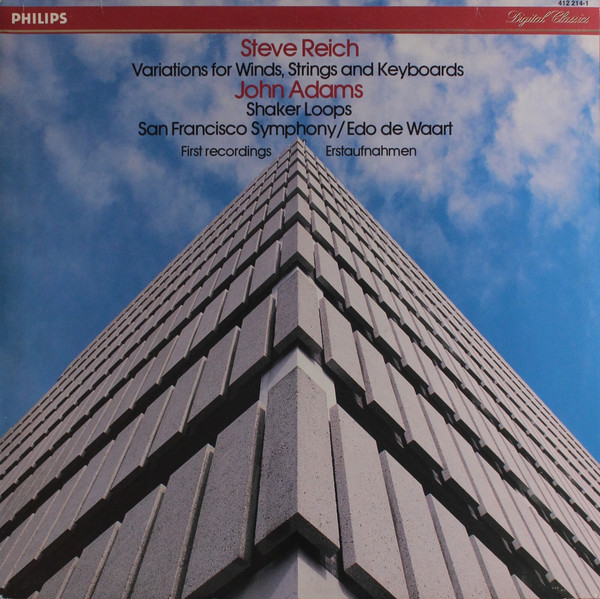
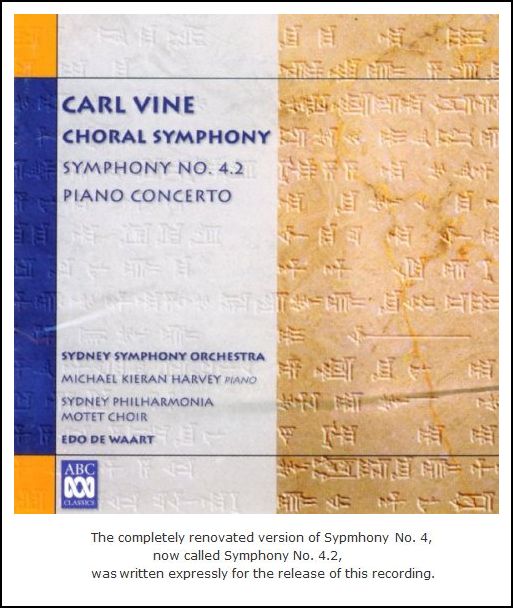
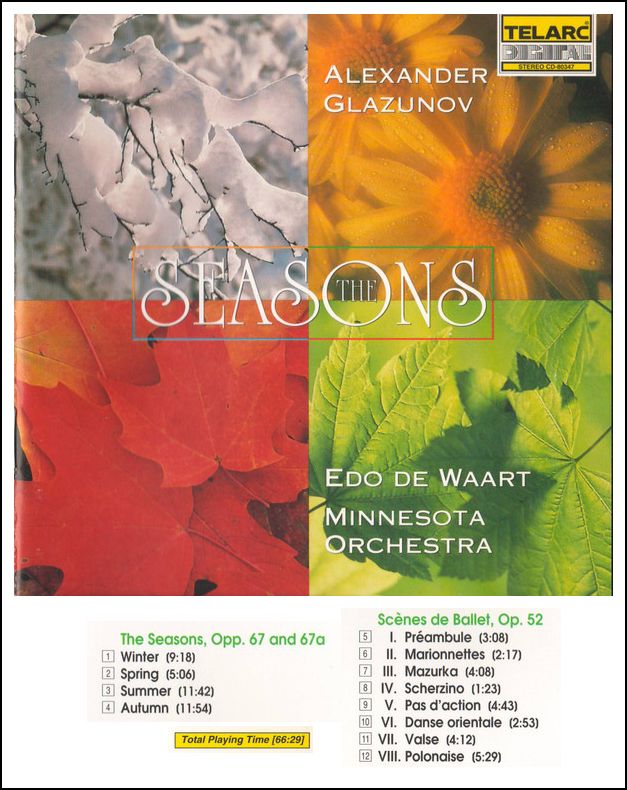
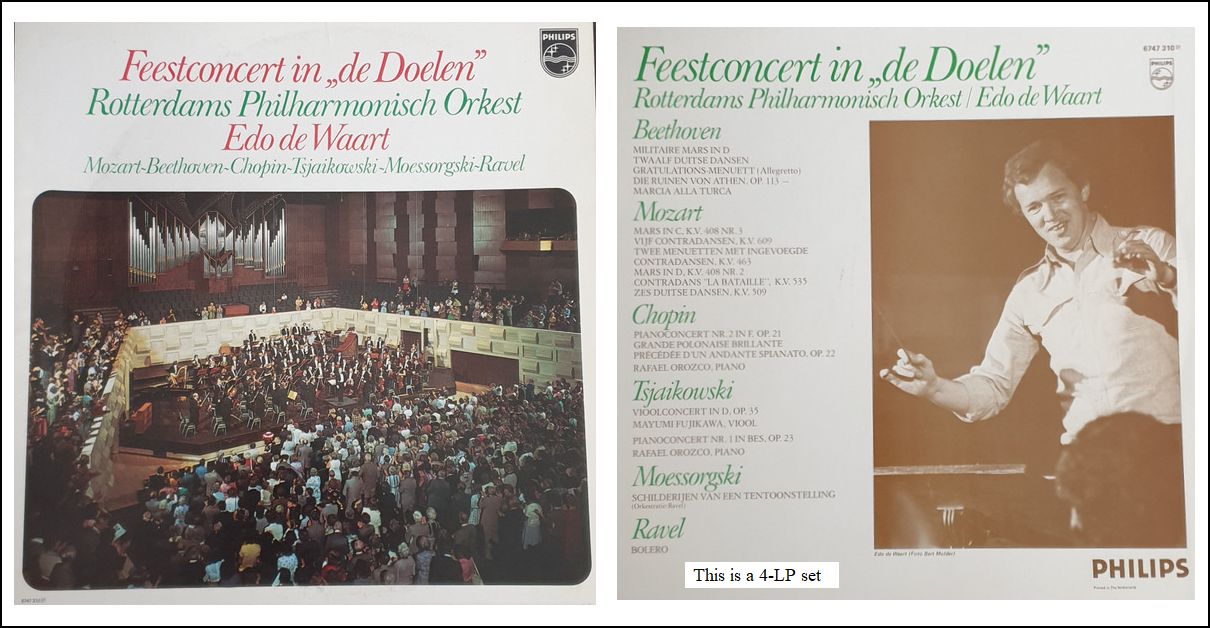
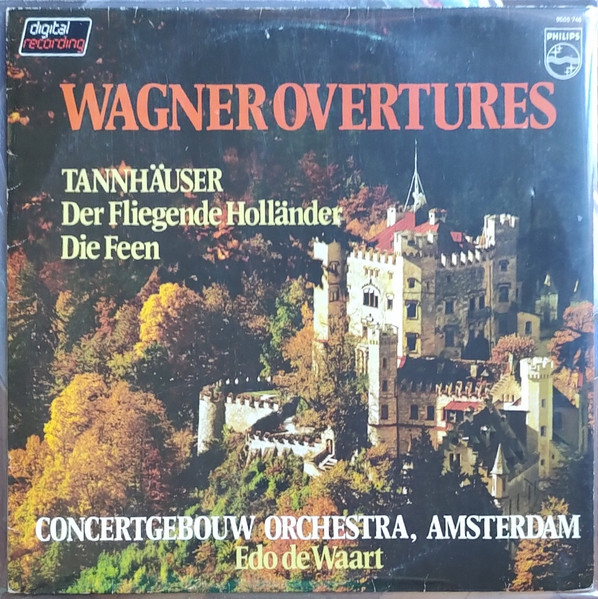
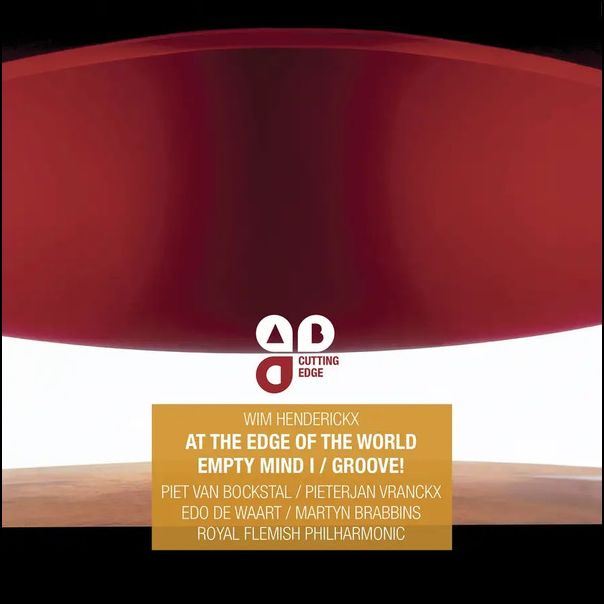
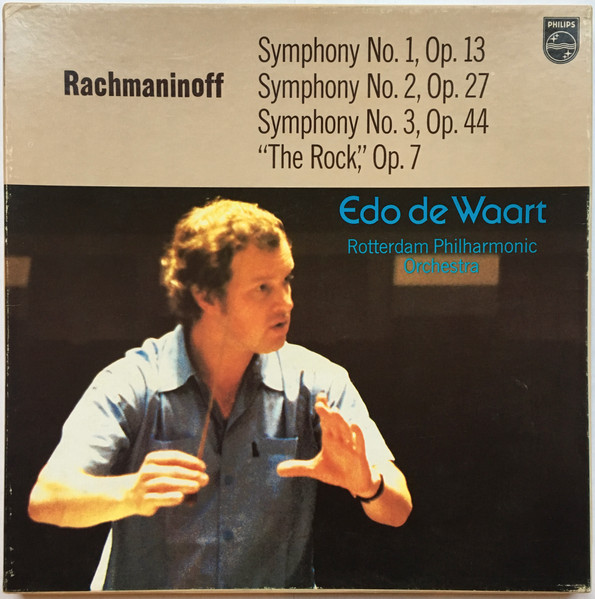
A renowned orchestral trainer, he has been involved with projects working with talented young players at the Juilliard and Colburn schools and the Music Academy of the West in Santa Barbara. De Waart’s extensive recorded catalogue encompasses releases for Philips, Virgin, EMI, Telarc, and RCA. [Several covers of these discs are used as illustrations on this webpage.]

Beginning his career as an assistant conductor to Leonard Bernstein at the New York Philharmonic, de Waart then returned to Holland, where he was appointed assistant conductor to Bernard Haitink at the Royal Concertgebouw Orchestra.

De Waart has received a number of awards for his musical achievements, including becoming a Knight in the Order of the Netherlands Lion and an Honorary Officer in the General Division of the Order of Australia. He is also an Honorary Fellow of the Hong Kong Academy for Performing Arts.

On April 10, 2024, de Waart announced his retirement.


==  Names which are links in this box and below refer to my interviews elsewhere on my website.  BD


Having led the Chicago Symphony on several occasions both downtown and at their summer home, in late July of 1986, Edo de Waart was back for concerts at the Ravinia Festival.  Without a great number of rehearsals, the orchestra is able to present programs that feature old standards as well as new (and sometimes complicated) works.

Needless to say, it is a busy time for everyone, and on this occasion, maestro de Waart was extremely gracious.  He allowed us to sit down and have a conversation which lasted about 75 minutes!  Portions were aired several times on WNIB, and later on WNUR, and Contemporary Classical Internet Radio.  Now, almost 40 years later, as we begin 2026, and my guest nears the age of 85, I am pleased to present the entire chat.

dewaart
Bruce Duffie:   Thank you for granting me a little bit of your time.

Edo de Waart:   It’s quite all right.

BD:   When you are guest conducting, you come in, you rehearse, and you leave.  Do you like that kind of lifestyle?

de Waart:   Not really, no.  I always categorize myself in the lineup of the typical Music Director.  I’m much more at home working with my own orchestra, being there quite a bit, and then making short trips, but not too many.  I don’t do a great deal of guest conducting.

BD:   Is this by choice?  I assume you have lots of offers.

de Waart:   Yes.  There is enough to fill a whole year if I didn’t have my own orchestra, but that is, of course, a wonderful position to be in.  You can then just go to the Chicago Symphony Orchestra, or the Boston Symphony Orchestra, or the Concertgebouw Orchestra.  I’m very fortunate.

BD:   You’re no longer in San Francisco?

de Waart:   No.  I’m going to start with the Minnesota Orchestra in September.  I was one year Acting Music Director of the Netherlands Opera.  That was supposedly going to be a long stint, but things were promised that didn’t work out, and I couldn’t deliver.  Also politics got into it.  Then they couldn’t deliver practically anything they had promised me when they tried to lure me back, so to speak.  So I had to cut my losses, and when I had the offer from Minneapolis, I decided that I would be solely working there and not hold the two jobs together, because it just wouldn’t work.

BD:   I’d like to come back to opera in a little while.  Let’s first talk about orchestral conducting.  Is there a great difference between conducting an orchestra and conducting an opera?

de Waart:   Yes and no.  The basic techniques are the same.  You are the motor of it, although you are in many ways more needed and less visible in opera, whereas in symphonic conducting you are somewhat less needed and much more visible.  I like opera very much because of the characteristics that I just described, and it is nice to know that you cannot lapse.  You have to be on one high level of intensity and concentration, because when you fail, or when you don’t deliver from the pit, they can sing beautifully but nothing will happen.  They won’t be together.  It will start to fall apart.  Opera is so much more difficult than the symphony in many ways... maybe not to make it perfect because everything is equally difficult. but to reach a reasonably good level with a symphony orchestra is not half as difficult as a reasonably good level with an opera.  Either one department is good and the music doesn’t work, or the musical side is good and the director is terrible.

BD:   Is that at all because you are working mostly with first-class orchestras, such as the Chicago Symphony, the Boston Symphony, and the Minnesota Orchestra?

de Waart:   Yes.  When you play the normal repertoire, you don’t need twenty rehearsals to have them play well.  In fact, sometimes it is better to have just a few rehearsals for a piece they know very well.  With my own orchestra, I will always rehearse quite well, especially those works that are very well known, because they get into a rut.  If the Music Director doesn’t do it, the guest conductors are usually not going to do it, so you have to really take care of that.  But a symphony orchestra just sits and plays from music, and has nobody else to contend with than themselves and the conductor.  In an opera it’s totally different.  You deal with people who have memorized it, and who can skip a bar, or a whole phrase, or a whole couplet on stage.  Something might go wrong in the staging.  For instance, people don’t show up on stage that need to be cued, but they were late, and singers suddenly make rubatos and jump ahead.  So an orchestra that plays in the pit has to be much more flexible than a real good symphony orchestra.  The real good pit orchestra is usually much more flexible, and quicker, and more tremendously alert.  So that is very different.

BD:   In the opera house, do you find that the prompter and the off-stage conductor are a help or a hindrance?

de Waart:   Sometimes they are a help, and sometimes they’re a hindrance!  If they are in complete agreement with you, and they’re not egomaniacs who are trying to compete with you for their own glory, then it is great.  Otherwise, it can be very bad.

BD:   Do you, as the conductor, ever relinquish control, even a little bit for a rubato that a singer wants to do add during performance?
de waart
de Waart:   Oh yes, especially if I like the singer a lot.  [Interestingly, three of his six wives were internationally-known sopranos... Roberta Alexander, Sheri Greenawald, and Ruth Welting, and according to a feature article in Milwaukee Magazine, he had a six-year relationship with mezzo-soprano Susan Graham.]  If I have respect for his or her musicality and tastes, it’s all about give and take.  You cannot just mold them exactly the way you think they should be, because then they are not themselves anymore.  Over the years, you meet a lot of singers, and when you do more opera you develop a group of people that you like to work with, because you like their way of expressing things.  You like the way they work.  You know each other very well, and you can provoke each other a little bit into doing things.  It’s always a challenge to work with someone who is a high quality singer for the first time.  You’re always pussyfooting around each other for the first rehearsals, trying to see how we’re going to do this.  Sometimes it immediately clicks, and sometimes it doesn’t click until the end.  That, thank God, has happened very, very seldom, but it does happen that you run into someone who absolutely doesn’t agree with anything you want, and makes a big point of stating it.

BD:   Do you make a point of not working with that person again?

de Waart:   Yes, absolutely!  I’ll do anything not to have to work with that person anymore.  [Both laugh]

*     *     *     *     *

BD:   You say that you can’t mold the singers exactly to your taste.  Can you mold an orchestra to your taste?

de Waart:   Not really, and not to the point where you can say it plays a hundred percent how I want.  The better an orchestra is, the more it has to offer in individual quality, the less you want to fool around with it.  You don’t want to change tremendous players, such as Dale Clevenger and Adolph Herseth [principal horn and principal trumpet of the Chicago Symphony], who are on the top of the world in their particular instrument.  They have something very special to offer, so why would I be so dumb as to try and either undermine that or change it?  You might ask something about a particular phrase, to make it a little differently, or a little more staccato, but it doesn’t go much further than that.  The rest goes by inspiration from one to the other, and that sometimes comes from the player, and sometimes it comes from the conductor.  The better the musicians are, the less coaching and teaching they need, and when they’re really good, and you have a world-class orchestra, there’s very little that you have to teach.  What you have to do as a conductor is basically to channel all that energy and all that talent into a common voltage, so that it doesn’t scatter all over the place.  This is very hard if you are a guest conductor.  You might achieve that by sheer force of your personality, and some of my colleagues are better than others with that.  For that particular week when you are with that orchestra, you might succeed in absolutely galvanizing it into one way of playing, but you have to be extremely strong in your feelings about the piece.  You have to have no second thoughts about how you want to play it.  In that case, even the greatest players will fall into line, in the sense that there is no argument, because they immediately recognize that he wants it that way, so let’s do it that way.  But molding is mostly done by the Music Director, and will take on much more things like common intonation, how to start notes, and doing all the tonguing at the same time.  Do we tongue a
tah, or do we tongue a dah?  With the strings, it has to do with how they start a bow.  A lot of bowings make a particular style of playing.  The personality of the Music Director will inevitably, for better or worse, be visible in an orchestra if the man or the womanbut in most cases it is still a manis tremendously powerful.  This will show itself in the way of playing, and if the man is very sensitive and moody, you will have a different sort of orchestra.

BD:   Then, as you work with the Minnesota Orchestra,
will you find it has more and more of your stamp on it?

de Waart:   I guess so.  I don’t know how long I will be there, but I was eight years in San Francisco, and I think I hired about forty players...

BD:   Roughly half the group?

de Waart:   Yes, almost, and obviously even though I do not just go out and hire them, my taste is very apparent in the auditions.  It’s done with a committee, but there is still some power left for the Music Director to have a little bit of the final word, or at least influence the final word.

BD:   When you’re hiring a new player, what is it that you look for?

de Waart:   I particularly look for a combination of things, and taste is one of the foremost.  When you play a Beethoven Sonata, you’re not vibrating as if you’re playing Tchaikovsky or Wieniawski.  You’re playing in a classical style.  You’re phrasing differently, more cleanly and clearer than you would in a late romantic work, where you just pour it on and produce a much more luscious sound.  Let
s say there is an opening for a first violin.  If the qualities and the instincts are right, of course it goes without saying that nowadays they have to have great technical facility.  You have to be able to play it all, but in this country that is certainly no problem.  There is such an incredible number of high-class musicians in America, that it practically never happens that someone cannot absolutely play an excerpt.

BD:   By the time they get to the audience with the Music Director, you
ve weeded out all but the top technical people.  Then you’re looking for musicianship?
de waart
de Waart:   Yes, musicianship, taste, musicality, quality of sound, intonation...

BD:   Flexibility?

de Waart:   Yes, flexibility.  Usually I made it a practice in San Francisco, and have started it a little bit in Minneapolis, to conduct a few things during the finals.  I was asked to do this by the musicians of the orchestra.  After all, how flexible is someone when he plays by himself?  [Both laugh]  You don’t know!  Let’s say there are ten people in the finals, after the preliminaries where we had a hundred.  These ten each play for twelve to fifteen minutes, so you have two-and-a-half hours.  Out of those ten, you choose the three or four that you think all basically can do the job, and are qualified.  Then there are no more solo concertos, just orchestral excerpts.  In all the other rounds, everybody plays a little bit of a favorite solo concerto.  This might be the Brahms, and almost always a Mozart.  Everybody has to play one of the Mozart concertos for the violin.

BD:   Why?

de Waart:   Because you can hear so much.  You can hear tone production, clarity, phrasing, technique, intonation, taste, and musicality.  It’s more revealing than anything else.  Then you have four people, and you add a few extra excerpts.  You have them play maybe eight or ten difficult excerpts.  They are difficult either because they’re slow and very beautiful, or very technical, or spiccato for the strings.  I would usually conduct those excerpts on the stage, with the candidates sitting opposite me, and the committee out in the hall.  That has really shown more to me than many other things.

BD:   Are they usually tough decisions?

de Waart:   They are tough decisions when there is not one real excellent player.  It gets more difficult when they’re all good, and they’re usually all very good.  You have four very good players, but there is not one who really stands out way above the others.  Then it gets very hard because then you have to make a decision on the basis that one has a better instrument and has a bigger sound, but the other plays prettier.  It is more beautiful, it’s more sensitive.  So what do you go for?  You look at your section.  If it’s a violin section, and if you have at that time have a very virtuoso section, but you need a big sound, then you pick the guy or the woman with the big sound.  But if you already have a big sound, you might much rather have a small player who maybe doesn’t play like a canon, but can play everything in a very tasteful and wonderful way.

BD:   So, then you’re looking for balance?

de Waart:   Yes, and those are very often the women that come in, I must say.  I hired a large number of women in San Francisco, and they very often bring that extra little bit of taste and intuition about the music, and certain gentleness that I like to have as a part of the orchestra.  It shouldn’t just be all muscle and machoism.

BD:   Especially in the violins and the cellos, do you ever get people who really wish they were soloists rather than orchestral players?

de Waart:   Yes, but I usually weed those out in the first round of the finals, because those are usually the people that play a terrific solo concerto.  They will come and they play the Sibelius violin concerto, or the Schumann cello concerto unbelievably well, but we’re not looking for a soloist, unless you are looking for the principal.  Then he or she has to have all those qualities together.  They have to be able be a soloist, and they have to be able to melt into the body of the strings.  But when they play the orchestral excerpts, they don’t understand anything about them.

BD:   That’s immediately apparent?

de Waart:   It absolutely is!  If you have a cello or a double bass play the ‘recitative’ of Beethoven Ninth [demonstrates by singing it], and they play it as if it was a big solo concerto, forget it!  They will never be together with other colleagues.  The man or woman will never be able to blend in.  Those are all things you look for.

*     *     *     *     *
 
BD:   You used to conduct chamber music with the Netherlands Wind Ensemble.  How is it moving from a little group into the larger orchestral sound?
dewaart
de Waart:   In many ways it is very, very different, because these people were hand-picked by me, and one of the members started it together with me.  The Wind Ensemble had existed, and then the conductor died.  It had almost disappeared, and then the principal bassoonist, who is now the principal bassoonist of the Concertgebouw Orchestra, came to me and asked if I would like to conduct.  We needed to decide who would be in it, and so we made a list of people who were chosen on playing ability and mentality.  We didn’t want complainers.  We didn’t want people that would rather be playing soccer or sitting on a bicycle.  We wanted people that really loved their instrument, and loved playing on it, and who loved wind music.  So we had talks with people, because we had both studied and been around a lot.  Holland is a small country, so we were able very quickly to draw up a list of people that we wanted.  The homogeneity that you hear on those records is not just me beating with a whip!  It has a lot to do with who we picked to play.  They were ensemble players and soloists at the same time.

BD:   Was it logical that you would almost inevitably fade out of the picture, and the Netherlands Wind Ensemble became a group without a conductor?

de Waart:   Yes.  The logic in that was how long can you just play six or seven or eight masterpieces?  [Laughs]  That’s all there are, and the rest then becomes a gray area of a lot of music to program.  Even some of the Strauss’s works are not great, but they’re fun to play.  But how long can you keep doing that?  What can I say about them?  Also, after something is rehearsed, and because they’re so good, after a while you’re just not needed.  So this fade-out for me was very natural and very logical.  I got more work, so there were concerts I couldn’t do with them.  I got things in England, and then America started to come.  So they thought to try it without a conductor, and that worked out very well.  If they do something very complicated, they’ll have someone conduct, but basically a conductor almost nonexistent anymore.  They do a couple of projects every year, but it will be one concert that they play a couple of times, and a concert in the Holland Festival or something like that.

BD:   Will they continue to make records?

de Waart:   Yes, but even with that, they’ve recorded practically everything that is recordable, and it is worth it, and that people would buy.  So even that is almost done.

BD:   You ask how much you can say about all of these pieces.  How much can you, as a conductor of an orchestra, say that’s new about a Beethoven symphony or a Mozart concerto?

de Waart:   That’s a big question, and it doesn’t really have an answer.  Once we stand up there, all of us that conduct have the conviction that there’s something we have to say about that piece.  If you didn’t think that in your endless sense of humbleness, then you wouldn’t be able to stand up there in front of a critical orchestra and a pretty critical audience.  So you try to find the things which are important to you, and you hope that this is not exactly the same as they’re used to hearing all the time.  People are so terribly different, and there are not all that many really very good conductors.  The list may include twenty-five to thirty names.  These are real good conductors, and those who conduct the whole repertoire.  I don’t mean such luminaries as Harnoncourt or Pinnock, and those people who are on the periphery doing only baroque, or only modern, but those who conduct the big repertoire.  So it is not as if there are hundreds of people going around saying the most wonderful things about these pieces.

BD:   When you conduct something, are you competing against the historical memory of all the concerts before, and also the recordings that people have in their homes?

de Waart:   I try not to!  [Both laugh]  But as I’m getting older, it gets easier not to compete.  I am from a generation that did not have a tremendous amount of self-confidence.  There is a new generation coming, including Simon Rattle and Esa-Pekka Salonen, who were born with a very well-balanced sense of self-worth.  Some of the older ones that are from my generation, who are about 45 years old now [1986], were born during the War, and grew up in the years right after the War.  It would an interesting social phenomenon to figure out what that generation is all about.

BD:   Were they, perhaps, in the shadow of Erich Kleiber and Furtwängler and Toscanini and Knappersbusch?

de Waart:   We were very close to them, yes.  Also Mengelberg and Klemperer.  It was just after the War when the records started coming out in Europe.  You were bowled over by them, and you felt inhibited by all them.  It took a long time for us.  For myself, I worked a lot with flair and intuition in my first years of conducting, and then I started what I was doing.  Why do I do it like this?  Of course, that kind of thinking can be terribly detrimental to any human being, because if you think too much, you outfox your own instincts.  You start putting names on things that maybe are better left alone.  It would be like trying to civilize John McEnroe.  If you civilized him, he’s no longer John McEnroe!  He has to yell and scream to be able to counter the pressure that is on him to be the best in the world the whole time.  The only way he can deal with it is to yell and scream now and then.  The world all wants him to be a neat nice Bjorn Borg, but he is not!  He is John McEnroe.  What I’m saying is that you can go too far in trying to civilize yourself.  We all go through a phase in life where you start thinking a lot about what you’re doing, and you lose some of that spontaneity and that instinct that you had when you were in your late teens and early twenties, when you just did things.  I see programs from concerts I did when I was twenty-three or twenty-four, and I wonder how in the world I had the guts to even dare to stand there and do a Mahler symphony, or a Bruckner symphony.  Unbelievable!  The biggest thing in your life that you have to achieve, or that you should try to achieve as a performer, is to fight back that intuition, all that raw nerve, and then fuse it with what you have learned and what you have thought out.  There is all the thinking, and the reading, and the listening that you have done, and the self-criticism.  If you can fuse all of this, then you’re okay and you will make it.  Otherwise, you become artificial, where you will just repeat what you have been doing your whole life.  What sounded fresh and gorgeous when you were twenty-five, isn’t all that terribly interesting when you’re forty-five, because they want to hear something else.  They want to see more of you, and they want to see that you have grown.  It is very important to try and have that growth, and show it.  That is also probably the reason why there are so very, very few conductors under fifty that are truly great.  Maybe we don’t have Furtwängler and Toscanini, but we have Karajan, and we have Carlos Kleiber, and Claudio Abbado, and Colin Davis, and many others.
de waart
BD:   Are you a great conductor?

de Waart:   Not yet, but I would very much like to be one when I’m in my mid-fifties, and have succeeded in really growing to the extent where everything I do shows a great belief, and a great love in music.  I hope to have the ability to couple this with the craftsmanship that one has gathered up over the years.  So, it’s not all lost yet!  [Both laugh]

BD:   As long as you keep ascending?
 [Vis-à-vis the recording shown at left, see my interviews with Steve Reich, and John Adams.]

de Waart:   Absolutely!  As long as I keep doing pieces that I haven’t done for three or four years, discovering a few things every twenty bars, and wonder why I didn’t see that before.  How is it possible that I played over this?  This needs more space, or this needs more nerve.  As long as that keeps happening, I will improve.  That is the wonderful thing in my profession.  What we work with is so great, we will never achieve the greatness that a Mozart or a Mahler had as a performer because we didn’t write it.  All we can do is try to really understand it, and really bring it back to life.

*     *     *     *     *

BD:   You’re talking about masterpieces, and there are only a few of those.

de Waart:   There is a fair number.

BD:   Yes, but should you be one that is helping to expand the repertoire to play more new works?

de Waart:   Yes, absolutely.  I have been doing that, and I will do that again.  I did a lot of contemporary music in San Francisco, and I certainly don’t plan to hide from it in Minneapolis.  It wasn’t always pleasant.  There were pieces that I didn’t like, and which I felt were too cerebral, and too thought-out, and too theoretical, and just cold and barren.

BD:   Augenmusik [music for the eye, referencing the printed score]?

de Waart:   Yes, but if we keep trying and looking for it, we will find pieces that are worth being played.  Somewhere there are the Mahlers and the Bruckners and the Mozarts and the Beethovens.  I can’t believe they are not alive, and that the logical heirs to those people aren’t walking around somewhere writing music.  The point is if we don’t play the music, it will not evolve.  It will just be stagnant.  Never in history until about 1880, 1890, or 1900 did we play such a great amount of music of composers that were dead.  They would always play premieres and new pieces the whole time.  With Schoenberg and Berg and people like Zemlinsky, it really stopped.  We referred back, and we just went into this unbelievable melancholy kick where music wasn’t good unless we could hum the tune and recognize it, and knew whose record it was.  We’ve got to find a way where we all speak the language of our own time.  I always feel very challenged by doing new pieces because there is no record to fall back on.  I can’t hide behind Furtwängler or Toscanini in order to choose the tempo and the way it has to be played.  This is very much as instrumentalists have lost the capability to improvise.  Only in jazz does that exist, and even there you see them more and more with music for the notes.  Classical music has lost the ability to improvise, but we have the ability to trust our own tastes and our own intuition, and modern music, contemporary music, is the only hope for a road back into that.

BD:   Despite all this, are you optimistic about the future of music?

de Waart:   No!  I’m not, because in America, and to a great extent also a lot in Europe now, it becomes commercialized.  The hype around performances and performers becomes so unbearable that the piece we did tonight was by Mozart, but it becomes a total vehicle for the egomaniacs in our profession.  Audiences seem more interested in what the performer does to the piece and with the piece, and critics very much feed this.  Unless someone does something totally outlandish, it
s not noteworthy.  We can’t listen without the magnifying glass anymore.  It has to be blown up and big.  Otherwise it is too small.  You can see it at recitals and chamber music.  It’s not really on the way up.  There is not a whole lot of interest for it, as there should be.  Opera and symphony have become very much mega-buck things.

BD:   Is this why opera is in the age of the stage director and the designer, with these outlandish productions?

de Waart:   Yes.  I think actually that the age of the singer has come.  The designer and the director are on their way out.  It is the singer who will dictate the next ten or fifteen years in opera.

BD:   Is that a good thing?

de Waart:   I am horrified by it, because anyone who just fights for one thing is not going to see the whole picture.  The tempo will have to be so that Miss or Mr. So-and-So will shine and sound well.  The clothes can’t be wrong.  He has to be totally free to stand and sing, and the lighting has to be so that the right gel is in the bulbs, so that the tone of the face comes out.  It becomes so self-serving.  I’m very frightened by that, and we’re on the wrong way.  Another big danger, and this particularly is an American situation, because there is absolutely no government subsidy to speak of.  It has become so important that each production sells.  I hate to think that music-making in America will go the same way as American cars, where it doesn’t matter what you sell as long as you sell.  It doesn’t matter that you turn the corner and you hit something, and half of your car falls off, or it doesn’t hold the road, or the brakes don’t work, or the engine overheats.  I’m painting a very bleak picture of the American car, but I have rented enough of them to know that I’m not speaking totally out of order.  I don’t see why Americans can’t build as good a car as the Germans.  I guess it is because marketing dictates that it can only cost so much, and now this whole marketing thing is getting very strong in the arts and in music.
de waart
BD:   Marketing tends to dictate cutting corners.

de Waart:   Of course!  Marketing has to do with only one thing, and that is selling.  Sadly enough, unions have only one thing to do, and that is see how little their members can work for how much money.  As long as marketing, or unions, or any other given group of people have only a single-minded interest, it’s over.  Then, if this group gets too strong, it will go down the drain.

BD:   Is this what the job of the conductor should be, to fight for everything rather than just one piece?  [Vis-à-vis the recording shown at right, note that de Waart would also record the Symphonies Nos. 5 and 6 by Carl Vine.  Earlier, the first three Symphonies were recorded and conducted by Stuart Challender.]

de Waart:   Absolutely!  One has to understand, I would much rather play for full halls than half-halls.  If, however, that means the whole season exists on five concerts of Tchaikovsky, and ten times the Beethoven Ninth, with a few things like the Symphonie Fantastique thrown in to make it a little bit more adventurous, but no Bruckner, no Rachmaninoff, and no Boulez, my God!  It couldn’t be worse.  If that is what it means, then we’re going the wrong way, and the only one who can stop that is the Music Director.  You have to be able to tell them that if they want a real orchestra, this is what it means!  We’re not a jukebox that just plays the favorites of the audience.  Throw in a hundred dollars and out comes out [sings the start of Beethoven’s Fifth!].  [Laughs]  However much I love Beethoven’s Fifth Symphony, it should be a specialty item.  It should be special.  It shouldn’t be a gimmick to pull people into the hall, to play over and over again.  As a Music Director, you must help with your vision and your belief, to try and formulate a policy where those who give the music are also aware of the fact that we are eating the chicken that lays the egg if we do not feed it, and the feeding can only be done by one thing, and that is by doing very searching and critical performances of existing works of the old and big reservoir, with enough rehearsal time, as well as fully prepared performances of modern contemporary works.  They have to be played even if half the audience goes out and has their coffee.  The half that listens to it might tell the others that they really missed something interesting!  It will take time, but instant gratification is the other great illness of our time.  If it doesn’t happen overnight, we don’t believe it.  The old saying is that Rome was not built in one day.  It took many, many, many years to build a special city like Rome, and it will take many, many years to build something special like a symphony orchestra.

BD:   Is there any way we could get something similar to the Holland Festival here in America?

de Waart:   I’m sure, yes.  You do have certain festivals...  Ravinia is certainly as close as you get, and also Tanglewood is another one.

BD:   But the Holland Festival seems to have a great tradition of doing so much new material.

de Waart:   Yes.  You could only do that if you had a large amount of subsidy, and obviously it should be based in one of the great cities.  New York, Chicago, and San Francisco are places that really have the audience to back it up, and to come out for that.

BD:   Minneapolis?

de Waart:   Maybe one day...  Obviously, that’s a very small city.

BD:   The Minnesota Opera used to do many new works.

de Waart:   Yes, and the St. Paul Chamber Orchestra with Dennis Russell Davies was on the very cutting edge of everything.  It’s too bad that has gone, but maybe one day, it will return.

*     *     *     *     *

BD:   Let’s move over to opera.  You were the conductor of the famous San Francisco Ring.  How do you see the Ring... and yes, I have more cassettes in my bag!  [Both laugh at the joke]

de Waart:   Good, because when we start on the Ring, you better have more...  Speaking very personally, conducting the Ring was the high point of my musical life.  It was the greatest thing I was involved with, and the years before I lived for it, I lived towards it, and while I was doing it, it was incredible.  Now it is a fantastic memory, an absolutely fascinating memory of something that I hope will happen again.

BD:   I was going to ask if you wanted to do another Ring.

de Waart:   Oh, yes.  I have very few things left on my wish list as a conductor.  It’s not like hundreds of works that I would love to do.  I have a big repertoire.  I’ve done a lot.  Most of my wishes are operas, and all the Wagner works are in it.  I just love conducting Wagner, because there is probably no other composer, with the exception of Mozart and late Verdi, who was so able to galvanize what happens on stage and what happens in the pit into one absolute unbreakable unit, where you feel in the pit that it cannot happen without you.  While when you do Bellini, you go plunk, plunk, plunk, plunk, and someone sings the most unbelievable roulades.  But, it doesn’t mean a whole lot to me.  I love hearing it, but I don’t love doing it.  It’s nice to sit in the audience and have a good performance from someone who believes in it, because it can sound wonderful.  But conducting the Ring is a story about human frailty, about greed, and also about love, about hate, about money, about power, and especially what it will bring you when you misuse that power.  It’s very moralistic in many ways, and beautifully symbolic in a lot of ways which are incredibly and beautifully direct.  In the repertoire, I don
t think there is anything that is so moving as Wotans Farewell.  We have the father saying goodbye to his daughter, and having to punish her, but with a heavy heart because he has to do it.  I will always be extremely moved, even just thinking about that moment, let alone doing it.
de waart
BD:   How do you see the very end of the Ring?

de Waart:   As a great symbol, that nobody should get too strong.  Maybe it shows that no single force or person or group of people should be too strong, and if we are willing to accept that, there might be hope for all of us.  The end is very much a question mark.  It’s not a period.  It asks what you are going to do with your freedom as human beings.  Obviously what we
re doing with it now is not so good, but that’s a whole lot of stories that someone else can write an opera about.  But the Ring is a wonderful story, though it gets long-winded sometimes...

BD:   Can I assume that you do not approve of any cuts?

de Waart:   Oh, absolutely no cuts.  There’s not a note too many in it.  We didn’t cut a note.  I’m pretty ferociously opposed to cuts.  It would be the same as going to patch something over Rembrandt’s The Night Watch because you think it’s weak.  Who the hell are we to think that we can just cut out something because we feel he really didn’t mean it?  Even when you go into Bruckner, I always try to find the first editions of his symphonies.  The man was only strong when he was by himself, but not strong when there were other people who were criticizing him.  He suddenly felt like a country hick, and thought he had to change things because all these bright guys from Vienna told him how to do it.  What was most incredible about Bruckner was his own intuition, and therefore you should always try to find his own first renderings of it.

BD:   Was Wagner as good a dramatist as he was a musician?

de Waart:   No, certainly not, but good enough to make it hold up somehow.  There are in his texts, of course … some librettos are extremely dated, and are very hard to do nowadays.  However, in all the librettos there … I’ve just done eight performances of Die Meistersinger in the Holland Festival with the Concertgebouw Orchestra playing in the pit.  These were staged performances, and when you read the libretto of Meistersinger, there’s so much really great and humoristic wisdom.  Even though the whole story might look a little like a fairy tale, there is still a lot to be learned from it.  There are great moments, such as when Eva says to Sachs that without him she wouldn’t be what she was, and had this guy not come about, he [Sachs] would have been her choice.  There is something very special and beautiful in that, and the words are fantastic.  There are dated things, but when I was young I liked fairy tales, and I still have a feeling that I can
t be so damned practical and still enjoy it a lot.  So I can’t really say much bad about it.  The only thing is that it’s so hard to find good singers.  That’s the only bad thing about Wagner.

BD:   How do you work around a singer who may or may not be quite up to the demands of the role?

de Waart:   That’s difficult, but in opera you almost always have to do that.  The problem is that when most singers are up to a role, they no longer want to sing it.  They want to sing something they’re not up to.  Pavarotti has the most beautiful lyric tenor voice, and as long as he sings lyric tenor parts, he is incredible.  It’s just so beautiful and so special.  Of course, he wants to sing Radamès [in Verdi’s Aïda], and I’m sure that on a given evening he will be do okay, and might actually do quite well because there is enough lyrical singing in that opera.  I’m glad he hasn’t attempted Otello yet.  But the problem is that when they’re too young, the singers want to do parts that are too heavy, and when they have grown into the parts they really should be singing, those parts aren’t big enough for their ego, or for their manager.  So you’re almost always dealing with people who are not singing the right repertoire.  In Wagner you will just have to go around it by trying to hold the orchestra down, and to make some reparations in the tempos sometimes.  Usually, the European singers who sing heavy stuff, always wants to rush.  They rush like crazy.

BD:   In that way, they don’t have to sing so heavy for so long?

de Waart:   Yes, but it also makes it lighter when you slow down the tempo.  Of course, the pounding is more on the vocal cords, so it makes it more into a bel canto thing.  There are very few people who can really, really sing it.

BD:   Did Wagner know how to write for the voice?

de Waart:   Yes, I think so.  The times were different.  Time, as it is now, no longer allows voices to grow the way they grew then.  I’m sure there were more of those voices around.  Obviously, Wagner didn’t have the huge voices which have now been trained specifically for his works.  Also, they couldn’t fly anywhere.  It was an absolute blessing for singers that there were no airplanes, and it took too long to get from New York to Vienna to do a performance.  This is ridiculous.  This kills voices.  Singers all know it, and yet they all do it.  This is one of the main reasons why voices don’t grow and blossom.  When they’re young, they sing parts that are too heavy, so already the voice gets cramped and hurt.  Only very few really do it right.

BD:   Is there any hope for this?

de Waart:   [Smiles]  Well, if there wasn’t hope, we should all finish ourselves off!  One hopes that there will come a generation that is maybe not terribly greedy, and that is not so insecure about being asked and having to say no.

BD:   Can the same thing happen to a conductor?

de Waart:   To a certain extent, but that has nothing to do with physical things.  It is much more mental.


de waart


BD
:   [With a wink]  You’re not going to wear out your shoulder?

de Waart:   [Laughs]  Not really.  Some of us have shoulder problems, others have elbow problems, others have lower back problems.  Those are occupational hazards that you can’t really help.  You might hurt yourself when you have just the beginning of a cold.  You don’t know it, and you go to rehearsal, and you have a big piece that requires quite a lot of very active and brusque beating, but it will be okay.  That would not be the problem.  There are many stories of conductors who could hardly stand up but made wonderful concerts.  For a conductor, the danger is in the head.  There is so much to do... twelve or thirteen years ago I had this season that I conducted twenty-six different orchestras.  I didn’t know whether I was coming or going.  It looked great on paper, but I always had to call my travel agent!  I’m very glad that I was wise enough only to do this for one season, because at the end of the season, I was a worse conductor than at the beginning.  Who needs that?  That’s ultimately not going to do anything for you.

BD:   Now you purposely set aside some time for yourself to study and to rest, and be with your family?

de Waart:   Yes.  Next season, I have eighteen weeks off.  It just has to be that way.  You just have to restudy, and be able to think in order to have it be something special.  It shouldn’t become a job.  If it becomes a job, then you might as well forget it.  It should be something special that you’re allowed to do only so often per year.

*     *     *     *     *

BD:   Is conducting fun?

de Waart:   It is great fun.  Conducting is the best profession anybody can have, as far as I’m concerned.  Even when it doesn’t go well, there is a lot to learn from it, but it can be very painful when you’re in a situation that doesn’t go well, such as if you are guest conducting an orchestra that doesn’t like you, or that doesn’t even give you the chance to show your best qualities.  I was once in a situation with an opera orchestra where they didn’t want to rehearse.  I felt they needed the rehearsal, and so there was an immediate tension.  After one hour, someone stood up and said,
We know this piece!  We don’t need the rehearsal time!  This was Parsifal, and they had played it one year before.  They play it three times every year around Easter, so they had done it with one or two rehearsals the year before, and the year before that.  However, there was a lot that wasn’t going right.  It was out of tune, the phrasing was different, it was not together with the stage, and so I wanted to use my three rehearsals (one for each act), so I just walked out.  Later they came and apologized, but the atmosphere was completely shot.  I did not leave.  I stayed and stuck it out.  The principal viola was sitting right next to me, and with every tempo change he would shake his head.  He kept this up the whole four hours of the piece, which was incredibly unnerving.  I needed all my strength to either not crack up inside, or whack him over the head.  I wondered how bad I was that someone does this?  I’m not that bad!  Finally, in the second performance, he came in wrong.  I looked at him for the next minute.  I just stared at him as I conducted.  I’m not a revengeful person, and I’m not one that always has to have the last word.  But in that case....  [Laughs]  So, he stopped doing it after that.  Then it is not fun, but I was very proud of myself of having done those three performances of Parsifal.
dewaart
BD:   You’ve conducted the Ring, and Parsifal, and Die Meistersinger.  Have you done the rest of the Wagner operas?

de Waart:   Yes, except I have not done Tristan and Isolde.  That’s the only one I haven’t done.

BD:   Which ones were at Bayreuth?

de Waart:   Lohengrin.

BD:   Is the balance different with the hood over the orchestra?

de Waart:   Bayreuth is terribly difficult to conduct in for several reasons...

BD:   I would think the conductor would be in absolutely the worst place to hear the balance.

de Waart:   It is horrible.  You can’t hear the stage at all.  Wolfgang Wagner told me that Karajan conducted only once in Bayreuth, and he kept changing the setup for the orchestra up until the dress rehearsal.  For the premiere, he put it back the way ‘Grandpa Richard
had it, which is the first violins on your right where the cellos usually are, and the second violins on your left where the first violins usually are.  There are four basses in the left corner of the pit, and four basses in the right corner of the pit, sixty feet apart from each other.  The violas and the cellos are right in front of you, which is is very nice, and then the winds behind them.  You hear only the orchestra in the pit because they play loud, especially the brass.  The sound just comes against that board behind you, and goes all around your head.  You see the singers on the stage [moves his mouth]...

BD:   Just moving their mouths?

de Waart:   They move like fish on the land!  They just bite for breath.  It takes a lot of nerve to just go and not wait.  You just have to go and conduct whether you know they’re with you or not.  That is the secret.  Wolfgang Wagner was very complimentary about how fast I had gotten used to it, but even by the last performance I really didn’t get used to it.  But it is a mental stage.  You have to go into that pit thinking you are going to go no matter what.  You don’t hear anything, unless they sing above forte.

BD:   Do you take yourself out of the pit for maybe a half of one rehearsal to sit in the auditorium to listen?

de Waart:   I did, yes, but that doesn’t help much.  You are told from the outside that it sounds beautiful, and the balance is perfect.  You have to trust it.  When you’re a conductor there, you go to the other rehearsals, and you listen. You hear that the brass is so loud in the internal balance of the orchestra, and it’s out of tune, and the winds are out of tune because they rotate like crazy there.  That was the main reason why I canceled Bayreuth.  I was signed up for four or five seasons to do Lohengrin for as long as it would run, and I canceled after one year.  I did not want to go back, and the reason was that you need ninety players in Lohengrin.  They have 165 players walking around in Bayreuth, because without these other players, it would be too heavy.  But rather than dividing the operas up, they rotate the musicians over each work.  I had twelve rehearsals all together for Lohengrin, which was a lot for them...

BD:   It was a new production?

de Waart:   Yes, and by the twelfth rehearsal I had seen most of the 165, but not all of them!  One day I walked into the pit for the sixth performance, and there was a whole new horn section.  Four new guys I had never seen in my life.  We hadn’t done one rehearsal.

BD:   I can’t imagine why they wouldn’t at least keep the orchestra together for each work.

de Waart:   The only person who got that was Carlos Kleiber, and it’s part of the reason why he isn’t back either.  He’s a fantastic conductor, and he’s crazy in many ways.  They knew when he said he’d walk out if he sees one other face.  They’re scared to death, and they all sit there.


de waart

See my interviews with Vinson Cole, and Andrea Silvestrelli


BD
:   I would think that Wolfgang Wagner would want to do it the best way possible.

de Waart:   I had long talks with him and I told him his grandfather would never accept what is going on, and no stage director at this time would accept what I have to accept as the music director in the pit.  I’m not rehearsing for myself.  Why in the world would I do twelve rehearsals?  I have done fifteen performances of this work, so I don’t need to rehearse.  For whom am I rehearsing?  Just give me an orchestra.  Say 120 people are assigned to Lohengrin.  They all do all the rehearsals in the rehearsal hall.  Then, as soon as you go into the pit, you rotate one stand per group.  That would be fine, and that is acceptable, and I think that is perfectly legal.  All those people would have seen you, and would have worked with you, and you would have worked with them.  I had three wind rehearsals where I tuned them.  There are a lot of chords, big brass chorales playing in Lohengrin, and they are very important.  I tuned them all really carefully because they come from all over the place.  They are from this orchestra and that orchestra.  One is from Budapest, one is from Berlin, one is from Munich, one from Cologne, etc.  So these guys have never played together.  After five rehearsals I had a big spell of free time.  I got a huge hand from the orchestra when I thanked them.  They were really very enthusiastic.  After two weeks I came back, and I counted forty people that I hadn’t seen.  So I stormed off.  I went to Wolfgang Wagner and said this is crazy.  If I were ever be asked again, which I would doubt, I would have in my contract that there is a regulation about the rotating, that it is under control.

*     *     *     *     *

BD:   Let me throw you a little bit of a curve.  Does Wagner work in translation?

de Waart:   I don’t think so.  The best thing you can do is send the program notes and the textbook out two weeks ahead to your audience.  That’s the best.  The second best are surtitles.  Doing it in English, however good a translation is, doesn’t work, because composers very much write on the vowels, and on the particular way a language is mouthed, and how you speak it.  English is a totally different language than German in sound.  It doesn’t have the sharp corners, and the incredible open and sharp vowels.  It’s a different language.  It doesn’t say the same things.  The second problem is that lots of singers sing so unclear in their own language anyway that you can’t hear or understand.  If you do Billy Budd in English with American or English singers, you usually don’t hear more than sixty percent.  The rest you fill in by guessing.  So singing in your own language is not suddenly going to let you hear every word.  It’s a big problem with Mozart operas where the recitatives just flow on, and where you would like to know what they say.  The recitatives are great, language-wise when you could really understand them.

BD:   Do you ever make cuts in the recitatives?

de Waart:   I did in Santa Fe a little bit.  We made little cuts because you feel they don’t make any difference.  If you do thirty seconds or a minute of recitative, they have no idea what goes on.  So you can condense it to a way that it just ties in.  Very interestingly would be the use of surtitles, and even though I know that some of my colleagues and some singers are very much against it, because imagination should be paramount, there is no substitute for knowing what goes on.  Just imagine what in the world Don Giovanni is saying to Leporello.  That is different from just seeing it, but it has to be absolutely first class.  It’s very difficult to get great surtitles.  They have to be exquisitely timed.  We had one surtitle in San Francisco in the dress rehearsal that came in too early, so the audience was laughing, but the singer hadn’t said the line yet.  You need the timing to be of the essence.  It’s very important you keep them short and to the point, and in very good English.  Even as a foreigner, I would sometimes see phrases that made me wonder how it was possible that they write that in English.  [Remember that this interview took place in 1986, not long after the introduction of surtitles in the theater.  With practice, this has greatly improved in all aspects since then.]
 
BD:   We were in Seattle last year for Walküre [see my interviews with the conductor, director, and designer], and we were very pleased with the titles.  They were timed just right.  I could read the text as the singers were beginning the phrase, and I knew what was being said.  It was almost as if Wagner himself was being his own prompter for the audience.
de waart
de Waart:   Perhaps you could give the audience their choice.  If you do four performances of a work, do two with surtitles, and two without.  [During the 1952-53 season, the Metroplitan Opera gave La Bohème in both the original Italian and an English translation, so the audience could choose which version they preferred.]  Also, if you do a particular opera every year, after seeing the surtitles, maybe the people who have seen it that way will just want to watch, because basically they know more or less what is being sung.  Then you’re very well off.  I took my son, who was seventeen at the time, to Siegfried, which is not an easy opera.  It was with surtitles, and he said it was great.  He said it was wonderful to see it that way.  He likes The Rolling Stones, but the surtitles made Siegfried interesting for him.  In these endless twenty-minute scenes, he previously had no idea what was going on, and who says what, and who is who.  So especially for young people, I think surtitles are an incredible tool.
 
BD:   Is rock n’roll music?

de Waart:   Oh yes, I think so... sometimes it’s very bad, though!  [Both laugh]  Sometimes quite good.  Some of these people really write an excellent tune, and some even write some very decent words.  Some do very good things with expanding the electronic sounds, and doing things with sounds which later turn up in pieces by Berio and Nono.  At its best, it certainly is music, and at its worst it’s horrible noise.  But some of the so-called classical music can be horrible!  There is some music, whether it’s contemporary or older music, that is so boring or so deadly...  [Both laugh]  There isn’t a great need in my life for certain pieces.  I couldn’t really want to sit through a whole evening of Carl Ditters von Dittersdorf [1749-99].  But in jazz, I’m an admirer of Pat Metheny, who does wonderful things with sounds and rhythms.  As a professional listening to it, I’m very impressed with his incredible imagination, and in that sense it is good.  The stomping disco I abhor.

BD:   Who are the great new Dutch composers?

de Waart:   I’m not really the one to tell you that.  We have a number of people who write very good music, and most of them are in their fifties.  I’m more or less out of touch with the youngest generation.  I have some tapes being shipped to me now of works from people that are in their early or late twenties, people I have never heard of.  There is Jan van Vlijmen [1935-2004], who is the new Intendant [General Director] of the Netherlands Opera.  He is a very excellent composer, but I don’t think he will compose a whole lot anymore.

BD:   Being Intendant is too demanding a job?

de Waart:   Yes.  There is also Peter Schat [1935-2003].

BD:   Didn
t he write Houdini?

de Waart:   Yes.  Louis Andriessen [1939-2021] has written some very interesting things.  Rudolph Escher [1912-1980] wrote much more in a sort of French 1940s style, poetic and very beautiful.  I will do one piece by him in Minneapolis.

BD:   What about de Leeuw?

de Waart:   Ton de Leeuw [1926-1996] is a very erudite man who doesn’t have a gigantic output, but writes very beautiful music.  There’s another de Leeuw, Reinbert de Leeuw [1938-2020] who wrote Abschied [Farewell], which is a great piece.  He’s also the director of the Schoenberg Ensemble, one of the great chamber music ensembles in Holland now.  Theo Loevendie [1930 - ]wrote an opera called Naima, which was premiered a year ago and has very good music in it.  I might do an excerpt from that.  That’s about it!  For 13 million people, that’s not so bad to have four or five or ten people that really have talent.

BD:   Does opera work on television?

de Waart:   No!  I think it will one day, when we have bigger screens that are flat against the wall, and an audio system that is really stereo and really first-rate digital.  Then it might work.  [All of this has now come to fruition!]  It will never ever come close to the real thing, but it is a very good medium to make a lot of people whet their appetite about it, and think it is something they might like to see.  But we’re very wanting in a director for television and opera, not just a camera shot of whoever is singing the whole time.  Not all singers are the greatest actors, and very often they can’t stand all those close-ups.
 
 
BD:   That’s been my main complaint about televised operas.  There are just too many close-ups.

de Waart:   Yes, and if people just counting and being ready for the next phase, that’s very uninteresting to see.  Even when they sing, not everybody is really worthwhile to look down in their throats!

BD:   Watching someone produce a beautiful sound is not a beautiful sight.

de Waart:   [Sadly]  Hardly ever, no.

*     *     *     *     *
dewaart
BD:   Do you enjoy making recordings?

de Waart:   Yes I did, especially the last couple of years in San Francisco, because I got away a little bit from this perfection kick that I had been on for a long time.  You feel a record will be in the store for ten years, so I want it to be perfect.  That’s also a sin of youth, this quest for perfection.  I made some recordings earlier that had a lot of splices in them.  Later, beginning with the Rachmaninoff symphonies with the Rotterdam Philharmonic Orchestra, I went on to longer and longer takes, sometimes even a whole movement.  Then we had just one or two repairs where either someone hadn’t come in, or an instrument that dropped on the floor, or someone had cracked badly.  Then you make a small insert of just ten, twelve, or fourteen bars.  I moved towards that, and then it is really fun.  I like recording, and there is something very special about the knowledge that your work as finely captured, not just in the imagination but something for real.  You can hold it up to your children and say that this is what I do, instead of blowing into the air where you can’t prove you did anything when it’s over.  So there is something very nice, but the recording business has taken on tremendous hype again, and the word says it.  It’s a recording
business.  Careers are made and broken with recording or non-recording, and I am very aware of the fact that for a big orchestra it is necessary to record.  Ultimately, in Minneapolis we will be recording in a couple of years.  But first I want to be there, and we need to get some work done.

BD:   Have you recorded any operas?

de Waart:   Der Rosenkavalier with Frederica von Stade and Evelyn Lear.  That was great!  That was wonderful!  We had played eight performances, and then recorded it in the concert hall in Rotterdam with the Rotterdam Philharmonic Orchestra in fifteen or sixteen sessions.  We really took our time to get good balances.  That was a great adventure.

BD:   Is that the way to record an opera, to do the performances and then try to duplicate them?

de Waart:   Yes, you should at least have done a number of performances.  I don’t believe in just rehearsing it and then recording, and then maybe do a performance.  They did it that way in the Salzburg Easter Festival with Karajan, but he has such incredible experience.

BD:   I asked Helga Dernesch [Karajan
s Brünnhilde and Isolde] if she’d rather have recorded them later, and she said yes!

de Waart:   Absolutely!  Having done it, and having been physically busy with it in a stage production, and then go on to recording it is the only way as far as I’m concerned.

BD:   Should The Flying Dutchman be done in one piece or three?

de Waart:   One!  I like it in one.  I’m doing it in one in Santa Fe in 1988.  It can stand that way.

BD:   Who’ll be singing?

de Waart:   James Morris will be the Dutchman.  The others we don’t really have yet, and Nikolaus Lehnhoff is going to stage it.  He staged the Ring in San Francisco, so we will continue our collaboration.

BD:   I assume you work very closely with the stage director when you’re doing opera?

de Waart:   Yes, I like to.  It’s not always easy, because one lives here and the other lives there.  With Lehnhoff, we had a lot of meetings.  We met at the beginning of the project three, or four, or five times, and then throughout the development of the project two or three times a year in San Francisco.  He would come and we would talk about it.  He would show me the designs, and those would trigger talks about the why and the what, and what does it mean.  But I must say, it is like fathering a child when you’re very young.  I have two children from my first marriage who are now 20 and 19, and I see pictures of me with them, and I wonder what in the world did I think I was doing???  [Laughs]  Now, at least I think I know much more, and it would be nice to do it all again, knowing what I know.  [He would later have two more children from a subsequent marriage.]  With the Ring, it will never be the same as the first time, but it will be better the second time, knowing the piece, the requirements, how to pace myself, what the piece means, and what it is all about.  There is no substitute for that experience.  You can’t study enough to have the experience taken away.  You’ve got to have the experience of doing it.

BD:   Will you be coming to Chicago for the opera?

de Waart:   No, not in the foreseeable future.  We tried once.  There was a potential offer, and then the dates didn’t fit, but I’d like to in the future.

BD:   Will you be back to Ravinia next year or the year after?

de Waart:   Next year, yes.  We just talked about it this morning, and we seem to have dates.  I’m also here in the winter season in Chicago.

BD:   Thank you for all of the music, and for spending this time with me today.

de Waart:   You
re welcome.


= = = = = = = =                = = = = = = = =                = = = = = = = =
---     ---     ---     ---     ---
= = = = = = = =                = = = = = = = =                = = = = = = = =


© 1986 Bruce Duffie

This conversation was recorded at the Ravinia Festival in Highland Park, Illinois, on July 30, 1986.  Portions were broadcast on WNIB two years later, and again in 1989, 1991, and 1996; on WNUR in 2012, and 2015; and on Contemporary Classical Internet Radio in 2013.  This transcription was made in 2026, and posted on this website at that time.  My thanks to British soprano Una Barry for her help in preparing this website presentation.

To see a full list (with links) of interviews which have been transcribed and posted on this website, click here.  To read my thoughts on editing these interviews for print, as well as a few other interesting observations, click here.

*     *     *     *     *

Award - winning broadcaster Bruce Duffie was with WNIB, Classical 97 in Chicago from 1975 until its final moment as a classical station in February of 2001.  His interviews have also appeared in various magazines and journals since 1980, and he continued his broadcast series on WNUR-FM, as well as on Contemporary Classical Internet Radio.

You are invited to visit his website for more information about his work, including selected transcripts of other interviews, plus a full list of his guests.  He would also like to call your attention to the photos and information about his grandfather, who was a pioneer in the automotive field more than a century ago.  You may also send him E-Mail with comments, questions and suggestions.