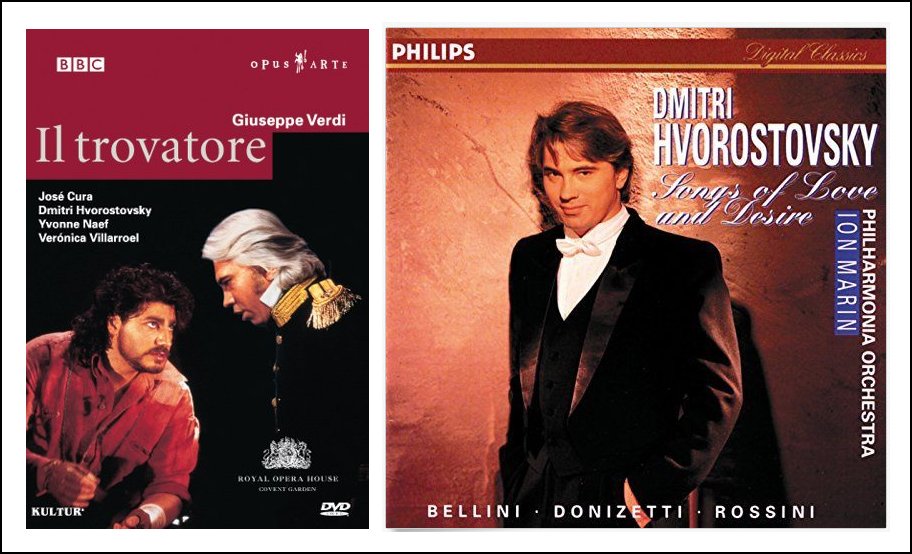
Baritone Dmitri Hvorostovsky
An Early Conversation with Bruce Duffie
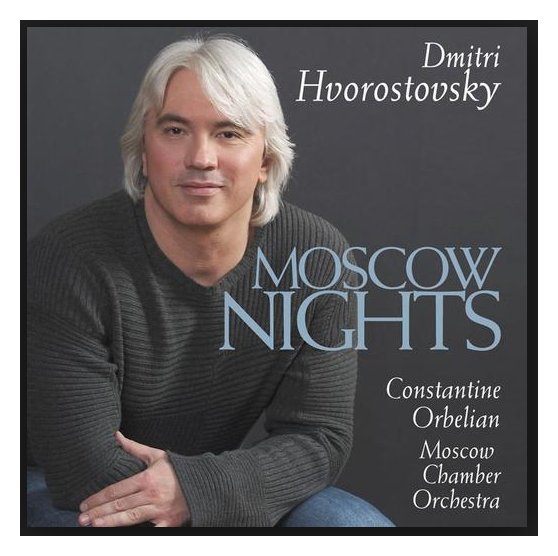
Dmitri Aleksandrovich Hvorostovsky
(Дми́трий Алекса́ндрович Хворосто́вский), born 16 October 1962, is a Russian
operatic baritone.
Hvorostovsky was born an only child in Krasnoyarsk in Siberia. He studied
at the Krasnoyarsk School of Arts under Yekaterina Yofel and made his debut
at Krasnoyarsk Opera House, in the role of Marullo in Rigoletto. He went
on to win First Prize at both the Russian Glinka Competition in 1987 and
the Toulouse Singing Competition in 1988.
 Hvorostovsky came to international prominence in 1989 when he won the BBC
Cardiff Singer of the World competition, beating local favorite Bryn Terfel
in the final round. His performance included Handel's "Ombra mai fu" and
"Per me giunto...O Carlo ascolta" from Verdi's Don Carlos. His international concert
recitals began immediately (London debut, 1989; New York 1990).
Hvorostovsky came to international prominence in 1989 when he won the BBC
Cardiff Singer of the World competition, beating local favorite Bryn Terfel
in the final round. His performance included Handel's "Ombra mai fu" and
"Per me giunto...O Carlo ascolta" from Verdi's Don Carlos. His international concert
recitals began immediately (London debut, 1989; New York 1990).
His operatic debut in the West was at the Nice Opera in Tchaikovsky's The Queen of Spades (1989). In Italy
he debuted at La Fenice as Eugene Onegin, a success that sealed his reputation,
and made his American operatic debut with the Lyric Opera of Chicago (1993)
in La traviata.
He has since sung at virtually every major opera house, including the Metropolitan
Opera (debut 1995), the Royal Opera House at Covent Garden, the Berlin State
Opera, La Scala and the Vienna State Opera. He is especially renowned for
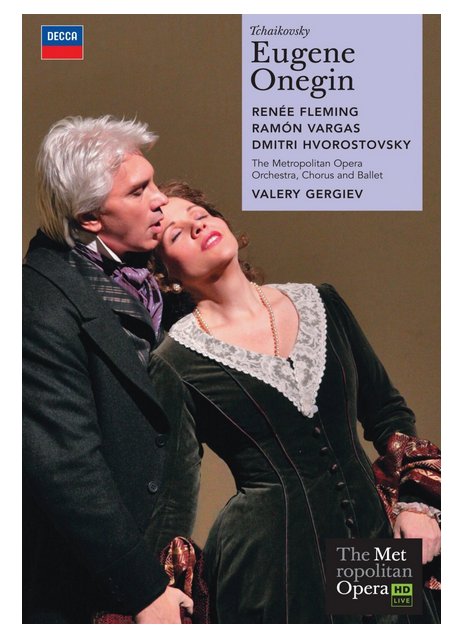
his portrayal of the title character in Tchaikovsky's Eugene Onegin; The New York Times described him as "born
to play the role."
In 2002, Hvorostovsky performed at the Russian Children's Welfare Society's
major fund raiser, the "Petrushka Ball". He is an Honorary Director of the
charity. A tall man with a striking head of prematurely silver hair, Hvorostovsky
has achieved international acclaim as an opera performer as well as a concert
artist. He was cast in People magazine's 50 most beautiful people, a rare
occurrence for a classical musician. His high, medium-weight voice has the
typical liquid timbre of Russian baritones.
A recital program of new arrangements of songs from the World War II era,
Where Are You My Brothers?,
was given in the spring of 2003 in front of an audience of 6,000 at the Kremlin
Palace in Moscow, and seen on Russian Television by over 90 million viewers.
The same program was performed with the St. Petersburg Symphony Orchestra
for survivors of the Siege of Leningrad on 16 January 2004.
In recent years Hvorostovsky's stage repertoire has almost entirely consisted
of Verdi operas such as Un Ballo in Maschera,
La Traviata and Simon Boccanegra. In 2009 he appeared
in Il Trovatore in a David McVicar
production at the Metropolitan Opera with Sondra Radvanovsky.
In June 2015 Hvorostovsky announced that he had been diagnosed with a brain
tumor and canceled all his performances through August. Family representatives
say that he will be treated at London's cancer hospital Royal Marsden. In
spite of his illness Hvorostovky returned to the stage at the Metropolitan
Opera in September as Count di Luna in Il
Trovatore for a run of three performances opposite Anna Netrebko.
He received strong reviews from both critics and audiences for his performance.
|
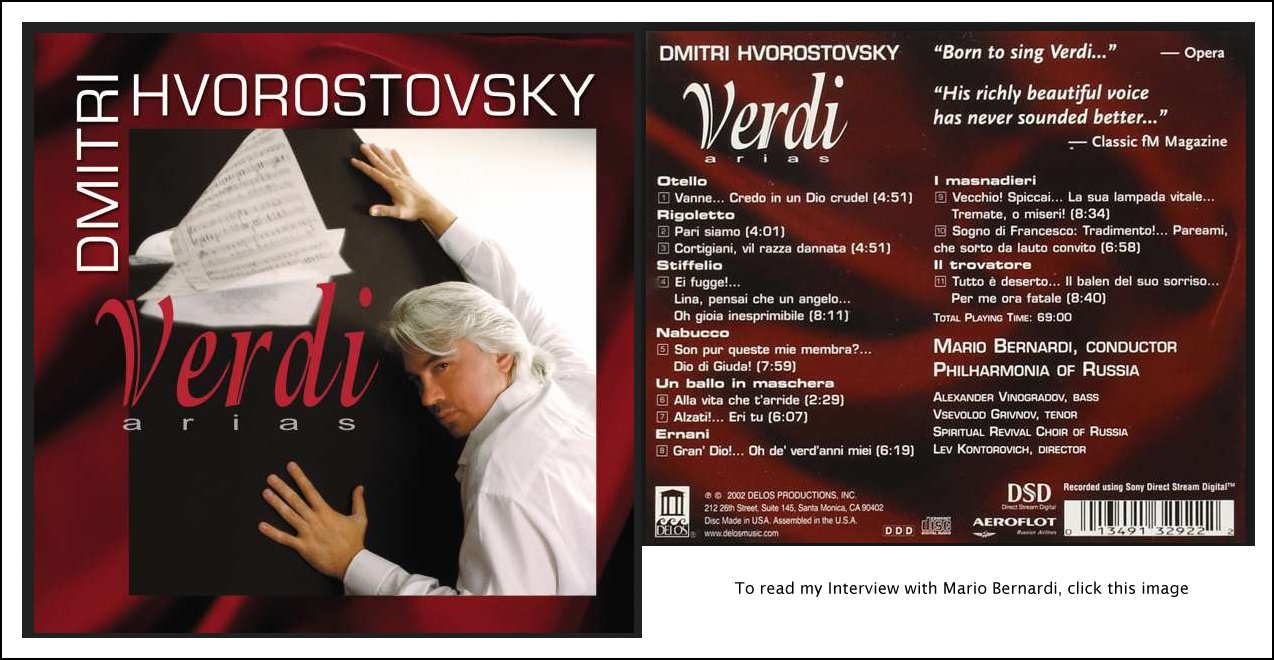
In doing interviews for twenty-five years, I have met with musicians at various
stages of their careers. Some were older and shared their life’s
experience; some were midway, and Janus-like looked both forward and back;
and a few were at the outset of what turned into either long service or a
brief flash. Dmitri Hvorostovsky, whose conversation is presented on
this webpage, became a legendary artist, and had a brilliant reputation onstage,
in recital and concert, and on recordings. Today (mid-2017) it is only
his devastating health issue that keeps him from continuing along this magnificent
path.
 We met backstage at Lyric Opera of Chicago in September of 1993, when he
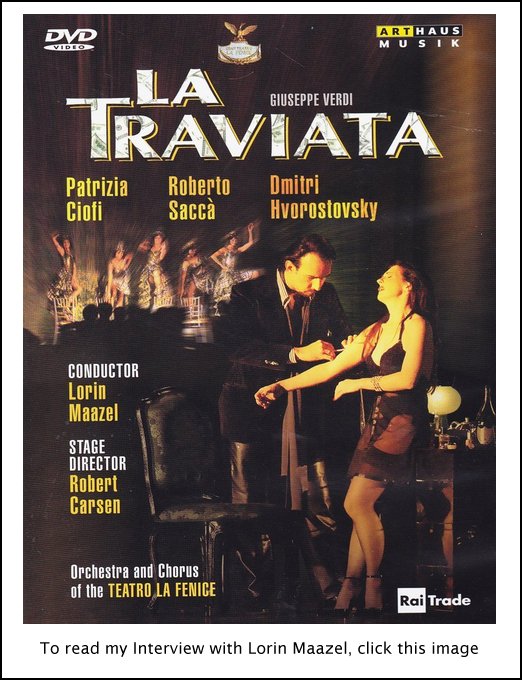
was making his American operatic debut as Germont in Traviata with June Anderson and Giuseppe
Sabbatini, conducted by Bruno Bartoletti.
He would return to Lyric two years later for Valentin in Faust with Richard Leech, Renée Fleming,
and Samuel Ramey, led by John Nelson and directed
by Frank Corsaro, as
well as another Traviata in 1998-99
with Andrea Rost and Frank Lopardo, Ballo
in 2002-03 with Veronica Villaroel, Neil Shicoff, Maria Kanyova,
and Larissa Diadkova, conducted by Mark Elder, and finally,
in 2007-08 Onegin with Dina Kuznetsova,
Frank Lopardo, and Vitalij Kowaljow, led by Sir Andrew Davis.
Hvorostovsky and Fleming would give a Subscriber Appreciation Concert in
June of 2012, and he also sang a solo recital in February of 2016.
[Names which are links on this webpage
refer to my Interviews elsewhere on my website. Vis-à-vis the
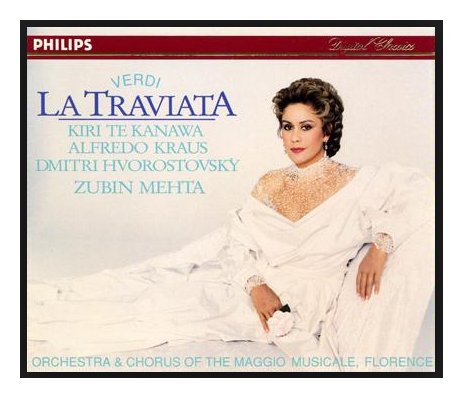
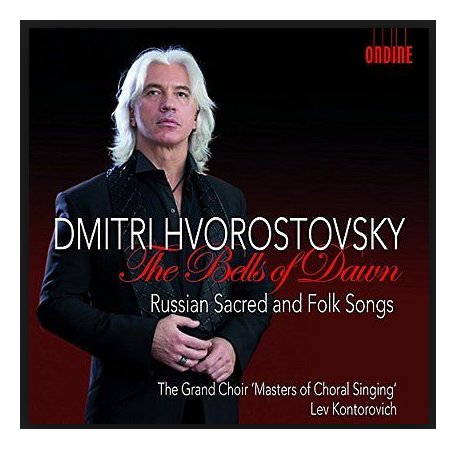
recording shown at right, see my Interviews with Kiri Te Kanawa, Alfredo Kraus, and Zubin Mehta.]
We met backstage at Lyric Opera of Chicago in September of 1993, when he
was making his American operatic debut as Germont in Traviata with June Anderson and Giuseppe
Sabbatini, conducted by Bruno Bartoletti.
He would return to Lyric two years later for Valentin in Faust with Richard Leech, Renée Fleming,
and Samuel Ramey, led by John Nelson and directed
by Frank Corsaro, as
well as another Traviata in 1998-99
with Andrea Rost and Frank Lopardo, Ballo
in 2002-03 with Veronica Villaroel, Neil Shicoff, Maria Kanyova,
and Larissa Diadkova, conducted by Mark Elder, and finally,
in 2007-08 Onegin with Dina Kuznetsova,
Frank Lopardo, and Vitalij Kowaljow, led by Sir Andrew Davis.
Hvorostovsky and Fleming would give a Subscriber Appreciation Concert in
June of 2012, and he also sang a solo recital in February of 2016.
[Names which are links on this webpage
refer to my Interviews elsewhere on my website. Vis-à-vis the
recording shown at right, see my Interviews with Kiri Te Kanawa, Alfredo Kraus, and Zubin Mehta.]
His English was quite good, though, as always with non-native speakers, it
was filled with hesitations, mistakes in tense, oddities of structure, as
well as the occasional made-up word. Much of that has been straightened
out here, though a few of his delightful turns have been left in the text.
Needless to say, though, I have not changed any of his ideas nor altered
anything more than simple corrections he himself would have made if he had
been given the chance.
Even at this very early stage of his career, he understood his voice, as
well as the necessary trajectory to stay at the top of his profession for
many years.
Bruce Duffie: Do you
find operatic life in Western Europe and America more exciting and more challenging
than in Russia?
Dmitri Hvorostovky:
I’m not based in Russia anymore. The very few times I’m coming back,
usually I’m giving concerts or recitals. Because I’m not working in
the opera house, and I’m not based anywhere, I can be just a guest singer.
Of course, instead of a regular relationship with Mariinsky Theatre in St.
Petersburg, I can do some things there. Actually I’m doing some things
there, but not very much. I can remember my expression the first time
I was brought here to the U.S. I was very excited, but after a while
you take it just naturally because you’re working.
BD: You’re asked to
sing all kinds of roles. How do you decide which roles you will learn,
and which roles you’ll postpone for awhile?
DH: [Laughs] It
wouldn’t surprise you if I tell you that four years ago, right after my wining
competition in Cardiff, I’d been invited to sing parts like Simon Boccanegra,
or Rigoletto, and Posa, and Renato, etc. Of course I realized that
I couldn’t do them so soon because I was rather too young for those parts.
So I had to choose very carefully which way I would go. This is why
I was taking more recitals in the beginning, and actually it helped me in
my career. Afterwards, kind of step by step, slowly, I began making
my operas, but still I can’t sing so many operas like I’ve just mentioned
above. Probably in five years I can put much more pressure and much
more attention on the Verdi operas. Now I’m doing Donizetti and Rossini,
and a few, though not very many Russian works, unfortunately, because the
main baritone parts are written for bass-baritones in Russian music
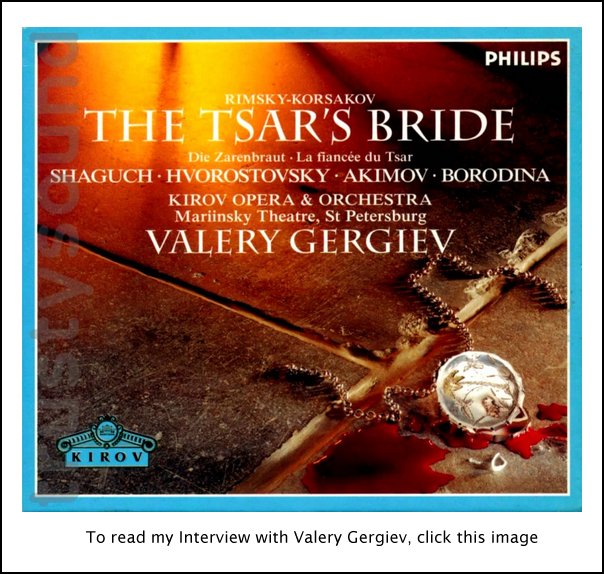
— like Gryaznoy in Tsar’s Bride (photo of recording shown below), or Prince
Igor, or even Boris Godunov. It’s very good for the baritone, but they’ve
been taken over by the basses.
 BD: They’re jealous and they
want those roles.
BD: They’re jealous and they
want those roles.
DH: Well, yes, and unfortunately
I can just sing Onegin and a very few Tchaikovsky roles, and that’s all.
BD: Is Onegin a satisfying
role to sing?
DH: Absolutely!
It’s very interesting to sing and to act. It’s great music, still.
BD: Is he nuts? [Vis-à-vis
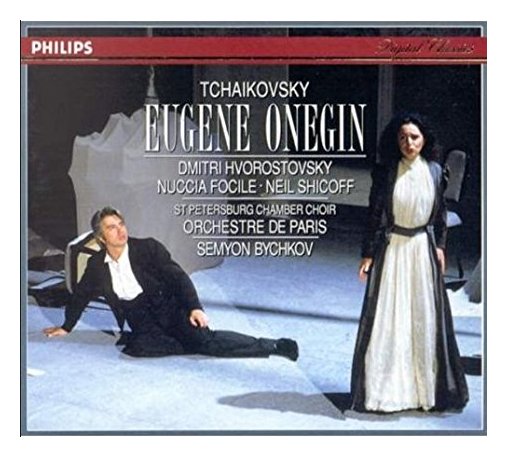
the recording shown at right, see my interview with Semyon Bychkov.]
DH: [Laughs] Well,
sort of, yes. What is interesting is you can play this role in many
different ways. It can be even nice. He can be loved by the audience
because they would feel sorry for Onegin. Don’t forget that in the
last act Onegin becomes completely different person. When he wants
to win the love of Tatyana, it changes him a lot, and it changes the subject
in this dramatic line in the opera.
BD: Could they have
been happy if he had realized his love earlier in the opera?
DH: [Thinks a moment]
I don’t believe he would realize it. If he would realize that he is
in love sooner, we wouldn’t have this subject and this story! [Both
laugh] There has to be some intrigue. I would describe the story
in a very usual way. I would say it can happen naturally in any age,
in any time, even now. It will show weight, a kind of nobility of the
behavior of the age, the personage which has been described at the beginning
of the nineteenth century. People will forget themselves for a while,
and immerse themselves in the rest of the subject. You will see it
can be happen, anyhow.
BD: Does the opera adhere
closely to the Pushkin, or does Tchaikovsky take liberties?
DH: It’s quite close
to Pushkin, but Tchaikovsky kind of simplified it, made the subject much
more simple because of the music. It’s too much to put it all into
an opera. It’s such a high level of poem, actually. It’s one
of the most well-known poems of Pushkin, and has such a nobility of the language.
It’s very high language, full of sarcasm, full of real humor, and full of
really high poetic lines. It’s far too much to even imagine this put
into an opera because opera expects some kind of simplicity.
BD: And more realism?
DH: More realism, and
a more simple presentation I would say.
BD: Does it please you
to know that because of this opera, the Pushkin poem is somewhat more known
in the West?
DH: I am sure lots of
people do know Pushkin’s poems. Because Tchaikovsky had the same genius,
this is the connection of two geniuses, so it makes twice as big an effect
for ordinary people who probably don’t know about Pushkin or Russian poetry.
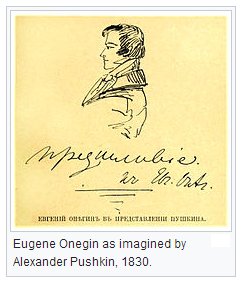 Eugene Onegin (Евге́ний Оне́гин, Yevgeniy Onegin) is a novel in verse
written by Alexander Pushkin.
Eugene Onegin (Евге́ний Оне́гин, Yevgeniy Onegin) is a novel in verse
written by Alexander Pushkin.
Onegin is considered a classic
of Russian literature, and its eponymous protagonist has served as the model
for a number of Russian literary heroes (so-called superfluous men). It was
published in serial form between 1825 and 1832. The first complete edition
was published in 1833, and the currently accepted version is based on the
1837 publication.
Almost the entire work is made up of 389 stanzas of iambic tetrameter with
the unusual rhyme scheme "AbAbCCddEffEgg", where the uppercase letters represent
feminine rhymes while the lowercase letters represent masculine rhymes. This
form has come to be known as the "Onegin stanza" or the "Pushkin sonnet."
The innovative rhyme scheme, the natural tone and diction, and the economical
transparency of presentation all demonstrate the virtuosity which has been
instrumental in proclaiming Pushkin as the undisputed master of Russian poetry.
|
Sometimes it does work for people who are not aware or who do not understand
something. I would say it’s like a compromise which is used to be done
by someone like Pavarotti. In the last few years he contributed a huge
part to make people, who just simply ignored classical music, understand
it. Of course it has been ‘cooked’ in a way to be more simple, but
it’s still classical music, and it’s very high-level of performance.
Because I’m a musician, we have to do something to get to these people, to
make them pay more attention to classical music, which is very important.
 BD:
Do you feel that recordings help this?
BD:
Do you feel that recordings help this?
DH: Everything and anything
— recordings, television shows, radio, anything — but
it always has to be kind of broader then you get usually. I wouldn’t
step over on this level, because it could immediately be bad taste.
It’s very dangerous.
BD: Do you feel that
opera and concert music for everyone?
DH: It can
be for everyone. I’m quite sure because opera is such a synthesized
genre. It includes everything. Lighting now is a huge thing,
as well as art work, acting, musical ideas, orchestra, everything.
And it has to be interesting. Unfortunately, opera is the most conservative
genre, but the stories and this wonderful music will never die because most
of them we love very much, especially when it’s written by geniuses.
BD: Do you only perform
the operas by geniuses?
DH: Well, I’m trying
to! [Has a huge laugh]
BD: [Gently protesting]
Is there not a place for some of the lesser composers?
DH: It has some place
as soon as you realize it’s worth it to do. You can be disturbed by
this music too often because most is contemporary, and is written with completely
new ideas and new profiles. They can always make you a very interested
in that.
BD: Do you have any
advice for a composer who would like to write an opera around you?
DH: [Laughs] You
better ask someone else. I’m far too young to give advice for composers.
But from my point of view, if I’m hearing, and listening, and seeing something
interesting, I immediately react. I wouldn’t give you examples, but
I do love contemporary music. When I was much younger, I used to do
it a lot when I was a member of Krasnoyarsk Theater, when I lived in Krasnoyarsk,
my home town. I was doing a lot of contemporary music written by our
young composers. It was almost all twelve-tone music, which was
very difficult. Also it was a very nice part of my education
to get through the quite complicated melody line. It was okay for me.
BD: So then you might
come back to some contemporary music?
DH: Yes, why not?
I have so many things to do, and I haven’t done even three per cent of what
I could do. I have to put so much work into the classical stuff, and
then when I get over forty I’ll do something more and new and contemporary.
[Laughs] I don’t know. You can get bored with classical music
because don’t forget, all musicians are quite crazy. [Both laugh]
Actually I simply can’t do six times for two weeks singing Traviata. It’s quite difficult
for me. I have to refresh my mind all the time, otherwise I will be
terribly bored from this music. Maybe when I will get a really tired
of singing classical stuff — which is very doubtful
— maybe I’ll do something different.
BD: [With a gentle nudge]
You won’t be a rock singer, will you???
 DH:
I used to be a rock singer when I was a teenager. I was doing a lot
of rock music and pop music. I feel very pleased now, and I’m very
grateful to my friends who brought me to this stage, because I received my
first stage experience when I was so young, and actually it was very helpful
for me.
DH:
I used to be a rock singer when I was a teenager. I was doing a lot
of rock music and pop music. I feel very pleased now, and I’m very
grateful to my friends who brought me to this stage, because I received my
first stage experience when I was so young, and actually it was very helpful
for me.
BD: Is there a huge
difference singing rock music and concert music?
DH: I would say yes
and not because yes, it’s a different way and style of singing, even a different
way of performing. You probably would be surprised if I would say you’re
going to use different muscles in your throat when you sing pop music.
This is not because you have to be very concentrated and honest. The
major reason is you wouldn’t be loved, you wouldn’t be understood.
You would be booed immediately if you make some kind of shit!
* *
* * *
BD: You’ve made a number
of recordings. Do you sing differently in the recording studio than
you do in the concert hall or the opera house?
DH: It’s a very good
question. You can ask a hundred people and they would all answer you
differently because it’s quite difficult to imagine yourself just alone in
front of a microphone. You have to be clear, like what you have brought
to the live performance. You have to imagine that the audience exists
in front of you – not only the mike but the audience. In that case
you will receive some nice results. If you can’t imagine it, you have
to find other clues, because it’s very important. Most of new recordings
are very clean, and they’re very, very similar to each other. They
are very much the same because you use the same machines, the same type of
very clever mikes, but something very fresh and delicate is gone because
you don’t have this kind of atmosphere. It is a different atmosphere,
a different spirit that you have in a concert or in a live performance which
is recorded. Most of the Toscanini records were live, and we will enjoy
them for many centuries because they really have some purity. Also
Furtwängler, etc., and most of genius conductors in the middle of this
century are still worthy of adoration.
[At
this point we are interrupted by a phone call, in which he speaks Russian,
and then we return to our conversation...]
BD: Now you’re back
to thinking in English?
DH: Yes. I’m dreaming
in English!
BD: [Surprised]
Are you really??? Good... well, I say ‘good’, but is that good or not?
DH: I don’t know.
I’ve spent already many hours talking Russian, and it’s quite difficult.
BD: When you go to a
new city in America, do you try to make contacts with the Russian community
there?
 DH:
I never do that, no. Maybe it’s strange, but somehow I am a little
bit of afraid to be disappointed, because most of the Russians here in America
are different. Honestly I have a lot of Russian friends here, but the
first contact is difficult. It is just probably my mental problem because
I’m not very connected with them in my mind. The first contact is always
very scary for me... not really scary, but somehow I’m too shy.
DH:
I never do that, no. Maybe it’s strange, but somehow I am a little
bit of afraid to be disappointed, because most of the Russians here in America
are different. Honestly I have a lot of Russian friends here, but the
first contact is difficult. It is just probably my mental problem because
I’m not very connected with them in my mind. The first contact is always
very scary for me... not really scary, but somehow I’m too shy.
BD: But you’re involved
in the opera house, so that’s your main contact here?
DH: Yes.
BD: We were talking
a bit about recordings. Would you prefer to have some of your performances
issued on disc?
DH: Of course I would.
I keep talking about it, and I keep asking my colleagues to do some live
recordings, and I’m sure it’s going to be sooner or later that I will record
some of my stuff. I also know lots of interesting musicians, including
conductors who keep telling the same things. Probably we have to wait
just a little bit more until the recording equipment and the machinery will
get to another generation to make it as clean and brilliant as possible.
BD: Would you wear a
little mike in your costume?
DH: Why not? My
generation has been accustomed to the use of mikes even in fancy programs.
I haven’t sung pop music, but I had to sing some folk music stuff just recently
in LA with Hollywood Bowl Orchestra. It was a huge place with about
20,000 people, and I had three evenings. It was a real Hollywood fancy
concert.
BD: Glitzy?
DH: Yes! John Mauceri gave very
nice talks to the audience, explaining some music and introducing artists.
It was very nice and I loved his way. I loved what he did. I
was aware of the different style, and I had to sing Tchaikovsky’s arias with
a very professional orchestra but in a more pop way, I would say. The
second half had some Russian folk music, and I practiced talking to the audience.
It was really nice. I wouldn’t say that I felt disappointed. Besides
I was very, very much surprised and I was very happy. I would make
this clever compromise to make people to love music more.
BD: Would you be interested
in doing a concert with domras and balalaikas?
DH: I did!
BD: I mean here in the
United States?
DH: Yes, why not?
You reminded me about a balalaika orchestra, and I was always thinking “Oh,
my God, it’s more than eighty members with quite huge stuff to carry!”
[Both laugh] There has to be some negotiation, and there has to be
some sponsorship. That is what I’m thinking about, but it’s not my
problem at all because I’m the soloist. I would be happy to introduce
this music in a real way. In LA I had to sing with the orchestration
for the symphonic orchestra, which was done very, very well. I had
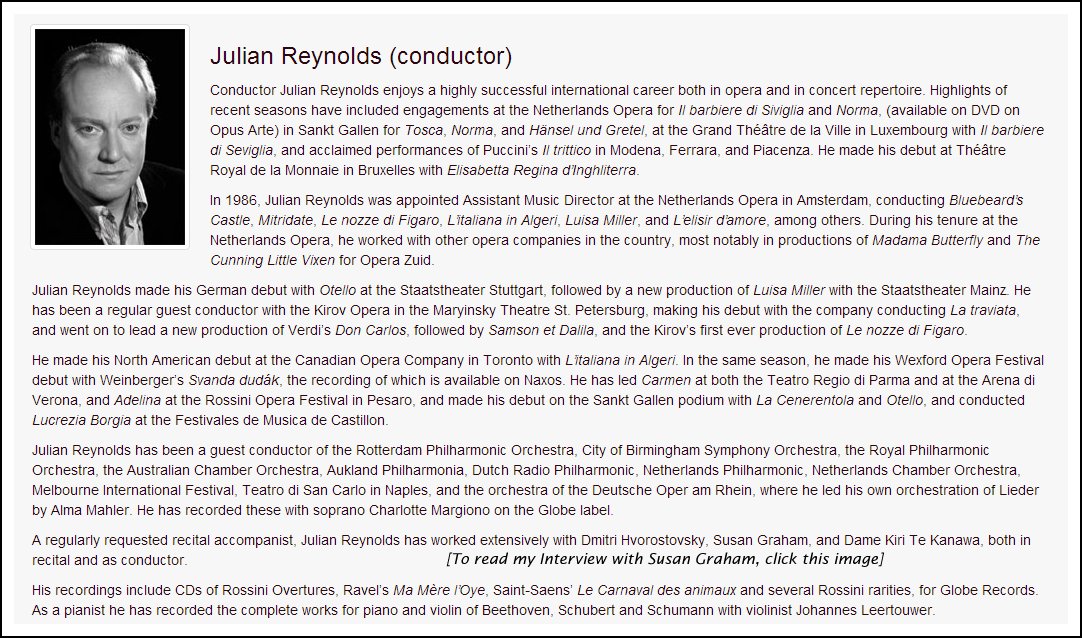
been accompanied by Julian Reynolds [biography
below], a friend of mine who is a great musician, but the most exciting
result you would receive is with the full orchestra because it does make enormous
sound, a very, very interesting sound. You would never probably even
imagine, but it can sound like waves in the ocean; so quiet but so deep and
so bright. Something of this sound should be recorded on folk music.
I could hear it.
* *
* * *
BD: Let’s
come back to some of your operatic roles. You’ve sung several of these
roles a number of times. Do you like coming back to these ‘old friends’?
 DH:
Yes, because usually you are meeting different directors with different kinds
of reading on the subject. So it’s fine, but I would like to do more
operas and more different roles. The time has come already, so I’m
learning a lot of new stuff. Next season I will be doing quite a lot
of new parts, and I’m really looking forward to this.
DH:
Yes, because usually you are meeting different directors with different kinds
of reading on the subject. So it’s fine, but I would like to do more
operas and more different roles. The time has come already, so I’m
learning a lot of new stuff. Next season I will be doing quite a lot
of new parts, and I’m really looking forward to this.
BD: Good. The
one you’re doing here in Chicago is Germont. Do you like playing such
an elderly man when you are such a young man yourself?
DH: It’s interesting
because you can improve your acting, not only imagining yourself older but
trying to be yourself older, and even trying to think like an old man.
I’ve never had that experience of helping my son. I don’t have any
son; I have a daughter who is much younger, but to communicate with such
a great like actress like June Anderson is just remarkable. I’m feeling
that I’m growing up just by working with her. I also enjoy singing
with Giuseppe Sabbatini. We were already nice friends because it’s
not the first time we are working together, and we’re going to have our next
opera together, Onegin at Covent
Garden in London. We’re going to fly from Chicago to London together,
so we are really working as a team. And, of course, it’s a gorgeous
music. [The Onegin also featured Catherine Malfitano
and Gwynne Howell, conducted
by Mark Ermler.]
BD: It’ll be interesting
to change from a father-son relationship to a friend-and-friend relationship.
DH: Friend-and-friend,
but I’m still older! [Both laugh]
BD: The baritone is
always the older man.
DH: Yes, it’s our destiny.
[With humor] What can we do?
BD: Would you rather
get the girl?
DH: Well, if you take
Don Giovanni, he takes the girls sometimes, but he’s still unhappy.
BD: But when we meet
Don Giovanni, he really is at the end of his conquests.
DH: That’s right, yes,
but he endures, trying to get someone.
BD: Have you also sung
the Count in The Marriage of Figaro?
DH: No, I haven’t sung
it yet. I’m loving this stuff now, and I’m going to sing him later.
BD: Again, the older
man.
DH: Yes. Obviously
he can be happy in the opera, so we will have to deal with this.
BD: Do you enjoy roles
that require flexibility in the voice?
DH: Yes, very much.
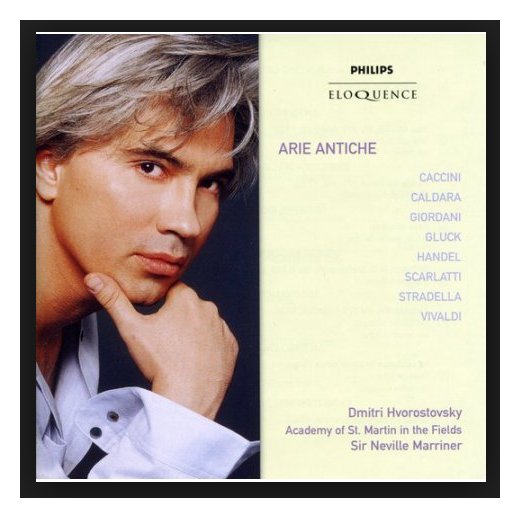
Thank God I can still sing some coloratura stuff. I used to do a lot
of Italian Arie Antiche, including
sometimes quite crazy coloratura. You can find some different cadenzas
because most of them are da capo,
so you can sing anything you want, but it very much depends on your taste.
If you pick up the oldest scores which describe coloraturas from the end
of eighteenth or beginning of the nineteenth century, you can sing that stuff,
which is quite enough for our generation because the real ‘bel canto’ singers
have gone. But you can try, and I do enjoy this very much, and my voice
responds to this. Of course, if you still doing the trills, that means
you still have your voice in a fresh condition. It’s a very, very good
school, and a very healthful thing for your voice. However, I’m more
curious for more dramatic stuff because I’m far too wild to just do delicate
things like Arie Antiche. Personally
I would love to do more dramatic parts, but again I have to wait.
 BD:
Do you adjust your vocal technique for the size of the house —
from a big house to a small house?
BD:
Do you adjust your vocal technique for the size of the house —
from a big house to a small house?
DH: This house here
in Chicago is quite big, but the acoustic is enormous. It’s very good
acoustic. Actually I’ve never seen such a combination with a great
and gorgeous-looking theater, and a gorgeous acoustic. It’s quite remarkable.
It’s quite unique because in comparison, for instance, in Covent Garden and
La Scala, these houses are much drier, and sometimes you find yourself screaming,
which is very dangerous. If you scream, it never will help you enough.
That’s the secret of singing, but it provokes you, and you have to be very
careful not to scream. There is a theater in Barcelona which is almost
the same size... well, probably a bit smaller, and it has a very natural
and good acoustic. I should go and see some more opera houses, but
this one is first for me. I’m really very nicely surprised.
BD: Now you say you
should be doing this, or you should be doing more of this. Do you make
sure that you pace your career so you don’t sing too much, too often, too
heavy?
DH: That’s very easy
to check, actually. I have it all written in my diary for four years
ahead, so you can count it, and if I don’t need something, I can simply throw
it away and say, “I’m sorry, I can’t do this, I can’t
do this, I have to rest here, or I need some time to learn things.”
So I hope I’m doing well, but it’s quite busy, and I have to work quite hard.
But it’s only the fourth year of my career, and I understand I have to work
very hard to be more relaxed later on. [Laughs]
BD: Are you at the point
now where you want to be in your career?
DH: Kind of, yes.
I’m very practical, very cool, and I understand what I’m doing. So
I think I’m in a right way, and I’m doing quite nicely, quite fine.
I used to get my goals. I used to get what I wanted sooner or later,
and I think I’m doing well.
BD: Is singing fun?
DH: Yes!
BD: Good. Are
you coming back to Chicago?
DH: Yes, I will.
It’s booked! Even if I wouldn’t be booked, I will come back because
of how nice this town is. It is a pleasure to work in such a great
opera, with a great company. Really I am very pleased.
BD: Thank you for coming,
and I look forward to more of your performances.
DH: Thank you.
© 1993 Bruce Duffie
This conversation was recorded in Chicago on September 23, 1993.
Portions were broadcast on WNIB two weeks later, and again the following year,
as well as in 1997 and 1998. This transcription was made in 2017, and
posted on this website at that time. My thanks to
British soprano Una Barry for her
help in preparing this website presentation.
To see a full list (with links) of interviews which have been transcribed
and posted on this website, click here.
Award -
winning broadcaster Bruce Duffie
was with WNIB,
Classical 97 in Chicago from 1975
until its final moment as a classical station in
February of 2001. His interviews have also appeared
in various magazines and journals since 1980, and he
now continues his broadcast series on WNUR-FM, as
well as on Contemporary
Classical Internet Radio.
You are invited to visit his website for more information
about his work, including selected
transcripts of other interviews, plus a full
list of his guests. He would also like to call
your attention to the photos and information about
his grandfather,
who was a pioneer in the automotive field more than a century ago.
You may also send him E-Mail with comments,
questions and suggestions.