A Conversation with Bruce Duffie
|
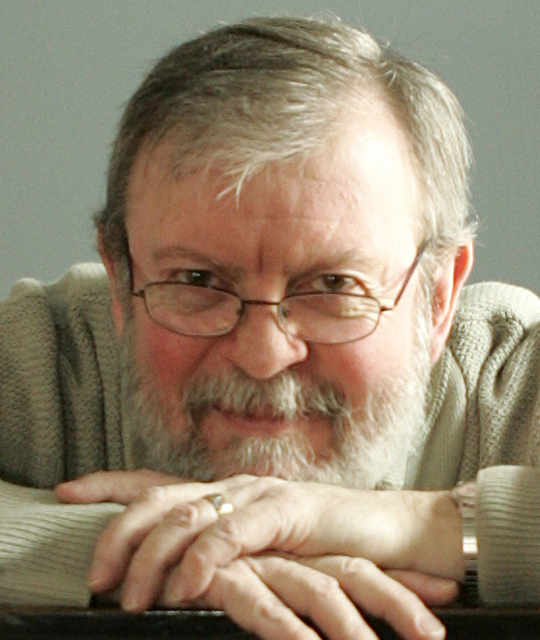
Maurice Wright was born in 1949 in Front Royal, Virginia, a small town situated between the forks of the Shenandoah River and near the Blue Ridge Mountains; he began composing at age 10. He attended Duke University and Columbia University, where he explored diverse interests that included music composition, computer science and film.
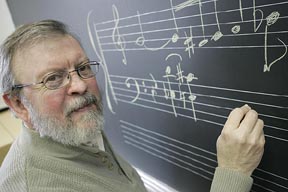
Wright has taught at Boston University, Columbia University, and the University of Pennsylvania. He is Laura H. Carnell Professor of Music Composition at Temple University's Boyer College Of Music and Dance, where he co-founded the Interactive Arts and Technology Laboratory and the Presser Center for Creative Music Technology. He recently served as Interim Associate Dean for Graduate Programs, Financial Aid and Technology. Described by the New Grove Dictionary [edited by Stanley Sadie] as "extremely prolific", Wright's work is a synthesis of his diverse interests: vocal and instrumental music (new and old); technology and acoustics; and drama and film. Critics note elements of lyricism and wit in Wright's work: "Maurice Wright composed half of the concert's six pieces with a level of wit and invention that makes you wonder why the music isn't better known (Philadelphia Inquirer)"; "modern and fresh and completely natural...a genuinely successful piece of new music. More from Mr. Wright, please. Much more!" (New York Concert Reviews.) Wright was introduced to the craft and technology of film when he met Director Gene Searchinger in 1976 and contributed an electronic score for an unusual film about recycled aluminum, "Metallic Tales: The Social Life of a Non-Ferrous Metal," which received a Golden Eagle Award. Over the next two decades Wright continued to work with Searchinger, most recently contributing music and special sound for the three-program series about linguistics, "The Human Language," broadcast in the United States and Japan. His interests in image were incorporated into two electronic operas: The Trojan Conflict (1989), and Dr. Franklin, an opera about Benjamin Franklin, produced in Philadelphia in 1990 as part of the Electrical Matter Festival. In both works a video screen was embedded in the set, and short scenes written and directed by Wright were integrated into the operatic fabric. Since then he has experimented with visualization of musical sound and with digital animation, making his first professional presentation as an animator in March, 1996. Shortly thereafter he was commissioned by the Network for New Music to create a work for computer animation and computer sound for their 1996-1997 season in Philadelphia. The resulting work, "Taylor Series," was described in the Philadelphia Inquirer as "visionary" and "lyric." Wright is currently setting the poetry of the late William F.
Van Wert, a Temple colleague whose work Wright first incorporated in The
Lyric's Tale, "an entertainment" for baritone voice, actress, chamber
orchestra and projected video, that plays themes of religion, existentialism
and science against one another in a fast-paced, 45 minute work featuring
dozens of characters, including Galileo, Sigmund Freud and Martin Luther. For more information, visit Wright's official website.
|
 Maurice Wright: It’s a perfect time for me. At the
institution, maybe I am a little young, but I’ve been at Temple University
since 1980, and was made full professor in 1992. So I guess about
it is not extraordinarily young, but I was very happy for that. It’s
the last big peer review that way. I’m a department chair. Even
though it’s a very small department, Composition in a music school is looked
upon for a lot of services. In addition to training composers, we’re
expected to keep nudging the other ensembles to perform interesting repertory,
and to keep track of what goes on. So I stay busy with that.
I like the music school a lot, and have wanted to be in the university for
as long as I remember. I’ve never seen it as a bad second choice, as
some composers talk about. I like it there a lot, and probably will
stay at Temple for the next several decades.
Maurice Wright: It’s a perfect time for me. At the
institution, maybe I am a little young, but I’ve been at Temple University
since 1980, and was made full professor in 1992. So I guess about
it is not extraordinarily young, but I was very happy for that. It’s
the last big peer review that way. I’m a department chair. Even
though it’s a very small department, Composition in a music school is looked
upon for a lot of services. In addition to training composers, we’re
expected to keep nudging the other ensembles to perform interesting repertory,
and to keep track of what goes on. So I stay busy with that.
I like the music school a lot, and have wanted to be in the university for
as long as I remember. I’ve never seen it as a bad second choice, as
some composers talk about. I like it there a lot, and probably will
stay at Temple for the next several decades.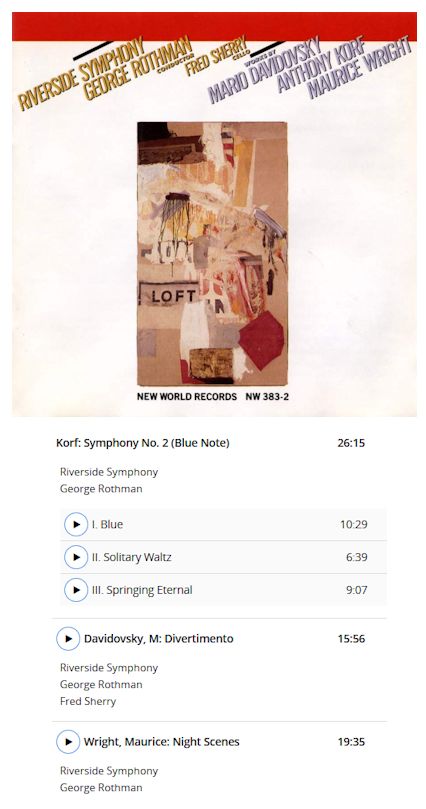 MW: Then you go right to it and write it down.
I have a fair amount of time along with a teaching schedule. Even
though there are activities seven days a week at the university, classes
are scheduled with faculty on basically three of those seven days, so there
are many times when I can have a day during the week which is completely
unstructured and unfettered. And I can get a lot done in a day.
If you can get up a head of steam with things, the inertia will carry through
a lot of difficult situations. I know from people that I’ve talked
to who have studied or taught at Eastman, that the composer Joe Schwanter carries
manuscript with him everyplace. Whenever he has five minutes, he takes
out a piece of paper and goes right back to work. He almost never stops.
I haven’t gotten to that point, but you can do it if you have the piece
started. But the starting time is critical. Things have to be
right to get it started, and after that you can go.
MW: Then you go right to it and write it down.
I have a fair amount of time along with a teaching schedule. Even
though there are activities seven days a week at the university, classes
are scheduled with faculty on basically three of those seven days, so there
are many times when I can have a day during the week which is completely
unstructured and unfettered. And I can get a lot done in a day.
If you can get up a head of steam with things, the inertia will carry through
a lot of difficult situations. I know from people that I’ve talked
to who have studied or taught at Eastman, that the composer Joe Schwanter carries
manuscript with him everyplace. Whenever he has five minutes, he takes
out a piece of paper and goes right back to work. He almost never stops.
I haven’t gotten to that point, but you can do it if you have the piece
started. But the starting time is critical. Things have to be
right to get it started, and after that you can go.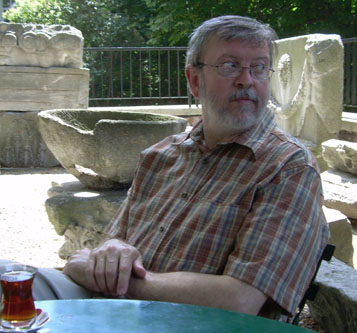 BD:
Throughout the compositional process, are there times when the pencil controls
your hand, or are you always in control of where those notes go on the page?
BD:
Throughout the compositional process, are there times when the pencil controls
your hand, or are you always in control of where those notes go on the page? BD:
How much leeway do you leave for the performers, whether it be the special
trio or just whoever happens to buy the score?
BD:
How much leeway do you leave for the performers, whether it be the special
trio or just whoever happens to buy the score? MW:
In the standard repertory it’s interesting, though. CDs have been
such a boon because you have to re-record everything to get it into that
format. Then, of course, with debates about original instrument performances
and the interest in a different kind of orchestral sound, there are even
more reasons to re-record certain parts of the repertory all different ways.
I find it really interesting; I really like hearing Berlioz with a different
set of instruments and some strange tempi. I don’t know if I’d want
to hear it more than once, but I always rush to hear the recordings that
are a little bit out of the mainstream framework. With music of this
century, though, it’s hard to know what it means to make multiple recordings
of a piece, because you should know, most all the way along, about how the
piece ought to go. The composer is usually around to say it should
go this way or that way, so the leeway for making great differences in recordings,
I think, is less.
MW:
In the standard repertory it’s interesting, though. CDs have been
such a boon because you have to re-record everything to get it into that
format. Then, of course, with debates about original instrument performances
and the interest in a different kind of orchestral sound, there are even
more reasons to re-record certain parts of the repertory all different ways.
I find it really interesting; I really like hearing Berlioz with a different
set of instruments and some strange tempi. I don’t know if I’d want
to hear it more than once, but I always rush to hear the recordings that
are a little bit out of the mainstream framework. With music of this
century, though, it’s hard to know what it means to make multiple recordings
of a piece, because you should know, most all the way along, about how the
piece ought to go. The composer is usually around to say it should
go this way or that way, so the leeway for making great differences in recordings,
I think, is less.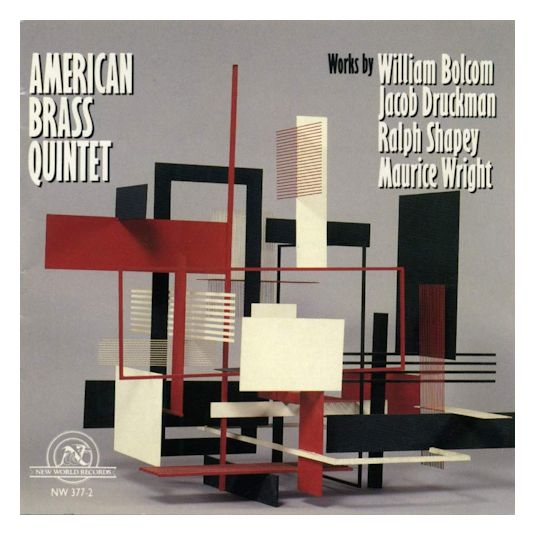 BD: Is it different to you, knowing that people
will be listening individually in their living rooms or on headsets, rather
than in a concert hall amongst two thousand people?
BD: Is it different to you, knowing that people
will be listening individually in their living rooms or on headsets, rather
than in a concert hall amongst two thousand people?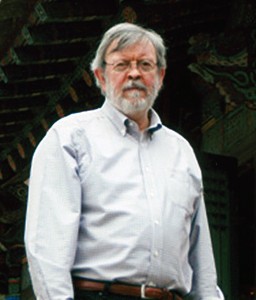 BD:
So this will be the twenty-first century equivalent of Hausmusik?
BD:
So this will be the twenty-first century equivalent of Hausmusik?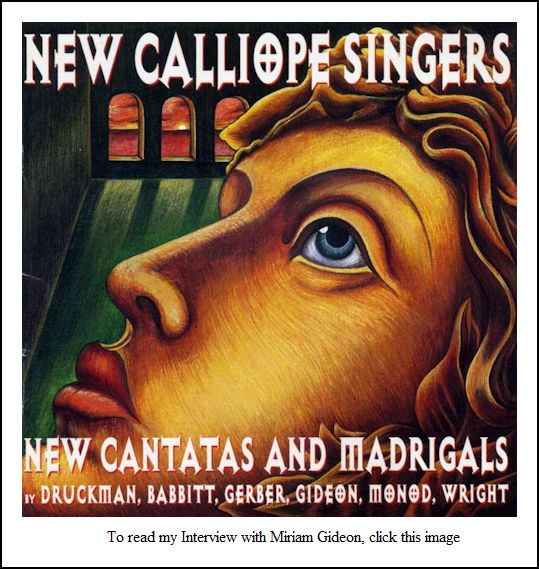 BD: Once in a while we get out the old records
just to reminisce?
BD: Once in a while we get out the old records
just to reminisce?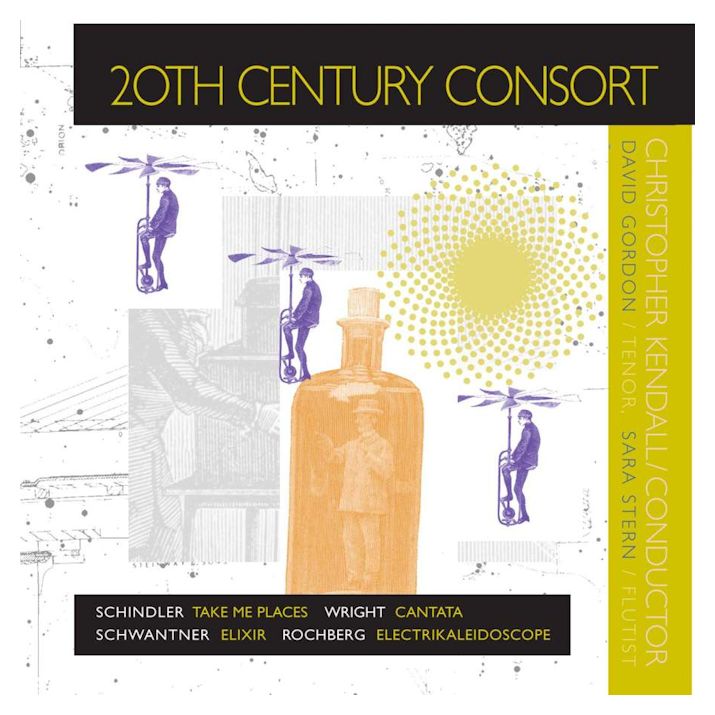 MW: If it’s done right, I think it is.
The tedious part of the transcription of the notes is not to be underestimated.
There’s this deadly process of writing everything down, and if it weren’t
fun, no one would stick to it enough. Unless they’re just absolute
masochists, they wouldn’t stick to it enough to get through it. It is
enough fun that once things are rolling, one really doesn’t feel the stress
of having to line up another bunch of bars; the things that are difficult
about it disappear. In great pieces of music, I am able to find things
that indicate to me the composer is having fun — things
in phrase length, or in musical puns, or in just pleasant phrases that
roll off the pieces. So I think that composers have had fun, and when
I say fun, it’s perhaps misleading to think that it means that everyone’s
a bunch of jokers who come up with clever little jokes. Maybe a better
term would be the exhilaration that might come from composing. What
must it be like to get a fugue in five or six voices to fit together with
the subject and some sort of an intricate inversion and something else going
backwards. Think about the key signatures and the notes spelling out
names. In Schumann, he’s kind of writing letters, coded messages to
everybody in the pieces. Now this by itself, of course, doesn’t make
the music any better; whether the fugue has the inversion of the subject someplace
in it or not is immaterial. But if it’s a great piece of music and
there’s also this great kind of brain stuff underpinning it, you sense that
this must have been very rewarding... I almost said a lot of fun!
MW: If it’s done right, I think it is.
The tedious part of the transcription of the notes is not to be underestimated.
There’s this deadly process of writing everything down, and if it weren’t
fun, no one would stick to it enough. Unless they’re just absolute
masochists, they wouldn’t stick to it enough to get through it. It is
enough fun that once things are rolling, one really doesn’t feel the stress
of having to line up another bunch of bars; the things that are difficult
about it disappear. In great pieces of music, I am able to find things
that indicate to me the composer is having fun — things
in phrase length, or in musical puns, or in just pleasant phrases that
roll off the pieces. So I think that composers have had fun, and when
I say fun, it’s perhaps misleading to think that it means that everyone’s
a bunch of jokers who come up with clever little jokes. Maybe a better
term would be the exhilaration that might come from composing. What
must it be like to get a fugue in five or six voices to fit together with
the subject and some sort of an intricate inversion and something else going
backwards. Think about the key signatures and the notes spelling out
names. In Schumann, he’s kind of writing letters, coded messages to
everybody in the pieces. Now this by itself, of course, doesn’t make
the music any better; whether the fugue has the inversion of the subject someplace
in it or not is immaterial. But if it’s a great piece of music and
there’s also this great kind of brain stuff underpinning it, you sense that
this must have been very rewarding... I almost said a lot of fun!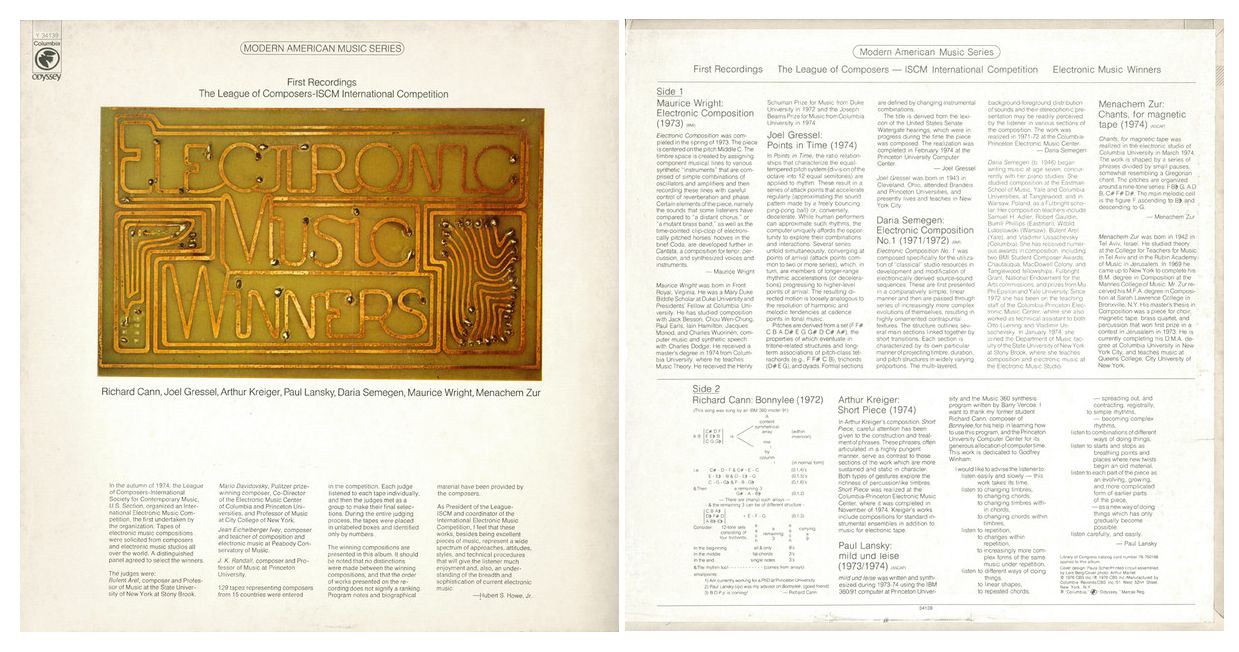
This interview was recorded in Chicago on September 16, 1994.
Portions (along with recordings) were used on WNIB one month later, and
again in 1999. A copy of the audio tape was placed in the Archive of Contemporary Music at Northwestern University. This transcription
was made in 2010 and posted on this website in 2011.
To see a full list (with links) of interviews which have been transcribed and posted on this website, click here.
Award - winning broadcaster Bruce Duffie was with WNIB, Classical 97 in Chicago from 1975 until its final moment as a classical station in February of 2001. His interviews have also appeared in various magazines and journals since 1980, and he now continues his broadcast series on WNUR-FM, as well as on Contemporary Classical Internet Radio.
You are invited to visit his website for more information about his work, including selected transcripts of other interviews, plus a full list of his guests. He would also like to call your attention to the photos and information about his grandfather, who was a pioneer in the automotive field more than a century ago. You may also send him E-Mail with comments, questions and suggestions.
 He has been commissioned by outstanding ensembles and soloists across
the United States, including the Boston Symphony Orchestra, the Emerson
String Quartet, the American Brass Quintet, the Riverside Symphony, and
the Berkshire Music Festival at Tanglewood. The American Academy of Arts
and Letters, the Guggenheim Foundation, the
He has been commissioned by outstanding ensembles and soloists across
the United States, including the Boston Symphony Orchestra, the Emerson
String Quartet, the American Brass Quintet, the Riverside Symphony, and
the Berkshire Music Festival at Tanglewood. The American Academy of Arts
and Letters, the Guggenheim Foundation, the