|
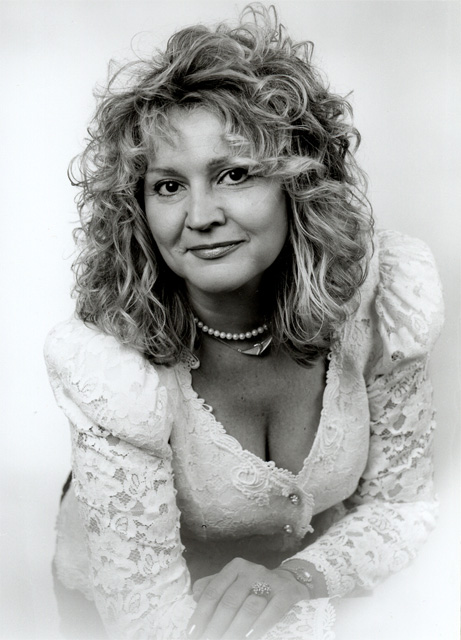
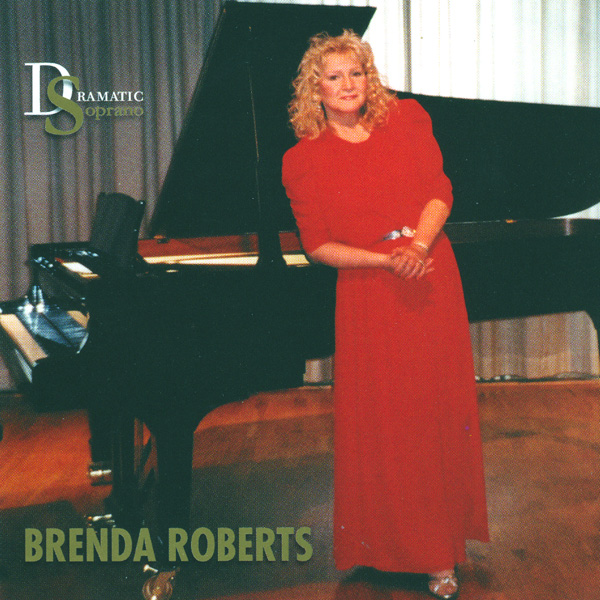
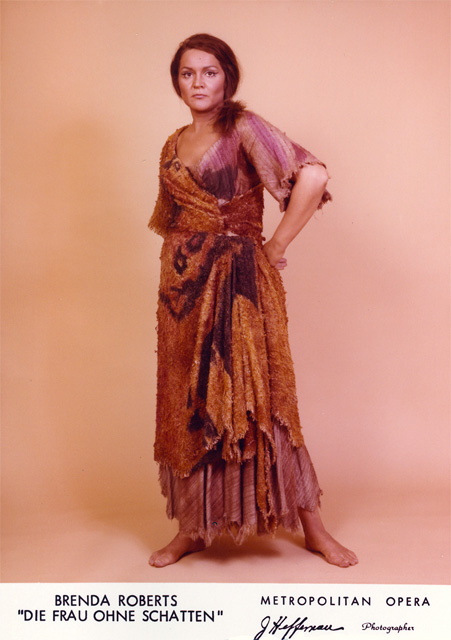
Brenda Roberts received both Bachelors and Masters degrees from Northwestern University, where she studied with Prof. Hermanus Baer and participated in master classes with Lotte Lehman and Gerald Moore. In addition to her years of studies in the United States, Miss Roberts spent a further year honing her craft at the Vienna Hochschule für Musik, as well as privately studying with Josef Metternich. She made her European debut in Saarbrücken as Sieglinde in “Walküre” and has since then performed at almost all of the international opera houses in major roles. The dramatic soprano roles of Richard Strauss and Richard Wagner are central to her repertoire and international success. She was the youngest-ever Brünnhilde at the Bayreuth Festival; she has sung the Dyer’s Wife at the New York Metropolitan Opera, and Elektra at the Chicago Lyric Opera; Ortrud at La Scala Milan and Paris Opera; Elektra, Senta, Ortrud and Venus at the Dresden Semper Opera; Elektra and Senta at the Stuttgart State Opera; Elektra, Senta, Ortrud and Dyer’s Wife at the Hamburg State Opera; Elektra at the Bavarian State Opera Munich; Salome at the Vienna State Opera; as well as Venus at the Maggio Musicale, Florence. Other key roles include Turandot (Bern, Essen and Warsaw); Tosca (Berlin, La Coruna and Nürnberg); Georgetta (Berlin and San Francisco); Erwartung (Teatro Massimo in Palermo); Fidelio (Warsaw, Franfurt and Antwerp); as well as Verdi’s Elisabeth, Aïda, Desdemona, Leonora, and Lady Macbeth. Miss Roberts has shared the stage with notable singers, such as Placido Domingo, Birgit Nilsson, Christa Ludwig, Hermann Prey, Martha Mödl, Theo Adam and René Kollo, and has worked with renowned conductors, such as Abbado, Leinsdorf, von Dohnanyi, Thielemann, Welser-Möst, Eschenbach, Horst Stein, Klobucar, Navarro, Russell Davies, Anton Reck, Fricke, Janowski and Jun Märkl. Roberts made her debut at the Boston Symphony Hall in the world premiere of Gregorian’s “Divine Liturgy” with soloists of the New York Metropolitan Opera and members of the Boston Symphony Orchestra. Her concert repertoire encompasses Britten’s “War Requiem” (Speyer Cathedral / televised live on Südwestfunk); Agave in Wellesz’s “Bacchantinnen” (Vienna Konzerthaus / broadcast live on Austrian radio); Hindemith’s “Drei Gesänge für Sopran und Orchester” Op.9 (Frankfurt); the 1st soprano role in Mahler’s “Symphony No. 8” (Salzburg Festival and Ludwigshafen), as well as Haydn’s “Creation”, Händel’s “Messiah” and Dvořák’s “Stabat Mater” (Cathedrale Notre Dame in Chartres). She also works extensively in the field of Lieder, performing and recording works by Wagner, Mahler, Strauss, Schreker, Poulenc and Wolf. For several years Brenda Roberts has been a faculty member and chair of the voice department at the Peter Cornelius Conservatory of Music in Mainz, Germany, and faculty member at the University of Mainz, School of Music. She taught voice to undergraduate and graduate students towards degrees in performance and music education, as well as courses in performance practices designed for opera and recital singers. She has also taught diction courses in German (which she speaks fluently), Italian and French. As chair of the department, her duties include extensive participation in the academic affairs of the Voice Department, juries, examinations, auditions, student advising, etc. She also arranged auditions with agents, theatres and schools in order to place students in their vocational fields of work. Her teaching duties included a course “Podiumstraining” for preliminary work in opera workshops, directing opera workshops and musical theatre productions, and teaching diction. She teaches voice to students of all vocal types and genders: Soprano, Alto, Tenor, Baritone, and Bass. Ms. Roberts is a member of the National Association of Teachers
of Singing (NATS), the German Voice Teachers Association
(Bundesverband Deutscher Gesangspädagogen) and the College
Music Society. Over the years she has taught many seminars and
workshops in vocal technique and opera production in Europe and the
United States. -- Biography and photos are from the singer’s
website |
 When we
sat down to chat, our mutual enthusiasm took over, and we dove right in
. . . . . . . . .
When we
sat down to chat, our mutual enthusiasm took over, and we dove right in
. . . . . . . . . BD: Is there any role that you sing
that is too close to the real Brenda?
BD: Is there any role that you sing
that is too close to the real Brenda?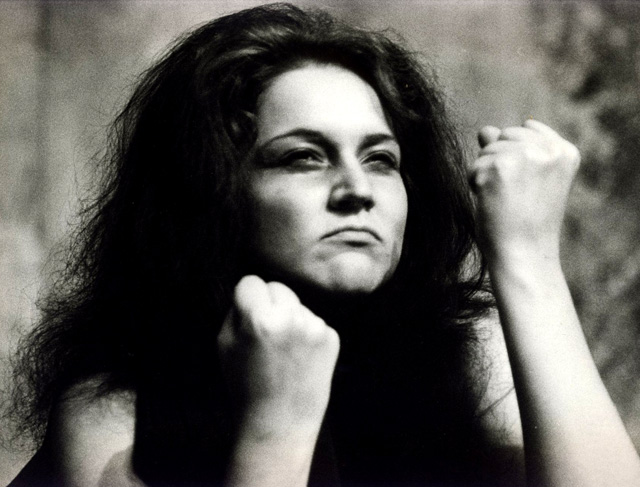 Roberts: Yes. So I went out on stage and sang it,
and they engaged me right away. I didn’t have to sing the rest
of it for them. They took me and gave me the contract. This
is funny... they said for me to go out and have lunch, and after I’d eaten
lunch, come back and the contract would be ready. I didn’t have
any money to eat lunch! I just went out and walked around the
whole city for two hours. So, I guess maybe that’s a word for young
people who are trying to audition. Of course, you always go with
a list of three to five arias, but make sure that what you’re doing
is what your teacher says is good, and what you really, really want to
sing. It has to do with what we were talking about before, and also
expression, and getting into the role. You should be doing what
you feel is you. Salome is also an outsider, and that’s a role that
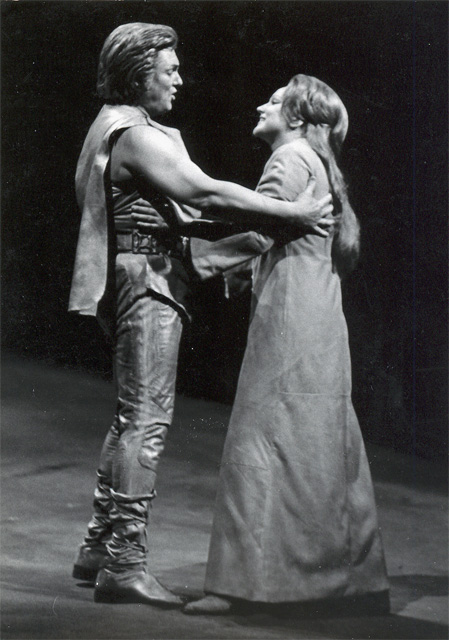
I enjoy doing. [The photo at left shows Roberts as Elektra. Photos
of Roberts in two productions of Salome are shown below.]
Roberts: Yes. So I went out on stage and sang it,
and they engaged me right away. I didn’t have to sing the rest
of it for them. They took me and gave me the contract. This
is funny... they said for me to go out and have lunch, and after I’d eaten
lunch, come back and the contract would be ready. I didn’t have
any money to eat lunch! I just went out and walked around the
whole city for two hours. So, I guess maybe that’s a word for young
people who are trying to audition. Of course, you always go with
a list of three to five arias, but make sure that what you’re doing
is what your teacher says is good, and what you really, really want to
sing. It has to do with what we were talking about before, and also
expression, and getting into the role. You should be doing what
you feel is you. Salome is also an outsider, and that’s a role that
I enjoy doing. [The photo at left shows Roberts as Elektra. Photos
of Roberts in two productions of Salome are shown below.]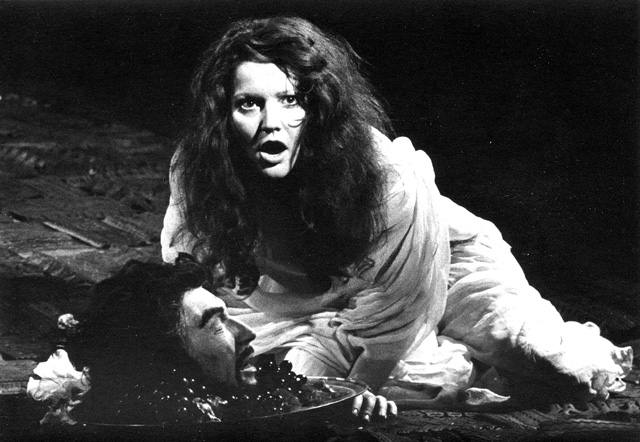 BD: Here in America, we get the feeling that European
stage directors are always going off the deep end about this or that part.
Have you been happy with some of the direction that you have got over
the years in the various roles?
BD: Here in America, we get the feeling that European
stage directors are always going off the deep end about this or that part.
Have you been happy with some of the direction that you have got over
the years in the various roles?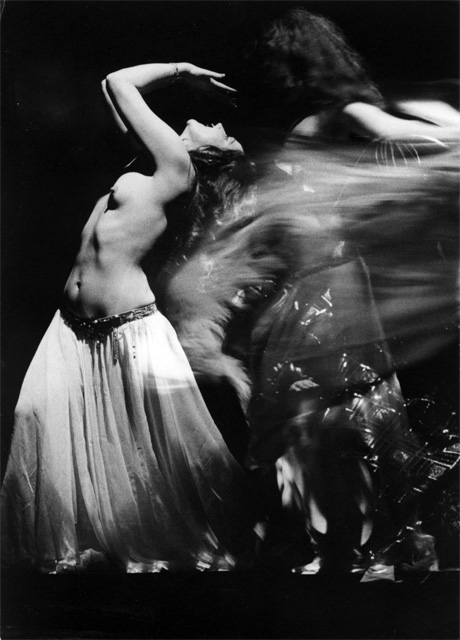 Roberts: No, unfortunately.
 BD: So then you’re known as Brenda
Dependable?
BD: So then you’re known as Brenda
Dependable? BD: Then can the producer flesh it
out for you?
BD: Then can the producer flesh it
out for you?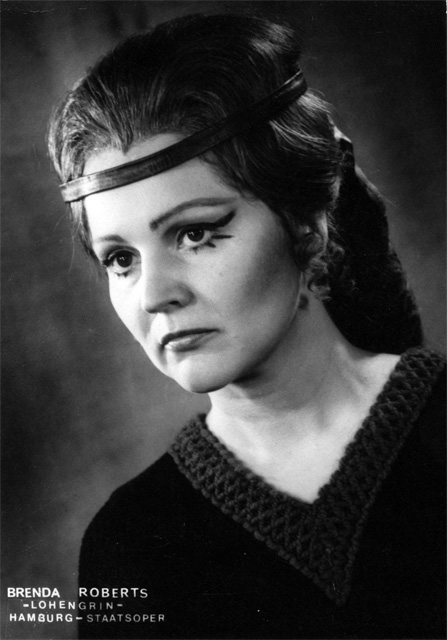 BD: Do you take into account the size of the house
— if you’re singing in a smaller house, or a great
big barn of a house?
BD: Do you take into account the size of the house
— if you’re singing in a smaller house, or a great
big barn of a house?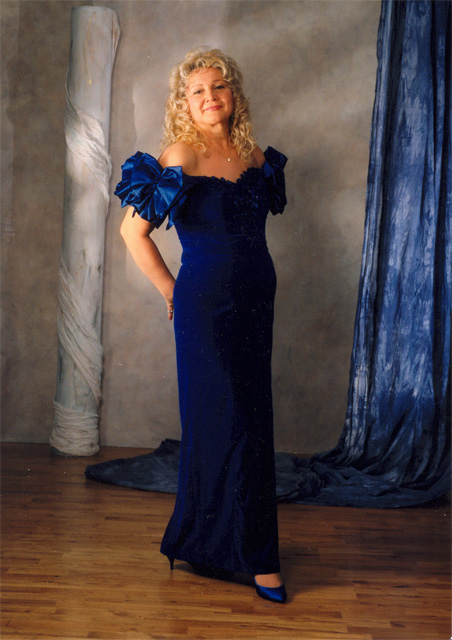 Roberts: I would hope that opera will
go on forever, and ever, and ever, but when I see bad productions
— and I’ve seen so many of them, that I say to myself
I’m not going back again — I wonder if
sometimes these stage directors who don’t really know what they’re doing,
are not doing a lot of bad, and making their reputation as bad opera.
I also find that the financial situation is getting worse and worse.
In Germany right now, they have just fired the whole Mainz opera orchestra.
They have no money. They’re bankrupt, and they’re trying to
find ways of still doing opera, but they’re cutting down productions
and then they’re cutting down on the ones they’re doing, and they’re trying
to draw the audience with musicals, or just the light opera. They
want the Ludwigshafen Orchestra to do their own concerts, and play the
opera at Mainz at the same time. I sang with the Ludwigshafen
Orchestra in their concert series with Eschenbach. There
are big protests going on right now. I don’t know if that’s going
to get better or not. Now here in the States you’re sponsored
by private people and corporate sponsors. It seems to be doing
pretty well.
Roberts: I would hope that opera will
go on forever, and ever, and ever, but when I see bad productions
— and I’ve seen so many of them, that I say to myself
I’m not going back again — I wonder if
sometimes these stage directors who don’t really know what they’re doing,
are not doing a lot of bad, and making their reputation as bad opera.
I also find that the financial situation is getting worse and worse.
In Germany right now, they have just fired the whole Mainz opera orchestra.
They have no money. They’re bankrupt, and they’re trying to
find ways of still doing opera, but they’re cutting down productions
and then they’re cutting down on the ones they’re doing, and they’re trying
to draw the audience with musicals, or just the light opera. They
want the Ludwigshafen Orchestra to do their own concerts, and play the
opera at Mainz at the same time. I sang with the Ludwigshafen
Orchestra in their concert series with Eschenbach. There
are big protests going on right now. I don’t know if that’s going
to get better or not. Now here in the States you’re sponsored
by private people and corporate sponsors. It seems to be doing
pretty well.
© 2003 Bruce Duffie
This conversation was recorded at Northwestern University in Evanston, Illinois, on August 5, 2003. Portions were broadcast on WNUR ten months later. This transcription was made in 2019, and posted on this website at the beginning of 2020. My thanks to British soprano Una Barry for her help in preparing this website presentation.
To see a full list (with links) of interviews which have been transcribed and posted on this website, click here.
Award - winning broadcaster Bruce Duffie was with WNIB, Classical 97 in Chicago from 1975 until its final moment as a classical station in February of 2001. His interviews have also appeared in various magazines and journals since 1980, and he now continues his broadcast series on WNUR-FM.
You are invited to visit his website for more information about his work, including selected transcripts of other interviews, plus a full list of his guests. He would also like to call your attention to the photos and information about his grandfather, who was a pioneer in the automotive field more than a century ago. You may also send him E-Mail with comments, questions and suggestions.