Soprano  Elizabeth  Futral

A Conversation with Bruce Duffie


futral

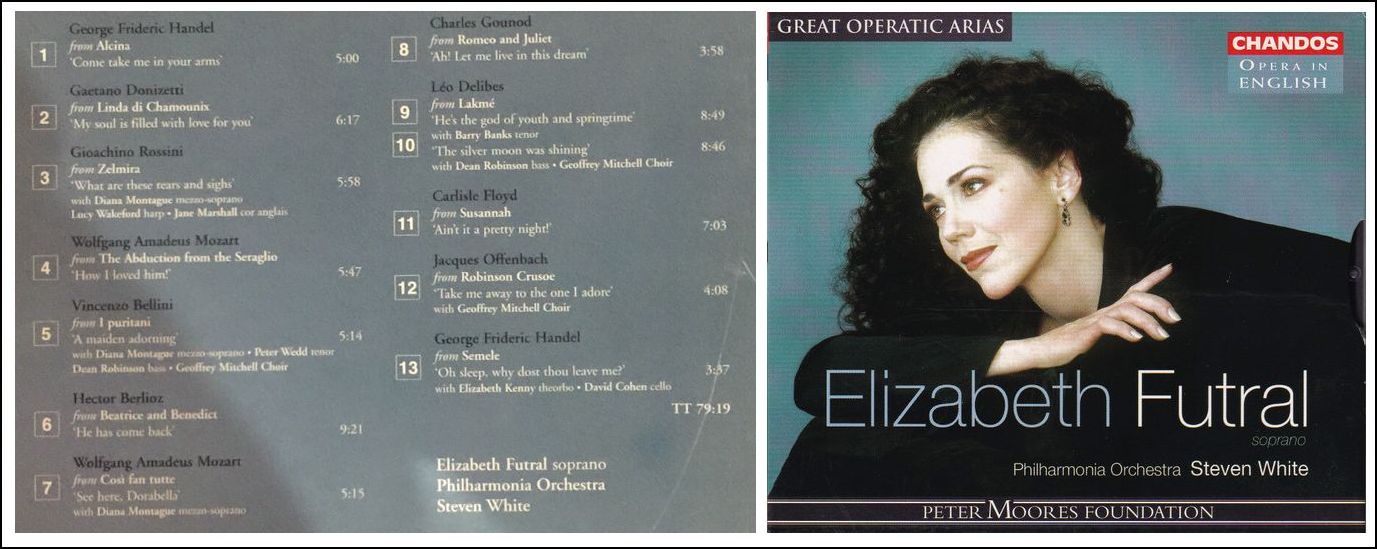
Note that all of these arias are sung in English!
See my interview with Carlisle Floyd


Susan Elizabeth Futral (born September 27, 1963) is an American coloratura soprano. Born in Johnston County, North Carolina, Futral grew up in Covington, Louisiana. She earned a bachelor's degree in music performance from Samford University. After studying with Virginia Zeani at Indiana University School of Music, she spent two years as an apprentice with the Lyric Opera of Chicago. In 1991, she was a winner of the New York Metropolitan Opera National Council.

The soprano first garnered acclaim in the title role of the 1994 New York City Opera production of Delibes' Lakmé. In 1995 she won 2nd prize in Plácido Domingo's Operalia International Opera Competition. In 1996 she was invited to the Rossini Opera Festival to sing the title role in the first production of Rossini's Matilde di Shabran since 1821. Later that year, she sang the role of Catherine in Meyerbeer's L'étoile du nord at the Wexford Festival.

In September 1998, she created the role of Stella in the world premiere of André Previn's A Streetcar Named Desire for the San Francisco Opera. In February 2001, she debuted with the Los Angeles Opera as Cleopatra in Handel's Giulio Cesare. Other roles she has sung for the Los Angeles Opera include Sophie in Strauss's Der Rosenkavalier and Violetta in Verdi's La traviata.

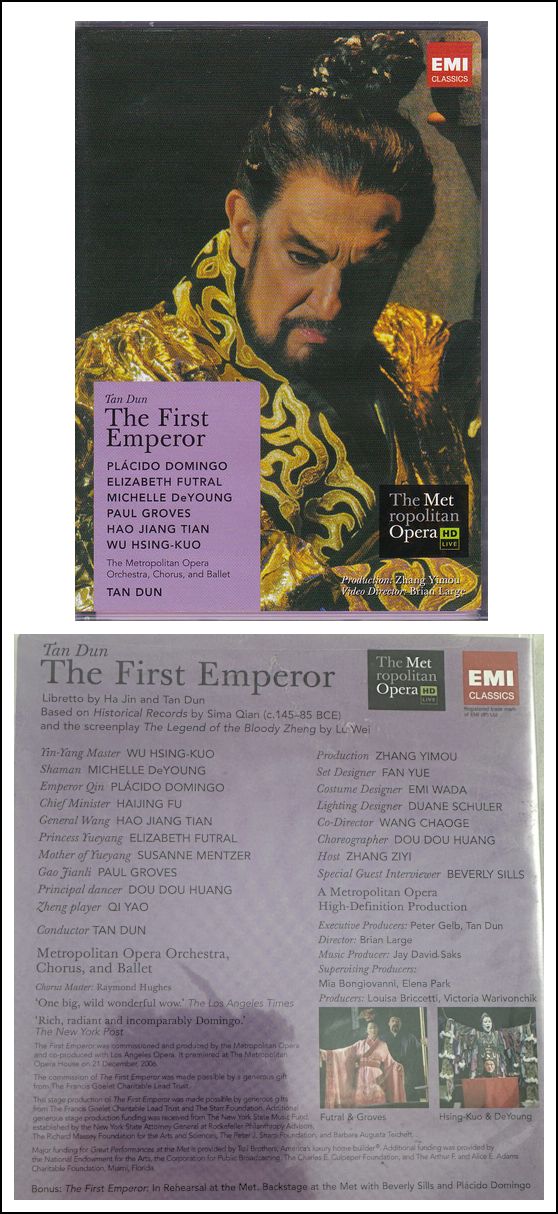
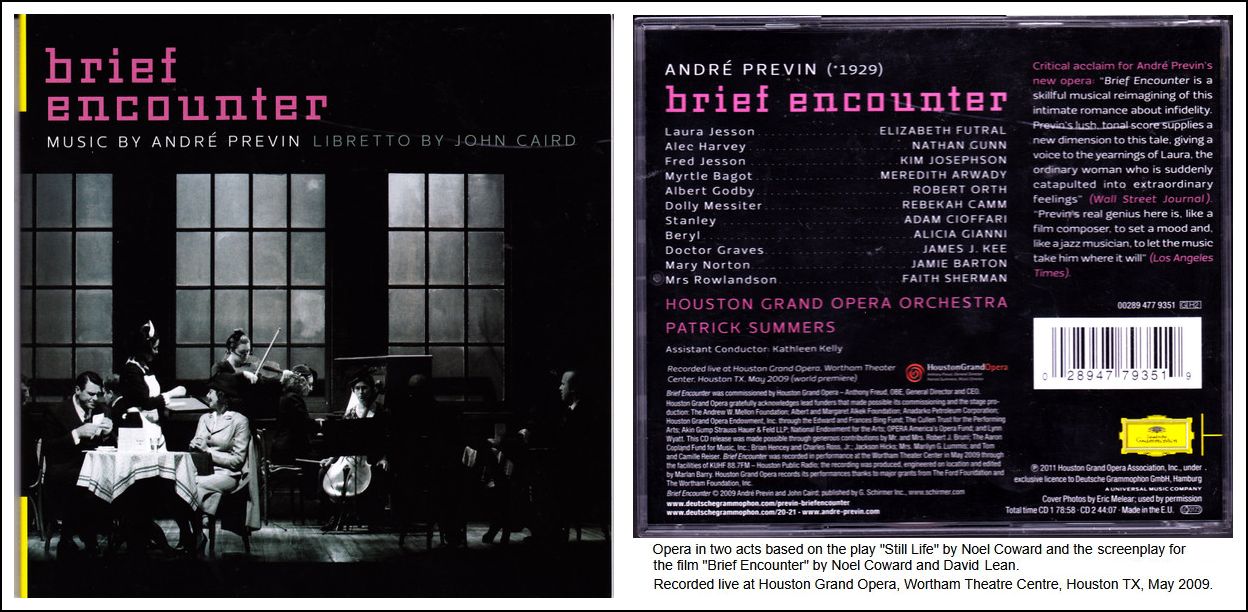
On January 8, 1999, Futral made her debut with the Metropolitan Opera in the title role of Donizetti's Lucia di Lammermoor. In 2003, she sang the role of Princess Eudoxie in the Met's first performances since 1936 of Halévy's La Juive. She returned to the Met in December 2006 to star opposite Plácido Domingo in the world premiere of Tan Dun's The First Emperor (which was televised and published on DVD [shown below-left]), later appearing in I puritani. In 2009 she portrayed Laura Jesson in the world premiere of Houston Grand Opera's production of Previn's Brief Encounter. In June 2014 she created the role of Alice B. Toklas in the world premiere of the Opera Theatre of Saint Louis' production of Twenty-Seven by Ricky Ian Gordon.

In addition to her stage roles, Futral also starred as Elvira in the 2010 film Juan, an English-language adaptation of Mozart's Don Giovanni in a contemporary setting by director Kasper Holten.

==  Names which are links in this box and below refer to my interviews elsewhere on my website.  BD  


While a member of the Lyric Opera Center (as it was then called) in the early 1990s, Elizabeth Futral sang several small roles, such as Barbarina in The Marriage of Figaro.  Then, later in that decade, Futral returned to the company for leading roles, including Susanna in that same Mozart opera, which she was rehearsing when we met in February of 1998.

Parts of the conversation were used on WNIB, and now, in 2026, I am pleased to present our entire chat . . . . .

futral
Bruce Duffie:   You’ve been with the Lyric Opera Center [the training school for young artists], and now you’re doing leading roles.  Was the preparation that you got the right way to go for a budding young career?

Elizabeth Futral:   For me it definitely was.  I know that every artist travels a different path, but for me that was absolutely the right thing, and this company been very much a nurturer for my career.  For me personally, it’s just a thrill to be singing here continuously.

BD:   Now, when you sing elsewhere and then come back, do you remember that?

Futral:   Absolutely!  I find the contrast very interesting between this company and others where I work.  I always come back here feeling very grateful for the artistic and personal standards here, as well as the relationships I have with people here, which makes this company very special.

BD:   You don’t find that quite as much with other companies, or is it just different?  [Vis-à-vis the video shown at left, see my interviews with Michelle DeYoung, Paul Groves, and Susanne Mentzer.]

Futral:   It’s different.  I don’t find it quite as much with other companies, to be honest.  They all vary in many different ways, but we often talk about the family feeling that there is at the Lyric.  I know that’s a cliché, but it really exists, and it is something very special.  It’s something that has been cultivated over the years, because there are many people who work here who have been here for years.  They come and they stay, and they know how to work with one another.  They know how to best serve the artists that come in and out, and they’re very good at what they do.  [If I may, in the fall of 1998, I did a series of programs on WNIB presenting some of the backstage people at Lyric Opera.  This included General Director William Mason, Technical Director Drew Landmesser, Production Stage Managers Caroline Moores and John Coleman, Lighting Designer Duane Schuler, Artistic Director Bruno Bartoletti, Property Manager Thomas Gilbert, Costume Designer Hugh Pruett, Wigmaster/Makeup Designer Stan Dufford, Chorus Master Donald Palumbo, Production Administrator Marina Vecci, and Artistic Services Coordinator Josie Campbell.  Not connected with that series, I also have interviewed Lyric
s first Chorus Master (1954-75) Michael Lepore, and the unique singer-turned-administrator Ardis Krainik.]

BD:   The company serves the artists.  Who do the artists serve?

Futral:   [Laughs]  Hopefully the artists serve the public here, and the company too.  We tend to have a lot of give-and-take, but the public in Chicago thinks it’s who we’re here for, and hopefully we are serving them well.  We’re certainly trying to do so!

BD:   Is the public very different from city to city and country to country?

Futral:   Absolutely, yes.  I can’t really say exactly how they differ until I go to another one, and then I feel the difference.  During an opera, there may be less audible participation from an audience, and then at the end of the opera, you may receive an ovation like you just couldn’t imagine, because you didn’t think they were with you during the show.  European audiences tend to be more reserved during a show.  They tend to be very attentive and quiet, and they show their appreciation at the end.  American audiences tend to interact more during a show.

BD:   You’re conscious of the audience when you’re on stage?

Futral:   Sure, absolutely, especially in this The Marriage of Figaro that we’re doing now.  It’s a comic opera, and you hope that they’re going to laugh.  If they’re not, that lack of interaction doesn’t feel so good.  We’ve had great response here, and the audience is very participatory.  We really appreciate that.

BD:   A lot of the roles you sing are not comic roles.  You wind up either being victimized or dead at the end.  So is it a good break for you to do a comic role?

Futral:   Absolutely, it’s really good for my mental health.  I laugh about it, but it’s nice to have spent two months here having a great time, and not poring over death scenes and tragedy.  It’s a bit of a relief.

BD:   How do you decide which roles you’re going to accept to learn and sing, and which roles you’re going to put aside?

Futral:   So far that has been fairly obvious.  My voice has pretty much shown me specifically what I should and shouldn’t be singing.  Probably right now the most dramatic thing that I do is Lucia.  It feels very comfortable to me.

BD:   [With a wink]  Do you like going mad?

Futral:   I do actually!  [Both laugh]  It’s a very interesting feeling, but I adore her character, and the journey that she takes through that opera.  I love playing Lucia, however, I haven’t quite felt that I was ready for Violetta in La Traviata, which is a step more dramatic.  I’ve had offers to do that, but I’ve said no because I just haven’t felt that my voice is quite ready to take that on.

BD:   Is it getting there?  [She would sing it at Lyric a decade later.]

Futral:   I think it’s getting there.  It definitely seems that in a few years it should be something I would be able to sing, but I just don’t want to push it until I’m ready.

BD:   Is it easy to look the company in the eye and say no?

Futral:   Now it is, yes.  It is when you’re looking at your own vocal health, and that’s the only thing you really have control over as a singer.  How you’re singing is what you can control, and that’s what you have to be looking after.  In the end it’s you who is standing there with blood on the floor if it’s the wrong thing.  You’ve got to be the one who says no to those things.

BD:   Do you make sure that you limit your engagements to just a certain number per year?

Futral:   I haven’t actually done that.  What I’ve tried to do is build in a little bit of free time between jobs, which seems to be working for me now.  The first few years I was out of the Opera Center and into the real world, I pretty much didn’t know how to say no to anything.  I was working back to back, sometimes with an overlap.  So I’d be flying to rehearse something while I was still performing something else, and that was very stressful for me.  I realized pretty quickly that I wasn’t going to survive too long if I continued that.  Now I try really hard not to overlap, and to schedule time in between jobs, and to say no to something just to fill the calendar.  That’s not as important to me as it was.

BD:   You’re looking for the long career?

Futral:   Yes.  I’d actually like to be singing into my fifties.  It’s a strange thing to think of quitting before that, and then what does one do?  There’s always teaching, I guess...

BD:   I’m not sure anyone thinks of quitting, but some people are asked to stop!

Futral:   [Laughs]  Yes, I wouldn’t really like that to happen.


futral

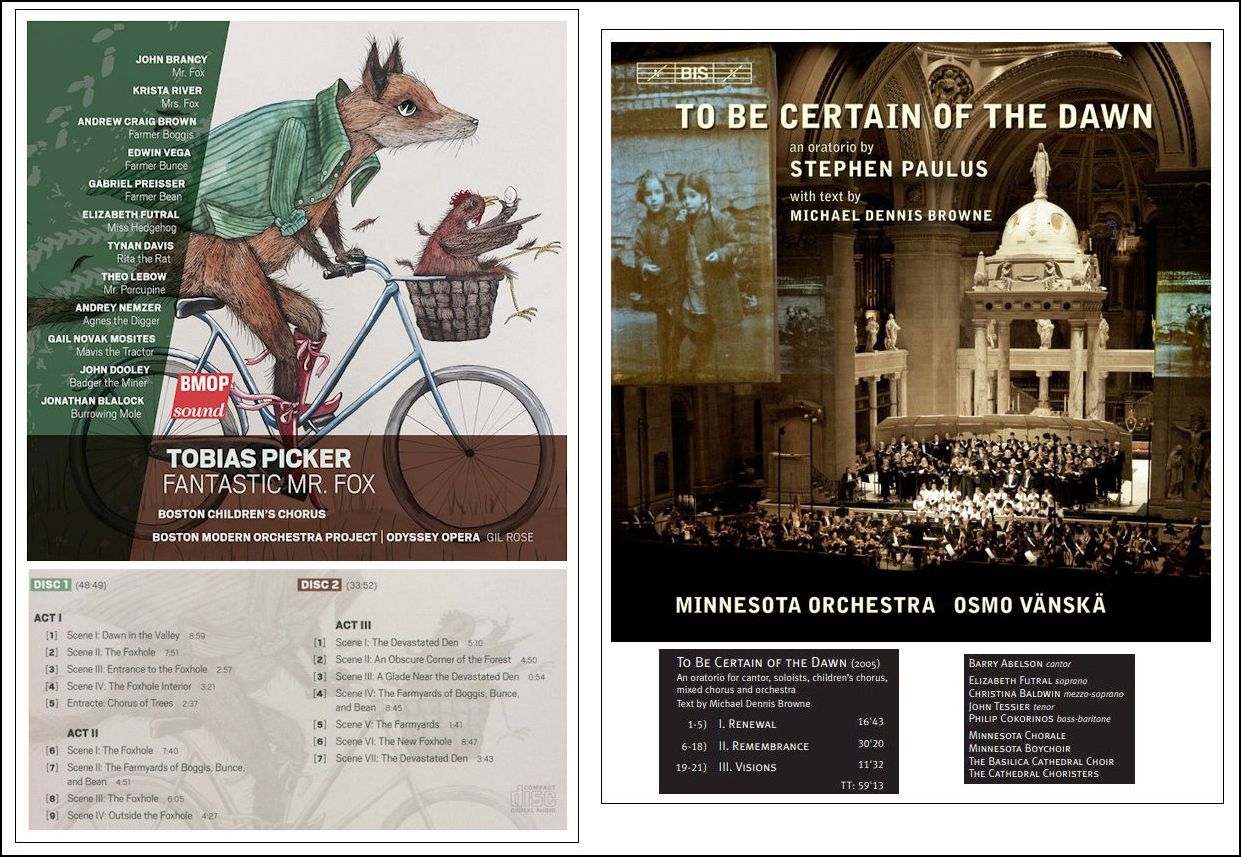
See my interviews with Tobias Picker, and Stephen Paulus


BD
:   You sing in small houses and big houses.  Do you change your technique at all because of the size?

Futral:   I don’t think so.  I hope not.  I’m trying really hard to work on my technique from my point of view.  This takes me from my natural inclination to the point of whatever limits I have.  My body and my own instrument says that for me.  What I’m trying to do is continue to learn how to sing well, and improve my technique so as to maximize my own potential.  For me, that’s got to work in any house in which I sing, and if it doesn’t then something’s wrong with the technique.

BD:   Are there any houses that you’ve been uncomfortable with, so you won’t go back there?

Futral:   Ah, interesting question!  I don’t think so.  I did sing once in Dublin, Ireland, and I’m not sure I’d go back there.  The house itself was difficult.  It was small, but it was meant to be for straight theater, so it was not acoustically endearing at all.  I don’t think it was so bad for the listeners, but for us on stage it was absolutely dead as a doornail, and that was hard.  It’s very difficult when you can’t have any perception of where your voice is going, or how it’s going.

BD:   You really have to trust yourself?

Futral:   Yes, but it’s very strange feeling.  It’s really like you’re singing in a vacuum.  It’s very odd.

*     *     *     *     *
futral
BD:   Is there a secret to singing Mozart?

Futral:   I don’t know!  [Both laugh]  Mozart wrote so wonderfully for the voice.  All of us who sing Mozart are thrilled to be doing so, and as long as we’re staying true to what he’s written, it leads you naturally to where he wants it to go.  The more that you can get out of the way of what he’s done, the better because what he wrote was so right.  There’s a lot of playing around with the recitatives.  We do that a fair amount, and they change from night to night.  That’s exciting, but that’s built in.  That’s something which is meant to happen.

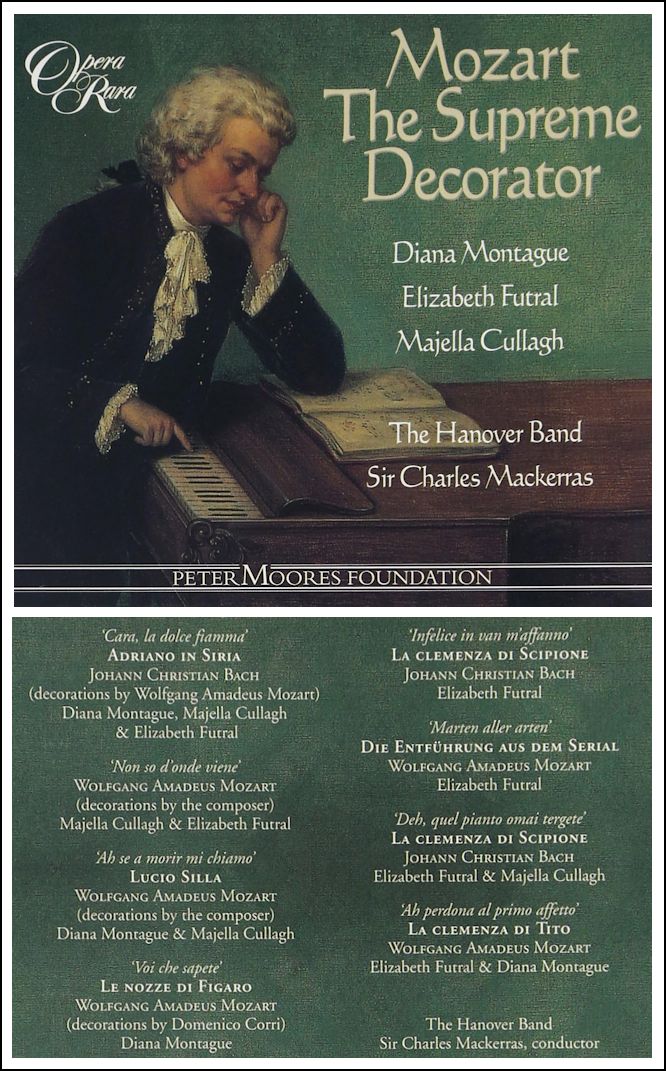
BD:   So you have to pay attention!  [Vis-à-vis the recording shown at left, see my interview with Sir Charles Mackerras.]

Futral:   Yes, absolutely!  You have to be on your toes, but it’s exciting and fun.  We have such a good time.

BD:   You have the Mozart technique.  Does that make it a little easier when you go into the bel canto of Bellini, Donizetti, and Rossini?

Futral:   Mozart is definitely a very healthy place to be vocally.  Mozart requires really clean singing, and the bel canto allows a little more freedom, and a little more choice on the part of the singer and conductor and orchestra.  Lots of rubato and ornamentation aren’t so much allowed in Mozart.  So the bel canto takes you to a different place, and may allow you to be a tad more inventive.  Maybe it also stretches one more as far as technique goes, because the ranges tend to be wider, at least for the roles that I do.  Bel canto really taxes the full extent of my range.

BD:   I hope it doesn’t overtax you.

Futral:   No, I don’t think so, but it requires me to use everything that I have.  Susanna, for instance has a few high Cs in the finale of Act Two, but Donizetti and Bellini have you hanging up in the Ds and E-Flats and Es, which never get touched in a Mozart opera.

BD:   Do you like singing around high C, or is that something you approach with trepidation?

Futral:   I like it.  My highest note is an F above high C, and I haven’t sung that in public.  But it’s not my favorite note!  [Both laugh]  But I do like the kind of drama that one can achieve in the really high stuff over a high C.  It’s interesting.

BD:   When you walk out on stage, are you portraying a character, or do you become that character?

Futral:   [Thinks a moment]  Every character that I do includes part of me, and personally I don’t assume a new character as much as I merge with another character.  That’s actually easier for me to portray in a natural way.  It’s more honest for me.  I wouldn’t say that I, Elizabeth Futral, am Susanna or Lucia, but there is a part of me which is that character.  So I start there, and then I build the other elements of that character on top of what I already am.  That gives me somewhere to start, and it feels more natural.

BD:   Is there any character that’s perhaps perilously close to the real Elizabeth Futral?

Futral:   I think the closest character perhaps is Alexandra in Regina.  Xan was her nickname.  I did this in New York, and she was very similar to me, but not in a bad way.  It wasn’t something that was just horribly revealing to the public because she was the nicest character.

BD:   You’ve been in that opera by Marc Blitzstein [first done in 1949, conducted by Maurice Abravanel], and now you’re about to create a world premiere of an opera by André Previn.  [This role would be Stella in A Streetcar Named Desire.  Futral would later create Laura Jesson in his Brief Encounter.]  Do you like doing new music?

Futral:   I do.  I have enjoyed very much all the involvement I’ve had with new music over the years.  It’s included quite a bit of twentieth-century music.

BD:   Are you very careful about selecting which new pieces you’ll do?

Futral:   More often than not, these days I’m offered standard repertoire, which is great, and I’m happy to be finally repeating some roles.  For the first three years of one’s operatic career, you’re madly learning new roles.  It’s tough to keep your standard high while you’ve got your nose buried in the next score you’re going to do.  So, it’s a relief to be coming back to some of these things, but yes, there are several things one takes into consideration when deciding to do a new role.  An André Previn project was very alluring for several reasons.  I grew up in Louisiana near New Orleans, so that was an interesting connection to A Streetcar Named Desire.  I was previously scheduled to work with André a couple of times, and after meeting him and hearing some of his music, I found it even more alluring.  Working with Renée Fleming again was obviously tantalizing.  She’s such a great artist, and any opportunity to work with her is appealing to me.

BD:   Are you working with Previn to make adjustments in the score?

Futral:   I’m sure we will work with him on its completion.  I only have the first act so far, and I’ve already received a revision of that after having really worked on it very hard!  [Both laugh]  I’m really excited about the prospect making whatever adjustments we need as we go along.  That’s the thrill of working with the composer who is also conducting.  He will be there leading us from the pit.  The opportunities are endless, and knowing him, he’s going to want to make it work as well as it can.  Whatever we need he’s going to be able to give to us.  I’m really excited about it.

BD:   Is this the first part that has been written for you?

Futral:   Yes, as a matter of fact.  I’ve had a song or two written for me by a composer friend in New York, but never a complete role.

*     *     *     *     *

BD:   How do you divide your career between opera and concerts?
futral
Futral:   Luckily it has worked out really well for me.  I do quite a bit of concert work right along with the opera.  I’ve always enjoyed doing orchestral songs and oratorio work.  Ever since I started singing, there have been jobs with major orchestras and great conductors.  I have been lucky to stay on that track, as well as the opera track.  I know that’s not always true.  Some opera singers don’t do much concert work, and some specialize in concert work.  I really enjoy doing both.  I find a different kind of connection with the conductor and orchestra when doing a concert piece.  You’re right there actually making the music with them, and that’s a different kind of thrill than opera.  So I’m always pleased to be able to keep my concert work going.

BD:   You’re also involved in some recordings.  Do you sing the same for the microphone as you do for the live audience?

Futral:   I do.  I haven’t done so much recording that I have acquired a recording technique, and no one has ever told me I needed to develop that.  What recording I have done, I sing exactly the same way as I do in front of an audience.  But it’s strange because you don’t have an audience!  That’s the biggest downside for me, because I love communicating with the audience so much that it seems odd for them not be there.

BD:   It’s more memory?

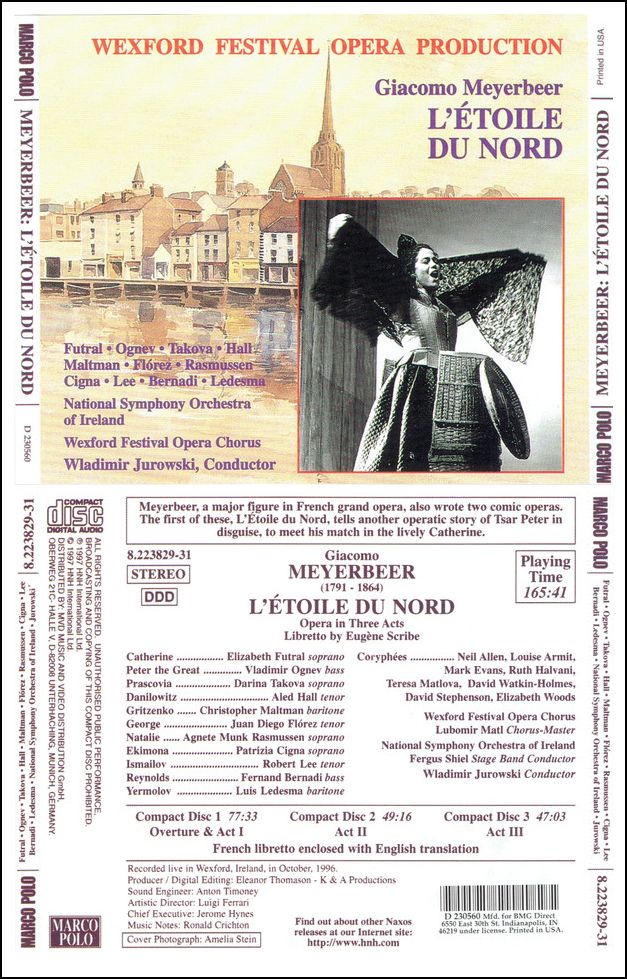
Futral:   Yes, and honestly for that very reason I don’t love recording so much.  I probably shouldn’t admit that, but maybe I haven’t done enough to really love it, but it’s an odd setup.  I have several things out.  One I actually did was a live recording of an opera, so that was easy.  We did it, and it happened to be recorded [CD shown at left].  It’s a little-known Meyerbeer opera called L’Étoile du Nord [The Star of the North].  Marco Polo was the company, and it’s in stores now.

BD:   Might you also do Dinorah, with its famous Shadow Song?

Futral:   I’d love to do that one as well.  I don’t know if there’s anything really famous from it, but she goes mad in the end.  Imagine that!  [Both laugh]  Peter the Great’s Catherine is in this story.  He becomes Peter the Great in this opera.  She goes mad and has this wonderful mad scene at the end with not one but two flutes.  It’s a really interesting piece, and one that I’d love to do in concert some time.  It’s just one of those pieces that you’d like audiences to hear, and they won’t because this opera is rarely done.  So, there’s that recording.  I’m on a recording called Kurt Weill On BroadwayThomas Hampson is headlining the recording, and I have three duets with him.  There’s also the Beethoven Cantata recording on the Koch label.  Deborah Voigt is on that with me in a little known work.  It is live from Carnegie Hall, with the Orchestra of St. Luke’s.  I did a recording of Ravel’s L’Enfant et les Sortilege...

BD:   Which of the several characters are you?

Futral:   I do the three high soprano parts
the Princess, the Fire, and the Rossignol [the Nightingale].  That’s with André Previn and the London Symphony Orchestra, but I don’t think it’s out yet.

BD:   Coming back to standard repertoire, many times you have to portray women who go mad.  Today, women today are much stronger than they were.  Is it an anomaly for you to play these victims on stage?

Futral:   It’s interesting.  The way we understand ourselves as women today, the whole victim idea changes how you perceive what is actually happening when one of these women goes mad.  One of the ways I deal with that is instead of feeling victimized and going mad because of that, with Lucia especially, I think that she is empowering herself by taking herself to this other world.  She can’t allow herself to stay in the reality of this horrible brother, who’s forced her into this loveless marriage, and is not allowed to be with the one she loves.  It’s all fallen apart for her, so she has made it a choice to go into a crazed dementia.

BD:   That sounds like a defense mechanism.

Futral:   Sort of, and in a way she’s stronger because she’s actually made this choice to relieve herself to get out of the situation.  It’s an escape mechanism I guess, but that works for me sometimes.

BD:   How much should you analyze these characters?

Futral:   We do a good bit of analyzing, and then when I get to another production, I find that all goes by the wayside.  Or maybe it goes into my subconscious, and I deal with what’s happening at that time.  So much of it is dictated to me by the music that I allow it to really guide me, especially with Lucia.  Donizetti really was a master, and I trust what he’s done.  Then, of course, each production is with different personnel, and you respond to whoever is playing Edgardo in a certain way, which is different from the way you responded to the previous Edgardo.  So, there are lots of things that vary my own interpretation and my own analyzation.

BD:   [With a gentle nudge]  We all know how you react to Arturo!  [Both laugh]

Futral:   Oh, yes!  That
s pretty obvious!  [More laughter]

BD:   Poor fellow!  Maybe fifty years from now, you’ll be looking back and remember a production when you really should have murdered the Edgardo and kept the Arturo...

Futral:   ...because I really liked him better!

BD:   Are these operas that you sing, for everyone?

Futral:   You mean audience-wise?
futral
BD:   Yes.

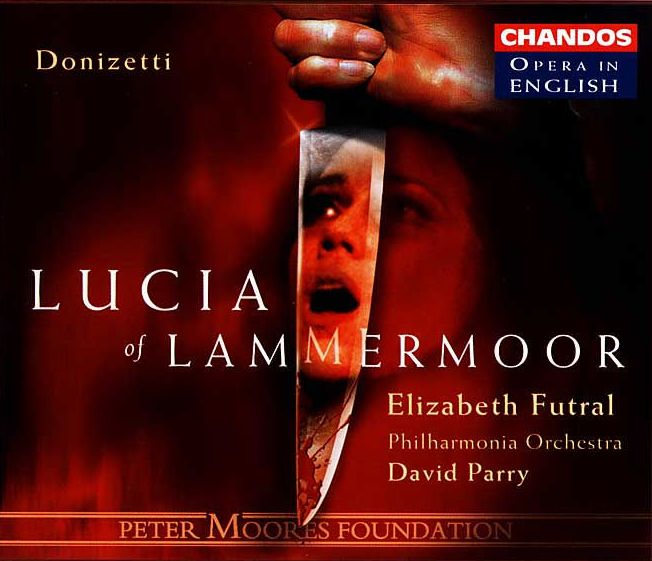
Futral:   So many of the opera stories are really timeless.  I can’t really think of who they wouldn’t be for.  There’s something in opera for everyone, but the youngest children perhaps shouldn’t go to Lucia di Lammermoor.  [Her recording (in English) is shown at right, with a dagger on the cover!]

BD:   But also in terms of musical taste.  You’re singing music that a very small group of people seem to enjoy.  Should we be trying to get more and bigger audiences in some way?

Futral:   We’re always hoping for that, and always trying to educate and bring in those who don’t know opera.  The vast majority of people just don’t know it, and they may say they don’t like it, but they probably haven’t ever heard it.  So our biggest task is to educate, and it’s got to be started at a young age.  That’s when your tastes are formulated... although I have people come to me often who are twenty, thirty, forty who say this was their first opera and it was great!  They loved it, and didn’t know what they’d been missing.  So it’s never too late, but our efforts at educating the kids these days is really important, and it’s tough.  Just look at all the things we are competing with.  They’re constantly being bombarded with things they’re told are popular, and is what they’re supposed to like.  There’s an awful lot of acceptance without discretion going on these days, and I hate that.  Give people a real choice!  If you walk into a clothing store, they’re playing horrible hip-hop music that you can’t even hear the melody.  All you hear is the beat.  Does that really make you want to buy clothes?  I constantly walk out of stores and restaurants everywhere.  I’m just overwhelmed by the noise in the background that they’re calling music.  A friend of mine always says that people do not walk out of places if they’re playing Mozart.  [Vis-à-vis this particular notion, see this news item from 2023.]

BD:   We’re sort of dancing around it, so let me ask the big question.  What is the purpose of music?

Futral:   Ooooo...  [Laughs]  That’s really hard!  In my opinion, the purpose of music for me is to enrich my life, to make my life better, to make me feel better, to think better, and perhaps make me feel more than I would feel without music.  That may be happiness, or it may be sadness, but music takes me to a depth that I don’t get to in any other way, and I don’t think we realize the importance of that.  We see that in this country because we’re cutting music education so severely.  It’s very sad because we don’t realize how much richer our lives are because of music.  I wish we would all sit back and take that into account.  In their many kind of artistic endeavors, music and art really makes us different from the animals.  [With a wink]  But even my dog likes good music!  [Both laugh]

BD:   Are you at the point in your career that you want to be right now?

Futral:   Yes.  I feel like my career has moved along at a steady but manageable rate.  I’ve been challenged, yet been able to manage the things that have come to me, the places I have worked, and the people with whom I’ve worked.  I’m really happy where I am.

BD:   Good!  You’ll be back at the Lyric for the next season or two?

Futral:   Yes.  I look forward to it.  This is my home now.  I have kept my residence here since I was in the Opera Center.  Last year, sometime in the spring, I was in the middle of trying to decide where I should buy my first place.  Should I go to New York?  Should I move closer to my parents?  Here or there, I just kept coming back to Chicago, thinking I don’t want to leave here.  I love the city.  It feels like home to me now, and so here I am!

BD:   We are getting several singers who are making their homes here.

Futral:   People are realizing what a great place it is.

BD:   Thank you for the conversation.

Futral:   Thank you.


futral

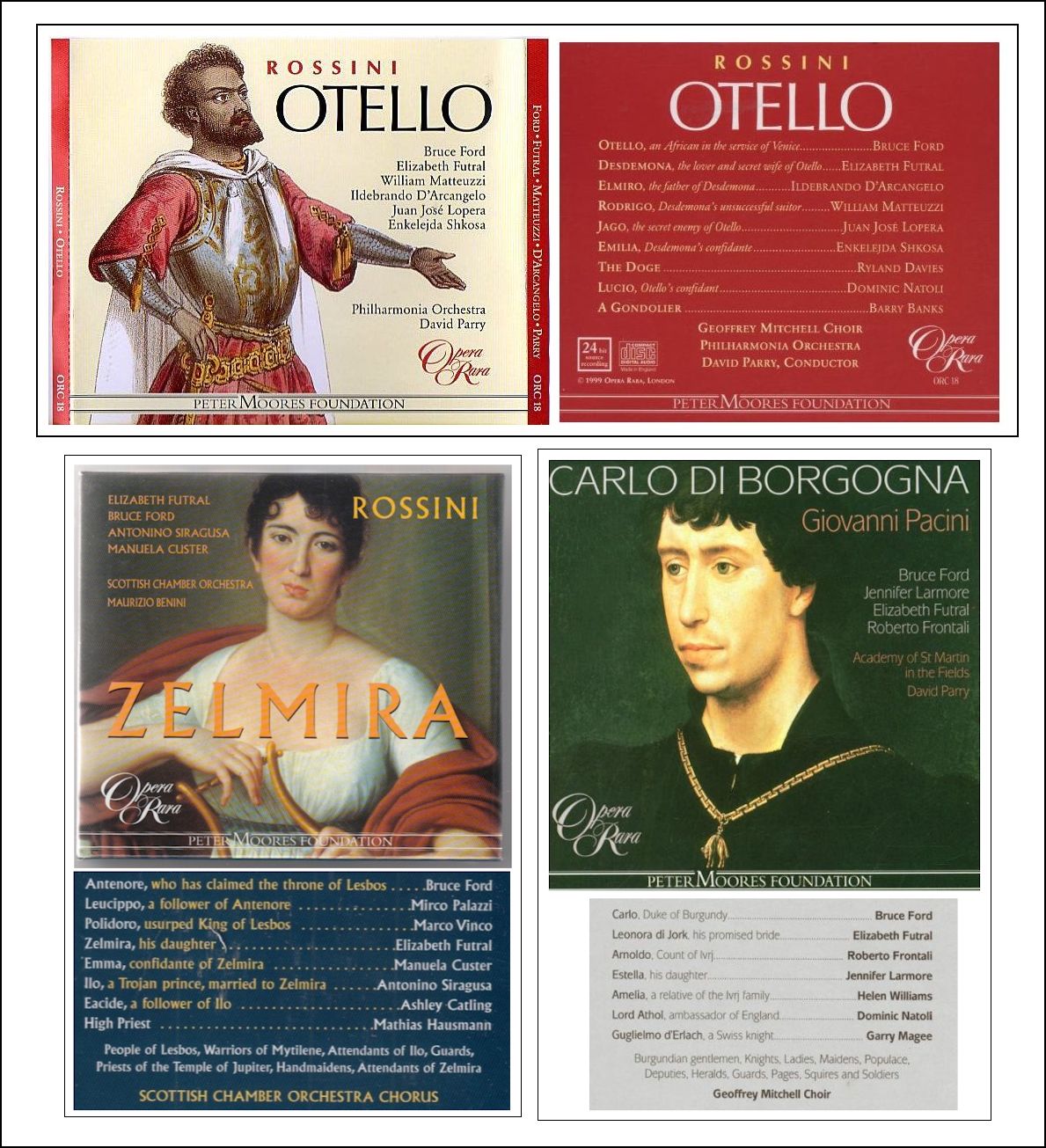
See my interviews with Bruce Ford, Ryland Davies, and Jennifer Larmore


futral

See my interview with Robert Orth


© 1998 Bruce Duffie

This conversation was recorded in Chicago on February 26, 1998.  Portions were broadcast on WNIB later that year, and again in 1999 and 2000.  This transcription was made in 2026, and posted on this website at that time.  My thanks to British soprano Una Barry for her help in preparing this website presentation.

To see a full list (with links) of interviews which have been transcribed and posted on this website, click here.  To read my thoughts on editing these interviews for print, as well as a few other interesting observations, click here.

*     *     *     *     *

Award - winning broadcaster Bruce Duffie was with WNIB, Classical 97 in Chicago from 1975 until its final moment as a classical station in February of 2001.  His interviews have also appeared in various magazines and journals since 1980, and he continued his broadcast series on WNUR-FM, as well as on Contemporary Classical Internet Radio.

You are invited to visit his website for more information about his work, including selected transcripts of other interviews, plus a full list of his guests.  He would also like to call your attention to the photos and information about his grandfather, who was a pioneer in the automotive field more than a century ago.  You may also send him E-Mail with comments, questions and suggestions.