A Conversation with Bruce Duffie
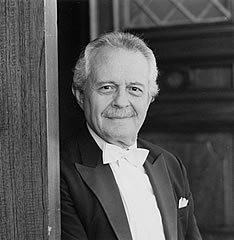
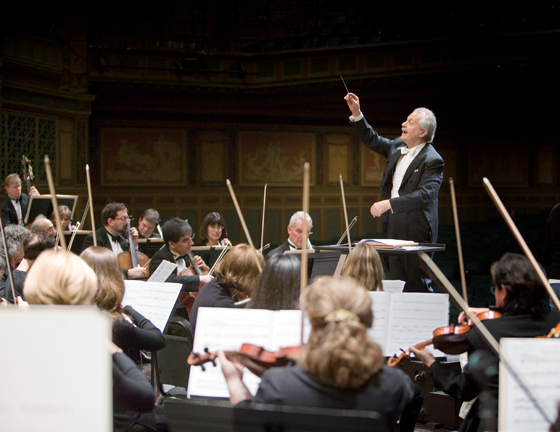
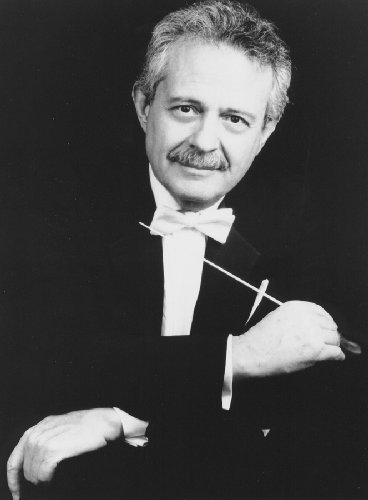
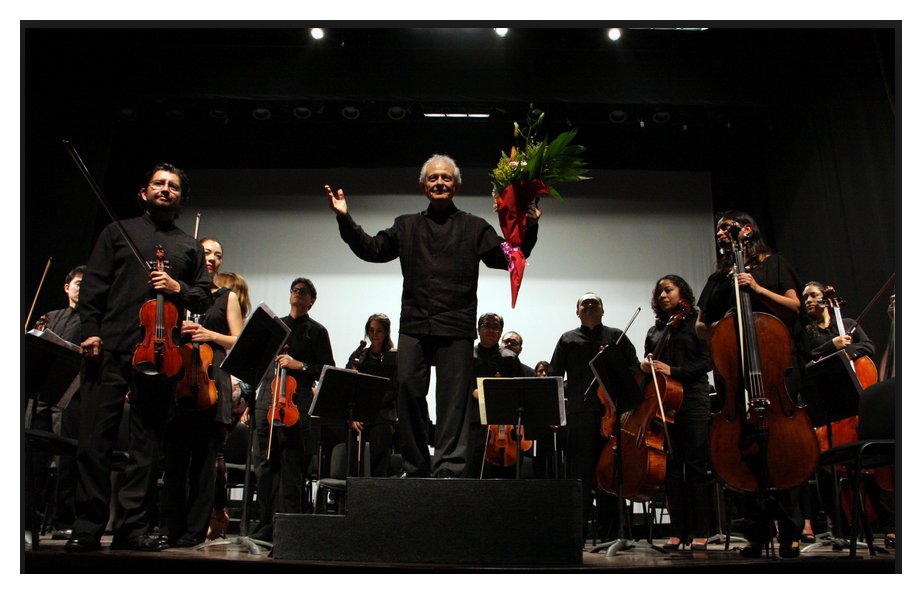
| The American conductor Jorge
Mester was born in Mexico City in 1935 to parents who had emigrated from Hungary.
He studied conducting with Jean Morel at The Juilliard School in New York,
also working with Leonard Bernstein at the Berkshire Music Center, and with
Albert Wolff. In 1955 he made his debut conducting the National Symphony
Orchestra of Mexico. His opera debut was with Salome in 1960 at the Spoleto Festival
in Italy. Since then he has conducted many of the world's leading ensembles,
including the Boston Symphony, the Detroit Symphony, and the Royal Philharmonic
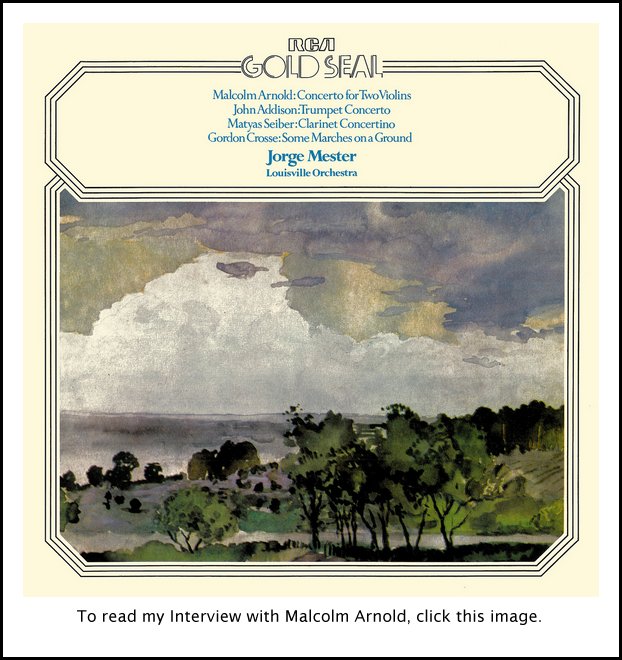
orchestras. In 1967 he became music director of the Louisville Orchestra, noted for its advocacy of new and neglected music. With this orchestra Mester made more than seventy first recordings of works by such composers as Bruch, Cowell, Crumb, Dallapiccola, Ginastera, Granados, Koechlin, Penderecki, Petrassi, Schuller, and Shostakovich. From 1969 to 1990 he was music director of the Aspen Festival and later became its conductor laureate. Mester was appointed music director of the Pasadena Symphony Orchestra in 1983, and in 1998 he added to that post the music directorship of the Mexico City Philharmonic Orchestra. A noted teacher, he was on the faculty of The Juilliard School for most of the period between 1958 and 1988. -- Names which are links refere to my interviews
elsewhere on this website. BD
|
 BD: Are you able to study on the plane and in hotels?
 JM:
One of the secrets of conducting is the pacing, from the first rehearsal through
the performance. I’ve always been pretty comfortable with that.
I don’t think I’ve ever peaked before a performance. What surprises
orchestras is that one can go from the kind of intellectual rigor that you
have to apply to rehearsals, and suddenly make the leap at a performance to
something where they almost are in charge. There are orchestras that
can’t handle that.
JM:
One of the secrets of conducting is the pacing, from the first rehearsal through
the performance. I’ve always been pretty comfortable with that.
I don’t think I’ve ever peaked before a performance. What surprises
orchestras is that one can go from the kind of intellectual rigor that you
have to apply to rehearsals, and suddenly make the leap at a performance to
something where they almost are in charge. There are orchestras that
can’t handle that. BD: So you had to change the concerto four
times?
BD: So you had to change the concerto four
times?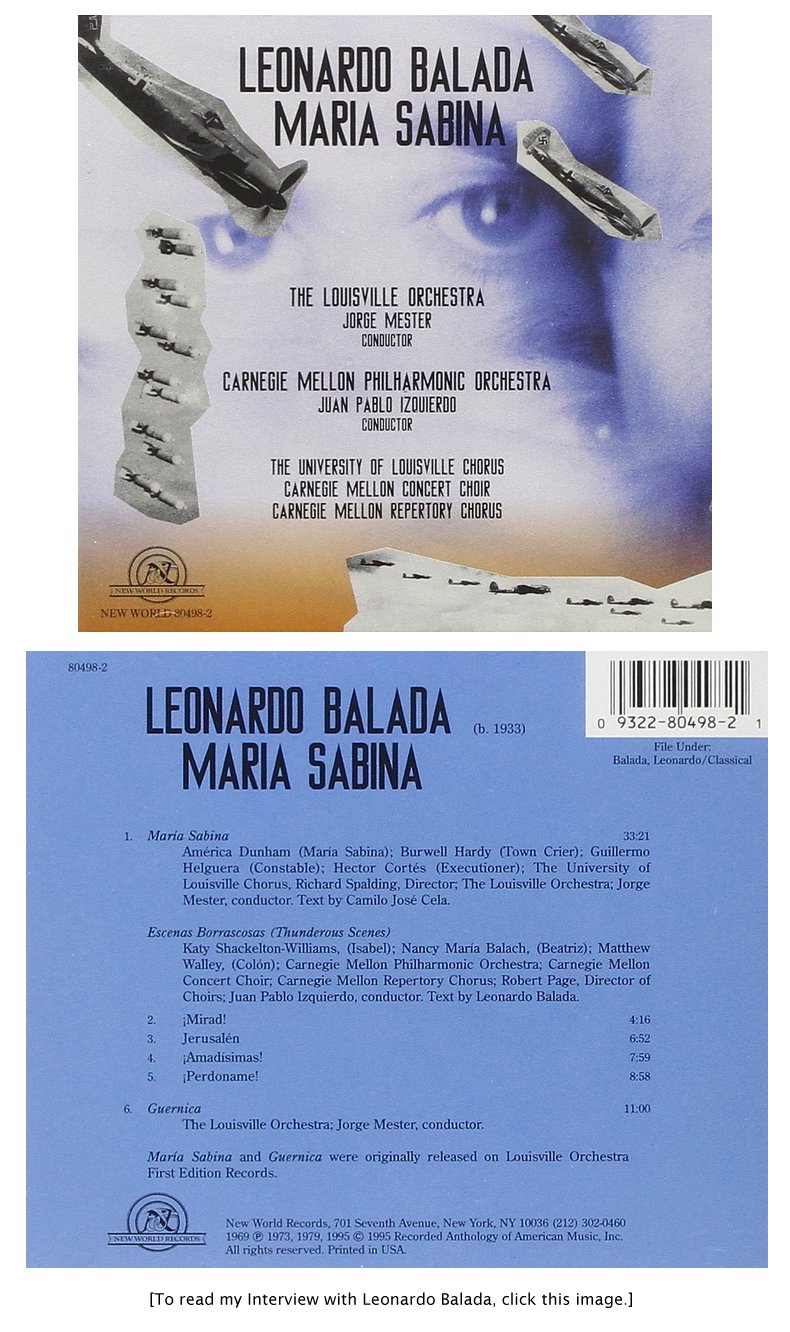
 BD: It seems, then, you’re much more of a populist
about all of this.
BD: It seems, then, you’re much more of a populist
about all of this. JM:
That particular piece just doesn’t speak to me, and the fact that it’s
now a bestseller and has sold a million copies doesn’t mean anything to me.
A lot of stuff that sells a million copies doesn’t mean anything to me, and
there’s a lot of stuff that doesn’t sell any copies that means a lot to
me! I don’t need to be politically correct.
JM:
That particular piece just doesn’t speak to me, and the fact that it’s
now a bestseller and has sold a million copies doesn’t mean anything to me.
A lot of stuff that sells a million copies doesn’t mean anything to me, and
there’s a lot of stuff that doesn’t sell any copies that means a lot to
me! I don’t need to be politically correct. BD: So am I to assume then that you think the technical
quality of orchestras has improved over the last forty years?
BD: So am I to assume then that you think the technical
quality of orchestras has improved over the last forty years? JM: It’s mainly joys. When you work with
American singers, there’s nothing they cannot do; also the British singers
and Australian singers. There are obviously a lot of European singers
that are wonderful, but you cannot actually put on many opera performances
in Europe without having Americans in there. They’re trained well, they
have beautiful voice production, and they are flexible, malleable and open
to good direction by the stage director as well as by the conductor.
What’s painful about opera is when you have singers of the old school who
have learned their music really badly, and then can only sing it the way they
learned it. A few do not even read music. They’re still there!
I’ve just done a production of Cavalleria
and Pagliacci with people who had
learned it wrong. Everything was wrong stylistically, and technically
with the wrong notes. They can never change it, yet they’ve had success
because they get up there and they can do it. But you get into rehearsal
and it’s not a productive situation; you cannot move and transcend and go
into some kind of new point of view. So that was not a happy experience.
JM: It’s mainly joys. When you work with
American singers, there’s nothing they cannot do; also the British singers
and Australian singers. There are obviously a lot of European singers
that are wonderful, but you cannot actually put on many opera performances
in Europe without having Americans in there. They’re trained well, they
have beautiful voice production, and they are flexible, malleable and open
to good direction by the stage director as well as by the conductor.
What’s painful about opera is when you have singers of the old school who
have learned their music really badly, and then can only sing it the way they
learned it. A few do not even read music. They’re still there!
I’ve just done a production of Cavalleria
and Pagliacci with people who had
learned it wrong. Everything was wrong stylistically, and technically
with the wrong notes. They can never change it, yet they’ve had success
because they get up there and they can do it. But you get into rehearsal
and it’s not a productive situation; you cannot move and transcend and go
into some kind of new point of view. So that was not a happy experience.
 JM: Yes. If it’s a brand new score, you never
know until you do it, and of course I’ve had to choose. When I was in
Louisville, I didn’t have the wonderful, comfortable experience of choosing
from among works that were commissioned, because the whole program was based
originally on choosing composers and playing the music that they wrote specifically
for that occasion. By the time I came along, the commissioning project
was no longer in existence and I had to choose from scores that were sitting
around. That’s a tough thing to do because you’re looking through these
mountains of scores and trying to decide which ones — and I’m putting this
in quotes — are “worthy” of being recorded.
JM: Yes. If it’s a brand new score, you never
know until you do it, and of course I’ve had to choose. When I was in
Louisville, I didn’t have the wonderful, comfortable experience of choosing
from among works that were commissioned, because the whole program was based
originally on choosing composers and playing the music that they wrote specifically
for that occasion. By the time I came along, the commissioning project
was no longer in existence and I had to choose from scores that were sitting
around. That’s a tough thing to do because you’re looking through these
mountains of scores and trying to decide which ones — and I’m putting this
in quotes — are “worthy” of being recorded. 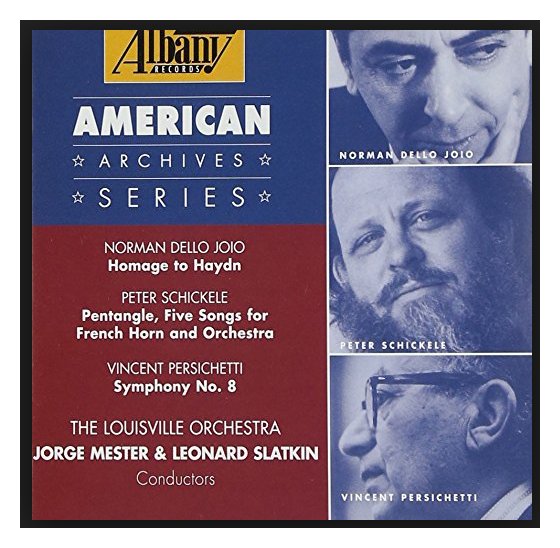
To read my Interview with Norman Dello Joio, click HERE. To read my Interview with Peter Schickele, click HERE. To read my Interview with Vincent Persichetti, click HERE. To read my Interviews with Leonard Slatkin, click HERE. 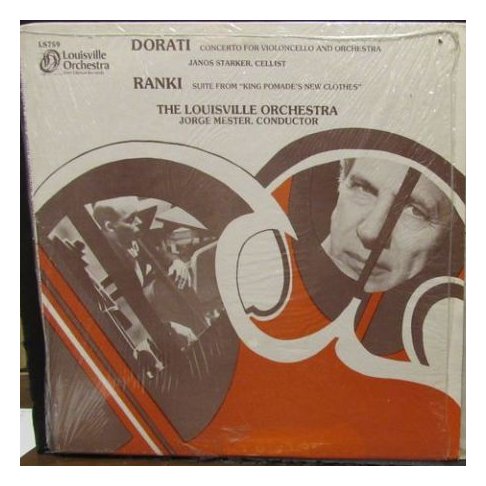
To read my Interview with Antal Dorati, click HERE. To read my Interview with Janos Starker, click HERE. To read my Interview with György Ránki, click HERE. 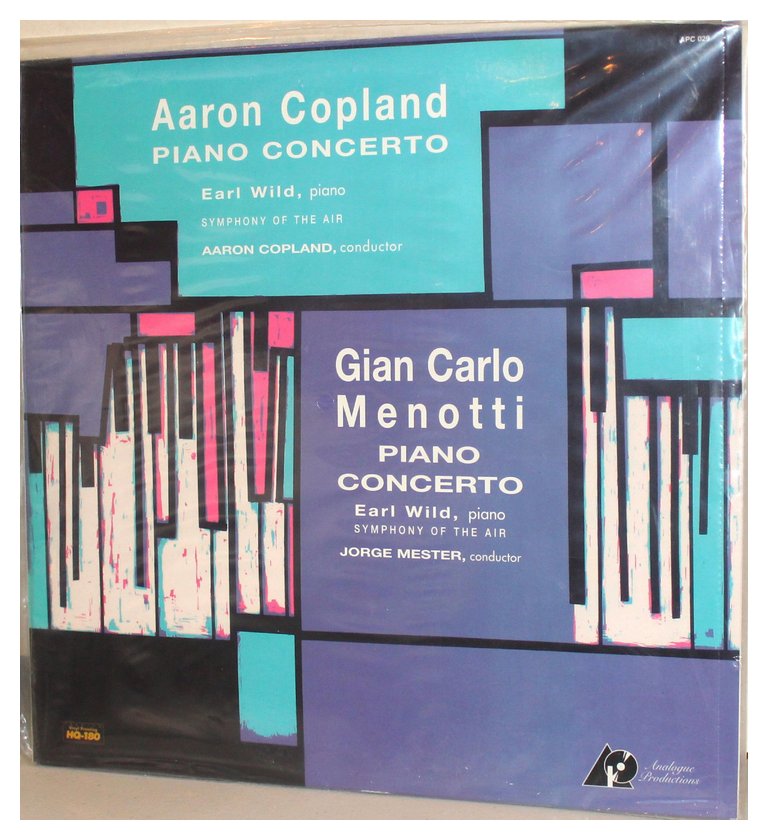
To read my Interview with Earl Wild, click HERE. 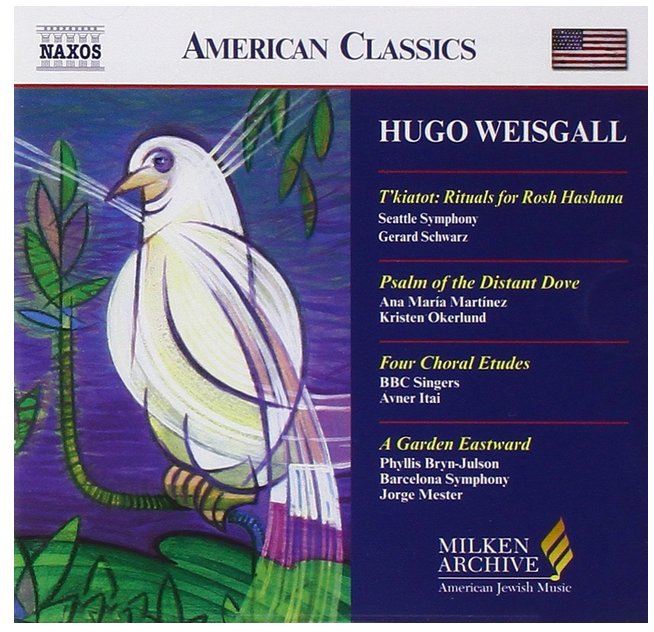
To read my Interview with Hugo Weisgall, click HERE, To read my Interview with Gerard Schwarz, click HERE. To read my Interview with Phyllis Bryn-Julson, click HERE. 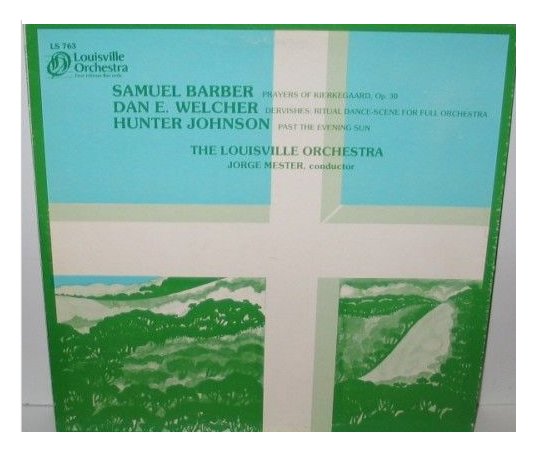
To read my Interview with Hunter Johnson, click HERE. |
This interview was recorded in a conference room at O’Hare Airport
on July 14, 1994. Portions (along with recordings) were broadcast on
WNIB the following year and in 2000. The transcription was made and
posted on this website early in 2009. More photos and links were
added at the end of 2015, and subsequently.
To see a full list (with links) of interviews which have been transcribed and posted on this website, click here. To read my thoughts on editing these interviews for print, as well as a few other interesting observations, click here.
Award - winning broadcaster Bruce Duffie was with WNIB, Classical 97 in Chicago from 1975 until its final moment as a classical station in February of 2001. His interviews have also appeared in various magazines and journals since 1980, and he now continues his broadcast series on WNUR-FM, as well as on Contemporary Classical Internet Radio.
You are invited to visit his website for more information about his work, including selected transcripts of other interviews, plus a full list of his guests. He would also like to call your attention to the photos and information about his grandfather, who was a pioneer in the automotive field more than a century ago. You may also send him E-Mail with comments, questions and suggestions.