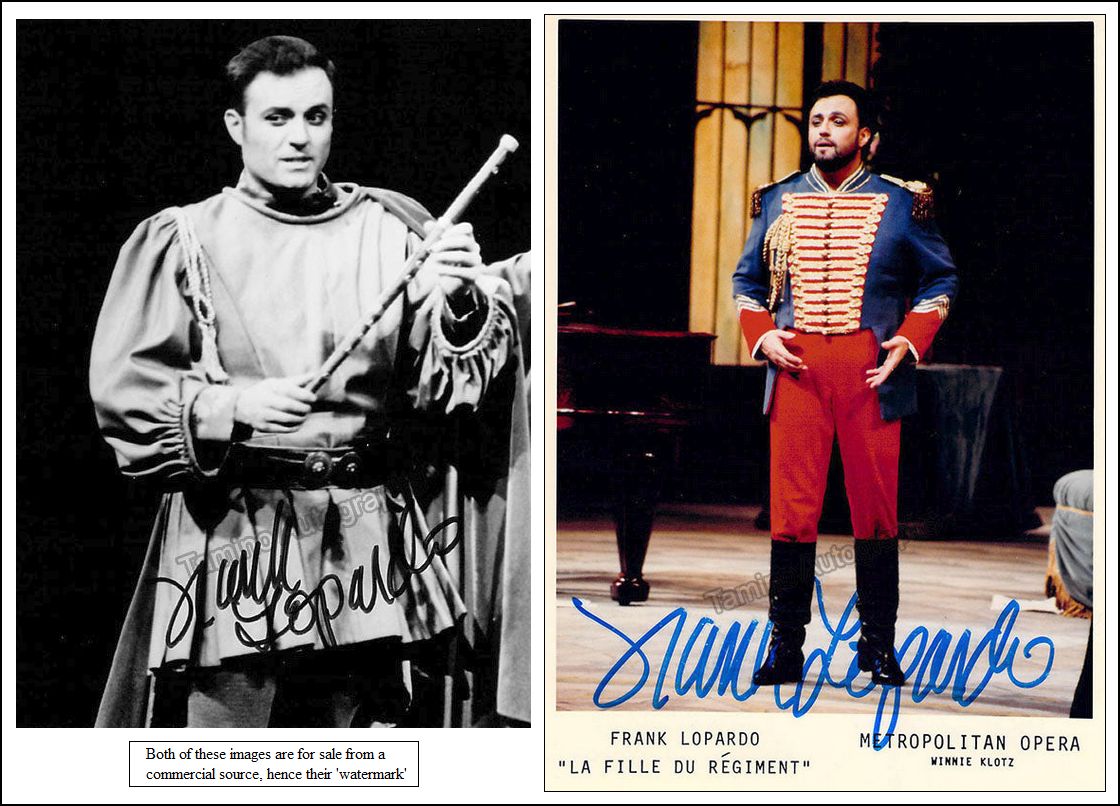
Tenor  Frank  Lopardo

A Conversation with Bruce Duffie


lopardo


lopardo Frank Lopardo (born December 23, 1957) is an American operatic tenor who was born in Brentwood, New York. Early in his career he specialized in the repertoire of Mozart and Rossini and later transitioned to the works of Puccini, Verdi, Donizetti and Bellini.

Lopardo began his musical training at Queens College, CUNY before moving on to the Juilliard School. At Queens College he first met Dr. Robert White, who currently serves on the staff at the Juilliard School. Lopardo attended the Music Academy of the West summer conservatory program in 1983 and 1984.

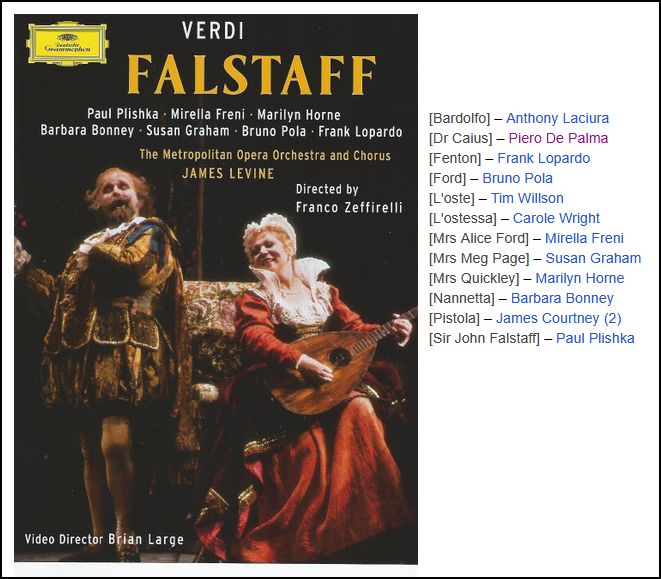
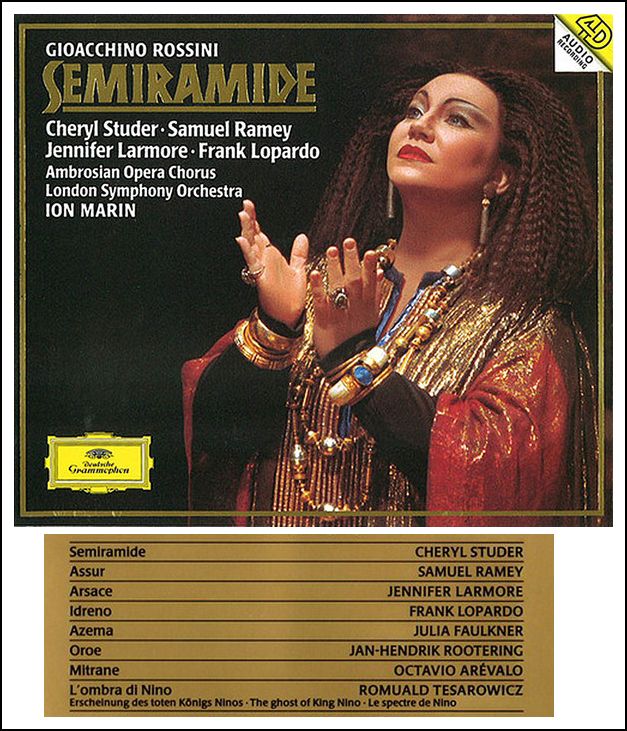
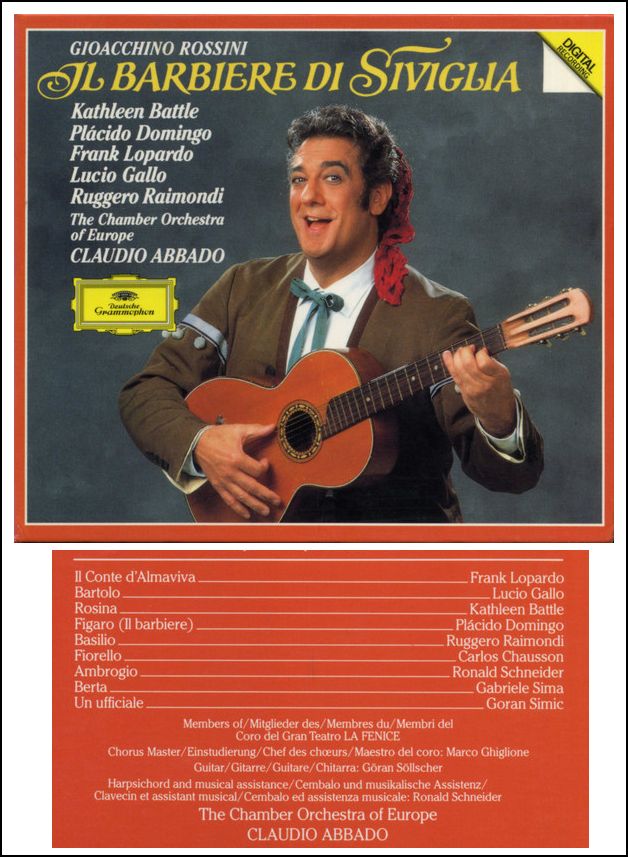
Lopardo made his North American debut as Tamino in Die Zauberflöte with Opera Theater of St. Louis. He entered into a long-standing relationship with The Metropolitan Opera in New York in 1989 in the role of Almaviva in Il barbiere di Siviglia. He has performed more than 180 times there, with roles including Rodolfo in La bohème, Alfredo in La traviata, the Duke in Rigoletto, Edgardo in Lucia di Lammermoor, Tonio in La fille du régiment, Nemorino in L'elisir d'amore, Don Ottavio in Don Giovanni, Idreno in Semiramide, Ferrando in Così fan tutte, and Fenton in Falstaff. Lopardo has made appearances with various North American opera companies, including the Lyric Opera of Chicago, Los Angeles Opera, Houston Grand Opera, Dallas Opera, the Canadian Opera Company, San Francisco Opera, and Santa Fe Opera.

In Europe, Lopardo made his debut as Fenton at Teatro di San Carlo in Naples. He has sung as Edgardo, Rodolfo, the Duke, and Lenski in Eugene Onegin at the Opéra National de Paris. At the Royal Opera House, Covent Garden he has sung Lindoro in L'italiana in Algeri. Other major European theaters where he has performed include the Vienna State Opera, the Grand Théâtre de Genève, Teatro alla Scala in Milan, Teatro Comunale in Florence and Teatro Real in Madrid. He has appeared in the Salzburg Festival, Glyndebourne Opera Festival, and Aix-en-Provence Festival, and he has sung with De Nederlandse Opera.

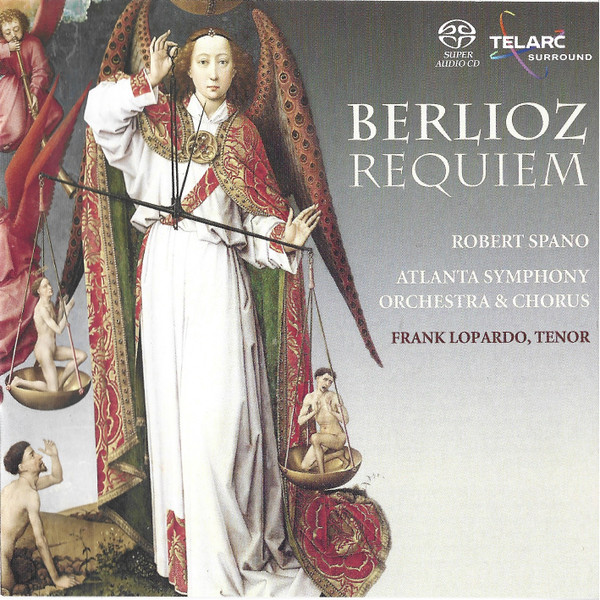
In 1983, Lopardo won first prize in the Liederkranz Foundation competition. He was awarded an honorary doctorate from Queens College, Aaron Copland School of Music, in 1992, and in 2005 won a Grammy Award for Best Choral Performance for a recording of the Berlioz Requiem, performed with the Atlanta Symphony Orchestra and Chorus, conducted by Robert Spano [shown in this box].


==  Names which are links in this box and below refer to my interviews elsewhere on my website.  BD  


In the fall of 1988, Frank Lopardo made his debut with Lyric Opera of Chicago.  It would be the first of 14 seasons he would appear there, as well as singing two works with the Chicago Symphony Orchestra.  A full list is shown near the bottom of this webpage.

In between performances that first season, Lopardo made time for an interview with me, and at the end he told me the reason for his decision!

Portions of this conversation were aired on WNIB, Classical 97 several times, and now, in 2026, I am pleased to present the entire chat . . . . .

lopardo
Bruce Duffie:   Is this your first time in Chicago?

Frank Lopardo:   First time here, yes.

BD:   You’re a thirty-year-old tenor!

Lopardo:   Yes.  I’ll be thirty-one very shortly.

BD:   Is this the right age to be making your debut in big houses like the Lyric?

Lopardo:   I don’t think about it that way.  I just think being ready for certain repertoire.  I don’t think about where I’m going to sing, as much as I think about what I’m going to sing.  So, if it’s the right piece, it doesn’t matter where I sing it.

BD:   [Surprised]  A big house or a small house doesn’t matter?

Lopardo:   No, I don’t care about that.  I don’t look it at that way.  I look at myself as singing literature, not conquering opera houses.  I don’t sing for the space anywhere.  I pretty much sing in the space where I am for a number of reasons.  If you establish one thing in a studio and you’re getting a role together, then all of a sudden you get into a house, all the work that you’re done is not totally in vain, yet all of a sudden you have to adapt to this big space.  It’s a good idea just to continue along the lines of what you’ve done to prepare the role in the first place.

BD:   When you’re offered a role, how do you decide if you will accept it, or postpone it, or even decline it?

Lopardo:   I
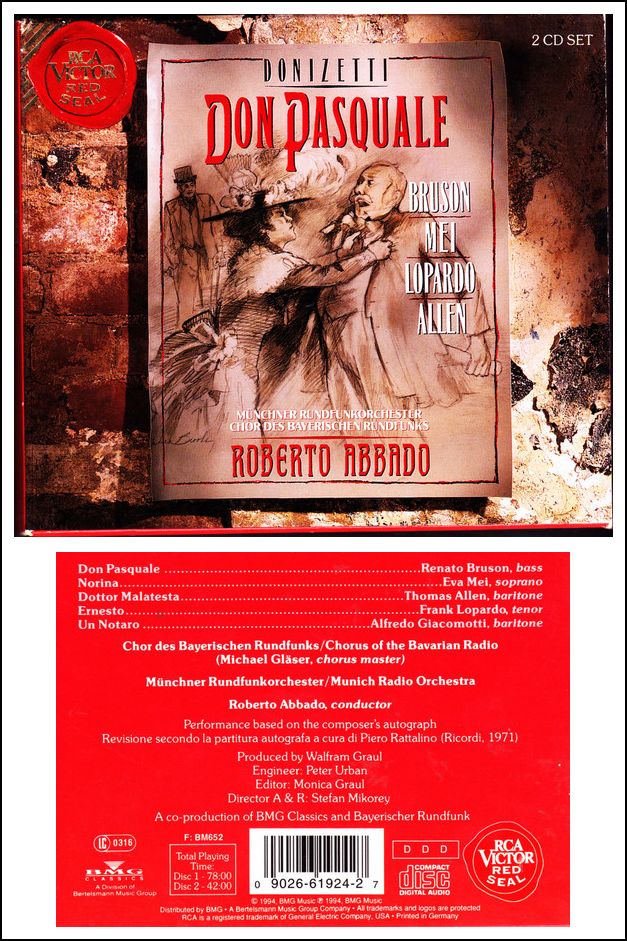
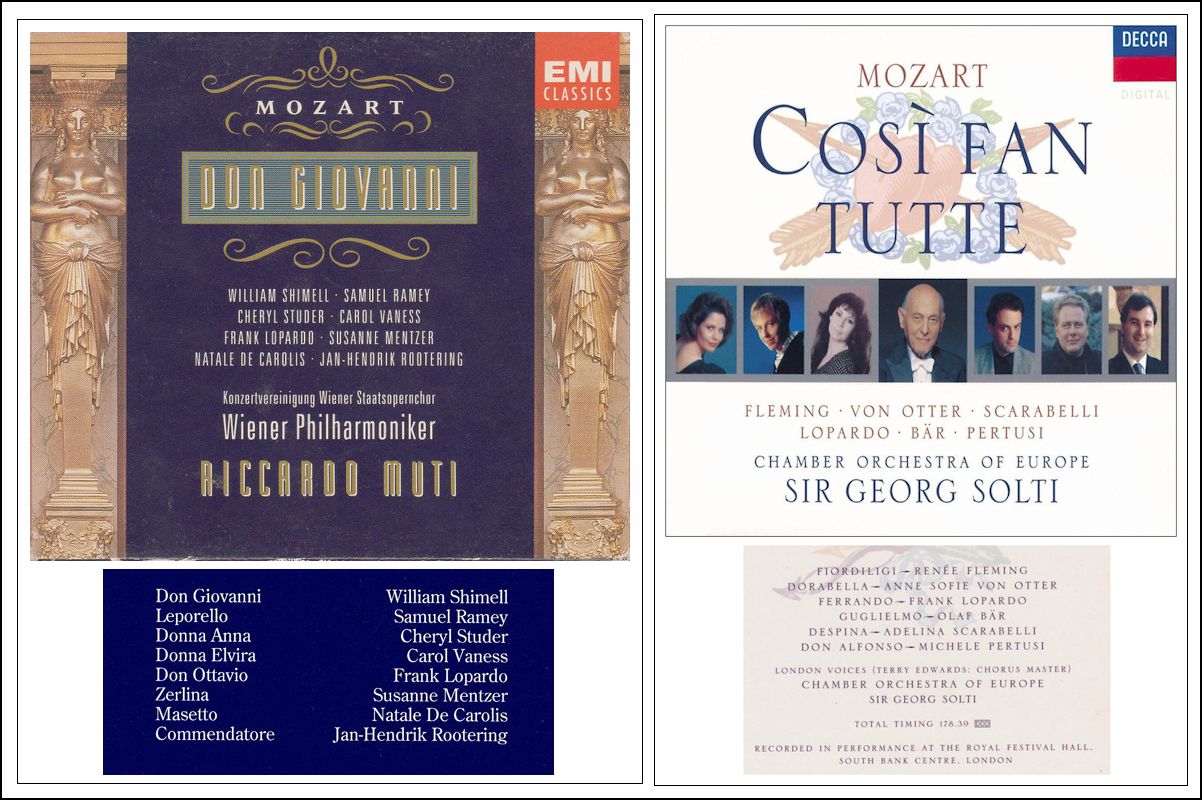
m a lyric tenor, so based on the repertoire that I do, I’ve committed myself to doing lyric works such as Rossini, Bellini, and Donizetti, with a lot of Mozart as a foundation.  Even within the parameters of those composers, we have lyric and dramatic pieces, but I still always tend towards the lyric.  For instance, in Donizetti I would sing Ernesto in Don Pasquale, but I would not sing Edgardo in Lucia yet.  [Vis-à-vis the recording shown at left, see my interviews with Eva Mei, and Thomas Allen.]

BD:   So, you’re looking toward Edgardo maybe ten years from now?

Lopardo:   I
m looking towards age and longevity, yes.  I’m looking at what I sing credibly at this very moment, rather that stretching myself.  It’s quite conceivable that a young voice of twenty-two or even twenty-three could sing certain roles credibly, and others not so.  This allows a young singer to enter the field, but in lyric repertoire, not in dramatic repertoire.

BD:   Do you keep something like Edgardo in the back of your mind, knowing that in a few years you’ll be doing it?

Lopardo:   I have consigned myself, or resigned myself I should say, to doing what the flow of the profession has now.  I’m a student, and shall always remain a student, but not with the same student restrictions that I had in the university, and which you have to guess what repertoire you’re going to do.  Today I’m off to a very good start, and when a contract or an offer comes up, there’s already the determining factor.  I don’t have to wonder when I’m going to sing this role.  It’s an offer.  It is something real.  It’s the present.  It’s touchable.  I don’t look at 10,000 pieces and wonder when I’m going to sing them.  I just follow the flow of the profession, and as offers come along I decide from there.

BD:   Are you yet getting so many offers that you have to decline some?

Lopardo:   Yes, but because it would be just too much work, not repertoire choices.

BD:   Everybody wants you?

Lopardo:   [Laughs]  Thank God not everybody, but a good amount of the things that supposedly count, or the places that supposedly count want me.

BD:   Are you purposely making sure that you sing in the better places, and letting the other places go?

Lopardo:   No, it’s just the way it’s worked out.  When I first came into the profession four years ago, I didn’t think I’m only going to restrict myself to A or B or C houses.  I just said I’m going sing, and I want to sing, and whatever presents itself to me as I go along is what I will do.  Of course, strategically speaking you’re not going to do certain things, because you already have done other things, and you are working on what is considered a world-class level.  So it’s not a very good idea to do some of these other things.

BD:   [With a wink]  You won’t accept a Parpignol [La Bohème]?

Lopardo:   Parpignol???  No, I don’t think so, and I probably won’t accept certain engagements that would not be the same kind of work intensity that I’m used to.

*     *     *     *     *

BD:   Your voice dictates that you sing these certain roles.  Are you happy with the actual roles, such as often being the young lover.  Do they fit your personality?

Lopardo:   Oh yes, sure!

BD:   You wouldn’t rather be a bass and slice everybody up?
lopardo
Lopardo:   No.  [Both laugh]  Lately I’ve been playing a lot of nice guys, and I’m a nice guy, so it works out.  Ferrando is the baby, and Ernesto’s a nice guy.

BD:   Is there any chance that some of these nice guys can be played too nice?

Lopardo:   I don’t know.  I don’t have that in my nature.  My physicality is not one which you would even say it’s too nice.  I’m not a small person.  I’m not too thin, but I’m not too big either.  The way I approach my physicality would never give the impression of being too nice, as you put it.

BD:   You
re not unbelievably nice.

Lopardo:   No, no!  The way I am off the stage is the way that I am on the stage.  It
s just real.  Let’s talk.  We agree or we disagree, and that’s pretty much it.

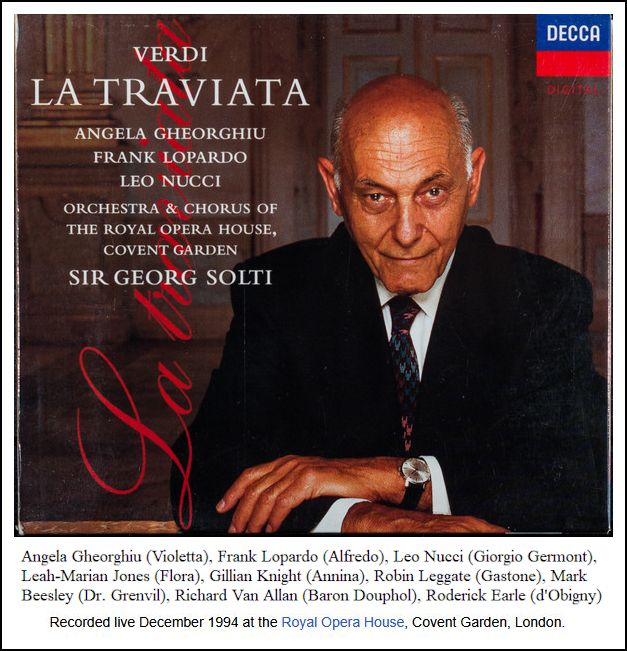
BD:   We’re dealing with operas that were written a hundred to almost two hundred years ago.  Can we make those believable for audiences that live in the space age?  [Note that the recording shown at right has been issued in both audio and video formats.  See my interviews with Gillian Knight, Robin Leggate, Richard Van Allan, and Sir Georg Solti.]

Lopardo:   One of the ways that is going happen is almost out of our control, because the stagecraft is evolving so well.  This is not to say that a hundred and fifty years ago they didn’t have wonderful stagecraft, because they did great things on the stage for what they had.  But we have hydraulic lifts now, and we have great lighting.  We have wonderful techniques and brand new productions.  The music is there.  It’s notated.  It’s on the page.  You can bring to it what you can.  That’s the wonderful thing about it.  It’s there.  It’s accessible.  You can bring your personality to it.  What you’re asking is if people ever become tired of this art form, and I can only say that if we go to a museum and see a Rembrandt, we don’t get tired of that.  I have a fairly traditional attitude towards things, although I’m quite open to a lot of new production techniques of the avant-garde, and things of that nature.  I
m not going against the grain, but we wouldn’t go to the library and rewrite the classics.  We wouldn’t go to the museum and repaint Rembrandt.  So, in the same sense, I don’t think it’s fair to superimpose modern taste upon something that’s simply old.  Basically, let’s view it in the period that it was in.  There are enough new pieces.

BD:   When you go to see a Rembrandt, that’s it.  But an opera has to be recreated each night with new singers.  How much can you make it grow just by your interpretation?

Lopardo:   That’s a hard one, because I can only bring myself to it, hopefully reaching some kind of positive parallel with the audience.  I don’t know if that’s going to happen every time I go out there.  I prepare a role, I go to the theater, we go through the rehearsal period, and then we open.  I hope that everything I put in during the period prior to and during the rehearsal period adds to it, and each of the performances will be congenial to the audience.  I’m not that calculating.  My point of departure is the work, and that’s where we have to go.  We have to go right back to the source, right back to the music.

BD:   Let me ask the Capriccio question.  Where’s the balance between the music and the drama?

Lopardo:   Trying to make it believable, trying to be honest with the piece, trying not to think that just because something is old there’s anything outdated about it.  One needs to be honest and not overact and oversimplify.  Like Cagney always said,
“Plant your feet, look the other guy in the eye, and tell the truth.  Especially with a piece like La Sonnambula, today it’s very difficult for us to believe that things happen just because of an insinuation like that.  Its absurd.  She was in the room of another man.  Today, people have much heavier things to deal with in terms of relationships between men and women, men and men, and women and women.  The point of the departure of doing the music well sometimes covers the whole ground by just saying good vocalism can cover the entire field.  Don’t worry about your acting because everything is in the score.  The score is a wonderful source of knowledge for the opera.

BD:   What about a director who would update it?  Maybe, instead of having her in the other man
s room, have the insinuation be that she has herpes.  [Both laugh]

Lopardo:   Let’s face it, as singers we are actors, or performing artists, and we have to humble ourselves to some extent.  We have to realize that we are lending ourselves for a period of time to the creative powers or weaknesses of another person.  I have to be honest and say sometimes that has been very, very difficult for me to accomplish.  I have to both humiliate and force all my powers of imagination to deal with some directors and some conductors.  On the other hand, the saving factor in these situations is that soon the engagement will be over.  Nothing lasts forever.  It
s not like you had to do a strange interpretation of Così fan tutte in combat fatigues for the rest of your life.  You just go, sing well, think about the thing that you do best, and know that after eight or ten performances you will move on to another crazy production.  [More laughter]

BD:   I would hope that most times you would opt for another three or four performances in the run.

Lopardo:   Oh yes, sure!  But I want to go home.  I miss my family, so that’s the reason I want to go.  But sometimes you just don’t want to learn the next piece.  However, you don’t want to go to the next engagement because you just want to stay here.  You found this oasis that’s a wonderful place to be, and this wonderful piece fits you like a glove.  You just want to do two more performances, but we have no more room in the season.  We have other pieces to do, and people like a variety of works.  There have been other times where I’m sorry we have to do another performance.  I would just like to open and go home, [laughs] but that cannot always be, unfortunately.
lopardo
BD:   When each night is a chore, and you’ve got another contract offer with that same director, might that influence your decision whether or not to accept?

Lopardo:   Only if you know that you’re not doing your job well.  What it means to be an artist is that you go out and do it, regardless of how much goes against your personal feelings.  But if it’s totally impossible, and you can’t bring those powers to mind, then maybe it’s a good idea not to accept.  This is not because of your disagreement, but because you can’t do your job well, and that’s the crime.  Don’t just go because there’s money involved, or it’s an important house.  Don’t go because the work is going to suffer, and you’ll suffer, and you’ll make your colleagues suffer, and worst of all the audience will suffer.  The audience doesn’t always sense exactly what is going on in your mind, but they can see you’re not having fun.

*     *     *     *     *

BD:   Do you like the idea of having the English translation above your head?

Lopardo:   Yes, it’s a good thing.  It’s in its infant stages and it needs to develop.  [Remember, this interview was held in October of 1988.]  We need to get people who specialize in that area now.  We’re going to see people for whom that’s their thing.  They do titles.  The English cannot be like everyday street English.  It has to be an exact translation of the text, whether it be Italian, German, or French.  It has to be a very good literal translation.  We have to elevate the audience.  We can’t put some camp statement up there that has no parallel to the original.  Translation is a very difficult thing because there’s not always a parallel in language for these idiomatic phrases.

BD:   Would you prefer to sing it in English rather than have the titles?

Lopardo:   No, absolutely not!  It would be like changing an orchestration.  It’s like doing it with electronic instruments.  If the piece was written in French, do it in French.  If it was written in Italian, do it in Italian.  I like doing the work.  I like going further than I might have gone in learning a piece in its original language, translating it, sitting down, learning the diction, and getting it across credibly.  It’s fine.  It works for me.

BD:   Have you sung opera in English?

Lopardo:   Oh yes, sure.

BD:   Do you work a little harder at your diction, knowing that everyone’s going to understand every word?

Lopardo:   Believe it or not, there is this standard stage diction which, being from New York, is not something I grew up with.  [Both laugh]  So when I prepare a role, I try to speak clearly and credibly, and I watch my New York regional inflection to make sure that it doesn’t get in there.  Yes, of course, you work  a little harder, but it should be just as hard as if you were doing a piece in Italian or a foreign tongue.  The English is important.

BD:   Would it perhaps be easier for you to do, say, Tony in West Side Story, just from a diction standpoint?

Lopardo:   Not necessarily.  Even in musical comedy, just because Tony is from the lower west side, it doesn’t mean he has to talk like that.  When he sings, it has to be just as credible.  It’s as much opera as anything else.  It’s musical theater and has to have good diction.  Plus, Tony is trying to elevate himself from what he grew up in.  Tony has grown and matured.  Riff, on the other hand, may still talk like that because he’s still very much part of his gang.  At least Tony gives the impression that he wants to change.  He wants to be a better person, so he would have good diction.  

BD:   In musical comedy, you get something similar to The Magic Flute, which is going from singing to speaking.  Is that particularly difficult in the theater?

Lopardo:   It’s difficult in the sense that singing and speaking are two different vocal approaches.  You have to be very careful within the context of the opera to speak on the same technical basis with which you sing.  You need to breathe properly, and use the same diaphragmatic technique as when you sing, so as not to fatigue yourself, because speaking is much more fatiguing than singing.

BD:   You don’t have any problem going from the dialogue to the singing?

Lopardo:   No, not at all, because I do what I just described.  I do try to speak on the breath, smoothly, almost melodiously.  So, between musical numbers where dialogue does come in, when the chord is struck for the opening of the next number, I’m prepared vocally.  When I first started doing The Magic Flute, that was a big problem, and I used to get very tired.  It was a great lesson for me to learn.  I had always to think while I’m speaking that I’m going to sing very shortly, and I have to maintain that true line.

BD:   Have you gotten to the point where this becomes natural, so you really don’t have to pay attention quite so much to all of these details?

Lopardo:   Yes, I would hope so.  I dissect my notes from time to time, and am getting sparser and sparser.  Regarding my notes to myself, I find I’m down to one or two words.  It’s all natural now.  I used to regret not bringing a cassette recorder to my lessons all the time, as many singers did, but I don’t feel bad about that anymore.  First of all, I’d have rooms and rooms and boxes full of tapes from the past dozen years.  Second, I wouldn’t want to go back to the first lesson because the things I need to overcome now are miles and centuries away from my first problems.  Now there are other things.  There are images, there are colors, and there are shapes which I can incorporate into my singing.  I always have done that, but your best intentions sometimes are met with the reality that you’re not ready yet.  You want to get out there and sing this big stuff, but you’re just not ready.  You don’t know where to put your voice.  You don’t know what you’re doing, but over the course of time and study, you find yourself coming more and more to what you’ve always wanted to do, and what you’ve always wanted to accomplish.  For instance, for an eight o’clock performance, I used to get to the theater at five o’clock, go to the piano and review every note particularly around the passaggio.

BD:   Did you sing though the whole role, or just look it over?
lopardo
Lopardo:   I looked through the whole role and thought through the whole role, and when I would get to the stage I would already be knocked out because I had incorporated so much concentration.  Even while at the piano, you sing without singing, and it’s like you’re sitting there having a conversation with somebody who has a really gruff voice.  After an hour of that, you come away hoarse without even speaking.  It’s bringing to mind those sensations, so while you’re looking through the role, whether you’re humming or you’re not singing at all, you’re activating those muscles.  Singers should be able articulate these things so well, but they are more sensations than they are verbal responses to things.  They are just the way you feel.

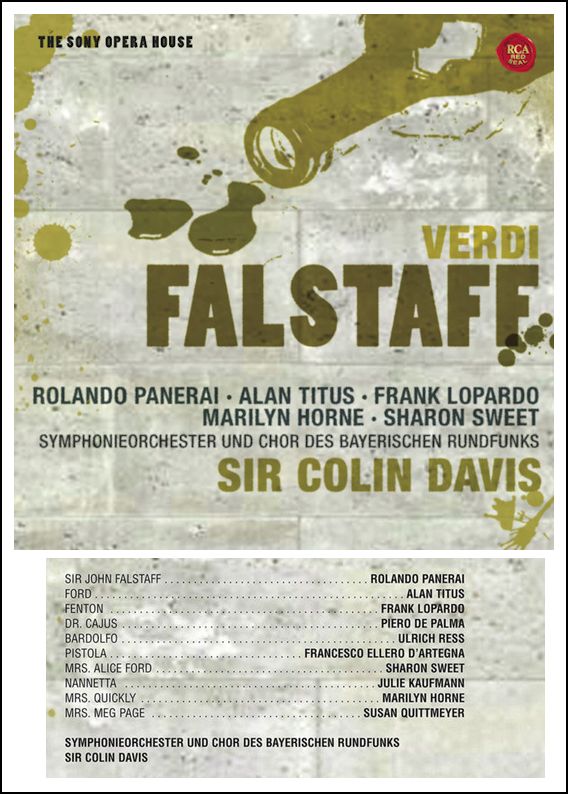
BD:   This is what you used to do, so what do you do now?  [Vis-à-vis the recording shown at right, see my interviews with Rolando Panerai, Alan Titus, Piero De Palma, Sharon Sweet, and Marilyn Horne.]

Lopardo:   My makeup call is at 6:30 pm, so I arrive at 6:00 for a 7:30 pm curtain.  They have to have their time to prepare you to go on.  Unfortunately, now in Chicago it’s getting cold, and I might have to take a taxi to the theater.  Otherwise, I try to walk to the theater, and this opens me up.  This gets me ready.  It gets my juices flowing.  It gets my blood moving, because during the day of a performance, I’ll be resting and not speaking so much.  You can’t go right into the theater with that same lackadaisical attitude, because you just go out there and kill everything.  You have to incorporate a certain amount of positive energy in order to sing.  So now, because my preparation is so good before I even go to the workplace, it’s been redundant.  I was doing too much.  You can actually go too far.  Now I’m not as tired, and I don’t have as much time to think about things.  I try to incorporate some positive thinking.   I say to myself that I’m going to go out there and have a good time, and thereby let the audience feel comfortable with my performance.

*     *     *     *     *

BD:   When you get on stage, are you portraying that character, or do you actually become that character?

Lopardo:   No, I’m me.  I’m absolutely me.  I don’t believe in the Stanislavsky acting techniques.  I don’t mean to be risqué, and I hope I’m not, but I just think it’s just a lot of nonsense.  But whatever works for a person is fine.  I don’t believe that I have to study Freud or I have to pick my brain and find out my relationships in my youth, and all these other things.  I don’t want to think about those things!  I want to know who I am at this very moment.  My past has gone.  Who I am is what you see before you when I go on the stage.  I will say, and what I believe about acting in the positive sense, is that it’s all acting.  It’s not real.  Let’s face it, if you want to play a killer, you’re not a killer.  You can’t be a killer, but you can imitate a killer.  If you really thought like a killer, and you tried to be a killer, the mind is a very powerful instrument, and you may just become one!  You may just do the very things that you think you’re acting to do.  You can’t play with your brain like that.  It’s not fair to you.  Some actors walk around constantly in a state because they’re delving into these things that the normal everyday person doesn’t think about.  What I will say is that there are parallels within us that are with a character.

BD:   Then as soon as you walk off stage, you’re back to being Frank again?

Lopardo:   Oh, yes!  [Both laugh]  I’m joking with people, and we talk.  People are saying,
Good job, and, Great.  If somebody brings a kid to the theater, I go play with the children.  Then, when I have a cue, I go on the stage and there I am!  I don’t have to go into a corner, and prepare, and insist that everyone be quiet.

BD:   When you’re on stage, are you conscious of the audience?

Lopardo:   [Thinks a moment]  I incorporate two things.  If I feel like I’m really on top of things and it’s a really good night, I don’t have to think too much about what I’m doing technically.  If I’m feeling well and healthy, I love to look at the audience.  This is not full-front looking the audience, but I know they’re there.  When I was much younger, I learned the
fourth wall concept of blocking out the audience, so that we’re in our own little domain.  We’re supposed to completely block out the audience.  I found that fourth wall concept very difficult to do, and when I opened up and let the audience in, I became a better performer.  I was so stiff because I was so worried about that wall, that I didn’t act to it.  I didn’t play to it.  I never played to the audience.  I never opened to the audience.  A lot of my acting was sideways on.  The audience would always see a profile of me.

BD:   Now it
s much more natural?

Lopardo:   Yes.  Come on in!  Join us!  It’s great!  One of the things that helped me was when I saw Equus on Broadway.  They had about 150-200 people in stage seats on little risers.  The audience was right there!  They were acting and doing this for somebody else, not doing it just for themselves.

BD:   You say you started about a dozen years ago.  Why did you decide to go into singing, rather than being a mechanical engineer or an advertising executive?

Lopardo:   I didn’t like any of those things!  [Both laugh]  I didn’t want to do that.

BD:   [Narrowing the parameters]  Why did you want to be an opera singer, rather than a rock star?

Lopardo:   That
s a fair question.  I wanted to be an artist, period.  Why I wanted to be an opera singer rather than a rock star, I don’t know.

BD:   You could have formed your own band, gone on tour, and made lots of money!
lopardo
Lopardo:   That’s definitely possible, don’t you think?  [Both laugh]  They only play a certain number of chords, and they grow their hair and get tattoos.  That’s really nice, and to each his own, but I honestly felt that there was so much to learn and so much to do, and I had the longing to do it.  From what I understand, singing on this operatic level is the farthest you can go in the vocal art form.  There is an audience for all things, and being a rock singer may not be the highest level, the highest Chakra, so to speak, but it is something, and I was not willing to settle for that.  It was offered to me, so it was a possibility.  Club singing, even jazz like Englebert Humperdinck or Tom Jones was also available.  Someday it may still be available.  [Both laugh]  We’ll see what happens!  But I just felt that to go to school, get an education in music theory and music history was a very good thing to do.  It was normal for me.

BD:   Having the name
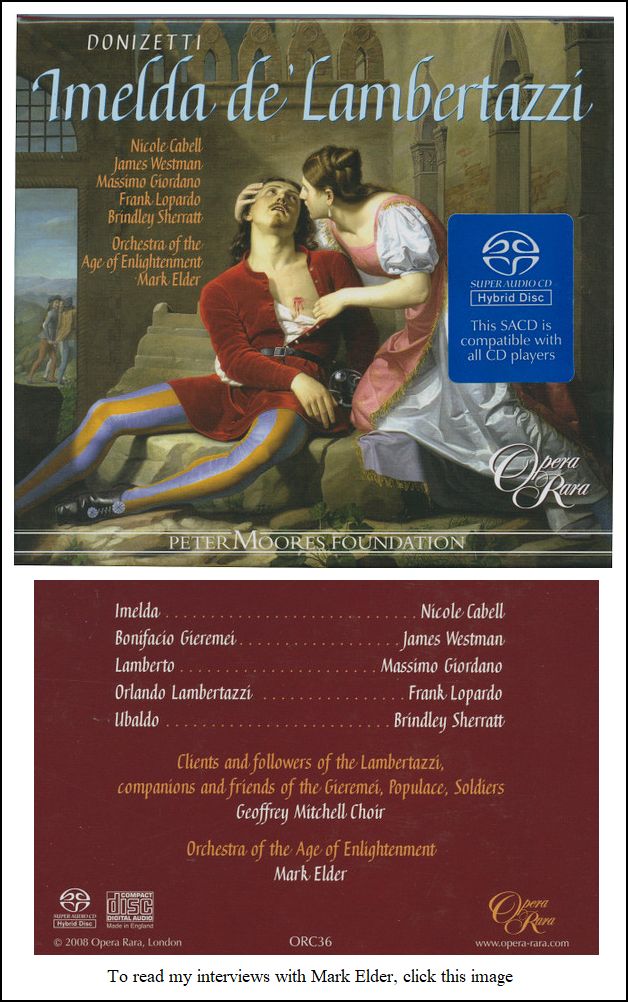
Lopardo didn’t force you into the opera?  [Vis-à-vis the video shown at left, see my interviews with Mirella Freni, Susan Graham, Barbara Bonney, Paul Plishka, and James Levine.]

Lopardo:   No.  I was totally alone in my decision.  No one really influenced me too much.

BD:   Was it easier to get into opera than if you’d been Frank Smith?

Lopardo:   I don’t think it’s a big problem.  Certainly Sam Ramey is not your average Italian name.  There’s a wide variety of nationalities in this field.  I never thought about it.  I never felt having an
‘o’ at the end of my last name was a good reason to be an opera singer.  It does help... most people don’t take me for an American because my name is Lopardo, and I do look very Italian.  But I’m an American, and when people start making that mistake, they hear me speak and they guess I’m American.  It’s an interesting thing in a way, because it breaks down those barriers pretty fast.  Besides, I’ve sung at La Scala, and the Vienna State Opera.

BD:   Are the European audiences different from the American audiences?

Lopardo:   They are wonderful.  It’s like anything else.  Their heritage is the Italian opera, or the German opera, or the French opera.  When you bring it to their country, they believe that they’re the only ones who know really what it’s about.  Oddly enough, you’ll see many American singers in Italy, and many doing very well.

BD:   [With a wink]  You don’t change your name to Francesco Lopardo?

Lopardo:   [Smiles]  No, but they do put Franko on the posters.

BD:   Then do they think that you’re from Siena rather than Brooklyn?

Lopardo:   Yes, and that’s what I love about it.  I don’t put on any guise.  I just come in and do my job, and they think I’m from around the corner!  But they are gracious, and wonderful to me in Italy, and in Germany, and Austria.  I have no problem whatsoever.  It’s a wonderful experience to go to Europe.

*     *     *     *     *

BD:   Do you like being a wandering minstrel?

Lopardo:   That I don’t like.  I like singing everywhere and going to different places all the time, because I would never want to get involved with one opera house, and just do their repertoire.  I want to go every place.  I want to sing in all houses everywhere.  I don’t believe in affiliating myself with any one house.  But as far as the travel aspect of it, it’s not the greatest.  It would be nice if they can come here, [laughs] but that’s not possible.  The jet age is a tough thing for singers.

BD:   Are you careful not to oversing, and not take too many engagements?


lopardo

See my interviews with James Morris, and Arleen Augér, and Frederica von Stade


Lopardo:   Yes.  I always sing six months a year.  I only accept the equivalent of thirty to thirty-five performances a year, and I hope to maintain that as I get older.  It seems like a sure formula for longevity.  Other singers sing 100+ performances a year.  I’m singing thirty to thirty-five maximum, and that includes oratorio.

BD:   That means Chicago and this La Sonnambula has gotten about one fifth of your season!

Lopardo:   That’s correct.  I also look at it in terms of months.  Most people look at their season in terms of the 1989/1990 season.  I see my whole year performing from January 1st to December 31st. That’s how I look at it, and when I start going over the 150-day mark, I start getting a little nervous for many reasons.  I have a wife and a son, and we’re expecting another.

BD:   You mean 150 days away from home?

Lopardo:   Yes, exactly.  When I start doing more than that, and I start doing more than thirty-five performances, my alarm goes off.  I’m not lazy.  If I didn’t have a family, I would probably just go more full steam, and extend it to about fifty.  But that’s still very low.  I was listening to a program the other day about the comedian Jackie Mason.  He had a low point in his career when he was making $400,000 a year.  [Laughs]  For the average guy, $400,000 a year is very good, but for the top man in his business, it’s a pittance.  My God, give me the $400,000.  I’ll take it!  I don’t try to compare myself.  I wouldn’t even be so bold as to put myself in the same company as Domingo or Pavarotti, the big mega-buck earners in this business.  You asked before why I didn’t become an engineer or an accountant.  In terms of earning, I see myself being able to do better than the average guy, and still being happy.  But when you start measuring your career by how much money you’re making, then you’re singing for the wrong reasons.
lopardo
BD:   Let me turn the question around.  Has the immense popularity of Pavarotti and Domingo made it better for all the other tenors, including yourself?

Lopardo:   No, I don’t think it has anything to do with it.

BD:   Hasn’t it gotten more people to come to every opera besides the ones they sing?

Lopardo:   No, because, oddly enough, a true opera lover will come to see an opera, not just to hear singers.  They’ll come to hear a piece regardless of who is singing.  I don’t think my career has been enhanced because Pavarotti and Domingo are in the world.  That’s never been part of my thinking.

BD:   Do you feel that opera is for everyone?
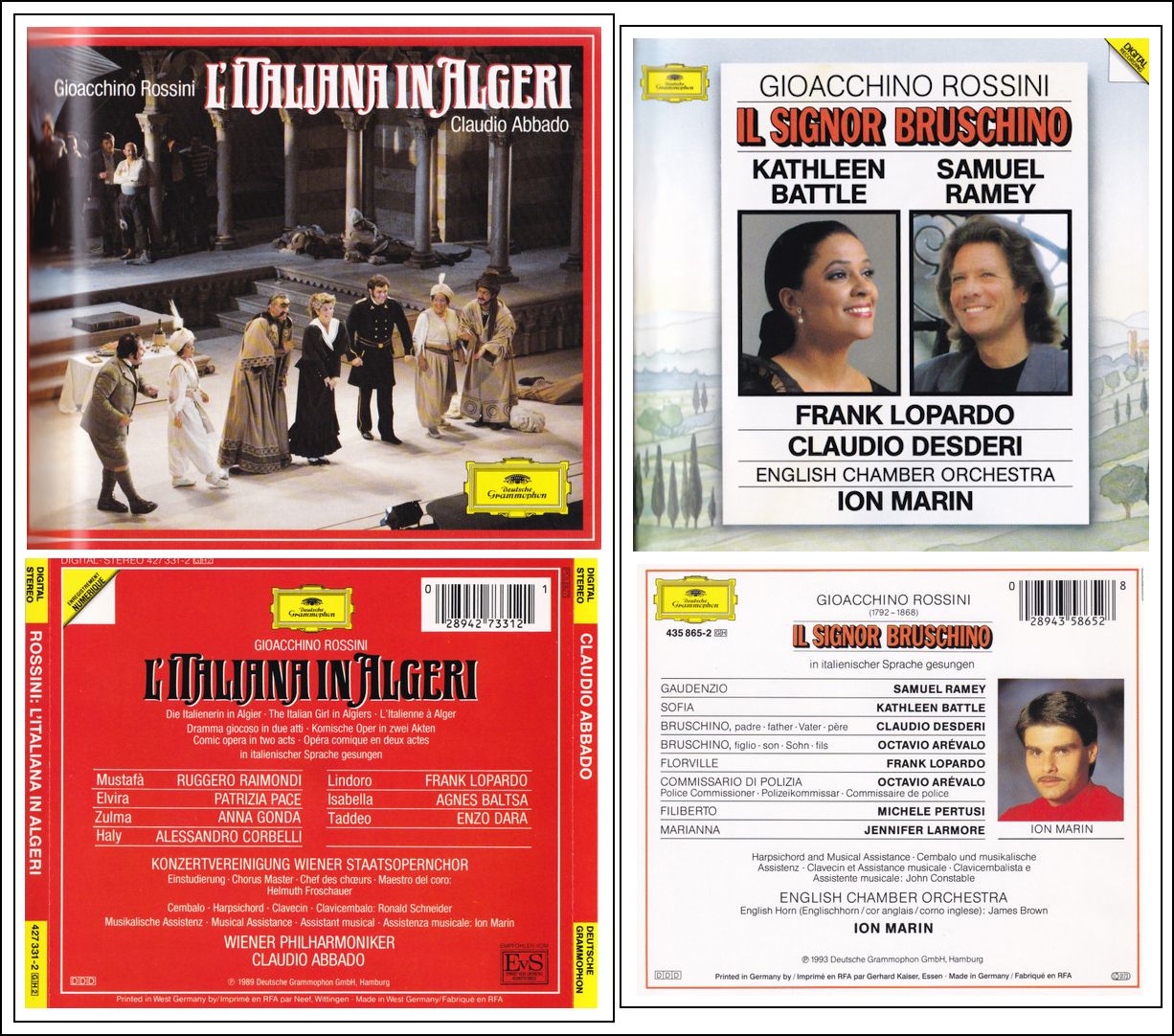
 [Vis-à-vis the recording shown at right, see my interviews with Jennifer Larmore, and Jan-Hendrik Rootering.]

Lopardo:   It’s important to educate the public.  Opera is for everyone!  Opera is theater.  Bellini was the Beatles of his age.  [Laughs]  He was the Bruce Springsteen of his time.  He’s great, and I love his stuff.  I even like Michael Jackson.  I appreciate this stuff.  I could never do it, but I appreciate it, and it has its worth, but we have to become more human to others in order for them to accept us.  It’s not just a high art.  It’s not only for the people with money.  Those things have their place, and let’s face it, we would not have opera in this country unless we had generous caring people to help it survive.  But it’s for everyone.  It’s absolutely for everyone.  It’s for children.  It’s for young and old.  We just have to make it more accessible, and these supertitles will help.

BD:   Do you think opera works well on television?  [Again remember this conversation was in 1988.]

Lopardo:   [Thinks a moment]  Opera would work better on television if it were staged with television in mind.  Doing opera on stage, and then setting up cameras around the theater might work.  Let’s face it, televised opera is in its infancy.  But if we take it apart and do productions specifically for television in a studio, it would be a little better.  I’m not saying that it doesn’t work the way it is, but opera in a theater is for a particular space.

BD:   So, combining the live audience with the camera doesn’t mix?

Lopardo:   No, they don’t mix.  I don’t think it would be bad to see camera angles and shots just the way they are in sitcoms and made-for-television movies.  When we watch a television show, it’s not done on a stage seventy-five feet wide.  It’s done in a studio.

BD:   Let me ask another big balance question.  In opera, where is the balance between the artistic achievement and the entertainment value?

Lopardo:   It’s important to realize that singing in itself can be a joyous experience.  It’s not just a profession.  It’s not just a calling.  It’s something that should enlighten.  Entertainment, from what I understand, is something that enlightens the viewer or the hearer, and brings them out of their daily walk just for a minute, so that they can return to their walk with some hope.  For that, I’ll thank God opera exists.  I can go there for three hours in the evening and forget about the bills, and cry, and feel pain and sorrow, and joy, and then get back on the train and go home.  That
s entertainment!  You can take anything and make anything out of it.  You can make a political statement, or you can make it a negative or positive.  One thing I will say, and maybe this will help... I see no room for the Diva or the Divo.  That’s gone.  That’s from an age gone by.  No one is really impressed with that type of behavior these days.  I am not, and I have not met an audience member, or a member of the public who was impressed with it.  It’s very important to come down to earth and to greet your public in a friendly way.  It puts you there.  They made you who you are, and to believe that the people are human beings when they come off the stage may help as much as what they see on the stage.  I don’t know about anything more that we can do on the stage.  I can’t speak for the craft as a whole, because so many good things are happening.  I’m not a director or a designer.  I put faith in what’s being created.  But as far as making it accessible to people, it helps to see that Pavarotti is genuinely a nice guy, or that Domingo can be spoken to.  I like to talk to the public.  I love it when people stop and say they came all the way just to see this opera, and they’re so happy.  Isn’t that nice?

BD:   It
s very special for you.

Lopardo:   This is special for me.  Those are the perks in this business.  No one is going to give you a new suit, or a Cadillac, or anything in this business.  But the perks come in nice ways, such as when a man or woman comes up to you.  I love it when the kids come.  That is the best.  The kids come back stage, and you know you did a good job when they appreciate it.  They are the hardest audience in the world.

BD:   Sure, because they’re honest!

Lopardo:   Oh, they’re honest.  They’ll tell you.  You know that they don’t like you when they’re talking, and laughing, and giggling, and playing around at times when they’re not supposed to.  They know when to laugh, especially in The Magic Flute.  They love Papageno!  But you just have to be human, that’s all.

*     *     *     *     *

BD:   Tell me about some of your recordings.

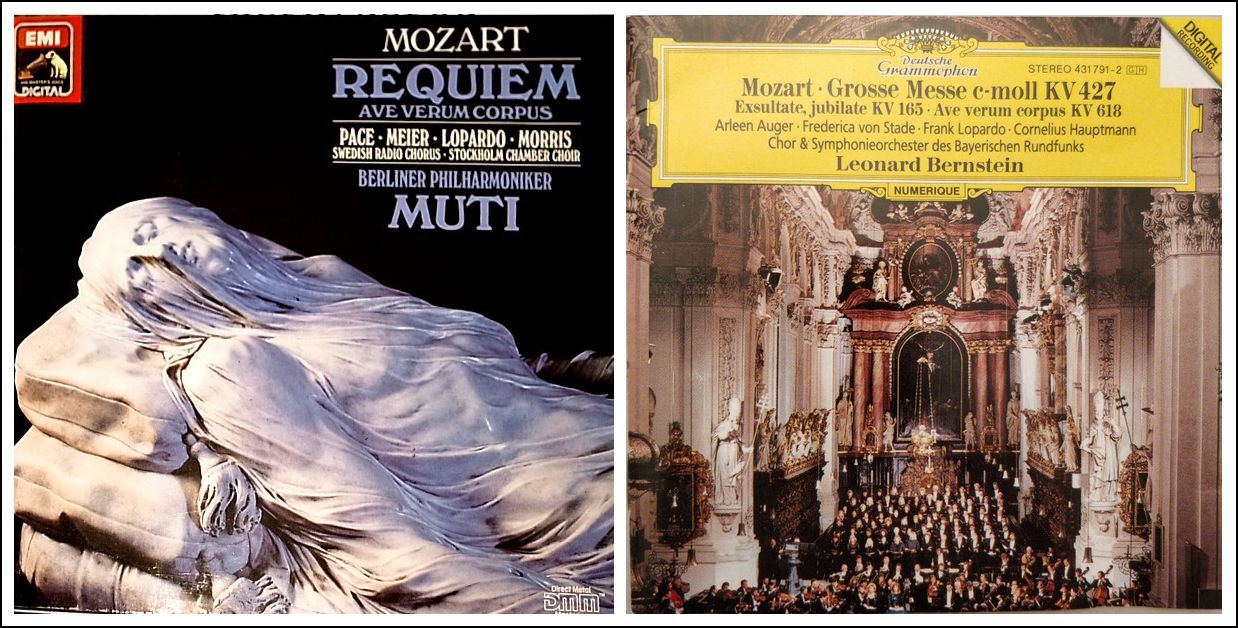
Lopardo:   I made a recording of the Mozart Requiem on EMI with Riccardo Muti, and Rossini’s The Italian Girl in Algiers with Claudio Abbado [shown below], which should be coming out soon.  I will also be recording the Mozart Mass in C Minor, and Don Ottavio in Don Giovanni.


lopardo

See my interviews with Ruggero Raimondi, Alessandro Corbelli, and Claudio Desderi


BD
:   Tell me the joys and sorrows of singing Rossini!

Lopardo:   I must say that my greatest successes have been in Rossini.  I’ve evolved in Rossini, but it was the least attractive to me.  It was the last thing I wanted to do, but, like everything else, this is one of the reasons why I said I don’t look for repertoire anymore.  I know what’s out there, because when I was in school I looked and listened to everything.  I know what exists.  I know what operas are available to me, but the profession didn’t choose me for those pieces that I wanted to sing.

BD:   You want to be Otello or Radamès?

Lopardo:   No, I wanted to sing some Puccini. but my voice is not appropriate for that.

BD:   You were very lucky, because many managers who hear your type of voice will ask you to go to the smaller houses and sing Rodolfo and Calaf.

Lopardo:   Absolutely not!  That is one of the things which impressed my agents very much.  Although I had absolutely no operatic experience, I have a broad-based experience in musical comedy.  So when I came to them with opera in my sights, they were very impressed because I knew exactly what I wanted, and I knew what I didn’t want.  They listened to me.  They knew because of my convictions that when an offer came down the pipe for a Duke of Mantua or Alfredo, I wouldn’t do it.  I don’t do those things.

BD:   But Tamino anytime!

lopardo

See my interviews with Carol Vaness, Susanne Mentzer, and Renée Fleming


Lopardo
:   Tamino, any day of the week, and Ferrando any day of the week.
 I build a little wall around my repertoire.  That’s how I feel.  I want to specialize in a certain number of roles.  I don’t believe in quantity, I believe in quality, and if I can do fifteen roles the best in the world, that’s better for me than doing twenty-five or thirty.  I want to do those standard pieces better than anybody.  That’s how I feel about it, and that’s not really a bad standard.  It’s not really a bad goal.  I’m not knocking anybody else, because even though I may have that goal, there’s about twenty singers out there who can do it just as well, if not better than me.  But as long as I maintain that ideal within myself, I will be happy.  Alfredo Kraus was very good at maintaining that optimum level, and saying what roles he would and would not do.  It took him years to take on Hoffmann and Werther, for instance.

BD:   He gave Chicago many roles over 21 seasons with Lyric Opera!  [The full list of Kraus
s Chicago repertoire is included on his interview webpage.]

Lopardo:  
I really love him.  It’s not only the love of his artistry, but of his approach to it.  He’s a very strict man about his life.  He eats at a certain time, from what I understand, and he only eats certain things.  His whole life and his philosophy is centered around singing.

BD:   He’s also a lovely gentleman.  When I did the interview with him he was just a gracious as he could be.

Lopardo:   A fine gentleman, yes.  I met him in Vienna in the lobby of a hotel where all the singers stay, and just talked to him briefly.

BD:   You’re never going to be in an opera with him, because there’s so few operas with two tenors!
lopardo
Lopardo:   [Laughs]  Well, that’s fine!  I don’t care about that!  I’ll never be in an opera with Plácido Domingo or Luciano Pavarotti, unless I sing Cassio, which I don’t think I’ll ever do.  Maybe some time when Domingo is conducting, which he seems to be doing very well.  [Or, as in the recording shown at right, he reverts to his early days and sings a baritone role.  Vis-à-vis that recording, see my interview with Lucio Gallo.]

BD:   [Coming back to Lopardo
s repertoire]  Do you do The Abduction from the Seraglio?

Lopardo:   No yet.

BD:   Which role would you do, Belmonte or Pedrillo?

Lopardo:   I would do Belmonte.

BD:   Because that’s a heavier part?

Lopardo:   It’s not heavy.  It’s higher, and more sustained.  It’s more romantic music than Pedrillo, but it’s not heavy in the sense of Mozart being heavy, like the character of Idomeneo.  In that opera, I would sing Idamante.  Now they’re doing it with mezzos so often that I don’t know if I‘ll ever get that chance, but I would love to do it.  Many people approach me with the offer to do Idomeneo.  You see, I have a full range, and go to the bottom.  It would be very dark, but my teacher hates it because she says it’s got nothing to do with the rest of my voice.  But everybody loves it!  The public thinks it’s exciting, and managers hear it and they want that sound.  But that’s not something I can do in the entire range of the voice, which would allow me to do some roles like Idomeneo, for instance.

BD:   Now, you say the mezzos are starting to sing Idamante.  Would you ever sing Siebel in Faust?  That has occasionally been done by tenors.

Lopardo:   No, I don’t think I will, and I don’t think I’ll ever sing Faust.

BD:   Siebel is an interesting part.

Lopardo:   It’s interesting, and I never even thought of that.  So often, these pants roles are just tossed up to tradition as being pants roles, and you leave them alone.  I’ll never sing Cherubino so forget about him!  [Laughs]  They’re intended for being what they are.

BD:   Have you sung The Barber of Seville?

Lopardo:   I’m preparing that, and I’ll be back here again next year doing it, and will make my debut at the Met with that in January.  I’ve done The Journey to Reims, and I’ve done William Tell, but not Arnaldo!  I’ve done the Pescatore [the fisherman, Ruodi].  Arnaldo is the other extreme.  I don’t mind doing so-called comprimario roles if there’s something as rewarding as the Pescatore, because he has a wonderful aria which opens the piece.  It’s great.

BD:   Is he there at the end?

Lopardo:   No, just at the very opening.

BD:   [With a wink]  So you do your piece, and go home?

Lopardo:   [Smiles]  No, not always.  Depending on how they structure it, you might have to stay for those bows!  But it’s real hard to come out and sing those high Cs.  You warm up the audience.

BD:   For that role, do you get to the theater a little bit early, knowing that the whole role is front-loaded?

Lopardo:   Yes, sure.  I come and I incorporate my warm-up techniques.  Sometimes singing is not as much warming up as it is ‘mental-ing-up’, getting your head together, warming up your brain, and just clearing and putting the visors on to focus.

BD:   Visors, but not blinders!

Lopardo:   [Laughs]  Yes.  Not looking to the left or right.  That’s the danger.  Focus!  But not blinders, no.  Don’t close your eyes.  I always tell people that I’m the best person I can be when I’m singing.  I incorporate all those positive techniques when it comes time to sing, so I feel that I really hit the mark when I’m singing.  This is not to say that I’m a destructive or totally wild person off stage!  [Both laugh]  I’m not.  I try to carry that over into my daily life.  Yet I say that I’m going to go out and sing, so I have to be the best person I can be at this moment.  It all fits in, because when you feel good about who you are, then you sing better, and that has nothing to do with technique.  You don’t have to think of those technical trappings of the vocal studio.  You just think about being a nice person, and relaying some of that to the audience.  Caruso said to be a great singer you have to have a good memory, a great voice, and something in your heart, and I have something in my heart.  That’s it!  So, I guess I have some of the prerequisites!  [Laughs]

*     *     *     *     *

BD:   You’re coming back next year for The Barber of Seville.  Have you got a contract beyond that?

Lopardo:   Not as of yet, but Ardis Krainik has stressed that she would like to have me again.  For what exactly, I have no idea.

BD:   It’s nice to know that you’ll be back.


Frank Lopardo at Lyric Opera of Chicago
[Note that names are only linked once, so several singers in this chart have links above]

1988-89  La Sonnambula (Elvino) with Gasdia/Welting, Kavrakos, Lawrence; Renzetti, Sequi

1989-90  Barber of Seville (Almaviva) with Von Stade, Allen, Desderi, Ghiuselev, Lawrence; Pinzauti, Copley, Conklin

1995-96  Don Giovanni (Ottavio) with Morris, Terfel/Held, Orgonasova, Vaness/Rambaldi, Mentzer/Rost, Scaltriti; Kreizberg, Ponnelle/Lata

1996-97  Magic Flute (Tamino) with Norberg-Schulz, Bär, Kodalli, Selig/Moll, Travis; Janowski/Johnson, Everding/Lata

1998-99  Traviata (Alfredo) with Rost/Swensen, Hvorostovsky/Álvarez, Raven, Lau; Benini/Mueller, Galati/Silverstein

1999-00  L'elisir d'amore (Nemorino) with Futral, Lanza, Plishka; Abel, Chazalettes/Liotta

2001-02  La Bohème (Rodolfo) with Racette, Nadelmann, Gilfry, Schrott, Montgomery; Bartoletti, Pearlman

2002-03  Traviata (Alfredo) with von der Weth, Frontali, McNeese, P. Kraus; Davis, Steingraber

2005-06  Rigoletto (Duke) with Kuznetsova, Álvarez, Silvestrelli, Clayton; López-Cobos, Vizioli

2007-08  Eugene Onegin (Lensky) with Kuznetskov, Hvorostovsky/Kwiecień, Kowaljow, Surguladze; Davis, Carsen

2008-09  Madama Butterfly (Pinkerton) with Racette, Westman, Cangelosi, Goeldner; Davis, Prince

2009-10  L'elisir d'amore (Nemorino) with Phillips, Viviani, Corbelli; Campanella, Chazelettes/Liotta

2010-11  Masked Ball (Riccardo) with Radvanovsky, Delavan, Blythe, Kim; Fisch/Morehead, Scotto, Conklin

2012-13  Simon Boccanegra (Gabriele) with Stoyanova, Hampson, Furlanetto, Kelsey, Boyer; Davis, Moshinsky


Frank Lopardo with the Chicago Symphony Orchestra
Chicago Symphony Chorus, prepared by Duain Wolfe


January, 1995  Carmina Burana with Williams, Skovhus; Mehta

July 2006 [Ravinia Festival]  Requiem (Verdi), with Brewer, Blythe, Kowaljow; Conlon


lopardo
Lopardo:   Oh, it’s nice!  The measure of a career is not your first time in a place, it’s your return.  It’s really nice to make the rounds of important places for the first time.  A lot of great voices can do that, but it’s a show of your success when you return, and when your work was good enough, and your personality was good enough to return, because ninety percent of this stuff is being a colleague.  It’s really only ten percent that goes out on stage.  For three or four weeks, depending on the rehearsal period, you have to live with people.  You have to sit down sometimes and talk and chit-chat a little bit, and be a good colleague.  You help your friends, even if you never see them again, even if you don’t even say goodbye.  You might just go out the door and go home, and go to the next endeavor, but for the duration of the engagement that you cross paths with people, you have made a friend, or you helped somebody.

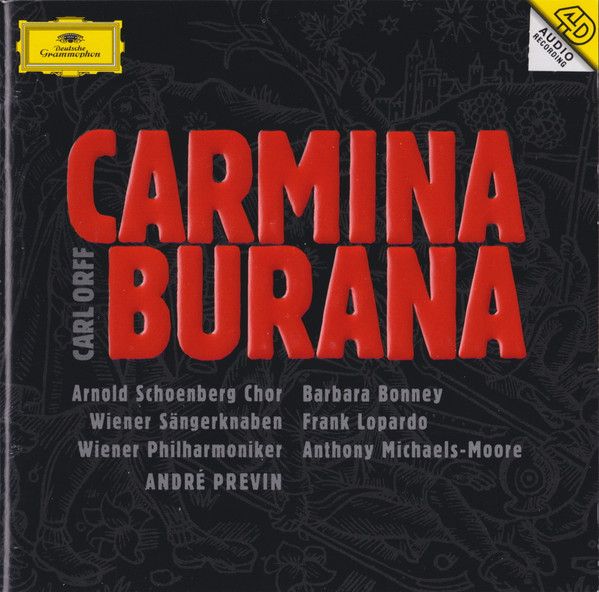
BD:   Is it nice to run into old friends in other productions?  [Vis-à-vis the recording shown at right, see my interview with André Previn.]

Lopardo:   Oh, it’s wonderful.  That’s the icing on the cake.  It’s a relationship that just snowballs, because you remember.  People really don’t forget when you break down your defenses and show them love.  They never can really forget it, especially when you survive a very tough production.  Then, when you walk into the first day of a rehearsal of that next production, you know who’s going to be there, and you just have a great time because that person’s there.  Even if there is a negative element in the situation, you can overcome it because you have somebody to turn to and giggle a little bit about what’s going on!  There’s somebody there who has been through that tough engagement three years ago, and you just look over and you smile, and they smile, and nothing need be said.  It’s just that really good feeling to have in there, and I have one or two friends like that now.  One of them is here in Chicago now.  Her name is Ruth Ann Swenson, and she’s a wonderful girl.  She’s going to be doing Nannetta in Falstaff.  We’re really good friends, and it’s one of those friendships that will be that way as long as we know each other.  Even when you go to a house and you’re not in the same show, but you see somebody in a rehearsal or between rehearsals, and they’re rehearsing in another room, you come out for a coffee break and renew the connection.  That’s a great reward.

BD:   I wish you lots of continued success, and look forward to when you come back.

Lopardo:   Thanks!  I liked this conversation.  I have to admit I turned down every offer for an interview since I’ve been here.  I’m not going to say I’m special that I granted one interview, but I thought that the way you presented the whole situation was very nice.  For the various other radio and newspapers I had had to say no.  It’s just an instinct.  I don’t really like to talk to newspapers, because at least if you play this, then that’s what I said, and the audience can make up their own minds about it.  That’s fine.

BD:   I know that a number of singers are wary of doing interviews.  For reference I can tell people to ask Marina [Production Administrator at Lyric Opera, and my regular Italian translator] about me.

Lopardo:   Yes.  You had an interview on the radio with Barbara Daniels, which I heard.  I don’t know Barbara, but I listened to the interview when you played a recording of La Bohème [the new one conducted by Leonard Bernstein].  It was about a month ago.  When one comes into a town, you put your bags down, and you’re so tired, so I popped on the radio and looked for the classical station.  There was La Bohème, and I wondered who the tenor was.  He was really great.  It turned out to be Jerry Hadley, and he was really fantastic.  Then you had a lengthy conversation with Barbara Daniels, and I really liked the way you approached it.

BD:   So, I auditioned for you!  [On a personal note, a similar situation happened with soprano Margaret Harshaw, and is described on that webpage.]

Lopardo:   [Smiles]  I had no idea that you would be calling me to participate in the same type of thing.  When you approached me, I thought it was really sweet.  I didn’t know what context you were going to use this, so I appreciate it, and I hope I was articulate enough.


= = = = = = = =                 = = = = = = = =                 = = = = = = = =
-----                -----                -----
= = = = = = = =                 = = = = = = = =                 = = = = = = = =


© 1988 Bruce Duffie

This conversation was recorded in Chicago on October 4, 1988.  Portions were broadcast on WNIB the following year, and again in 1991, 1992, 1994, 1997, and 2000.  This transcription was made in 2026, and posted on this website at that time.  My thanks to British soprano Una Barry for her help in preparing this website presentation.

To see a full list (with links) of interviews which have been transcribed and posted on this website, click here.  To read my thoughts on editing these interviews for print, as well as a few other interesting observations, click here.

*     *     *     *     *

Award - winning broadcaster Bruce Duffie was with WNIB, Classical 97 in Chicago from 1975 until its final moment as a classical station in February of 2001.  His interviews have also appeared in various magazines and journals since 1980, and he continued his broadcast series on WNUR-FM, as well as on Contemporary Classical Internet Radio.

You are invited to visit his website for more information about his work, including selected transcripts of other interviews, plus a full list of his guests.  He would also like to call your attention to the photos and information about his grandfather, who was a pioneer in the automotive field more than a century ago.  You may also send him E-Mail with comments, questions and suggestions.